
Cane Creek Suspension Forks
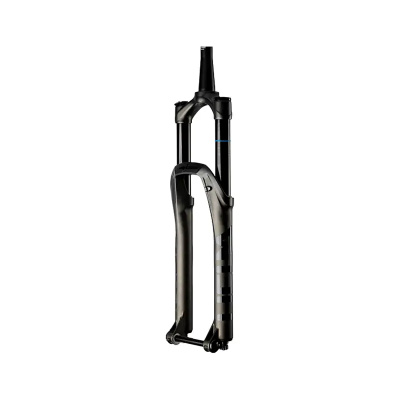
Cane Creek suspension forks are for riders who treat a setup session as seriously as the ride itself. Where most fork brands hand you a token high/low compression dial and wish you luck, Cane Creek builds suspension around the idea that you know - or want to learn - exactly how your front end should behave. The Helm MKII and the radical Invert are the two pillars of that philosophy, and they sit at opposite ends of the riding spectrum without compromising on what makes Cane Creek worth your attention.
The Helm MKII is aimed squarely at trail and enduro riding - think steep, loose Welsh singletrack or the chunky roots of the Tweed Valley - and it offers a depth of damper tuning and air-spring adjustability that most mass-market forks simply don't match. The Invert takes a completely different approach, using a continuous carbon fibre strut construction to cut weight for rough UK gravel roads. Both forks reward riders who want to get into the weeds on setup. If you prefer to spin a couple of dials and ride, there are easier options. But if you want your suspension to behave exactly the way you've imagined it, Cane Creek mountain bike forks are worth a long, hard look.
Prices and availability can change quickly. Delivery charges are not always included in listed prices.
Final price, stock status and delivery terms are set by retailer. We may receive a commission on purchases made.
Decoding the Cane Creek Fork Lineup
Two families. Very different jobs. The Helm MKII is the trail and enduro workhorse - a 35mm or 38mm stanchion diameter fork (depending on spec) offering travel options that cover everything from snappy 130mm trail geometry to burly 170mm enduro setups. Within the Helm range, the split between Air and Coil versions is the first decision you'll make, and it matters more than most fork choices.
The Helm Air runs independent positive and negative air chambers, which means you're tuning two separate variables rather than a single equalised system. More on that shortly. It's the pick for riders who want precise control over how the fork ramps up through its travel and how progressive the end-stroke feels. The Helm Coil drops the air system entirely and replaces it with a traditional coil spring. It's heavier - no getting around that - but the trade-off is a deeply linear, ultra-sensitive feel through small bumps that some riders, particularly aggressive descenders, find genuinely addictive. Coil forks don't breathe and stiffen with temperature the way air forks can on cold British winter mornings, which counts for something when you're heading out in December.
The Invert is a different beast altogether. Designed for gravel and rough road riding, it uses a continuous carbon fibre strut - a single moulded piece rather than a conventional stanchion-and-crown assembly - to reduce weight and improve stiffness-to-mass ratios. It comes in two trims: the Invert CS, which features a push-button climb switch lockout built into the top cap, and the Invert SL, which sheds every gram it can for pure weight obsessives. If your gravel loops involve long road climbs followed by properly rough descents, the CS makes sense. If it's mostly rough tracks all day, the SL keeps things simple.
The Cane Creek Tech Philosophy
The headline feature on the Helm Air is something Cane Creek calls independent positive and negative air chambers - and it's not just marketing differentiation. Most air forks use an equalisation dimple or port to let a small amount of pressure bleed between the positive and negative chambers during setup, balancing them automatically. Cane Creek removes that entirely. You set the two chambers independently, which means you can adjust the initial spring rate (positive chamber) and the force pushing the fork back into the travel (negative chamber) without one affecting the other. In practice, this gives you far more control over sag point, mid-stroke support, and end-stroke progression than a standard setup allows. It takes longer to dial in. That's the honest trade-off. But once it's right, it's really right.
The D-Loc axle system handles torsional stiffness at the dropout. Rather than a conventional through-axle that threads directly into the fork leg, D-Loc uses a pinch-bolt mechanism that Cane Creek claims improves rigidity under hard braking and cornering loads. Whether you notice it consciously or not, stiffer dropouts translate to more predictable front-end behaviour when you're leaning hard into a loose corner.
Internal travel adjustment is another genuinely useful feature. You can reposition the travel spacers on the existing air shaft in 10mm increments - no new shaft, no sending the fork off for conversion. For riders who run different bikes across the seasons, or anyone who wants to experiment with geometry without committing to a parts purchase, that's a practical advantage. Compared to the approach taken by Fox suspension forks or RockShox suspension forks, where travel changes often mean buying into a new configuration, Cane Creek's approach is notably more owner-friendly.
Volume spacers are also part of the tuning toolkit on the Helm Air, letting you adjust bottom-out control by changing the air volume available in the positive chamber. Add spacers, the fork ramps up harder in the final third of travel. Remove them, and it stays more supple deep into the stroke. It's the kind of adjustment you'd normally associate with Öhlins suspension forks or boutique options from DVO suspension forks - not something you'd expect from a brand with this level of accessibility.
Living with a Cane Creek Fork in the UK
Boutique suspension and British winters are a combination that requires a bit of discipline. UK trails grind stanchions hard - especially anything near clay or sandstone - and the gritty paste that builds up around the wiper seals over a winter of Peak District or Scottish riding will work into your lower legs faster than you'd like. Regular lower-leg services, roughly every 30-50 hours of wet riding, aren't optional if you want to protect the stanchions long-term. The good news is that Cane Creek's service documentation is thorough, and the forks are designed with home mechanics in mind - you won't need specialist tooling for a basic oil change and wiper seal swap.
Damper tuning is where Cane Creek's approach really pays off on UK-specific riding. High-speed compression tuning on the Helm MKII lets you manage the fork's behaviour on fast, chattery rock gardens without sacrificing sensitivity on slower, rooty climbs. Welsh enduro tracks and Tweed Valley descents tend to combine both in quick succession, and having genuine independent control over those settings - rather than a single compression adjuster that approximates a compromise - means you can chase the right feel rather than settle for the least-bad option.
If you're building around a Helm MKII or Invert, it's worth thinking front-to-back. Matching your fork with a Cane Creek rear shock gives you a genuinely consistent tuning language across the full suspension platform - same air-spring philosophy, same damper logic, same service intervals. It makes dialling in the whole bike a more joined-up process. Pair that with a Cane Creek headset to handle the steering loads the fork generates under hard use, and you've got a front end built with some actual coherence. Cane Creek's headset bearings are worth speccing correctly too - the wrong bearing standard under a stiff fork is a quick way to introduce play that undermines everything else you've tuned.
Cane Creek Suspension Forks FAQs
How do you adjust the travel on a Cane Creek Helm?
You don't need to buy a new air shaft - that's the key difference. The Helm uses internal travel spacers that you reposition on the existing shaft in 10mm increments. It's a workshop job rather than a trackside tweak, but it's straightforward and keeps the cost of experimenting with geometry much lower than most alternatives.
What is the difference between the Helm Air and Helm Coil?
The Helm Air runs independent positive and negative air chambers, giving you precise control over progression, sag, and bottom-out feel. The Helm Coil replaces that system with a traditional coil spring - it's heavier, but the payoff is a more linear, deeply sensitive feel through small bumps and consistent performance in cold conditions. Most trail riders go Air; dedicated descenders often prefer Coil.
Does the Cane Creek Invert gravel fork have a lockout?
Only on the CS (Climb Switch) trim. That version has a push-button lockout integrated into the top cap, letting you run the fork rigid on smooth tarmac climbs and flick it back open for rough descents. The SL trim doesn't include a lockout - it prioritises weight reduction over that functionality.