
Cane Creek Rear Shocks
Cane Creek rear shocks have a reputation that precedes them in any bike shop conversation - these are the shocks that serious setup-obsessives reach for when they want genuine, independent control over how their bike behaves. Cane Creek pioneered the Double Barrel (DB) twin-tube damping architecture in mountain biking, and that engineering philosophy still runs through every shock in the current lineup. What makes it matter? Instead of a single piston doing all the work, oil circulates continuously through dedicated damping valves, giving you true 4-way adjustability - high and low-speed compression, high and low-speed rebound - all independently tunable. No compromises, no cross-talk between circuits.
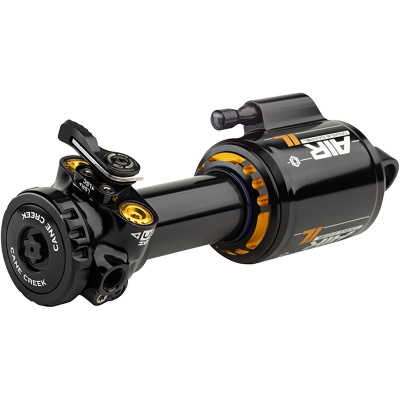
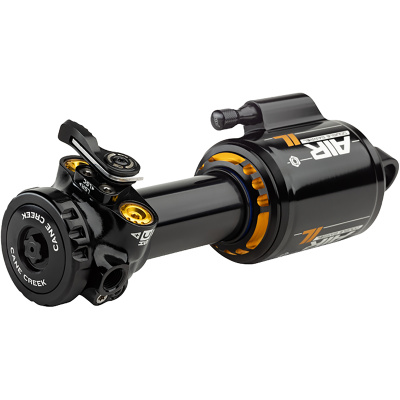
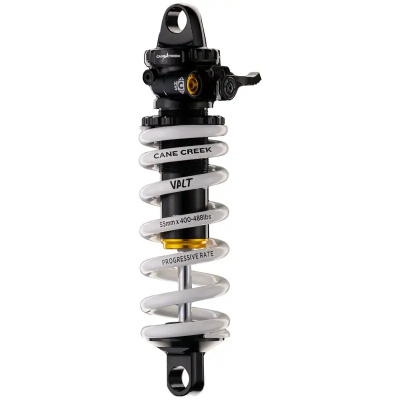
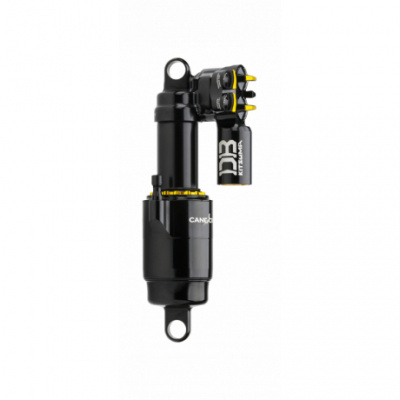
The range splits neatly between the DB Kitsuma, aimed squarely at enduro and gravity riding with its piggyback reservoir and tool-free adjusters, and the DB IL (Inline), which squeezes the same twin-tube damping into a lighter, more compact body for trail bikes where frame clearance is tight. Both come in air and coil variants, so whether you want the progressivity of an air spring or the raw small-bump sensitivity of a coil, there's a Cane Creek shock that fits the brief. If your frame's kinematics suit them - and they suit a wide range - these are genuinely hard to argue against.
Prices and availability can change quickly. Delivery charges are not always included in listed prices.
Final price, stock status and delivery terms are set by retailer. We may receive a commission on purchases made.
Decoding the Cane Creek Rear Shock Lineup
The range is built around two families, and knowing which one belongs on your frame makes the decision straightforward. The DB Kitsuma is the bigger, burlier option - a piggyback shock with a remote oil reservoir that keeps damping oil cooler and more consistent on long, punishing descents. It's the choice for enduro racers and aggressive trail riders who want tool-free access to all four damping adjusters trailside, without hunting for a hex key in a muddy car park. Metric sizing is standard across the range, so compatibility with modern frames is rarely an issue.
The DB IL (Inline) drops the piggyback entirely. Same twin-tube damping internals, meaningfully lighter package, and a slimmer profile that fits frames where a reservoir would foul the seat tube or linkage hardware. Trail and XC riders get the full Cane Creek Double Barrel experience without the bulk. Both families split further into air and coil variants. The air shocks use Cane Creek's LinEair spring curve technology, which uses a flattened air volume to produce a more linear, controlled progression - less of that wall-like end-stroke feel you get with some competitors. Coil versions ditch the air spring entirely for a metal spring, trading adjustable progression for exceptional small-bump compliance. Roots, chatter, square-edged braking bumps - a coil shock absorbs them without needing to build pressure first.
If you're servicing your current setup, we stock a full range of replacement parts. Head over to our dedicated Cane Creek Shock Spares and Frame Spares and Bushings pages to find exactly what you need to keep your suspension running smoothly.
The Twin-Tube Philosophy and What Climb Switch Actually Does
Most rear shocks use a single-tube design where oil gets pushed back and forth across a main piston. Adjustment dials on those shocks are interactive - tighten compression and you'll often feel it bleed into rebound behaviour. Cane Creek's twin-tube damping works differently. Oil flows continuously through separate, dedicated compression and rebound valves, which means each of the four adjustment circuits - high-speed compression (HSC), low-speed compression (LSC), high-speed rebound (HSR), and low-speed rebound (LSR) - operates independently. Wind in more HSC to control big-hit bottom-out without touching your LSC pedalling platform. Dial back LSR for faster wheel return on successive hits without affecting HSC. That's a level of precision that single-tube designs simply can't match.
The Climb Switch (CS) is where Cane Creek separates itself even further. A standard lockout stiffens low-speed compression to reduce bob on climbs - useful, but it leaves rebound unchanged, which means the shock can pack down on repeated hits and lose rear wheel traction on technical, rooty ascents. Cane Creek's CS simultaneously firms up low-speed compression and slows low-speed rebound. The result is a chassis that stays composed and efficient on climbs without turning the rear end into a pogo stick on technical ground. On wet, rooty Welsh climbs or punchy Peak District ascents where grip is marginal, that distinction between a lockout and a properly calibrated CS mode is the difference between the wheel tracking and the wheel spinning. Compared to a RockShox rear shock with a standard Rx Tune, the CS gives you noticeably more rear wheel engagement when the gradient gets steep and loose.
Living With a Cane Creek Shock in the UK
Four-way adjustability sounds brilliant until you're staring at four dials and wondering where to start. Don't guess. Cane Creek's 'Dialed' app and their online Base Tune database list frame-specific starting points - exact click counts for your shock on your specific frame, accounting for that frame's kinematics and leverage ratio. Start there, ride a familiar loop, then make one adjustment at a time. Changing two dials simultaneously tells you nothing useful.
UK winters are hard on suspension. Gritty, wet conditions accelerate wear on wiper seals, and a contaminated air can will start to feel sticky and inconsistent long before it fails outright. Clean your lower legs and shock body after muddy rides, and budget for an air can service annually if you're riding through winter regularly. Cane Creek shocks aren't uniquely fragile - Fox rear shocks and Öhlins rear shocks need the same attention in British conditions - but the DB architecture does reward regular maintenance more obviously than simpler designs. Keep the bottom-out bumper in good shape too; a degraded bumper changes the end-stroke feel significantly and is a cheap fix compared to ignoring it.
Trunnion mount versions are increasingly common on modern frames, and Cane Creek covers both trunnion and standard eyelet configurations across the range. Check your frame's spec sheet before ordering - a metric eyelet shock won't drop into a trunnion mount without an adapter, and it's an easy thing to overlook. If you're also looking at updating your fork at the same time, our Cane Creek suspension forks page is worth a look for keeping damping character consistent front and rear. And if you want to go deeper into the Cane Creek ecosystem, their headsets are built to the same engineering standard - small detail, but it adds up.
Cane Creek Rear Shocks FAQs
Are Cane Creek rear shocks good?
Yes - they're genuinely well-regarded, particularly among riders who care about precise suspension tuning. The twin-tube damping architecture gives you true independent 4-way adjustability that single-tube shocks can't replicate. They suit riders willing to spend time dialling a setup rather than those who want to fit and forget.
How do I set up my Cane Creek rear shock?
Start with Cane Creek's 'Dialed' app or their online Base Tune database - both provide frame-specific starting click counts that account for your frame's kinematics. From that baseline, adjust one circuit at a time based on trail feedback. Change HSC for big-hit control, LSC for pedalling firmness, and work rebound separately once compression feels right.
What is the difference between Cane Creek Kitsuma and Inline?
The Kitsuma is a piggyback shock built for enduro and gravity riding - larger oil volume, cooler running, and tool-free adjusters for trailside tuning. The Inline (IL) uses identical twin-tube damping internals in a lighter, more compact body without the reservoir, making it the better fit for trail frames where clearance is limited.