
Ohlins Racing Rear Shocks
Ohlins rear shocks sit at the sharper end of mountain bike suspension - the kind of kit that World Cup downhill racers rely on when a single bad corner costs them a podium. That pedigree matters on your local trails too. Whether you're threading rocky chutes in the Peak District or grinding through a long Welsh enduro stage, the difference between suspension that tracks and suspension that deflects is very much felt in your hands, arms, and confidence levels.
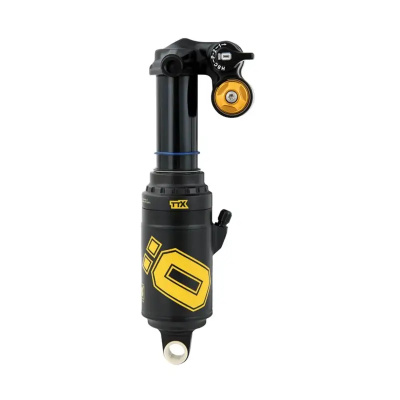
What sets Ohlins apart is their TTX (Twin Tube) damping technology - a system borrowed from motorsport that recirculates oil continuously, keeping cavitation out of the picture and damping response consistent from the first hit to the fiftieth. No fade. No vagueness mid-descent. Just a shock that does what you ask of it, every time.
The range covers coil and air options, metric and trunnion mounting, and a spread of spring rates that let you dial the setup precisely to your frame's kinematics. These aren't fit-and-forget units - they reward a bit of setup time. Get the base tune right, and you'll feel it immediately. We've pulled together the full Ohlins rear shock range here so you can compare models and find the best UK price in one place.
Prices and availability can change quickly. Delivery charges are not always included in listed prices.
Final price, stock status and delivery terms are set by retailer. We may receive a commission on purchases made.
Decoding the Ohlins Rear Shock Lineup
Three models form the core of the Ohlins MTB rear shock range, and choosing between them is mostly a question of discipline and how much adjustability you actually want. The TTX22M is the coil unit - the one the downhill and enduro race crowd gravitates towards. It uses a solid piston design inside the twin-tube circuit, runs on a steel coil spring, and is available in lightweight steel springs in 4 Nm/23 lbs increments, so you're not compromising with a spring rate that's merely close enough. Precise spring matching to your weight and frame makes a tangible difference to mid-stroke support, and Ohlins' incremental range makes that genuinely achievable.
The TTX1 Air suits trail bikes where a more linear feel and slightly simpler setup is the priority. It's a capable unit that brings TTX damping to riders who don't need the full coil setup. Step up to the TTX2 Air and you get a larger positive air chamber - better suited to aggressive enduro rigs where progressivity and support through the travel matter more. Both air models offer a meaningful upgrade over stock OEM shocks on mid-to-high-end trail bikes.
All three models are available in standard metric sizing and trunnion mount configurations, so compatibility with modern frames - including those with tight yoke clearances - is well covered. Check your frame's recommended shock eye-to-eye and stroke measurements before ordering; getting that wrong is an expensive mistake. If you're running a trunnion mount frame, confirm the specific hardware included with the shock.
Need replacement springs or mounting hardware for your setup? Head over to our Ohlins Shock Spares page to find the exact tune components for your frame. And if you're building a full Ohlins package, it's worth pairing with Ohlins suspension forks for a matched damping character front and rear.
The TTX Damping Circuit - What It Actually Does
Most MTB shocks use a monotube damper design. Ohlins' TTX (Twin Tube) technology works differently: oil recirculates between two concentric tubes rather than compressing against a sealed gas chamber alone. The practical upshot is that the shock stays primed and responsive throughout a long descent - no oil aeration, no cavitation, no moment where the damping suddenly feels vague because the fluid has been worked hard. On a place like the Cairngorms or a long enduro stage in the Brecon Beacons, that consistency is the whole point.
The solid piston design contributes to this too. It maintains a more stable oil flow path through the damping circuits, which means high-speed compression control stays predictable even when the trail turns properly rough. You're not fighting the shock - it's reading the ground and reacting before you've consciously processed the input.
Then there's the click adjustment quality. One click on an Ohlins shock genuinely changes something you can feel. That's not always true of budget dampers, where three or four clicks might produce a barely perceptible difference. With Ohlins, low-speed rebound and compression adjustments are distinct enough that you can fine-tune on the fly between stages without second-guessing whether anything changed. Compare that experience to dialling in a standard RockShox rear shock or a Fox rear shock and the feedback precision is a notable step up at this end of the market.
Running an Ohlins Shock Through a UK Winter
The spherical bearing mounts used on Ohlins shocks are a genuine engineering advantage. By allowing the shock to articulate slightly under load, they reduce side-loading on the shaft - that lateral stress that accelerates seal wear on standard eyelet bushings. Over a season of riding, that matters. Long-term, you get a more consistently smooth stroke and less shaft wear.
There's a caveat though. Spherical bearings don't like being packed with grit and left wet. After a muddy Welsh winter ride - the kind where you come back looking like you've been through a car wash backwards - those bearings need cleaning and greasing. It's a five-minute job if you stay on top of it; it's an expensive bearing replacement if you don't. Keep a small brush and some fresh grease in the garage and make it part of your post-ride routine through the mucky months.
Frame kinematics matter more with a shock this tuneable. Ohlins provide base tune recommendations, but a shock set up for one frame's leverage curve can feel noticeably wrong on another - even at the same rider weight. If you're fitting a TTX22M to a custom or unusual frame, it's worth mapping the leverage ratio properly before settling on a spring rate. Getting the base tune right isn't fiddly for its own sake; it's the difference between a shock that transforms your riding and one that just sits there being expensive.
For riders considering alternatives, Cane Creek rear shocks offer a similarly tuner-friendly approach and are worth a look if you want a coil option with a different damping character. That said, the TTX circuit's oil management approach is genuinely distinct from what Cane Creek or others offer at equivalent price points.
Ohlins Racing Rear Shocks FAQs
Are Ohlins shocks better than Fox?
Ohlins TTX damping offers more distinct, noticeable click adjustments and exceptional consistency on long, demanding descents - qualities that racers and technically-minded riders value highly. Fox has a broader model range and much wider service network across the UK, which matters if you want quick turnaround on servicing. Neither is objectively better; it depends on whether tuneability or convenience is your priority.
How do I set up my Ohlins rear shock?
Start with Ohlins' published base tunes for your specific frame - these account for the frame's kinematics and give you a sensible starting point for spring rate or air pressure. From there, adjust low-speed compression and rebound one click at a time. Because Ohlins damping clicks are genuinely distinct, you'll feel each change clearly, which makes the process straightforward rather than a guessing game.
What is the service interval for an Ohlins MTB shock?
Ohlins recommend a basic air can service every 50 hours of riding and a full damper rebuild every 100 hours or once a year, whichever comes first. If you're riding through a UK winter - grit, mud, standing water - lean towards the shorter end of those intervals. Keeping the spherical bearings clean and the seals fresh is the most cost-effective maintenance you can do.