
Dvo Suspension Forks
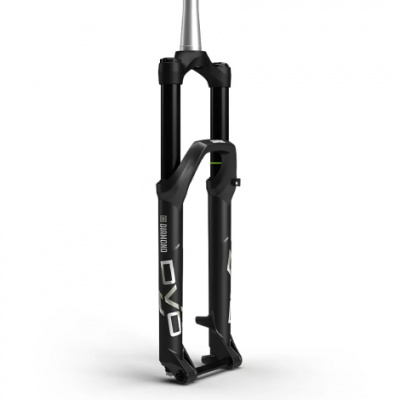
DVO Suspension Forks are built around a straightforward idea: you should be able to tune your suspension yourself, at home, without needing a degree in fluid dynamics or a specialist workshop. Most forks leave you choosing between a supple initial stroke and proper mid-stroke support - DVO decided that was a false choice. Their proprietary OTT (Off The Top) technology lets you adjust the negative spring independently, so you get both. Plush off the top, progressive through the middle, and composed at the bottom.
The range covers three clear families - the burly Onyx SC for enduro and e-MTB, the versatile Diamond for all-mountain and trail riding, and the lightweight Sapphire for riders chasing a more agile, downcountry feel. Each one shares DVO's commitment to genuine adjustability and straightforward home servicing, which matters more than most brands admit when you're pulling grit-caked lowers apart after a wet Welsh weekend.
If you've been running Fox or RockShox and wondered whether there's more tuning depth available without going full custom, this is where that conversation starts. Compare UK prices on DVO forks below.
Prices and availability can change quickly. Delivery charges are not always included in listed prices.
Final price, stock status and delivery terms are set by retailer. We may receive a commission on purchases made.
Decoding the DVO Suspension Forks Lineup
Three fork families. Meaningfully different, not just badge-swapped. Getting the right one comes down to stanchion diameter, travel range, and how hard you actually ride.
The Onyx SC runs 36mm or 38mm stanchions depending on spec, and it's the one you want if your riding involves long, committing descents, an e-MTB, or both. It's a substantial fork - engineered for sustained abuse rather than weight-weenie credentials. Travel options typically span 150mm to 180mm, and the chassis is stiff enough to handle the lateral forces that heavier bikes and aggressive riders generate. Think less Glentress flow trails, more Twrch or Ae Forest when the ground's rowdy.
The Diamond runs 35mm stanchions and sits in the all-mountain and trail bracket. It's the most versatile fork in the range - capable of 130mm to 160mm of travel, light enough not to drag the front end down on climbs, and stiff enough to stay composed on steeper pitches. Most riders building a capable 29er trail bike will find the Diamond covers the brief well. The D1 trim brings the full damper package: independent high and low speed compression adjustment alongside OTT, which gives you genuine, meaningful control rather than token dials. Lower trim levels use a simplified damper - still good, but with less granularity if you like to experiment with setup.
The Sapphire uses 34mm stanchions and targets the growing crowd who want aggressive geometry without the fork weight. Travel runs from around 100mm to 140mm. It's a fork for riders who prioritise snap and efficiency - cross-country riders who occasionally go proper off-piste rather than strict XC racers chasing podiums. The Sapphire shares DVO's core air spring philosophy, so the ride quality is recognisably from the same family, just tuned leaner.
The Tech Behind the Adjustability
OTT is the feature that tends to make DVO riders evangelical, and it's worth understanding properly. Standard air forks use the negative spring - a volume of air on the other side of the piston - to help the fork move freely at the start of the stroke. The problem is that negative spring volume is usually fixed, meaning if you raise your air pressure for better support, you also make the initial stroke stiffer. OTT adds an external adjuster that controls an independent negative coil spring. Turn it up, and the first 20 to 30mm of travel becomes noticeably more supple, even at higher air pressures. Your wheel tracks small roots and rocks rather than deflecting off them. It's the kind of difference you feel immediately on rough fire road descents before you even get to the technical bits.
Pair that with AVA (Advanced Volume Adjust) - DVO's token-based volume spacer system - and you've got genuine control over how the fork ramps up through the stroke. Add tokens to push the air spring harder in the final third, remove them for a more linear feel. Standard enough in concept, but DVO's implementation is clean and well-documented.
The D3 Damper is the performance heart of the premium trim levels. High speed compression handles big impacts - drops, compressions, square edges. Low speed compression controls fork dive under braking and body movement on rougher ground. Having both independently adjustable means you're not robbing Peter to pay Paul when you change one setting. The Top Loader compression circuit is perhaps the most practically useful feature for home mechanics: it allows you to remove and re-shim the compression circuit from the top of the fork leg without draining the damper oil. Changing the shim stack - which alters how the damper behaves fundamentally - becomes a garage job rather than a workshop visit. For UK riders who service their own bikes, that's a genuine, tangible advantage over forks where internals are more opaque.
If you're comparing DVO against Öhlins at a similar price point, the DVO argument is largely about home serviceability and external tuning access. Öhlins have their own strong case, but DVO's transparency around servicing is hard to match.
Running a DVO Fork in UK Conditions
A fork can be technically impressive and still frustrating to own in a UK winter. DVO have thought about this. The arch clearance on the Onyx SC and Diamond is generous - mud-caked tyres in Welsh or Scottish conditions won't pack up into the crown the way they can on tighter designs. Wiper seals are robust, designed to cope with the kind of persistent grit ingress that UK trails deliver from October through March. You'll still clean and service them, but they're not fragile.
DVO actively encourages home servicing. They publish detailed teardown videos and make their service documentation accessible - not locked behind dealer portals. Lower leg services on their forks are genuinely straightforward, which matters when you're doing it every few weeks through winter rather than once a year. Grease the bushings, replace the foam rings, fresh oil. Done. This culture around maintenance is consistent across the range, not just on premium builds.
One practical note: if you're building a new bike around a DVO fork, check axle and boost spacing compatibility early. The current range is predominantly boost spacing (110mm front), which aligns with most modern 29er and 27.5 trail frames, but it's worth confirming against your specific build before ordering.
To balance your front-end investment with matched rear performance, have a look at DVO Rear Shocks - running matched damping philosophy front and rear tends to make setup more intuitive, since you're working with consistent tuning logic across both ends of the bike.
Whether you're putting together a capable enduro rig or refreshing an ageing trail bike with a fork that gives you real control, DVO mountain bike forks represent a well-engineered, rider-focused option that competes seriously with the established names. The DVO Onyx vs Diamond decision will come down to how hard you ride and how much travel you actually need - both are strong. The DVO Sapphire fork fills a genuine gap for riders who want DVO's air spring quality in a lighter, shorter-travel package. And across all three, the tuning tools are there if you want to use them.
Dvo Suspension Forks FAQs
Are DVO forks any good?
Yes, genuinely. DVO forks are well regarded for ride quality, build robustness, and the depth of tuning available without needing specialist help. The OTT system gives you a level of small-bump sensitivity that most factory-set forks can't match at equivalent pressures, and the home-servicing culture means they stay in good condition with reasonable effort.
What is DVO OTT?
OTT stands for Off The Top. It's an externally adjustable negative coil spring that works independently from your main air spring pressure. Turning it up makes the first portion of the travel noticeably more supple - better small-bump tracking - without forcing you to drop your air pressure and lose mid-stroke support. It's the feature that makes DVO forks feel distinctively plush from the first pedal stroke.
How do I set up my DVO fork?
Start with air pressure set to give you roughly 15 - 20% sag - that's your baseline. From there, use the OTT dial to tune how the fork feels in that first 20 - 30mm of travel; more OTT gives a softer initial response. Then adjust rebound so the fork recovers quickly without feeling bouncy, and use the high and low speed compression dials to match how the fork handles big hits versus general trail chatter.