
Camelbak Frame Bags
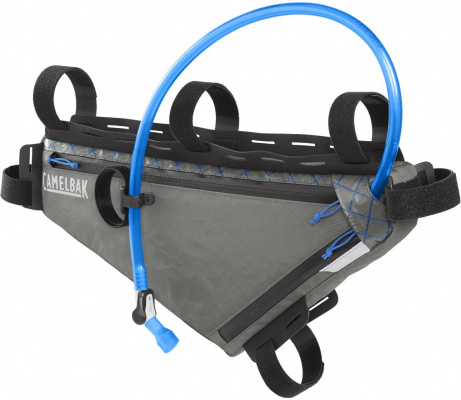
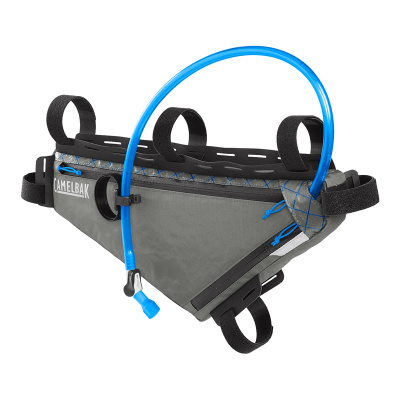
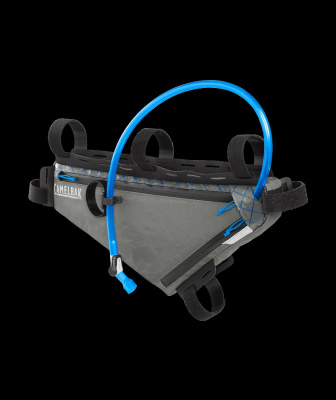
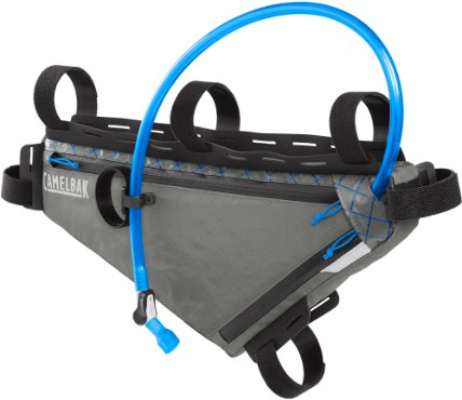
Camelbak frame bags do something most bikepacking luggage doesn't: they bring genuine hydration expertise into the frame triangle, so you're not just stuffing a dry bag between your tubes and hoping for the best. The M.U.L.E. frame packs are built with dedicated hose routing ports, meaning a 2L reservoir sits low on the bike where the weight actually helps handling rather than hanging off your back on a long day in the saddle.
Construction uses recycled ECOPAK sailcloth with a PFAS-free DWR coating - tough enough for Peak District grit and grimly persistent Welsh drizzle, without the environmental cost of older coatings. The adjustable hook-and-loop strap system works across a wide range of tube shapes, so whether you're running a slender gravel frame or a burlier hardtail, there's a reasonable chance of a secure, rattle-free fit.
Sizing splits into Small and Large options. The Small handles tools, spares, and a quick-stow flask. The Large is where the hydration bladder routing comes into its own. Neither size is the cheapest frame bag you'll find - Altura frame bags undercut on price - but the integrated reservoir compatibility and material quality justify the step up for anyone planning more than a day ride.
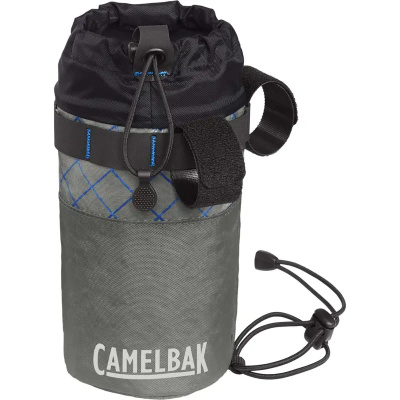
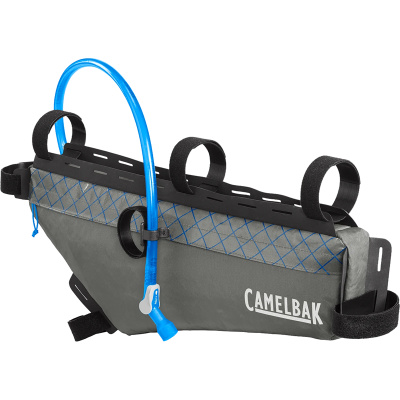
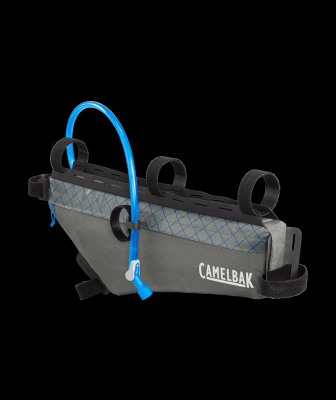
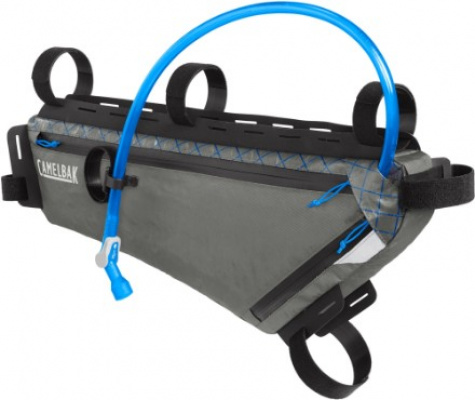
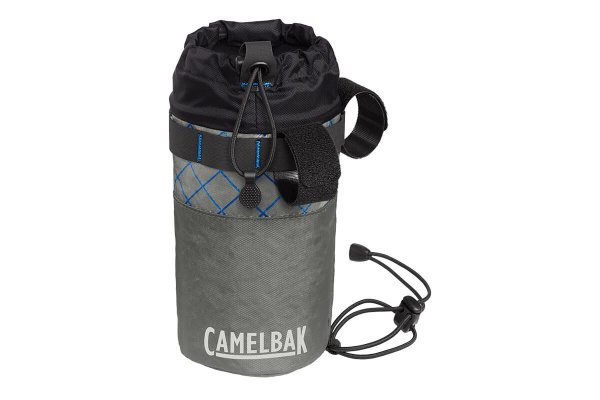
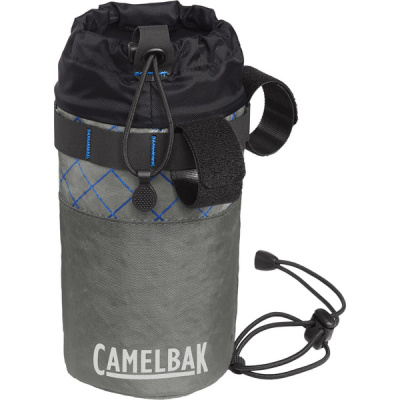
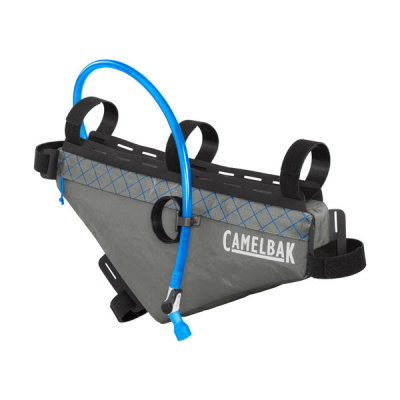
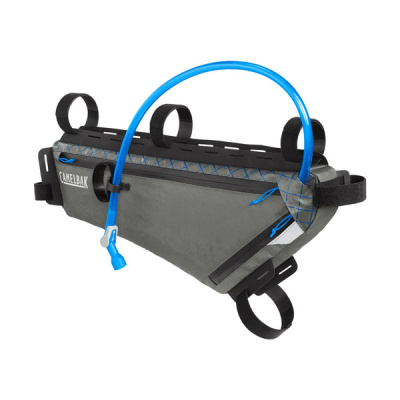
Prices and availability can change quickly. Delivery charges are not always included in listed prices.
Final price, stock status and delivery terms are set by retailer. We may receive a commission on purchases made.
Measuring Your Frame Triangle for a Proper Fit
Getting a Camelbak frame bag to sit flush and secure starts with three measurements: the inner length of your top tube, the inner length of your down tube, and the seat tube height from bottom bracket to where the top tube meets. These give you the usable triangle dimensions. Compare them against Camelbak's sizing chart before you buy - a bag that's too large will sag and foul your pedal stroke; one that's too small won't use the space efficiently and may not strap securely.
Full-suspension MTBs need extra attention. Suspension linkages cut into the lower portion of the front triangle, sometimes dramatically, and on some short-travel trail bikes you're left with a surprisingly narrow usable window. Measure the clearance carefully and check whether the bag will foul the linkage through the full travel range, not just at sag. Hardtails and gravel bikes are far more straightforward.
One thing worth doing before your first ride: apply helicopter tape or a quality frame protection film wherever the velcro straps contact the frame. UK riding means grit paste forms between the strap and the tube on almost every wet outing, and that abrasive slurry will work through paint or a carbon layup faster than you'd expect. Takes five minutes to sort before the bag goes on; much longer to repair the damage if you skip it. The adjustable hook-and-loop strap system on Camelbak bags grips well across different tube profiles, but that's no reason to skip the tape - the strap contact patch is where the wear happens regardless of how well it's fitted.
Breaking Down the M.U.L.E. Frame Pack Range
The Camelbak M.U.L.E. frame pack comes in two sizes, and they're not really interchangeable - they suit different riders with different priorities. The Small is the one to pick if you want a tidy tool and spares kit: multi-tool, tubes, tyre levers, a CO2 canister, and a Quick Stow flask all fit without the bag looking overstuffed. It keeps the frame triangle relatively open, which matters on smaller frame sizes where clearance is already tight.
The Large is a different proposition. It's built around the hydration bladder routing - specifically a 2L Crux reservoir - with hose routing ports that channel the drinking tube up and out of the bag cleanly. Water weight sits low and central on the bike rather than on your back, which genuinely changes the feel on longer climbs. If you're doing a multi-day bikepacking route or a big day out on the South Downs Way and you want to keep your back free, this is a strong reason to choose Camelbak over competitors who offer frame bags without bladder compatibility.
If you're building out a full bikepacking setup, the frame bag works best as part of a wider system. Camelbak bar bags and Camelbak saddle bags are designed to complement the frame packs without overlap, and pairing them keeps the weight distribution sensible. For riders who prefer a back-carried system or want additional capacity, Camelbak hydration packs are worth a look alongside the frame bag rather than instead of it.
How does the M.U.L.E. range sit against the wider market? Apidura frame bags are the benchmark for minimalist weight and precise fit options, particularly on road and gravel bikes. Ortlieb frame bags go harder on waterproofing with a welded construction. Camelbak's edge is the hydration integration - no other brand in this category makes the reservoir routing as clean or as central to the bag's design.
Keeping the Bag Running Through a UK Winter
ECOPAK sailcloth is genuinely abrasion-resistant material - it handles repeated contact with gritty seatstays and frame edges without pilling or degrading quickly. The DWR coating sheds rain and road spray well when it's in good condition. The weak point, as with most frame bags, is the zippers.
Water-resistant zippers rely on tight coil tolerances to keep moisture out, and grit is the enemy of those tolerances. After a muddy ride - think Lincolnshire bridleways in November or any Scottish trail in autumn - rinse the zipper teeth with clean water before the mud dries in. A stiff brush helps. Once the zipper is clean and dry, work a silicone-based zipper lubricant along the teeth and run the slider back and forth a few times. Do this regularly and the sliders stay smooth; skip it for a few rides and you'll be fighting a stiff, partially seized zip on a cold morning when you least want the faff.
Cleaning the bag itself needs a bit of care if you want the DWR coating to keep performing. Avoid detergents that strip water repellency - a gentle hand wash with lukewarm water is enough for the shell fabric. If the DWR starts to wet out (water soaking in rather than beading), a wash-in DWR re-proofer applied according to its instructions will restore it. Don't tumble dry. Reproofing once a season is realistic for UK winter riding.
For cleaning the hydration reservoir itself after use, Camelbak cleaning kits include the brushes and tablets designed specifically for the bladder and hose - worth keeping in the kit bag rather than improvising with washing-up liquid.
Camelbak Frame Bags FAQs
How do I know if a Camelbak frame bag will fit my bike?
Measure the inner dimensions of your front triangle - top tube length, down tube length, and seat tube height - then check those figures against Camelbak's sizing chart. On full-suspension bikes, also check that the bag won't contact suspension linkages through the full travel range. When in doubt, size down rather than up.
Can you fit a hydration bladder in a Camelbak frame bag?
Yes, but only the larger M.U.L.E. frame pack is designed for it. It houses a 2L Crux reservoir with built-in hose routing ports so you can drink on the move. The smaller size is a tools-and-spares bag - no bladder compatibility there.
Are Camelbak frame bags fully waterproof?
Not fully waterproof, but highly water-resistant. The ECOPAK sailcloth carries a DWR coating and the zippers are weather-resistant rather than welded-seam sealed. They'll handle UK rain and road spray without issue. For submersion or prolonged heavy downpours, wrap sensitive electronics in a small dry bag as an extra precaution.