
Camelbak Bar Bags
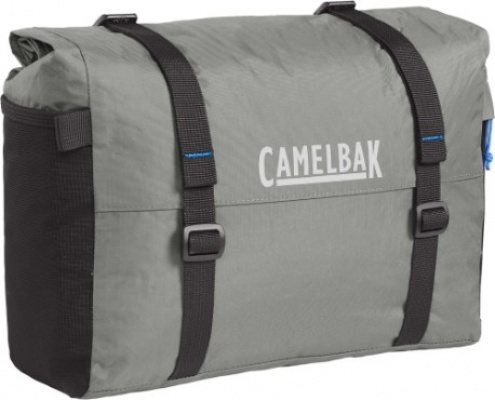
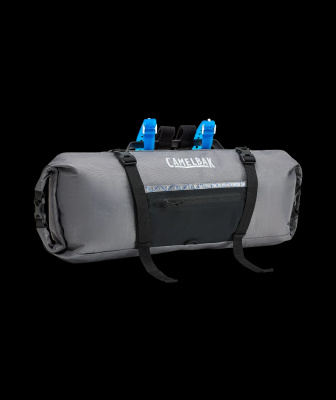
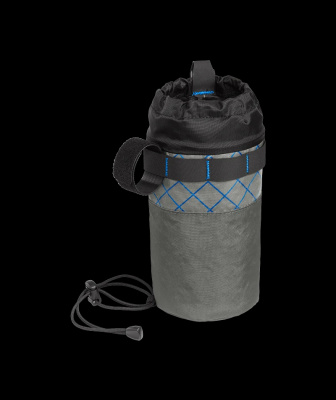
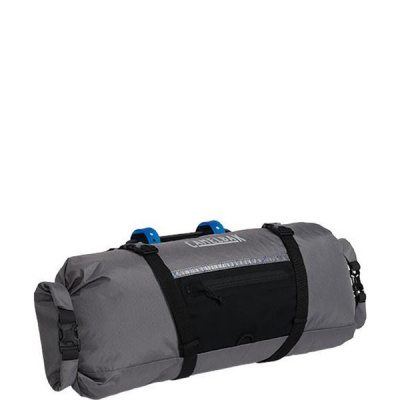
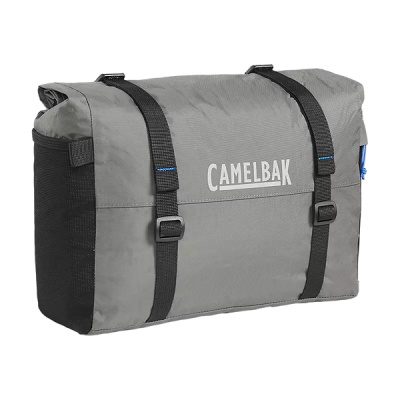
Camelbak Bar Bags bring the same no-nonsense reliability the brand built its name on to your front-end bikepacking setup. Most riders know Camelbak from hydration packs, but their handlebar bags carry that same utilitarian thinking: structured bodies that hold their shape under load, weather-resistant PU-coated zippers with oversized pulls you can actually grab with winter gloves on, and a strap mounting system designed to keep things locked down over rough stuff. No bounce, no sway, no creeping looseness after an hour on the Peak District grit roads.
The bags are built with a rigid internal structure that stops the bag sagging onto your front tyre - a genuinely important detail that cheaper options often miss. That rigidity also means your snacks, tools, or spare layer stay accessible rather than compressed into a shapeless lump. It's worth noting the range is made with recycled materials, so there's a sustainability angle if that factors into your buying decision.
Whether you're running a full bikepacking rig for a multi-day Scottish route or want reliable cockpit storage for a long gravel day out, Camelbak's handlebar bags are worth comparing. Check the UK prices below.
Prices and availability can change quickly. Delivery charges are not always included in listed prices.
Final price, stock status and delivery terms are set by retailer. We may receive a commission on purchases made.
Fitting Your Camelbak Bar Bag: Compatibility Worth Checking First
Before you buy, spend two minutes with a tape measure. Handlebar clearance between the bottom of your bar and the top of your front tyre is the critical number - you need enough room that the bag won't contact the tyre under heavy braking or when the fork compresses on a rough descent. On most road and gravel bikes this is fine, but on short-travel hardtails or bikes with minimal fork rake, it's worth confirming. If you're running a full bikepacking rig on something like a rigid 29er, you're almost certainly clear.
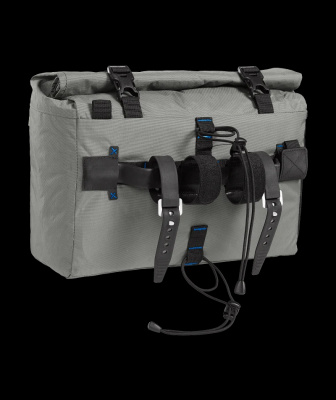
Cable routing compatibility is where riders catch themselves out most often. The anchor strap that loops around your head tube will sit close to where brake and gear housing exits the frame. Route your cables behind the bag rather than letting the bag pinch them against the bar or stem. Foam spacers - the kind that come bundled with most quality handlebar bags - help here by creating a small standoff between the strap and your housing, preventing any kinking that would make your braking feel like it's going through treacle. Check this carefully if you're on mechanical shifting with full-length housing runs.
Out-front GPS mounts are another consideration. A taller bar bag can obstruct your Garmin or Wahoo sightline, particularly on drop bars where the bag sits higher relative to your riding position. On drop bars generally, check that the bag body doesn't foul your STI lever throw - the bag should sit clear of the lever hoods when the bars are turned lock to lock. It sounds obvious, but it's the kind of thing you only discover halfway through the first ride if you skip the check.
If you're comparing dedicated bikepacking luggage brands, Apidura bar bags and Ortlieb bar bags both offer different approaches to the same mounting challenge - Ortlieb leans harder into waterproofing with a roll-top design, while Apidura prioritises a low-profile fit for aerodynamics.
The M.U.L.E. Series: What Camelbak Actually Offers
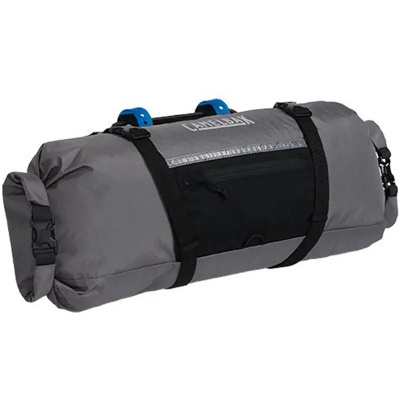
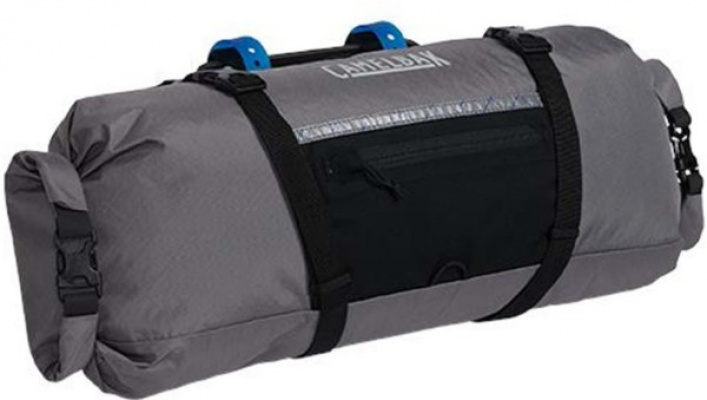
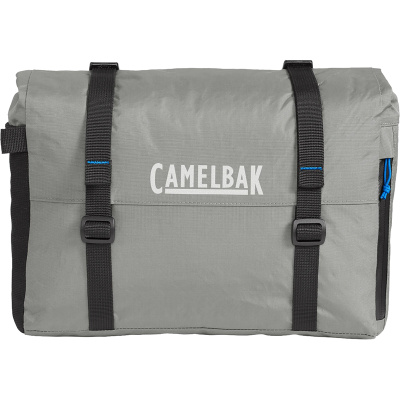
The Camelbak M.U.L.E. bar bag is the brand's main event in this category. Capacity sits in the range that suits multi-day use - enough volume for a waterproof layer, a day's worth of snacks, a small tool roll, and your phone - without pushing the front end of the bike into a handling compromise. The rigid internal structure is what separates it from soft-shell roll-top designs: even when partially loaded, the bag keeps its shape, which means the contents don't shift around and upset the weight distribution on technical sections.
External bungee tie-downs on the top panel are a practical touch. They're where you'd lash a lightweight gilet or arm warmers when the weather does what UK weather does - cold at the start, warm by 11am, threatening again by lunch. Quick access without unzipping the main compartment.
One practical note on building a complete rig: don't put all your weight at the front. A heavily loaded bar bag shifts your handling noticeably, making the front end feel sluggish in tight corners. Pair the bar bag with Camelbak frame bags and Camelbak saddle bags to distribute the load more evenly - frame bags in particular keep the centre of gravity low, which is where you want it. If you're doing longer self-supported routes and water weight is a concern, a Camelbak hydration pack keeps that load on your back rather than swinging off the front of the bike.
For riders who want to compare alternative takes on handlebar luggage, EVOC bar bags are worth a look for structured designs, and Brooks bar bags suit riders who want a more traditional aesthetic with practical functionality.
Keeping It Running in UK Conditions
Front-wheel spray in this country is relentless. On wet Welsh lanes or a muddy gravel track through the Chilterns, your front wheel is effectively a dirt cannon aimed directly at your bar bag and head tube. Camelbak's weather-resistant PU-coated zippers handle day-to-day drizzle well - the oversized pulls help when you're running winter gloves and need to get in quickly. That said, no zip is truly impervious to sustained grit ingress, and UK road grit is particularly fine and abrasive.
Before you even mount the bag, apply a strip of clear frame protection tape - helicopter tape - to your head tube where the anchor strap will sit. That strap under load, combined with grit trapped between the strap and the frame, will sand through paint over a season. Takes two minutes to apply and saves a nasty scuff on what might be a fairly expensive frame.
Zip maintenance is straightforward but worth doing every few rides during winter. Rinse the bag off with clean water, work the zipper back and forth to flush any grit, then apply a small amount of silicone zipper lubricant. Avoid WD-40 - it cleans initially but dries out the zip tape. A soft brush on the zip teeth before lubing makes a real difference to how smoothly the zip runs. The structured body design also means you can rinse the bag out without it collapsing, which is a small but useful practical advantage over soft-shell designs. If you're comparing the Camelbak waterproof handlebar bag approach against something like the Ortlieb range, Ortlieb's welded construction removes the zip question entirely - worth considering if you're regularly riding in truly heavy rain rather than standard UK drizzle.
Camelbak Bar Bags FAQs
Do handlebar bags mess up cables?
They can, if you're not careful with the setup. The strap system sits close to cable housing exits on most frames. Route your brake and gear cables behind the bag, not between the bag and the bars, and use foam spacers under the handlebar straps to stop the housing kinking. Done properly, there's no impact on shifting or braking performance.
How do you attach a Camelbak bar bag?
Camelbak bar bags use a multi-point strap system - straps loop over the handlebars and a separate anchor strap secures to the head tube. Get the head tube strap genuinely tight; a loose anchor is what causes bags to bounce and sway on rough ground. Check all straps again after the first 20 minutes of riding, as they tend to bed in slightly under load.
Are Camelbak bar bags waterproof?
Highly water-resistant rather than fully waterproof. The PU-coated weather-resistant zippers and DWR-treated fabric cope well with UK showers and spray. For sustained heavy rain or if you're carrying electronics, pack sensitive items inside a lightweight dry bag as a second layer of protection. It's a sensible habit regardless of which bar bag you're running.