
Camelbak Saddle Bags
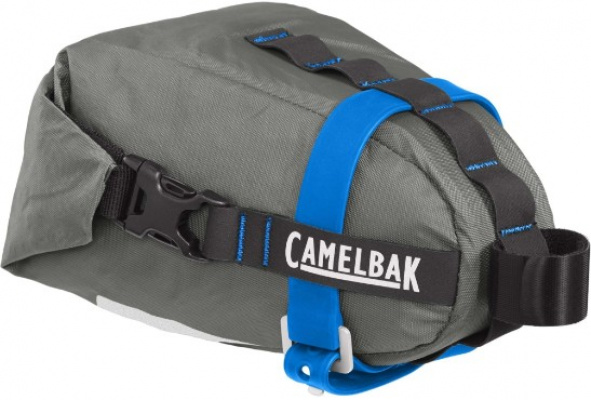
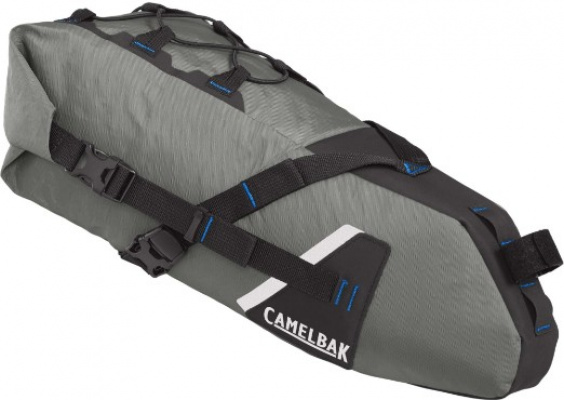
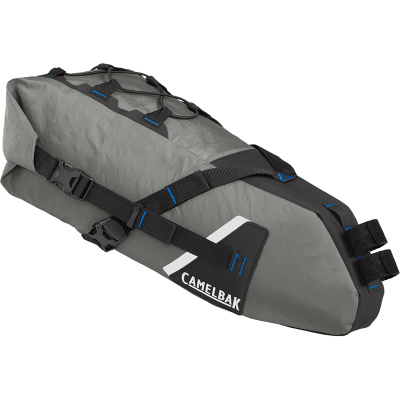
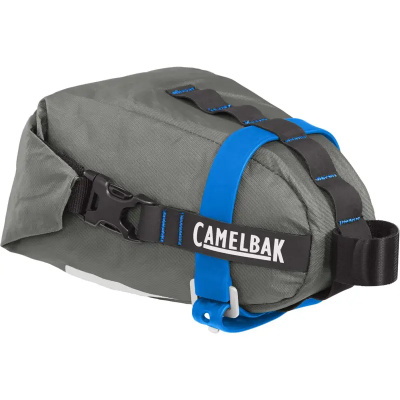
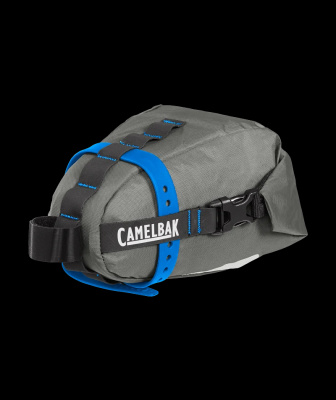
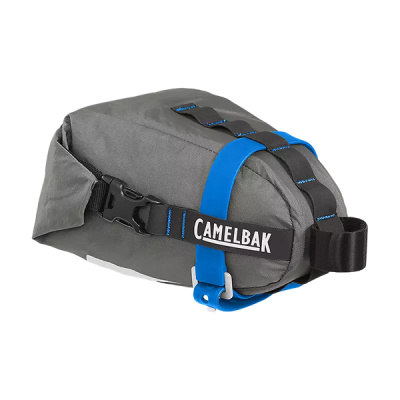
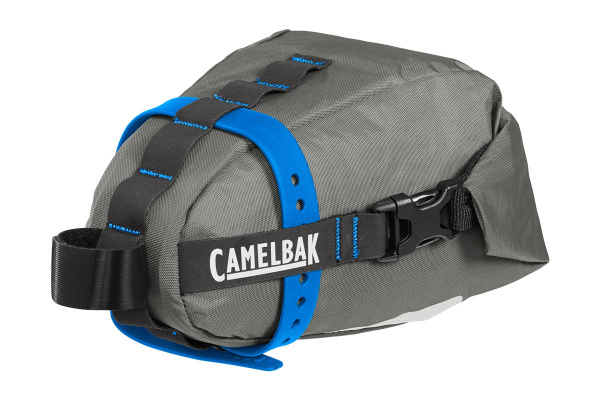
Camelbak saddle bags bring the same durability logic that made their hydration packs a fixture on bike racks worldwide to your seatpost. The M.U.L.E. series in particular has built a solid reputation for no-nonsense, weather-resistant storage - the kind that doesn't let you down on a wet February loop through the Peaks or a loaded gravel overnighter into the Dales. Construction centres on ECOPAK™ sailcloth, a recycled, high-tenacity fabric that resists rear-wheel spray without turning stiff in cold weather, paired with Hypalon reinforced mounting points that grip saddle rails without chewing into carbon. A quick-release bungee compression system keeps the bag snug against the saddle shell, cutting the pendulum sway that turns a loose seat bag into a handling liability on technical descents. Capacities run from slim tool rolls - just enough for a tube, levers, and a CO2 - up to multi-litre bikepacking packs that swallow a gilet, a snack stash, and a patch kit without complaint. If you're weighing up options, Apidura saddle bags and EVOC saddle bags sit in a similar bracket. Compare UK prices across the range below.
Prices and availability can change quickly. Delivery charges are not always included in listed prices.
Final price, stock status and delivery terms are set by retailer. We may receive a commission on purchases made.
Fitting a Camelbak Saddle Bag: Rails, Straps, and Dropper Posts
Mounting is straightforward on most setups, but the details matter. The hook-and-loop seatpost strap and saddle rail straps are cut wide enough to interface cleanly with standard 7×7 mm and 7×9 mm rail profiles - aluminium and carbon alike. Wrap the rail straps snugly but not aggressively; over-tightening on carbon rails concentrates load at the contact point, so check for creasing after your first ride and back off if needed.
Dropper post compatibility is the question we get asked most, and the honest answer is: it depends on the bag size and your specific post. Smaller tool rolls sit high enough that they clear the wiper seal entirely on most 125 - 150 mm travel posts. Larger M.U.L.E. Saddle Pack variants need more thought. You want at least 100 - 120 mm of exposed stanchion above the clamp collar when the post is fully extended, so the bag body isn't resting against the lower tube or pressing on the seal. Drop the post on your bike, measure the gap, then check the bag's listed drop from the saddle shell. Get it wrong and you're either scratching the stanchion finish or, worse, compromising the wiper seal - a repair that costs far more than a careful fit check in the first place.
Full-suspension riders should also confirm tyre clearance at full bottom-out. With 150 mm+ travel bikes, the rear wheel arcs up significantly, and a bag sitting low under the saddle can clip the tyre on square-edge hits. Most riders find that positioning the bag slightly forward on the rails - rather than hanging it as far back as the straps allow - adds useful clearance without affecting balance.
M.U.L.E. Packs vs. Tool Rolls: Picking the Right Size
Camelbak keeps the range readable. At the compact end, the tool rolls are stripped back by design - a single main compartment sized for a folded inner tube, a mini multi-tool, a couple of tyre levers, and a CO2 head. No frills, low weight, and the profile stays tight enough that it doesn't wag around on rough ground. If your pockets handle the rest, this is all you need for a road or XC day ride.
Step up to the larger M.U.L.E. Saddle Pack options - the 1 L through to the heftier bikepacking variants - and the spec sheet changes noticeably. ECOPAK™ fabric replaces standard nylon across the main body, bringing genuine weather resistance without the weight penalty of heavier coated materials. The roll-top closure keeps grit and water out far more reliably than a zip when you're spraying through standing water. External bungee compression lets you strap a lightweight gilet or arm warmers to the outside when you peel them off mid-ride, rather than cramming them inside and blowing the roll-top seal.
If you're building out a full luggage system for a gravel overnighter or a bikepacking route like the South Downs Way, the saddle bag pairs logically with a Camelbak frame bag and a Camelbak bar bag for a cohesive setup that shares the load across the bike rather than hanging it all off the back. Alternatively, if storage is covered but hydration isn't, Camelbak hydration packs slot in neatly alongside any of the seat bags. Riders who want a lighter, more minimalist approach to seat storage might also look at Lezyne saddle bags or Carradice saddle bags for comparison.
Keeping It Sorted Through a UK Winter
British winters are hard on seat bags in ways that don't always show up immediately. Rear-wheel spray carries fine silica grit - particularly on chalk lanes in the South Downs or gritstone trails in the Dark Peak - and it works its way into zip coils, hook-and-loop closures, and strap buckles over the course of a few months. Zips are the first casualty; the PU coated seams and roll-top closure on the larger M.U.L.E. packs sidestep this problem neatly, but the tool rolls use a conventional zip, so keep an eye on it and work a drop of dry lube into the coil at the start of each winter season.
The Hypalon strap material grips well when clean, but liquid mud - the kind you pick up on bridleway crossings after a week of rain - reduces hook-and-loop adhesion noticeably over a long ride. After a muddy session, wash the straps under warm water with a soft brush and mild soap, working the hook-and-loop faces gently to clear embedded grit. Let them dry fully before folding them together. Don't go near them with a pressure washer - the DWR coating on the main body doesn't survive it, and once that's gone the fabric starts absorbing water rather than shedding it. The weather-resistant finish is durable, but it's not indestructible.
If you want to refresh the DWR treatment after a full season, a low-heat tumble dry or a light application of a spray-on re-proofer after washing restores water beading effectively. It's the same process you'd use on a hardshell jacket, and it takes ten minutes. Use the Camelbak cleaning kit for routine interior maintenance on any of the larger packs - it's the right tool for the job rather than improvising with bottle brushes.
Camelbak Saddle Bags FAQs
Are Camelbak saddle bags waterproof?
They're highly water-resistant rather than fully waterproof. ECOPAK™ fabric and DWR coatings handle sustained rear-wheel spray and typical UK downpours well, but they're not submersible. If you're carrying a GPS or a phone in the bag, slip it into a small dry bag inside - cheap insurance on a Scottish winter ride.
Will a Camelbak saddle bag fit a dropper post?
Yes, with caveats. Compact tool rolls clear most dropper posts without issue. Larger M.U.L.E. saddle packs need at least 100 - 120 mm of exposed stanchion above the clamp collar when the post is fully extended. Strap placement matters too - keep straps away from the wiper seal to avoid wear or interference with post movement.
What can you fit in a Camelbak M.U.L.E. saddle bag?
The 1 L version fits a spare inner tube, a multi-tool, two tyre levers, and a CO2 inflator comfortably. Larger bikepacking variants have room for a compressible mid-layer, a lightweight bivy shelter, and trail snacks alongside the toolkit. The bungee exterior lets you lash on a wet gilet without opening the main compartment.