
Assos Skinsuits
Assos skinsuits exist at the sharp end of cycling performance - one-piece constructions where every panel, every seam, and every gram of fabric has been interrogated for drag. If you're chasing a personal best on a local 10-mile TT or digging deep in a summer criterium, these are the suits that WorldTour riders trust when the clock is running. Assos has spent decades refining what a race suit should do, and the result is a range that pairs extreme aerodynamic efficiency with the kind of chamois comfort - built around the legendary S9 insert - that lets you stay in the tuck without fidgeting. The Type.112 Dual fabric wicks moisture fast and keeps air moving when intensity climbs, which matters on a humid August crit circuit. racingFit geometry means the cut is dialled for an aggressive riding position, not for standing around signing in. And A-Lock Engineering keeps the chamois anchored through hard efforts, so it doesn't creep or bunch mid-race. Whether you're comparing Assos against Castelli skinsuits or simply deciding which Assos model fits your racing calendar, this page will guide you through the range.
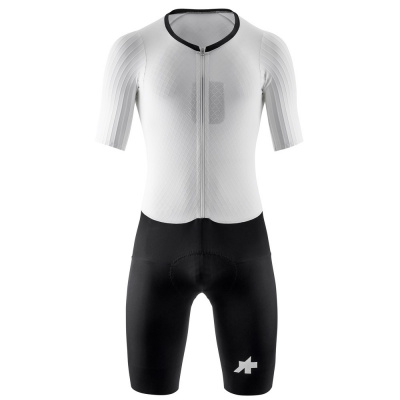
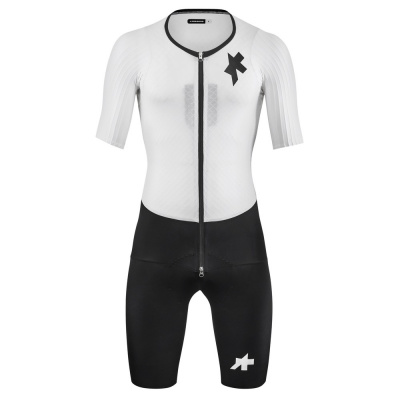
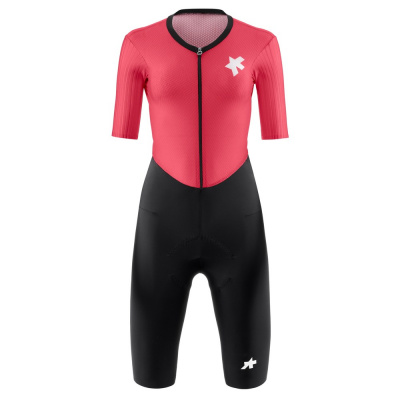
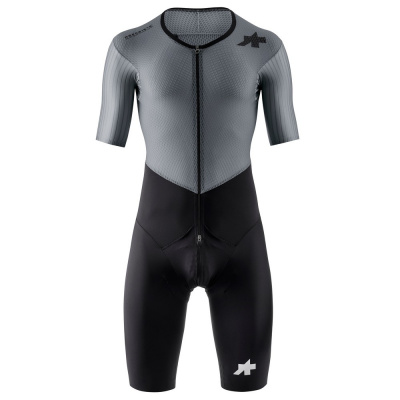
Prices and availability can change quickly. Delivery charges are not always included in listed prices.
Final price, stock status and delivery terms are set by retailer. We may receive a commission on purchases made.
Fabric Tech and Aerodynamic Performance
The Type.112 Dual fabric is the backbone of Assos' aero suit range. It's a dual-density textile - smoother on the outside to reduce surface drag, with a moisture-transport layer on the inside that pulls sweat away from the skin quickly. In a summer criterium where intensity rarely dips, that breathability isn't a luxury; it's what keeps your power numbers from falling off a cliff in the final laps. Wind-tunnel testing shapes how each fabric zone is positioned, with higher-drag areas on the arms and thighs treated differently to panels over the torso where airflow behaviour changes.
Raw-cut sleeves and legs are a detail worth understanding. Standard hems create a lip at the fabric edge - a tiny but measurable disruption to airflow as air transitions off the suit and onto exposed skin. Raw-cut edges remove that transition point entirely, keeping things smooth across the arm and leg. It's a small thing individually, but in a sport where people spend hundreds on marginal aero gains, it's the kind of detail that justifies the Assos approach. The one-piece construction also eliminates the gap between jersey and shorts that can act like a sail in a crosswind - relevant on the kind of exposed dual-carriageway TT courses common across the UK.
If you're weighing up alternatives, Bioracer skinsuits and Pas Normal Studios skinsuits offer strong aero credentials too, but Assos' chamois integration and fabric specificity are a genuine differentiator at this level.
How the Assos Fit Actually Works: Road vs TT Suits
Put an Assos skinsuit on in the car park and it will feel wrong. The shoulders pull, the legs feel short, and the whole thing seems a size too small. That's not a fit problem - that's racingFit working as intended. The cut is built around the position you hold on the bike: torso angled forward, hips rotated, arms reaching to the bars. Stand upright and you're fighting the geometry. Drop into your tuck and everything clicks into alignment, the fabric goes flap-free, and the suit does exactly what it's supposed to.
So how tight should an Assos skinsuit be? Tight enough that it pulls slightly across the shoulders when you're standing. If it feels comfortable in the car park, it's probably too big for serious racing. Size down if you're between sizes and your priority is aerodynamic performance over all-day comfort.
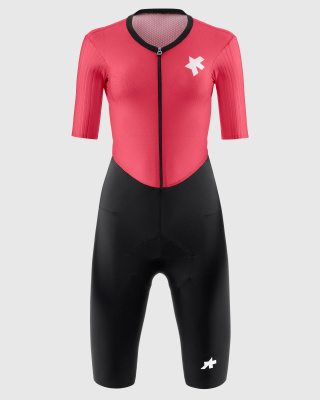
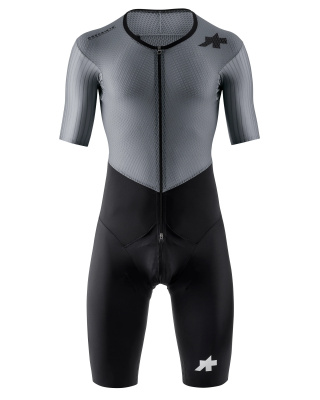
Within the range, there's a meaningful split between road racing suits and pure TT suits. The Equipe RS Le Houdini is the road-specific option - it carries rear pockets for gels and a gilet, and the fabric blend accommodates the dynamic movements of criteriums and road races where you're sprinting, climbing, and changing position constantly. A Chrono or TT-specific suit goes the other direction: no pockets, smoother compressive fabrics optimised for straight-line speed, and a cut that's even more extreme in its positional bias. If your racing is exclusively time trials, the Chrono suits earn their keep. If you're doing crits and road races with occasional TTs, the Le Houdini is the more versatile choice.
The S9 chamois insert sits within both suit types, offering a density profile built for seated, high-torque efforts rather than endurance comfort. And A-Lock Engineering - a structural system that anchors the chamois to the suit body - stops the pad migrating during hard efforts, which is a real problem in cheaper one-piece suits without it.
Adapting Your Skinsuit for UK Racing Conditions
Early-morning TTs in the UK are a specific kind of challenge. British Summer Time being what it is, you might be rolling down a dual carriageway at 6am in 10°C with damp air and a stiff crosswind. A skinsuit alone won't be enough. Pairing your suit with a lightweight Assos base layer underneath adds core warmth without meaningful aerodynamic bulk - a thin, close-fitting mesh layer moves sweat away from the skin and keeps your temperature stable through the warm-up and into the effort. Arm warmers are another option for events that start cold and warm up mid-ride, though they introduce a small aero penalty at the transition point.
For foot coverage, Assos overshoes keep the aero line clean from ankle to shoe, and Assos socks in the right cut height avoid any gap between leg and shoe that disrupts airflow. These aren't vanity items - on an exposed course, every flapping edge costs time.
Garment care matters more with a skinsuit than most cycling kit. The elastane content that gives racingFit its compression degrades with harsh detergents and heat. Using Assos Active Wear Cleanser from their cleaning kit preserves the fabric's structure and keeps the chamois pad in working condition for longer. Cold wash, no tumble dryer, and hang dry - standard elastane care, but worth being strict about with a suit at this price point. Apply Assos Chamois Cream before any seated high-intensity effort; the S9 insert is shaped for performance rather than long-ride forgiveness, and the cream reduces friction during those sustained power outputs where you're not shifting position much.
If the Assos range sits above your current budget, Endura skinsuits offer a solid British-made alternative with strong wind-protection credentials for UK conditions.
Frequently Asked Questions
How tight should an Assos skinsuit be?
Tighter than feels comfortable standing up. The racingFit cut is built for the position you hold on the bike - if it feels fine in the changing room, it's likely a size too large. Expect the shoulders to pull slightly when upright; once you're tucked over the bars, the suit should feel locked in and completely flap-free. If you're between sizes and racing is the priority, go smaller.
Do you wear a base layer under an Assos skinsuit?
Yes, particularly for early-morning UK time trials where temperatures can be single figures even in summer. A lightweight, close-fitting base layer regulates core temperature and moves moisture away from the skin without adding meaningful drag. Keep it thin and snug - a bulky base layer will bunch under the suit and create pressure points. The Assos base layer range is cut to work with their suits specifically.
What's the difference between Assos road suits and TT suits?
Road suits like the Equipe RS Le Houdini include rear pockets and use fabrics that perform across a range of intensities and positions - useful in criteriums where you're sprinting, climbing, and manoeuvring. Pure TT suits drop the pockets entirely and use smoother, more compressive textiles optimised for sustained straight-line speed. If your racing is mixed, the road suit is more practical. If it's purely against the clock, the Chrono suits are more focused.
Assos Skinsuits FAQs
How tight should an Assos skinsuit be?
Tighter than feels natural when you're standing up. The racingFit cut is built around your position on the bike, so the shoulders will pull and the legs will feel short until you're tucked over the bars. If it feels comfortable in the car park, size down. Between sizes and racing seriously? Go smaller.
Do you wear a base layer under an Assos skinsuit?
Yes - especially for early-morning UK TTs where it can be cold even in July. A thin, close-fitting base layer keeps your core temperature stable and moves sweat away from the skin without adding aerodynamic drag. Keep it snug and lightweight; anything bulky will create pressure points under the suit.
What is the difference between Assos road suits and TT suits?
Road suits like the Equipe RS Le Houdini carry rear pockets and suit the dynamic demands of crits and road races. TT-specific Chrono suits drop pockets entirely and use smoother, more compressive fabrics for straight-line speed. Mixed racing calendar? Road suit. Clock-only events? Go Chrono.