
Assos Socks
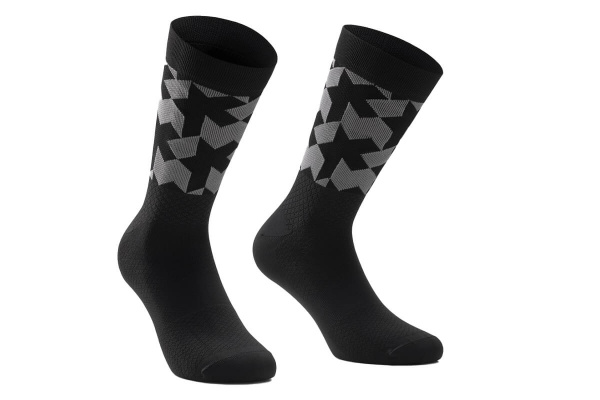
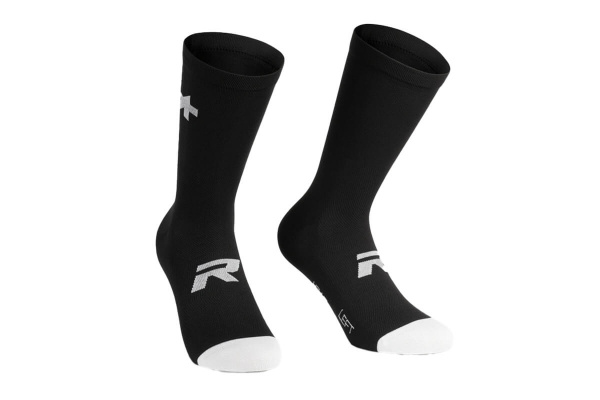
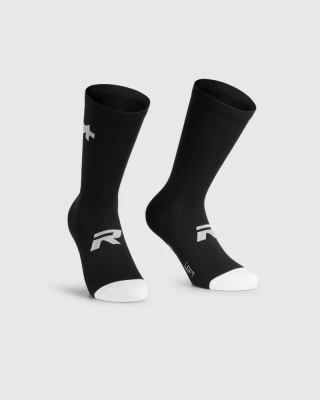
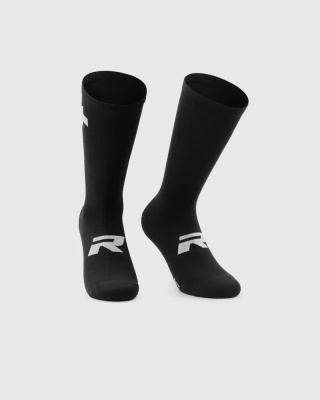
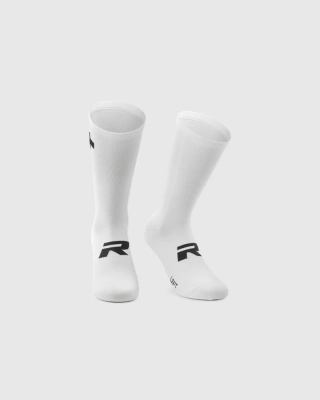
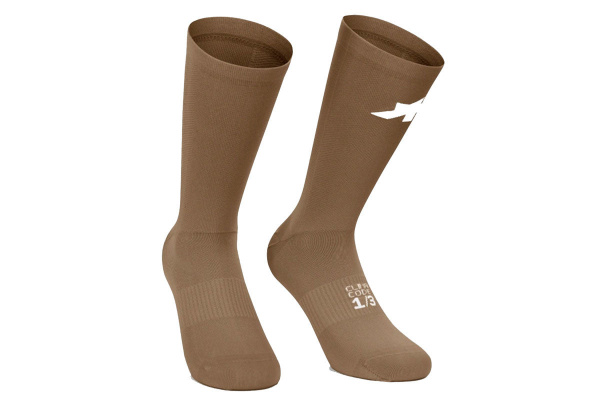
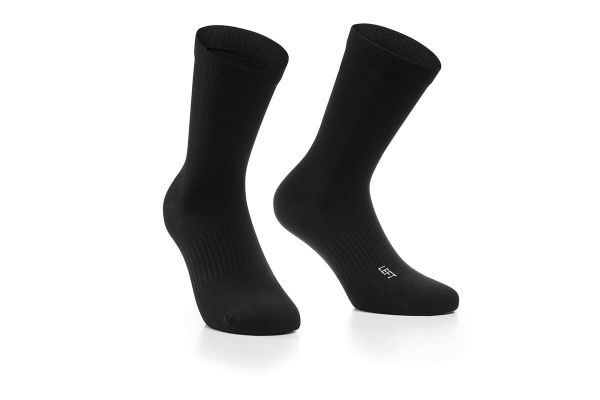
Assos cycling socks get the same obsessive engineering treatment as the brand's celebrated bib shorts - because Assos has always argued that a sock is a critical contact point, not an afterthought. Every pair is built around seamless construction that eliminates the pressure ridges and hot spots you'll know from cheaper options, particularly brutal inside stiff carbon-soled shoes on a long summer sportive. Proprietary hydrogen yarn does the heavy lifting in warmer months: it's ultra-soft, moves sweat away fast, and keeps the microclimate inside your shoe from turning hostile. Then there's the ribbed arch support that delivers targeted compression without cutting off circulation - the difference between a foot that feels locked in and one that's just constricted. The whole range is organised by Assos's climaCode system, a straightforward 1/3 to 3/3 scale that maps each sock to summer, shoulder season, or deep winter use. That structure makes picking the right pair genuinely simple. For UK riders dealing with August humidity one week and October drizzle the next, having a clear framework matters. From the race-day Equipe RS to the long-haul Mille GT and the insulated Ultraz winter blends, there's a considered option for every month of the British riding calendar.
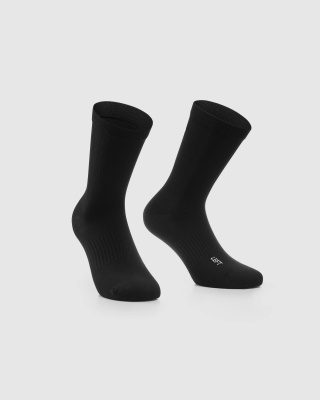
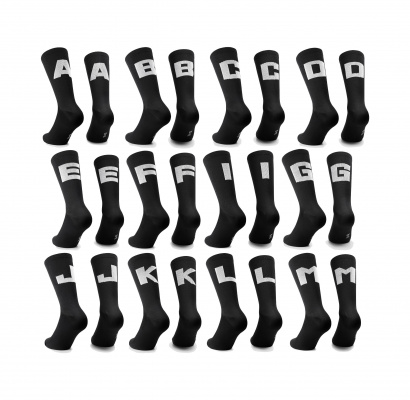
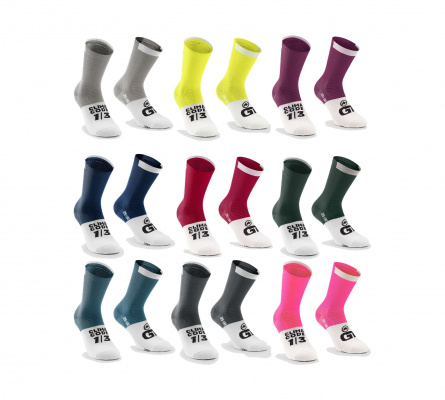
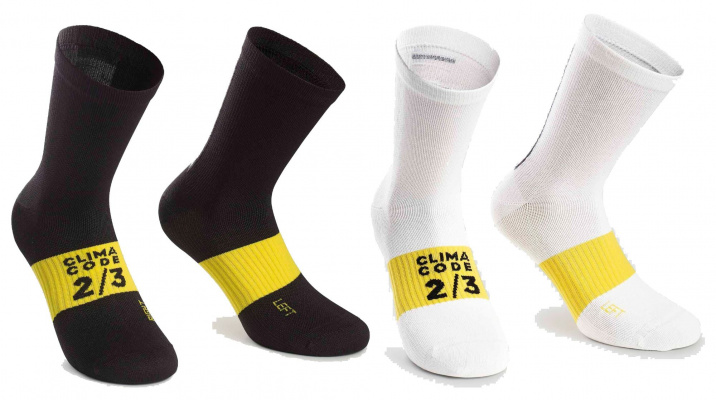
Prices and availability can change quickly. Delivery charges are not always included in listed prices.
Final price, stock status and delivery terms are set by retailer. We may receive a commission on purchases made.
Fabric Tech and the climaCode Weather System
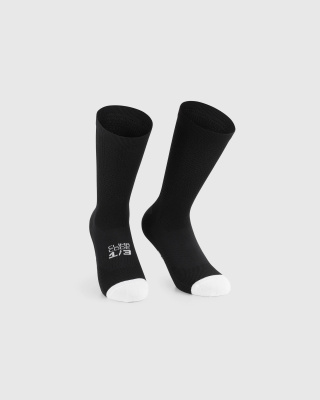
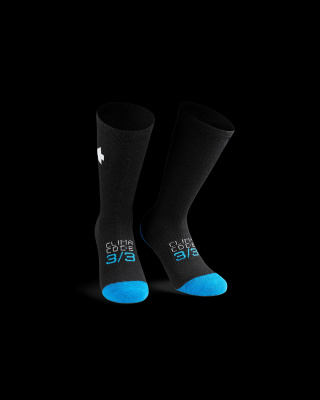
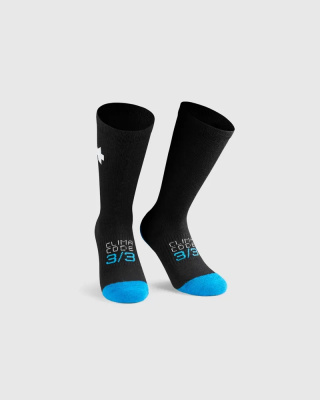
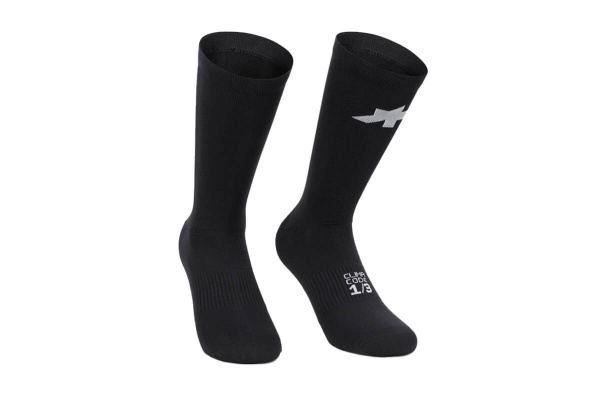
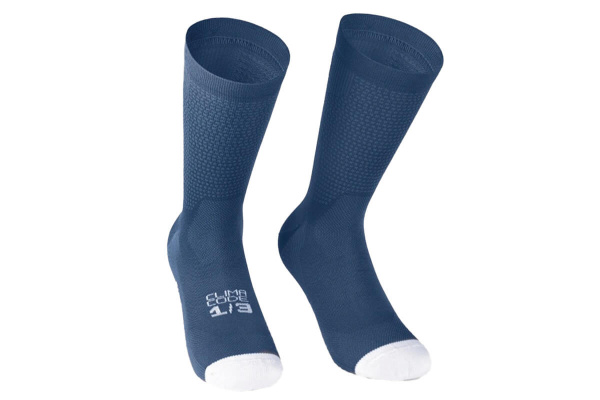
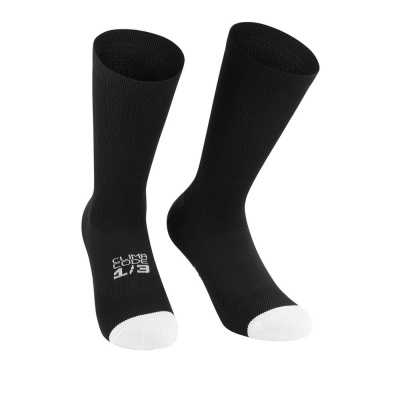
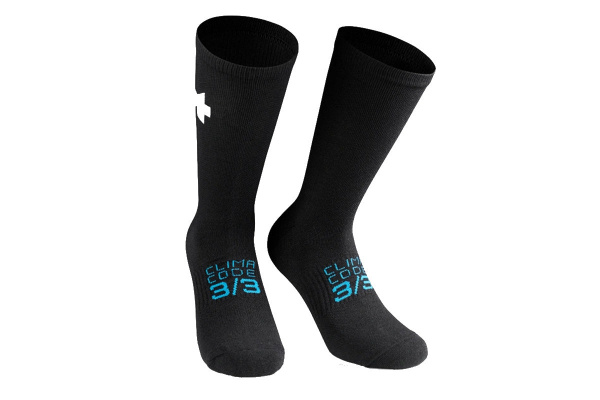
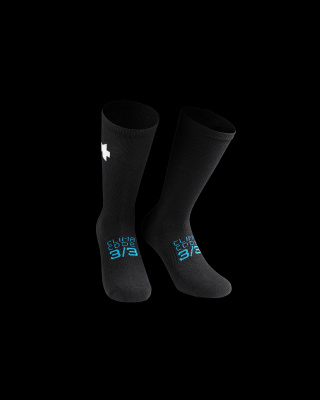
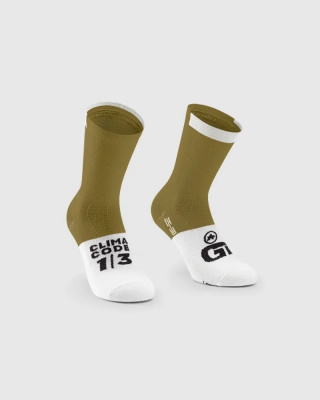
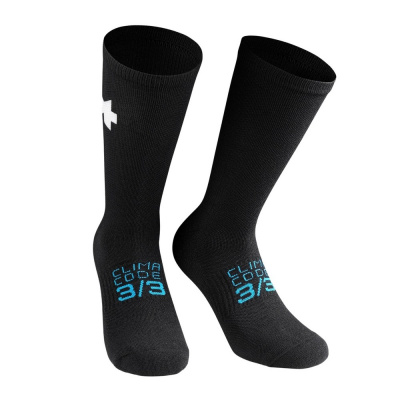
The climaCode system is the clearest way into the Assos range. Think of it as a dial: 1/3 is pure summer, 2/3 covers the unpredictable spring and autumn shoulder months, and 3/3 takes you through deep winter. Each rating reflects a genuine change in fabric construction, not just a marketing label.
In the 1/3 summer socks, hydrogen yarn is the core material. It's engineered to be highly breathable and rapid-wicking - on a humid August ride through the South Downs, where shoe ventilation is working hard to keep up, hydrogen yarn pulls moisture through the sock structure quickly enough to prevent the hot, damp build-up that causes blisters. Seamless construction reinforces this: without raised seams pressing into your foot, friction stays low even over four or five hours in the saddle.
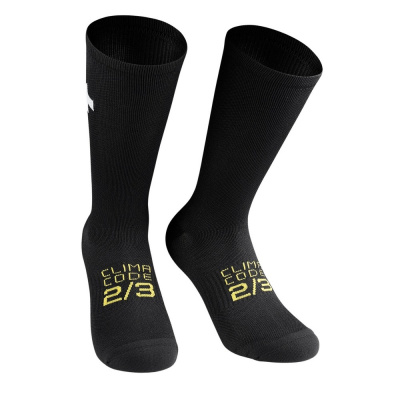
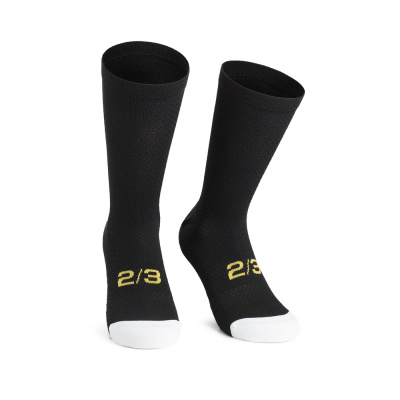
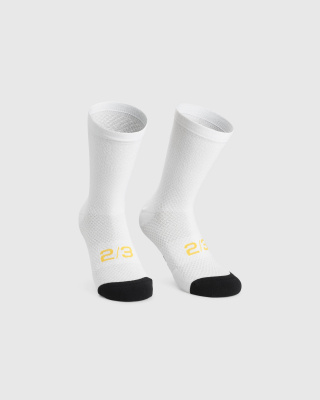
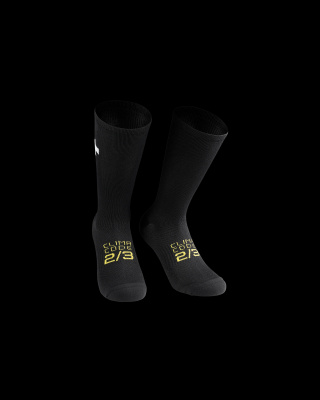
The 2/3 spring and autumn socks add a moderate degree of insulation and wind resistance while keeping enough breathability for those days where the temperature swings ten degrees between your first climb and your café stop. If you're riding the Peak District in October, you'll know exactly the conditions these are designed for.
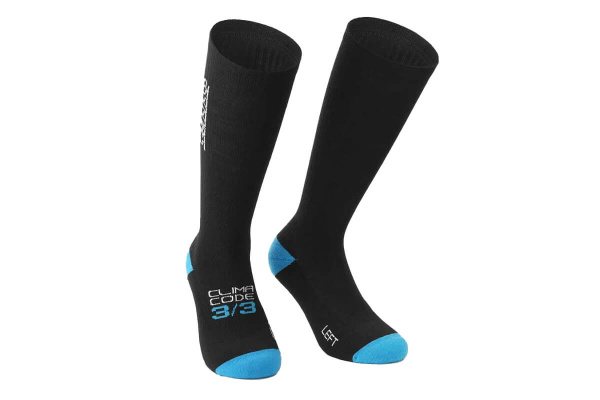
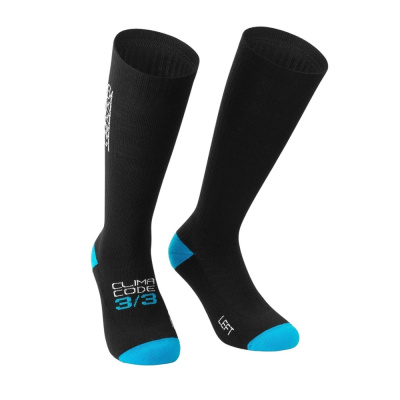
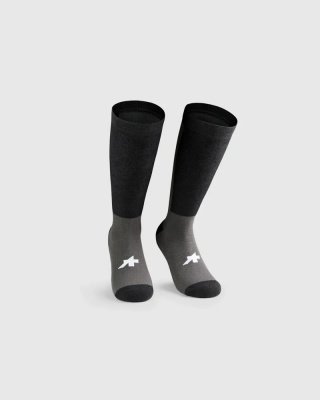
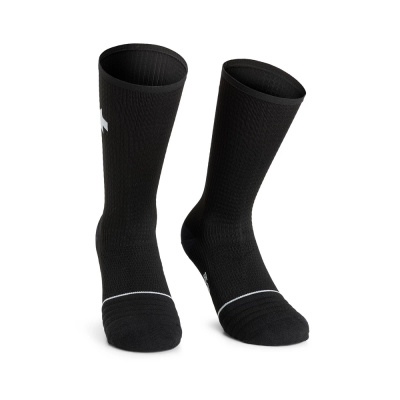
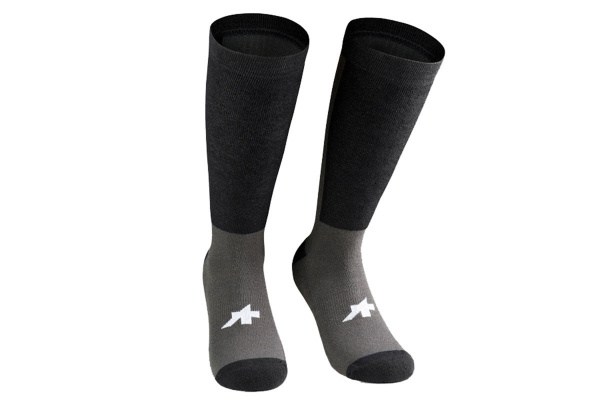
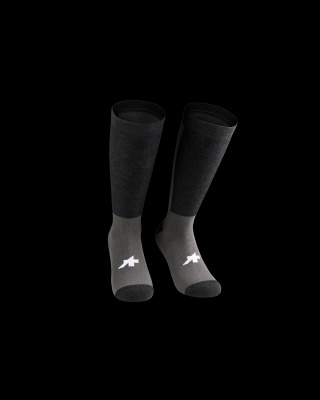
At the cold end, the Ultraz range uses a twin-deck construction with a merino wool blend. Merino traps a thin layer of warm air against the skin without the bulk that compresses your foot inside a cycling shoe - that compression is what cuts off circulation and actually makes your feet colder. The Ultraz construction threads the needle: genuine warmth, preserved fit. For Scottish winter riding or exposed Welsh valleys in January, that balance is worth having. Pair the 2/3 socks with Assos overshoes when the forecast turns wet and you've got a layering combination that handles most of what a UK winter throws at you without needing to swap to the full Ultraz option.
Range Breakdown: Mille GT Against Equipe RS
Two names come up most often in the Assos sock range: Mille GT and Equipe RS. They share the same seamless construction and hydrogen yarn DNA, but they're aimed at noticeably different riders.
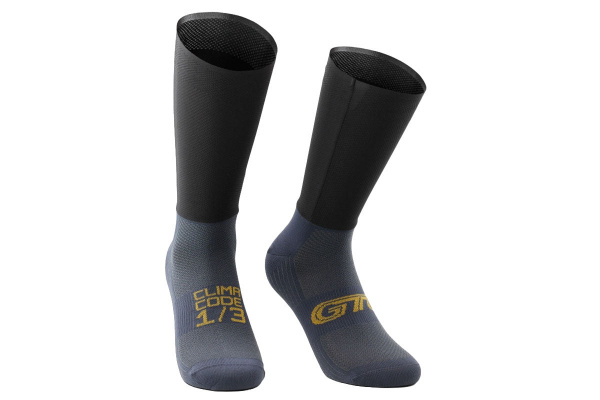
The Assos Mille GT socks are built for endurance. The compression is present - you'll feel the ribbed arch support and the secure hold - but it's calibrated for all-day comfort rather than maximum squeeze. If your typical ride is a four-hour audax, a long sportive, or a steady Sunday road loop, the Mille GT gives you the performance fabric without the fatigue that can come from very high compression over long durations. The fit is described as a second-skin rather than a vice grip.
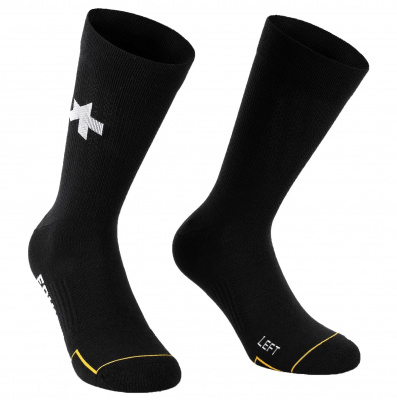
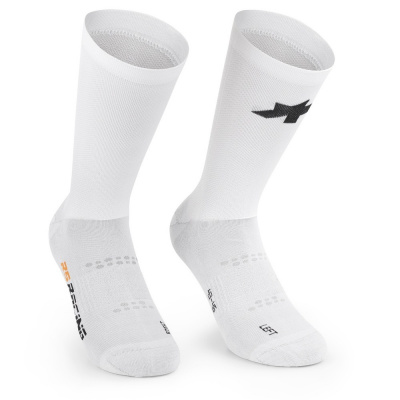
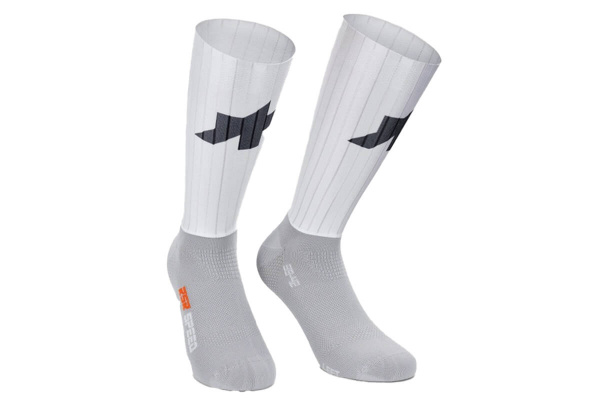
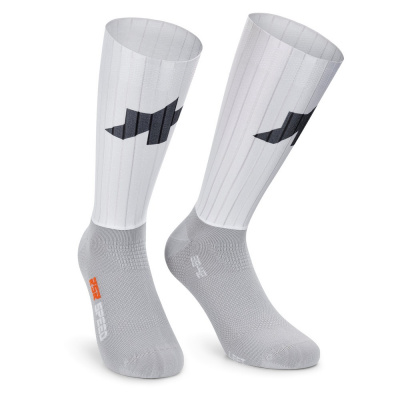
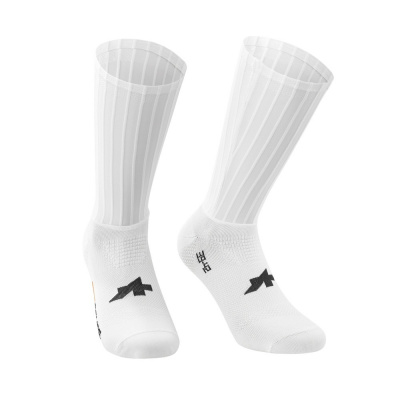
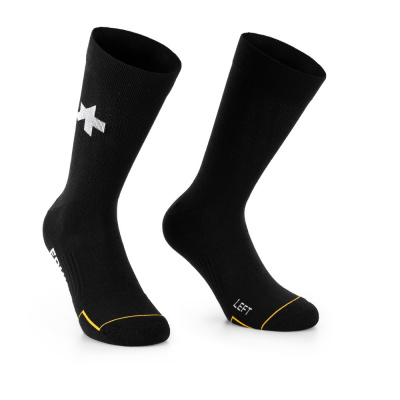
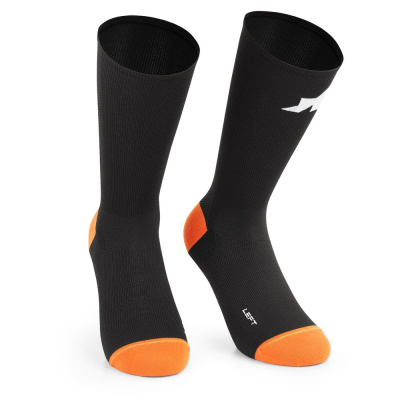
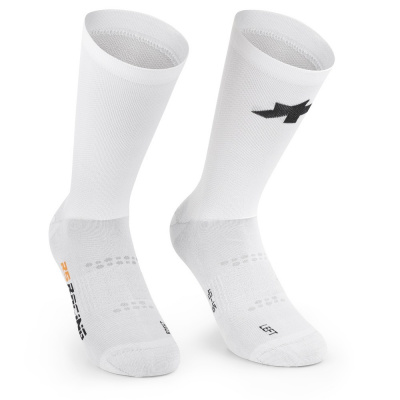
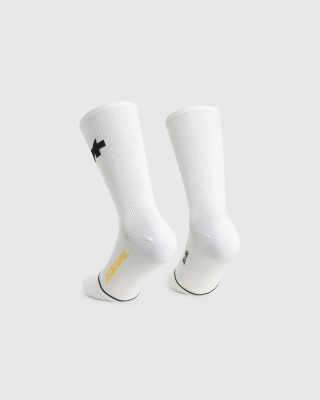
The Assos Equipe RS socks sit at the performance end. The compressive hold is tighter, the materials lean more aerodynamic, and the whole sock is optimised for race-pace efforts where every detail is dialled. Cuff height on the Equipe RS also tends to run taller - the modern tall cuff that's become standard in the peloton. That height matters aerodynamically at speed, but it's also a fit preference: some riders simply feel more secure with more sock coverage above the shoe.
Sizing is worth paying attention to across both lines. Assos socks run true to size, but if you're on the border between two sizes, go smaller. The ribbed arch support zone needs to align with your foot's arch properly to do its job - if the sock is slightly long, that panel shifts forward and you lose the targeted compression it's designed to deliver. It's a minor detail, but it's the kind of thing that separates a sock that works from one that just sits there.
For riders who want a comparable but different approach to fit and compression, Castelli socks and GripGrab socks are worth a look - both offer strong summer-weight options, though the Assos climaCode structure gives it a cleaner seasonal framework. DeFeet socks bring a different character again, with more expressive designs alongside solid technical construction.
Getting the Most from Your Assos Socks in British Conditions
Knowing which sock to reach for is half the job. Most UK riders find the 2/3 spring and autumn range ends up doing the most miles - our shoulder seasons are long, unpredictable, and rarely conform to what the calendar suggests they should be.
Layering is where a lot of riders leave performance on the table. The 2/3 Assos sock paired with a neoprene overshoe handles genuinely cold and wet conditions without committing to the full Ultraz winter option. That combination gives you flexibility: you can strip the overshoe on a café stop if it warms up, whereas a 3/3 sock is a one-way door once you've started sweating in it.
On the care side, the hydrogen yarn and merino blends in these socks are only as good as you treat them. Wash at 30 degrees. Skip the fabric softener - it coats the yarn fibres and degrades the moisture-wicking properties over time, which rather defeats the point. Air dry rather than tumble dry; the elastic fibres that give you that compressive fit lose tension faster with repeated heat cycles.
If you're building out a complete Assos system, these socks pair logically with Assos bib shorts and Assos base layers - the brand's sizing and compression philosophy is consistent across categories, which means the whole ensemble tends to work together without pressure points or gaps in coverage.
Assos Socks FAQs
Are Assos cycling socks worth the money?
For riders who spend serious time in the saddle, yes. The seamless construction genuinely prevents the hot spots and blisters that cheaper socks cause on long rides, and the hydrogen yarn maintains its wicking properties wash after wash. Durability is strong - these aren't socks that pill or lose their shape after a season.
How do Assos cycling socks fit?
Snug and secure, with a compressive second-skin feel that stays put inside tight cycling shoes. They run true to size, but if you're between sizes, go smaller - the ribbed arch support needs to sit correctly over your arch to deliver the targeted compression it's designed for. Too long and that zone shifts forward and loses its effect.
What is the difference between Assos Mille GT and Equipe RS socks?
The Mille GT is tuned for endurance: comfortable all-day compression, breathable hydrogen yarn, and a fit that doesn't fatigue the foot over four or five hours. The Equipe RS is race-focused - tighter compressive hold, aerodynamic materials, and typically a taller cuff. If you're training and sportive riding, Mille GT. If you're racing or chasing fast group rides, Equipe RS.