
Apollo E-Bikes
Apollo E-Bikes sit at one of the most accessible entry points into electric cycling in the UK - sturdy, straightforward machines that take the sting out of headwinds and local hills without demanding a serious outlay. These aren't bikes chasing podiums or Strava segments. They're built around a simple idea: get more people riding, more often, with less effort. The 6061 alloy frames are robust enough to soak up potholed urban streets and canal towpaths alike, while the upright geometry keeps you comfortable on longer commutes rather than hunched over the bars. Propulsion comes from a 250W Shengyi rear hub motor with integrated speed sensors for smooth, predictable pedal assist - you feel the motor working with your legs, not fighting them. Whether you're eyeing a folding model for mixed-mode commutes on Southern Rail or a hardtail for weekend rides along the Mersey, there's a sensible option in the Apollo range. They're heavier than mid-range rivals like Carrera e-bikes, and the componentry is entry-level - but that's the honest trade-off for a price that doesn't require a financing conversation.
Prices and availability can change quickly. Delivery charges are not always included in listed prices.
Final price, stock status and delivery terms are set by retailer. We may receive a commission on purchases made.
The Apollo Range: Three Bikes, Three Jobs
Apollo keeps things uncomplicated. There are no sprawling trim levels or confusing spec matrices - just three distinct families, each aimed at a specific type of rider.
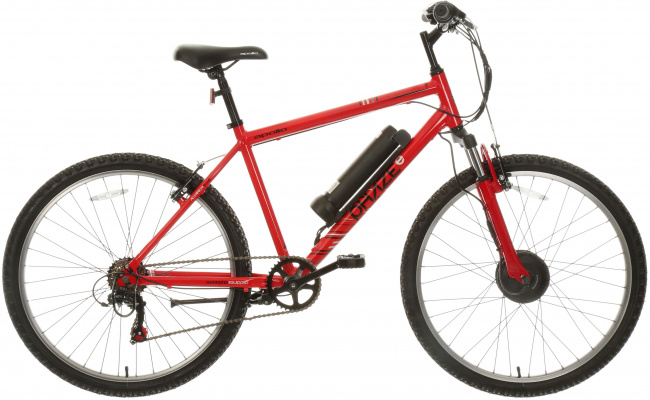
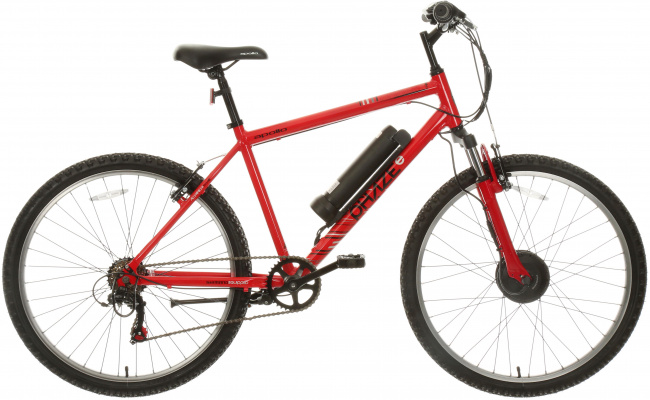
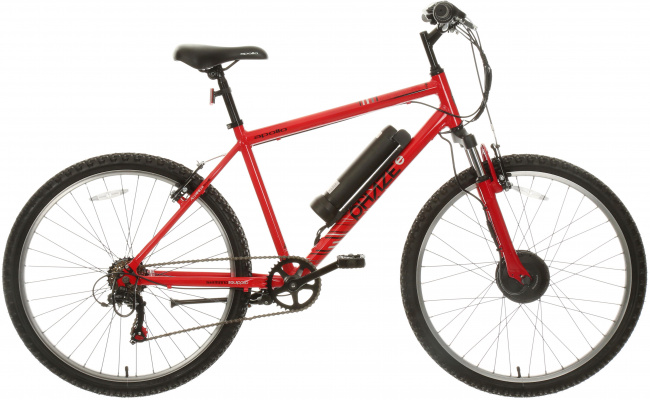
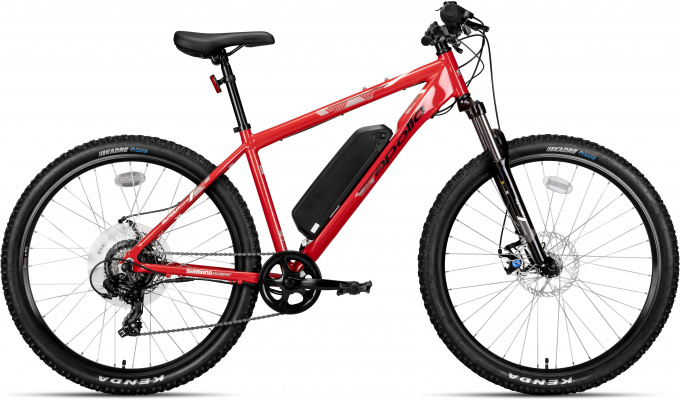
The Apollo Phaze is the entry-level e-MTB of the lineup. It's not going to handle Afan Argoed or anything with a trail grading, but it's well-suited to bridleways, gravel paths, and the kind of light off-road riding that most casual weekend cyclists actually do. Think canal towpaths, forest tracks, and the odd gravelly park cut-through. The front suspension fork - typically a basic Suntour unit - takes the edge off rougher surfaces without adding meaningful weight savings to worry about.
The Apollo Kinetic is the urban hybrid. It's the one to reach for if your daily route involves traffic lights, bus lanes, and the occasional climb over a railway bridge. Upright geometry, sensible gearing via a 6-speed Shimano Tourney drivetrain, and a frame built for consistent, repeatable use rather than occasional heroics. If you're comparing Apollo electric bikes UK options for commuting specifically, the Kinetic is the straightforward answer.
The Apollo Transport is the folder. It's aimed squarely at mixed-mode commuters - the riders who need a bike that fits in a boot, under a desk, or in the vestibule of a commuter train. Folding e-bikes are a genuine compromise by nature (heavier, smaller wheels, less responsive handling), but if the alternative is a long walk from the station, that compromise makes complete sense. You can browse Apollo folding bikes alongside the electric variant to see how the ranges compare. If an e-MTB angle is more your direction, the Apollo mountain bikes range gives useful context too.
What the Tech Actually Does for You
The 250W Shengyi rear hub motor is the engine of every Apollo e-bike. Hub motors sit neatly inside the rear wheel and are generally more durable and lower-maintenance than mid-drive alternatives - there are no extra stresses on your chain or cassette from motor torque. The trade-off is that rear-hub motors change the weight distribution of the bike, making the back end feel slightly planted. Most commuters barely notice. The integrated speed sensors detect your pedalling cadence and apply assist accordingly, so the power delivery feels progressive rather than sudden.
Gearing is handled by a 6-speed Shimano Tourney drivetrain. Tourney sits at the base of Shimano's hierarchy, but for flat-to-rolling urban commutes it's genuinely adequate - reliable shifting, easy to adjust, and straightforward to maintain or replace. It's not a system that will excite anyone, but it will keep working.
Braking across the range uses V-brakes rather than hydraulic discs. They're lighter, cheaper to service, and perfectly capable in dry conditions. In wet or gritty riding, though, they require more lever force and wear through pads faster. More on that below.
If you need replacement power packs or want to understand range capacities, visit our dedicated Apollo E-Bike Batteries page. We cover all specific model compatibilities and charging specs there.
For riders looking at alternatives at a similar price point, Assist e-bikes and BTwin e-bikes are worth comparing - both offer rear hub motor setups in the same entry-level bracket, each with slightly different geometry priorities.
Owning an Apollo in British Conditions
There are a few things worth knowing before the box is even opened. Apollo e-bikes are on the heavier side - most models sit north of 20kg. That's fine when the motor's running, but you'll feel it if you need to carry the bike up stairs or push it any distance with a flat battery. Worth factoring in if your flat is on the third floor.
The Phylion battery is rack-mounted or downtube-fitted depending on the model, and crucially it's removable. In a British winter, that matters. Cold temperatures - anything consistently below 5°C - accelerate lithium cell degradation, so bringing the battery indoors to charge and store overnight is a genuine preservation habit, not just a fussy recommendation. A battery that lives in a cold garage through January will lose capacity noticeably faster than one kept at room temperature.
The V-brakes are the other maintenance reality. After a few wet commutes through gritty winter roads, cable tension drifts and pad wear accelerates. A quick barrel adjuster tweak every couple of weeks keeps the feel consistent - ignore it and you'll find yourself pulling the lever further than expected before the brakes actually bite. It takes two minutes and a 5mm allen key. Keeping a spare set of brake pads around is straightforward and cheap. If this kind of upkeep sounds like a faff, it's worth considering whether a step-up to a disc-equipped hybrid like the Apollo hybrid range (non-electric) or a competitor model makes more sense for your use.
Mudguard compatibility is another practical tick-box - most Apollo commuter models are designed to accept them, and for year-round UK riding they're close to essential. A decent saddle upgrade is also worth considering early on; the stock saddles are functional but thin on comfort for longer rides. A bell is legally required on new bikes sold in the UK and practically essential on shared-use paths - worth checking it's fitted before your first ride.
The Apollo Phaze E-Bike vs Kinetic decision usually comes down to surface type. If your route is tarmac and hardpack, the Kinetic's more road-focused geometry will feel more efficient. If you're mixing in gravel or grass regularly, the Phaze's wider tyres and suspension fork will make those sections noticeably more manageable. Neither is dramatically better - they're just pointed at different jobs.
Related searches:
Apollo E-Bikes FAQs
How fast do Apollo electric bikes go?
The pedal assist cuts out at 15.5 mph (25 km/h) - that's the UK legal limit for electrically assisted pedal cycles. You can ride faster than that under your own steam, but the motor won't contribute beyond that point. It's the same limit across all compliant e-bikes sold in the UK.
How long does an Apollo e-bike battery last?
Expect roughly 15 to 20 miles from a full charge under typical conditions. Heavier riders, higher assist levels, and hillier routes will push you toward the lower end. Storing and charging the Phylion battery indoors at room temperature - especially through winter - helps preserve long-term cell health and keeps range consistent over time.
Are Apollo e-bikes waterproof?
They're water-resistant and safe to ride in normal UK rain and through puddles - the motor and electrical components are sealed to handle everyday wet conditions. They're not fully waterproof, so avoid jet-washing the motor or battery connections directly, and don't submerge the bike. Standard cleaning with a hose on a low setting is fine.