
Acros Pedals
ACROS pedals carry the same bearing philosophy that made the brand a go-to for headset and hub components - precision-engineered, built to last, and genuinely resistant to the kind of grot that destroys cheaper platforms inside a season. Where most pedal makers bolt on bearings as an afterthought, ACROS treat them as the whole point. Their angular contact stainless steel bearings and high-load IGUS bushings are paired together specifically to handle the grinding paste of UK winter riding - think Peak District grit working into every gap, or a sodden Welsh trail centre that hasn't seen dry ground since October.
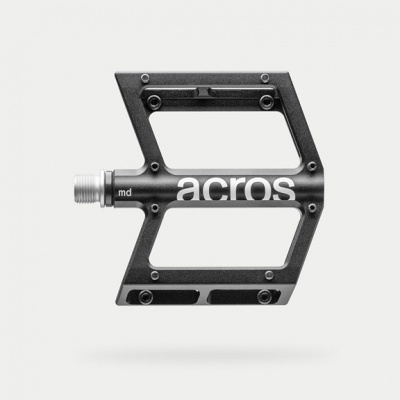
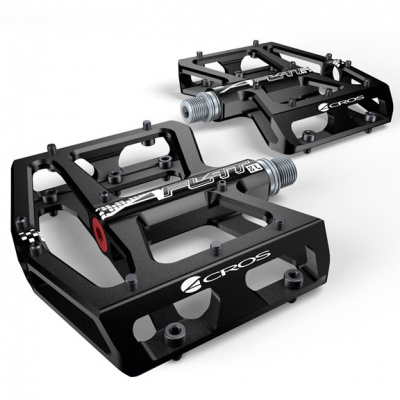
The A-Flat range sits at the centre of their lineup: wide, concave platforms with adjustable traction pins and an open body design that lets mud drop away rather than pack in. Both MD and XL variants share the same premium internals - the size difference is purely about matching platform footprint to your boot. You get real grip, a planted feel, and the reassurance that when the bearings eventually need attention, you can rebuild them yourself rather than binning the whole pedal.
Compare the latest ACROS flat pedals above to find the right fit for your riding.

Prices and availability can change quickly. Delivery charges are not always included in listed prices.
Final price, stock status and delivery terms are set by retailer. We may receive a commission on purchases made.
Axle Standards, Sizing, and Crank Fit
Every ACROS flat pedal uses a standard 9/16-inch chromoly axle, so they thread straight into any modern adult crank - no adapters, no faff. Chromoly is the right call here: it resists the bending loads that shorter, cheaper axles struggle with on rough descents, and it keeps the platform rock-solid under hard cornering. Check the crank threads are clean before fitting, and always torque to spec - 20 - 25 Nm is the usual range, though verify with the specific model.
Q-factor is worth thinking about if you're switching from a different pedal platform. ACROS axle lengths position the platform close to the crank arm without cramping your ankle clearance, but the MD and XL have slightly different footprints that affect where your foot naturally centres. Riders on wider stance setups may feel an immediate difference coming from a narrow competitor pedal - give it a couple of rides before tweaking cleat or shoe position. Pedal strike is mostly a frame and crank-length conversation, but a thinner platform profile (as on the MD) does buy you a few extra millimetres of ground clearance on tight switchbacks - useful if you're threading through rocky lines on tighter trail bikes.
A-Flat MD vs A-Flat XL: Which One?
The honest answer is that your shoe size drives this decision more than your riding style. Go for the A-Flat MD if you're on UK size 9 (EU 43) or smaller. The reduced platform footprint keeps the pedal body lighter and lowers your pedal strike risk on technical, rooty ground - exactly the kind of off-camber nonsense you find on natural trail lines across the Scottish Borders or the gritstone edges of the Dark Peak. The MD isn't a compromise; it's the right tool for that foot size.
Move to the A-Flat XL if you're a UK 9.5 or above. Larger feet need the bigger platform for full support under the arch and consistent power transfer - a pedal that's too small leaves the outer edge of your foot hanging and kills your confidence on steep, loose sections. The XL's extra real estate also means more grip pins in contact with your sole, which is where the concave platform design does its best work. That concave profile cups the foot naturally rather than sitting flat, giving you a more secure feel without needing to consciously grip the pedal. Both models share the same sealed cartridge bearing and IGUS bushing internals, so the performance floor is identical - you're just matching the footprint to the foot.
If you're comparing platforms at this level, Burgtec pedals and Hope pedals are the most direct rivals for build quality in this segment - both strong options, but neither brings quite the same bearing pedigree that ACROS carry across from their headset bearing range.
Staying on Top of UK Grime: Maintenance and Longevity
UK conditions are brutal on pedal internals. Gritty runoff from limestone and gritstone trails mixes with water to form an abrasive slurry that works into bushings and bearing races faster than most riders expect. Standard unsealed systems can feel notchy within a season. ACROS address this with two things working together: their proprietary angular contact stainless steel bearings resist lateral load and contamination better than radial designs, and the IGUS bushings - a self-lubricating polymer used in industrial applications - handle the residual grime that does get past the seals without seizing or wearing rapidly.
In practice, strip and re-grease every six to twelve months depending on how much winter riding you do. If you're out every weekend from November through March on wet moorland trails, lean toward the six-month interval. Pull the axle, clean the bearing races with a dry cloth (avoid solvent saturation on sealed units), pack with a quality waterproof grease, and reassemble. It takes twenty minutes once you've done it once. ACROS pedal rebuild kits include the replacement bearings, seals, and bushings you need - this is genuinely a pedal you can keep running for years rather than replace annually.
When you're replacing or adjusting the customisable extra-long traction pins, use a 2mm hex key and apply a small drop of medium-strength threadlocker to each pin thread before reinstalling. Pins vibrate loose on rough trails - it's not a question of if, it's when. Don't use high-strength threadlocker or you'll struggle to extract them for future adjustments. You can tune pin height and pattern to suit your shoes: more pins closer to the centre for a locked-in feel, or a sparser outer pattern if you prefer to reposition your foot mid-descent. DMR pedals take a similar approach to pin customisation, and Nukeproof pedals are worth a look if you want a wider field of comparison at a similar price point.
One thing worth flagging: the open body design that makes ACROS pedals so good at shedding mud also means the internals are exposed to more direct spray than a fully enclosed platform. That's a deliberate trade-off in favour of mud clearance, not a design oversight. It's exactly why the sealed bearing and IGUS bushing combination matters - you need the internals to handle what comes through the gaps. If most of your riding is dry hardpack or summer singletrack, Crank Brothers pedals offer an interesting alternative with a different grip approach, though for UK all-season use the ACROS setup makes more sense.
Acros Pedals FAQs
Are ACROS pedals fully rebuildable?
Yes. ACROS pedals are designed to be completely serviceable - you can replace the angular contact bearings, IGUS bushings, and seals individually using an ACROS pedal rebuild kit. That means restoring smooth, factory-spec rotation without buying a new pedal. For most UK riders, a rebuild every six to twelve months keeps them running properly.
Which ACROS A-Flat pedal size do I need?
If your shoe size is UK 9 (EU 43) or smaller, go with the A-Flat MD - it offers better ground clearance without sacrificing grip. Larger feet suit the A-Flat XL, which provides a bigger platform footprint for full foot support and maximum traction pin contact. Both share the same premium internal components.
How do I replace the pins on ACROS pedals?
Use a 2mm hex key to thread the traction pins in or out. Before refitting, apply a small drop of medium-strength threadlocker to each pin - this stops them vibrating loose on rough descents without making future removal a nightmare. Avoid high-strength compounds, which can effectively bond the pins permanently.