
Acid Bar Bags
Acid bar bags give you proper carrying capacity at the front of your bike without turning your handling into a guessing game. Engineered by Cube's in-house component brand, the Acid range covers everything from stripped-back commuter bags to the full Pack Pro bikepacking system - and the pricing sits well below what you'd pay for comparable waterproof front bags from the more boutique end of the market.
The construction is where Acid earns its keep. PVC-free TPU with welded seams means water doesn't find a way in through stitching holes - a genuine consideration when you're crossing the Cairngorms in October or grinding through a Manchester winter commute. These aren't bags with a DWR coating that gives up by February. The harness systems are solid too, holding position under load without the bag slowly migrating south mid-ride.
Whether you're speccing up a full bikepacking setup or just want somewhere dry to stash your wallet and a rain layer, compare the Acid handlebar bags below and find the one that fits your cockpit, your capacity needs, and your budget.
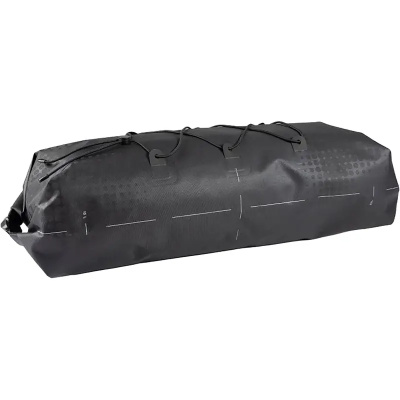
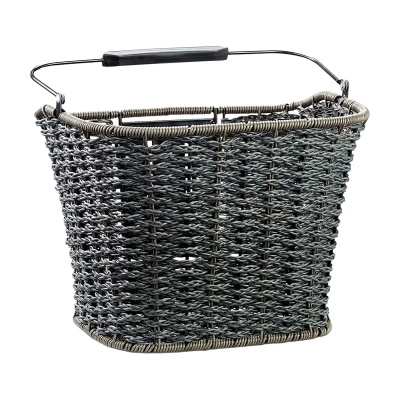
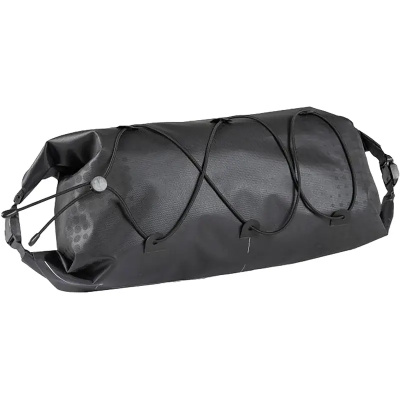
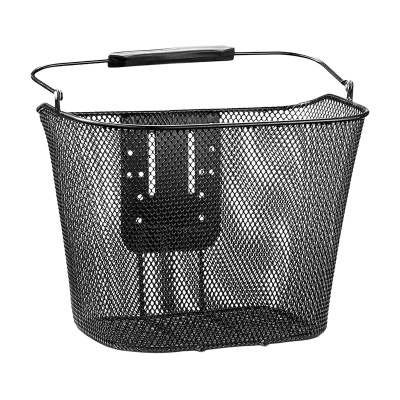
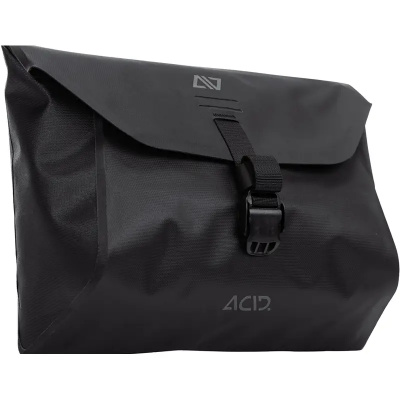
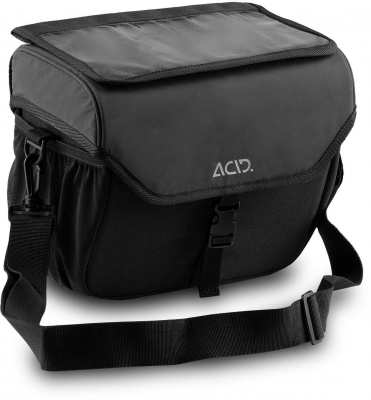
Prices and availability can change quickly. Delivery charges are not always included in listed prices.
Final price, stock status and delivery terms are set by retailer. We may receive a commission on purchases made.
Fitting It Right: Clearance, Cables and Cockpit Standards
Before you buy, measure. The single biggest fitting issue with any handlebar bag - Acid or otherwise - is insufficient handlebar clearance. You need at least 20cm between your bars and the front tyre, and that measurement has to be taken with your fork fully bottomed out, not just sitting at ride height. On a hardtail with 120mm of travel, the fork compresses far more than most riders expect during a sharp hit. Get that wrong and your bag clips the tyre mid-corner. Not ideal.
Width is the other dimension people underestimate, particularly on drop bars. STI levers need room to swing inward when you shift from the hoods, so the bag can't pack out right to the lever body. Acid's bags are sized with this in mind, but you'll still want to confirm the bag width against your lever position before committing. If you're running a narrow drop bar with your levers set close together, you'll likely have no issues - wider, more relaxed setups need a closer look.
Cable routing matters more than it sounds. Acid bar bags come with foam spacer blocks that hold the bag body clear of the handlebar, which creates a natural channel beneath the bag for your hydraulic hoses and gear outers to pass through cleanly. Route them behind the spacer blocks rather than letting them run under the bag's base, and you won't get kinking or the kind of intermittent friction that causes ghost shifting. If you're running internal cable routing into the headtube, double-check that the bag's mounting straps don't compress the hoses where they exit the fork crown - a wrap of handlebar tape around the hose at that point keeps things tidy and protected.
Commuter Bag or Pack Pro: Knowing Which Acid Bag Suits You
Acid's range splits fairly cleanly into two categories, and picking the wrong one is an easy mistake to make on spec alone. The simpler commuter-oriented bags - several of which use the FILink (Front Integration Link) system on compatible Cube frames - are designed for daily use. FILink lets the bag click directly into a mounting point on the fork crown or headtube of select Cube bikes, which eliminates strap-induced rub and keeps the whole setup looking deliberately designed rather than bolted on as an afterthought. If you ride a Cube and want a clean front bag for commuting, this is the route worth checking first.
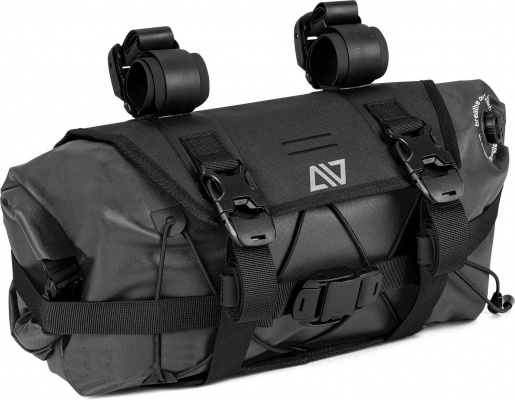
The Acid Pack Pro is a different animal. It uses a two-piece harness and drybag system - the harness stays clamped to your bars while you unclip the drybag itself and carry it into the tent, the café, or the office. For multi-day riding, that's a genuinely useful feature rather than a marketing point. You're not wrestling a muddy bag off your bike every time you stop; you just grab the drybag and go. The harness system is robust enough that repeated removal and reattachment doesn't loosen the clamp position over time, which is a real concern with cheaper alternatives.
The Pack Pro also features integrated air bleed valves, which let you compress the bag down once your sleeping bag is stuffed inside. Loft is the enemy of a tidy front end - a half-compressed drybag acts like a sail. The bleed valve lets you squeeze out the dead air and strap the bag tight, keeping the weight low and centred rather than ballooning out over your bars. Worth checking whether competing options like Apidura bar bags or Ortlieb bar bags offer the same compression at comparable price points - on balance, the Acid Pack Pro holds its own in that comparison for riders who don't need the modular roll-top systems the premium brands favour.
If budget is tighter and you're not going multi-day, Altura bar bags are worth a look as a practical commuter alternative, though the waterproofing spec is different - DWR rather than welded TPU construction. That gap matters if you're regularly riding in sustained rain rather than the odd shower. Pair your bar bag with Acid saddle bags and a frame bag if you're building out a bikepacking setup - the bags are designed to work together and the harness dimensions are consistent across the range, which makes load balancing more predictable.
Grit, Winter Mud and Keeping the TPU Sealed
UK riding chews through gear in ways that showroom conditions don't reveal. Winter grit - the sharp, abrasive stuff that gets thrown up from road surfaces after a salting - works its way under hook-and-loop mounting straps and acts like sandpaper against your bar tape, carbon handlebars, or headtube. It's slow damage, but it adds up. Before you fit any handlebar bag, lay down a strip of heli-tape or clear vinyl protection film on every surface the straps will contact. It takes ten minutes and saves your frame finish over a full winter. This goes double for carbon bars, where scratches can mask more serious damage.
Cleaning the bag properly keeps the welded seams doing their job. TPU welded construction is tough, but pressure washing forces water into any area where the weld has even a micro-gap - and over time, that degrades the seal. Mild soapy water and a soft brush is enough to shift mud and grit from the seams after a dirty ride. Let the bag dry fully before rolling it up for storage; damp TPU stored compressed can encourage mildew at the valve areas. The air bleed valves themselves occasionally accumulate grit in the seal - a quick rinse with clean water and a gentle squeeze keeps them working freely.
If you're commuting year-round and want the Acid bags to last multiple winters, a light wipe-down after every wet ride is less effort than it sounds. The waterproof TPU construction doesn't need reproofing the way fabric-and-DWR bags do, which is one less thing to think about - but it does reward basic cleaning over neglect. If you're also running Acid lights or Acid pannier bags, the same care routine applies across the range.
Acid Bar Bags FAQs
How do I stop my bar bag rubbing on my front tyre?
Measure your handlebar-to-tyre clearance with the fork fully compressed - not just at static ride height. You need at least 20cm of clearance at full bottom-out. On suspension forks, this is often less than riders expect, so check it properly before fitting. If you're borderline, a smaller bag volume or a different mounting position can help.
Are Acid handlebar bags fully waterproof?
The Pack Pro series and Acid's premium commuter bags use PVC-free TPU with high-frequency welded seams - that's fully waterproof rather than water-resistant. Welded construction doesn't rely on coatings that wash out over time, so sustained heavy rain isn't a problem. Clean the seams regularly with soapy water and avoid pressure washing to keep the integrity long-term.
Will a handlebar bag crush my brake and gear cables?
Not if you fit it correctly. Acid bar bags include foam spacer blocks that hold the bag clear of the handlebar surface, leaving a channel underneath for hydraulic hoses and gear outers to route without kinking. Thread cables behind the spacer blocks before tightening the harness and you won't get the friction or ghost shifting that a poorly routed cable causes.