
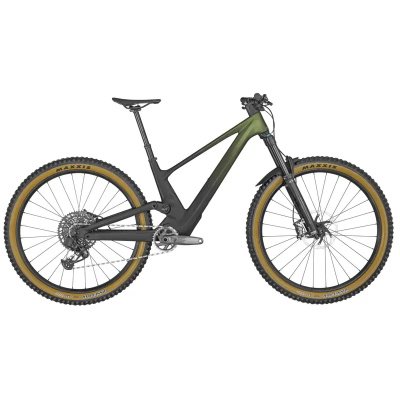
Scott Genius 910
Climb efficiently, descend confidently, and switch suspension character on the fly with integrated tech that sharpens handling.
- Integrated shock lowers centre of gravity, sharpens handling
- TwinLoc lever: instant climb/descend mode switch
- 160mm front, 150mm rear travel for aggressive trail riding
- SRAM GX Eagle AXS wireless shifting, Shimano XT brakes
- Adjustable head angle personalises steering feel
- Carbon mainframe with alloy swingarm balances stiffness and cost
Scott Genius 910 Deals

Prices and availability can change quickly. Delivery charges are not always included in listed prices.
Final price, stock status and delivery terms are set by retailer. We may receive a commission on purchases made.
Bikesy's Verdict
The Scott Genius 910 is a trail bike that genuinely earns its name. It's smart, adaptable, and built for riders who want one machine to handle the lot - punchy climbs, technical descents, and everything in between. The integrated shock and TwinLoc system aren't just party tricks; they deliver real-world benefits in handling, efficiency, and on-the-fly control that make the bike feel more responsive and capable across a wider range of terrain.
With SRAM GX Eagle AXS wireless shifting, Shimano XT brakes, and a parts list that's well thought out rather than flashy, the Genius 910 is a bike you can ride hard and trust. It's not the lightest trail bike, and it's not a full enduro sled, but it's brilliantly versatile - the kind of bike that makes you want to ride more, explore further, and push a little harder. If you're after a do-it-all trail bike with genuine engineering depth and a ride character that adapts to your ambitions, the Genius 910 is a very strong choice.
Pros
- Integrated shock design lowers centre of gravity and sharpens handling
- TwinLoc system offers instant, intuitive suspension mode changes
- SRAM GX Eagle AXS wireless shifting is clean, reliable, and customisable
- Shimano XT four-piston brakes deliver strong, consistent power
- Versatile geometry balances climbing efficiency with descending confidence
- Adjustable head angle lets you personalise steering feel
Cons
- Integrated features and headset cable routing add complexity to maintenance if you prefer simple wrenching
- Heavier than dedicated XC race bikes when chasing podiums or KOMs
- Not a full enduro rig if you're spending most of your time on extremely steep, rough descents
About the Scott Genius 910
Scott's Genius has always worn its name well - a bike that thinks ahead, adapts on the fly, and refuses to be pigeonholed. The 2025 Genius 910 doubles down on that reputation with a carbon mainframe hiding its rear shock inside the front triangle, a TwinLoc lever that flips suspension character with a thumb press, and a parts list that mixes wireless electronic shifting with four-piston brakes. It's a trail bike with enduro ambitions, built for riders who want one machine to handle the lot: punchy climbs, technical descents, and everything in between.
The integrated suspension isn't just a styling trick. By tucking the FOX Float X shock inside the frame, Scott drops the centre of gravity and cleans up the silhouette, which translates to sharper handling in tight switchbacks and a more planted feel when you're leaning hard into berms. The Virtual 4 Link kinematic keeps the rear wheel tracking smoothly through square-edged hits, and the TwinLoc system - controlling fork and shock simultaneously - means you're never more than a lever flick away from the right mode for the terrain ahead.
With 160mm up front (via Öhlins RXF36 m.2 Air or FOX 36 Float Performance Elite, depending on spec) and 150mm out back, the Genius 910 sits squarely in the aggressive trail category. It's not a mini-enduro sled, but it's got enough travel and geometry slack to make you grin on rowdy descents, and enough efficiency to keep you from hating the climbs that get you there.
Scott Genius 910 geometry
The Genius 910's geometry strikes a balance between modern trail aggression and all-day ridability. The head angle sits around 64.5 to 65.1 degrees (adjustable via the Syncros headset), which is slack enough to inspire confidence when the trail pitches down but not so laid-back that you're wrestling the front end on tighter turns. The seat angle hovers near 77 degrees, keeping your weight forward on climbs so the front wheel stays glued to the ground even when the gradient bites.
Reach figures aren't published here, but the overall posture is contemporary trail: you're centred over the bike, not perched on top of it. The relatively short chainstays - around 438 to 440mm - keep the rear end lively, making it easy to pop the bike over roots or snap it into tight lines. Wheelbase grows with frame size, but the Genius never feels unwieldy; it's nimble enough for technical singletrack yet stable enough to hold a line at speed.
The adjustable head angle is a practical touch. Slacken it half a degree for bike park days or steeper home trails; steepen it when you're chasing flow and want quicker steering response. It's a small tweak, but it lets you personalise the ride without swapping parts.
Component choices & upgrades
The stock build on the Genius 910 is already well sorted. SRAM's GX Eagle AXS wireless shifting is clean, reliable, and eliminates cable faff - you'll appreciate the crisp shifts and the ability to customise button mapping via the AXS app. The 10-52t cassette gives you a bailout gear for steep pitches and enough top-end for fast fire roads. Shimano XT four-piston brakes (203mm front, 180mm rear) deliver strong, consistent power with excellent modulation, and they're easy to bleed when the time comes.
Syncros Revelstoke wheels (30mm internal width) are tubeless-ready and stout enough for aggressive riding, wrapped in Maxxis Minion DHF up front and Dissector out back - both 2.6" wide with EXO casings. The Minion DHF is a proven front tyre for mixed conditions, offering predictable cornering grip and braking traction. The Dissector rear rolls faster than a full-on DHR II but still hooks up when you need it. If you're riding particularly rocky or sharp terrain, consider upgrading to Double Down or MaxxGrip compounds for added puncture protection and grip, though you'll trade some rolling speed.
The Syncros Hixon iC carbon handlebar (780mm wide, integrated with the stem) is stiff and comfortable, but the integrated design means you can't easily swap stem length or bar width without replacing the whole unit. If you prefer more adjustability, a traditional stem and bar combo is an option down the line. The Syncros Duncan dropper post offers ample travel (up to 200mm on XL frames) and smooth action, though some riders prefer the feel of a OneUp or Fox Transfer if they're chasing ultimate reliability or specific lever ergonomics.
For riders pushing hard into enduro territory or riding year-round in wet, abrasive conditions, upgrading to a coil shock (if you prefer the suppleness and consistency of a steel spring) or swapping to burlier tyres and inserts can extend the bike's capability. But for most trail riders, the stock setup is more than capable - spend your money on riding, not chasing marginal gains.
Where the Scott Genius 910 excels
The Genius 910 is outstanding at aggressive trail riding where you're mixing technical climbs with fast, rough descents. It's the bike for riders who want to pedal to the top of the hill without suffering, then rip back down with confidence and control. The TwinLoc system is a genuine asset here: flick it to Climb mode and the suspension firms up, keeping your watts driving you forward rather than bobbing into the shock. Switch to Descend mode and the bike opens up, soaking up chatter and letting you push harder into corners and compressions.
It handles tight, twisty singletrack with agility, thanks to those short chainstays and the low centre of gravity from the integrated shock. You can flick it through switchbacks, manual over obstacles, and generally play around in ways that longer, slacker enduro bikes resist. On open, fast trails it holds speed well, and the suspension kinematic keeps the rear wheel tracking smoothly through rough sections without feeling harsh or uncontrolled.
Where it's not ideal: pure XC racing. The Genius 910 is efficient, but it's not as light or as race-focused as a Spark. If you're chasing podiums in cross-country events, you'll want something more single-minded. It's also not a full enduro rig - bikes with 170mm or more travel and slacker geometry will feel more stable at high speeds on extremely rough, steep descents. The Genius 910 can handle those trails, but it's happiest when the riding is varied rather than relentlessly brutal.
It's also worth noting that the integrated features - cable routing through the headset, the hidden shock - add a layer of complexity to maintenance. If you're the type who likes to wrench on your own bike and swap parts frequently, you'll need to be comfortable with the system or willing to spend a bit more time getting familiar with it. For riders who value a clean aesthetic and are happy to follow Scott's setup guidelines, it's a non-issue.
Scott Genius 910 FAQs
What is the travel on a Scott Genius 910?
The Genius 910 runs 160mm of travel up front (via Öhlins RXF36 m.2 Air or FOX 36 Float Performance Elite, depending on spec) and 150mm at the rear with a FOX Float X Nude shock. In Climb mode, the rear travel effectively reduces to around 100mm to improve pedalling efficiency.
How do you adjust the suspension on a Scott Genius?
The TwinLoc lever on the handlebar simultaneously controls the fork and rear shock, offering three modes: Climb (firm, efficient), Traction Control (mid-travel, balanced), and Descend (full travel, plush). You can also fine-tune compression and rebound settings directly on the fork and shock using the adjustment dials. The head angle is adjustable via the Syncros headset, allowing you to slacken or steepen the steering by up to 0.6 degrees.
Is the Scott Genius 910 good for enduro riding?
The Genius 910 is capable on enduro-style trails and will handle aggressive descents with confidence, but it's not a dedicated enduro race bike. It's best suited to riders who want a versatile trail bike that can tackle enduro terrain without being a handful on the climbs. If you're racing enduro or spending most of your time on extremely steep, rough descents, a longer-travel bike like the Scott Ransom might be a better fit.
What is the weight of the Scott Genius 910?
The complete bike weighs approximately 14.1 kg (31 lbs), which is competitive for a carbon trail bike with this level of travel and component spec. The carbon mainframe and alloy swingarm strike a balance between stiffness, durability, and weight.
What type of bottom bracket does the Scott Genius 910 use?
The Genius 910 uses a BB92 press-fit bottom bracket standard, which is common on modern mountain bikes and compatible with SRAM DUB cranks. It's a reliable system when installed correctly, though some riders prefer threaded bottom brackets for ease of maintenance.
Can you fit wider tyres on a Scott Genius 910?
The bike is designed to accommodate up to 2.6" tyres, which is what it ships with (Maxxis Minion DHF and Dissector, both 29x2.6"). You might be able to squeeze a 2.7" tyre on depending on tread pattern and rim width, but 2.6" is the practical limit for most riders. That's plenty of rubber for grip and cushioning on aggressive trails.
How does the integrated shock on the Scott Genius 910 work?
The rear shock is housed inside the front triangle of the frame, connected to the Virtual 4 Link suspension via internal linkages. This design lowers the centre of gravity, improves handling, and protects the shock from trail debris. The shock is still fully serviceable, but accessing it requires removing the motor cover (on e-bike models) or following Scott's specific procedure for the acoustic version. It's more involved than a traditional external shock, but the performance and aesthetic benefits are tangible.
What are the key differences between the Scott Genius and Spark?
The Spark is Scott's cross-country and marathon race bike, with less travel (typically 120mm front and rear), lighter weight, and more XC-focused geometry. It's built for speed and efficiency on smoother trails and race courses. The Genius has more travel (160mm front, 150mm rear), slacker geometry, and a more robust build, making it better suited to aggressive trail riding and technical descents. If you're racing XC, choose the Spark; if you're riding varied, challenging trails and want one bike to do it all, the Genius is the smarter pick.
Key Features & Benefits
- Integrated Suspension Technology with hidden shock: Lowers centre of gravity for sharper handling and a cleaner, more protected frame design
- TwinLoc handlebar lever controlling fork and shock: Instant suspension mode changes (Climb, Traction, Descend) without stopping or reaching down
- SRAM GX Eagle AXS wireless electronic shifting: Crisp, reliable shifts with no cable maintenance and customisable button mapping via app
- Adjustable head angle via Syncros headset: Fine-tune steering response and stability to match your trails and riding style
- 160mm front / 150mm rear travel with Virtual 4 Link kinematic: Confident descending control and smooth tracking through rough terrain without sacrificing climbing efficiency
Scott Genius 910 2025, 2024 & 2023 differences
The 2025 model introduces the "ST" (Super Trail) designation and often features the Öhlins RXF36 m.2 Air fork with TTX-Technology and adjustable high-speed compression, low-speed compression, and low-speed rebound - though some 2025 builds retain the FOX 36 Float Performance Elite Air FIT4 fork from previous years. The rear shock remains the FOX Float X Nude with custom tuning, and the overall geometry and frame design carry over with minor refinements.
For 2024, the Genius 910 moved to SRAM GX Eagle AXS Transmission wireless shifting, replacing the mechanical drivetrain from 2023. The fork was typically the FOX 36 Float Performance Elite Air FIT4, and the rear shock was the FOX Nude 5T EVOL. The integrated suspension design, TwinLoc system, and adjustable head angle were already in place, so the changes were primarily component-level rather than frame or geometry overhauls.
The 2023 model featured a mechanical SRAM GX Eagle drivetrain, FOX 36 Float Performance Elite Air FIT4 fork, and FOX Nude 5T EVOL Trunnion shock. The core Genius platform - integrated shock, Virtual 4 Link kinematic, and TwinLoc control - was already established, making the 2023 version a capable and well-regarded trail bike. The shift to wireless shifting in 2024 and the optional Öhlins fork in 2025 represent incremental refinements rather than wholesale redesigns, keeping the Genius 910 competitive without abandoning what made it work in the first place.
Alternatives to Consider
Within Scott's own range, the Scott Spark 960 is the natural step down if you're leaning more towards XC and marathon riding - it's lighter, has less travel (120mm front and rear), and is built for speed on smoother trails. If you want more aggression and travel, the Scott Ransom 910 is the step up, offering 170mm or more travel and slacker geometry for dedicated enduro and bike park riding. It's burlier and more stable at high speeds on rough descents, but you'll feel the extra weight and slack angles on the climbs.
Cross-brand, the Specialized Stumpjumper EVO Comp is a close peer - similar travel, aggressive trail geometry, and a reputation for playful handling mixed with descending confidence. The Trek Fuel EX 9.7 offers comparable versatility with Trek's Active Braking Pivot suspension and a slightly more XC-leaning character, making it a touch more efficient on long climbs. The Santa Cruz Hightower C S brings VPP suspension and a cult following for its balanced, poppy ride feel, though it tends to command a higher price for similar spec. The Giant Trance Advanced Pro 29 2 is another strong contender, offering excellent value with capable suspension and a well-rounded build that's hard to fault for the money. Each of these bikes sits in the aggressive trail category, but the Genius 910's integrated shock and TwinLoc system give it a distinct character - cleaner lines, lower centre of gravity, and on-the-fly suspension control that's hard to match.
Reviews
Integrated suspension and TwinLoc control define the ride. The hidden shock drops the centre of gravity noticeably, making the bike feel more planted and responsive through tight, technical sections where you're leaning hard and changing direction quickly. When you flick the TwinLoc lever from Descend to Climb, the transformation is immediate - the rear end firms up, pedal bob vanishes, and your watts drive you forward rather than disappearing into suspension movement. On long fire-road climbs or punchy singletrack ascents, that efficiency is a genuine asset.
Descending, the bike opens up and soaks up chatter with a plush, controlled feel. The Virtual 4 Link kinematic keeps the rear wheel tracking smoothly through rough, square-edged hits, and the FOX Float X shock delivers consistent damping without feeling harsh or uncontrolled. Cornering grip is strong, and the short chainstays let you flick the bike into tight lines or manual over obstacles with minimal effort. It's nimble enough to feel playful on twisty singletrack, yet stable enough to hold a line at speed on fast, open trails.
Because the geometry balances modern trail slack with all-day ridability, the Genius 910 never feels like a compromise. The adjustable head angle is a practical touch - slacken it for steeper home trails or bike park days, steepen it when you want quicker steering response. SRAM GX Eagle AXS wireless shifting is crisp and reliable, and the ability to customise button mapping via the app is a nice bonus. Shimano XT four-piston brakes deliver strong, consistent power with excellent modulation, making it easy to scrub speed or lock up the rear wheel when you need to.
While the integrated features and headset cable routing add a layer of complexity to maintenance, the performance and aesthetic benefits are tangible. The bike feels cohesive, purposeful, and smart - exactly what you'd expect from something called the Genius.
Full Specification
| Spec | Value |
|---|---|
| Frame Material | Genius Carbon HMF Mainframe with Alloy 6061 Swingarm |
| Frame Design | Integrated Suspension Technology, Virtual 4 Link kinematic, adjustable head angle |
| Frame Features | Syncros Cable Integration System, UDH interface, bottle cage mounts |
| Standards (BB/Axle) | BB92 Press Fit, 12x148mm Boost rear axle spacing |
| Suspension Platform | Virtual 4 Link kinematic |
| Fork | Öhlins RXF36 m.2 Air or FOX 36 Float Performance Elite Air FIT4 |
| Fork Travel | 160mm |
| Fork Adjustments | HSC, LSC, LSR adjustable (Öhlins); 3-Modes Lockout, Traction Control, Descend (FOX) |
| Rear Shock | FOX FLOAT X NUDE PE EVOL Piggy Back Trunnion |
| Rear Travel | 150mm (adjustable to 100mm in Climb mode) |
| Rear Shock Adjustments | 3 modes (Climb/Lockout, Traction Control, Descend), Comp & Reb. Adj. |
| Drivetrain | 1x12 speed |
| Shifters | SRAM GX Eagle AXS Rocker Controller |
| Rear Derailleur | SRAM GX Eagle AXS 12 Speed Wireless Electronic |
| Crankset | SRAM GX Eagle DUB 55mm CL / 32T |
| Bottom Bracket | SRAM DUB PF 92 MTB Wide |
| Cassette | SRAM XG1275 / 10-52T |
| Chain | SRAM CN GX Eagle |
| Brakes | Shimano XT M8120 4 Piston Hydraulic Disc |
| Rotors (Front) | 203mm |
| Rotors (Rear) | 180mm |
| Rims (IW) | Syncros Revelstoke 1.5 or 2.0 TR, 30mm internal width, Tubeless Ready |
| Hubs (Front) | Syncros, 15x110mm Boost |
| Hubs (Rear) | Syncros, 12x148mm Boost |
| Tyres (Front) | Maxxis Minion DHF 29x2.6" 120TPI Foldable Tubeless Ready EXO 3C maxxTerra |
| Tyres (Rear) | Maxxis Dissector 29x2.6" 60TPI Foldable Tubeless Ready EXO 3C maxxTerra |
| Handlebar | Syncros Hixon iC Carbon, 780mm width, 15mm rise (S/M) or 25mm rise (L/XL), 8° back sweep |
| Headset | Syncros - Acros Angle adjust & Cable Routing HS System, ±0.6° head angle adjustment, ZS56/28.6 - ZS56/40 MTB |
| Seatpost | Syncros Duncan Dropper Post 1.5S / Travel Adjust, 31.6mm diameter |
| Seatpost Travel (S) | 140mm |
| Seatpost Travel (M) | 160mm |
| Seatpost Travel (L) | 170mm |
| Seatpost Travel (XL) | 200mm |
| Saddle | Syncros Tofino 1.5 Regular Titanium rails |
| Grips | Syncros Endurance lock-on |
| Weight (Approx) | 14.1 kg |