
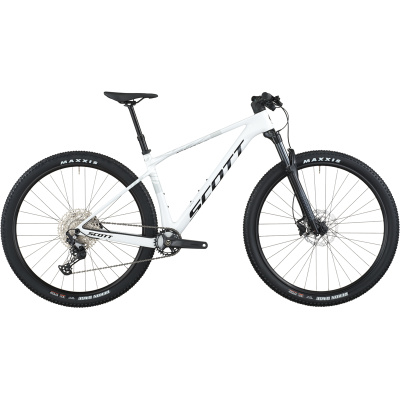
Scott Scale 920
Climb like a rocket, descend with confidence, and adjust the handling to match your ambitions.
- HMF carbon frame with adjustable head angle
- RockShox Judy Silver fork with 110mm travel
- Shimano Deore 1x12 drivetrain for crisp shifting
- Syncros dropper post included across all sizes
- Maxxis Rekon Race tyres for fast rolling
- 12.9kg complete weight for size M
Scott Scale 920 Deals
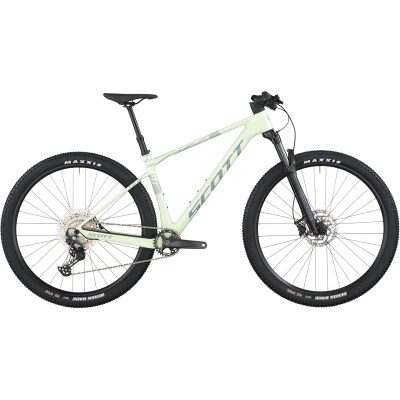
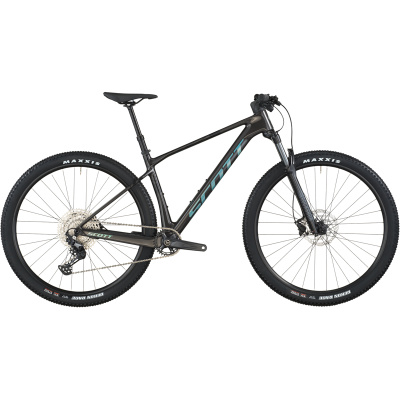

Prices and availability can change quickly. Delivery charges are not always included in listed prices.
Final price, stock status and delivery terms are set by retailer. We may receive a commission on purchases made.
Bikesy's Verdict
The Scale 920 nails the brief for riders who want serious XC performance without the compromises that often come with pure race bikes. That adjustable head angle and standard dropper post transform it from a one-trick pony into a genuinely versatile machine that's equally happy chasing KOMs or exploring new trails.
Scott's HMF carbon construction delivers the goods where it matters most - climbing efficiency that'll have you spinning past more expensive bikes, yet with enough refinement to keep longer rides comfortable. The component spec hits a sweet spot of reliability and performance, even if the fork could be more sophisticated. For riders who want one bike that can handle club rides, XC races, and weekend adventures, this hardtail delivers the goods with style.
Pros
- Lightweight HMF carbon frame with excellent stiffness-to-weight ratio
- Adjustable head angle allows fine-tuning for different terrain
- Dropper post now included as standard across all sizes
- Efficient climbing geometry with steep seat tube angle
- Clean cable integration and modern UDH derailleur interface
Cons
- RockShox Judy fork is capable but less refined than premium options
- Hardtail design means you'll feel every bump on rough terrain
- MT200 brakes adequate for XC but may lack power for aggressive descending
About the Scott Scale 920
The Scale 920 distils decades of XC racing wisdom into a hardtail that's both brutally efficient and surprisingly refined. Scott's HMF carbon construction delivers the stiffness you need for explosive accelerations while their Advanced Shock & Standing Damping System takes the sting out of trail chatter. It's a bike that climbs like it's been launched from a catapult yet descends with the composure of something twice the price.
This isn't your grandfather's rigid race bike. The adjustable head angle lets you dial in handling from razor-sharp to trail-calm, while the dropper post (now standard across all sizes) transforms descending from a white-knuckle affair into genuine fun. When you're chasing personal bests on familiar climbs or exploring new singletrack, the Scale 920 adapts to your ambitions rather than limiting them.
What sets this machine apart is how it balances uncompromising speed with real-world usability. The Syncros cable integration keeps everything tidy, the UDH interface future-proofs your drivetrain choices, and that carbon frame manages to be both featherlight and reassuringly solid when you're pushing hard through technical sections.
Scott Scale 920 geometry
The Scale 920's geometry strikes a sweet spot between old-school XC aggression and modern trail confidence. That 69.5-degree head angle (adjustable by 0.6 degrees either way) gives you a bike that steers with precision on climbs but won't get sketchy when the trail points downward. The reach figures are generous enough to feel stable at speed without stretching you into an uncomfortable racing tuck.
Your riding position is purposeful but not punishing. The steep seat tube angle puts you right over the pedals for maximum climbing efficiency, while the stack height keeps you from feeling cramped during longer efforts. When you adjust that head angle slacker, the bike transforms from pure XC weapon into something that's genuinely happy on more adventurous terrain.
The 435mm chainstays keep the rear wheel tucked in close, making the bike feel lively and responsive through tight corners. Combined with the 29-inch wheels, you get a bike that tracks beautifully through rough sections while maintaining that playful, flickable character that makes hardtails so addictive.
Component choices & upgrades
Scott's built the Scale 920 with components that work brilliantly together straight from the box. The Shimano Deore 1x12 drivetrain delivers crisp, reliable shifts with a 10-51T cassette that covers everything from steep technical climbs to flowing descents. The RockShox Judy Silver fork might not have the cachet of higher-end options, but it's a solid performer with lockout and rebound adjustment that'll handle most XC duties without complaint.
Those Maxxis Rekon Race tyres are properly fast-rolling while still offering enough grip for confident cornering on hardpack. The Syncros dropper post is a game-changer for versatility, and having it as standard equipment means you can tackle varied terrain without constantly adjusting your saddle height.
If you're planning to race seriously or tackle more demanding terrain, consider upgrading the fork to something like a Fox 32 Step-Cast or RockShox SID for improved small-bump sensitivity and lighter weight. The Shimano MT200 brakes are adequate for XC use, but riders tackling steeper, more technical descents might appreciate the extra power and modulation of Deore or SLX-level stoppers. The Alex X-25 TR wheels are tubeless-ready and perfectly functional, though dedicated racers might want something lighter for maximum climbing performance.
Where the Scott Scale 920 excels
This bike absolutely dominates on XC terrain where climbing efficiency and nimble handling matter most. Fire road climbs, flowing singletrack, and technical ascents are where the Scale 920 shows its breeding. The combination of lightweight carbon construction and that steep seat angle means you'll be spinning past heavier bikes on every climb, while the adjustable geometry lets you fine-tune handling for different trail conditions.
It's also brilliant for riders who want one bike that can handle club rides, XC races, and weekend trail adventures. The dropper post transforms it from pure race machine into something genuinely versatile, while that refined carbon frame keeps you comfortable during longer efforts. If your riding mixes sustained climbs with technical descents, this hardtail delivers the efficiency of a race bike with enough capability to keep you grinning on the way down.
Where it's less ideal is on truly rough, rocky terrain where a full-suspension bike would be more appropriate. While the frame's damping system helps, you'll still feel every root and rock through the rear end. It's also not the best choice if you're primarily interested in bike park laps or aggressive trail riding - the geometry and component spec are optimised for efficiency rather than all-out descending capability.
Scott Scale 920 FAQs
What is the weight of the 2026 Scott Scale 920? The complete bike weighs approximately 12.9kg for a size M, which is competitive for a carbon hardtail at this price point. The HMF carbon frame construction keeps weight down while maintaining the stiffness needed for efficient power transfer.
How does the adjustable head angle on the Scott Scale 920 work? The Syncros headset system allows you to adjust the head angle by +/- 0.6 degrees without cutting cables or bleeding brakes. This lets you fine-tune handling from sharp and responsive for racing to more relaxed and stable for technical trail riding.
Is the 2026 Scott Scale 920 good for trail riding, or is it only for XC racing? While it's designed primarily for XC racing, the inclusion of a dropper post and adjustable geometry makes it surprisingly capable on varied terrain. It excels on flowing singletrack and technical climbs but isn't ideal for very rough, rocky descents where full suspension would be preferable.
What is the maximum tyre clearance for the Scott Scale 920? The frame accommodates tyres up to approximately 2.4-2.5 inches wide, which is typical for modern XC hardtails. The stock Maxxis Rekon Race 29x2.4" tyres make good use of this clearance for a balance of speed and grip.
What are the key differences between the 2025 and 2026 Scott Scale 920 models? The 2026 model switches from a Fox 32 SC Float Performance fork to a RockShox Judy Silver, changes from SRAM GX Eagle to Shimano Deore drivetrain, and updates the tyre spec from Schwalbe Racing Ray/Ralph to Maxxis Rekon Race. The dropper post is now standard across all sizes.
How does the RockShox Judy fork compare to higher-end forks on other XC bikes? The Judy Silver is a solid entry-level air fork with lockout and rebound adjustment, but it lacks the small-bump sensitivity and lighter weight of premium options like Fox 32 Step-Cast or RockShox SID. It's perfectly adequate for most XC riding but could be a worthwhile upgrade for serious racers.
Key Features & Benefits
- HMF Carbon Frame with Adjustable Head Angle: Lightweight construction with customisable handling from race-sharp to trail-confident
- Syncros Dropper Post (Standard): Quick saddle height adjustment transforms climbing efficiency into descending confidence
- Advanced Shock & Standing Damping System: Reduces trail chatter and improves comfort without sacrificing pedalling efficiency
- Shimano Deore 1x12 Drivetrain: Reliable shifting with wide 10-51T range covers steep climbs to fast descents
- UDH Interface and Internal Cable Routing: Future-proof compatibility and clean aesthetics with easy maintenance access
Scott Scale 920 2025 and 2024 differences
The 2025 model featured a Fox 32 SC Float Performance fork with 100mm travel compared to the 2026's RockShox Judy Silver with 110mm. Drivetrain duties were handled by SRAM GX Eagle rather than Shimano Deore, while braking came from Shimano Deore M6100 instead of the MT200 specification. Tyre choice was Schwalbe Racing Ray front and Racing Ralph rear in 29x2.35" rather than the Maxxis Rekon Race 29x2.4" rubber.
The 2024 model shared similar specifications to the 2025 version, maintaining the Fox 32 SC Performance fork and SRAM GX Eagle components. Both earlier years featured Syncros X-30SE wheels with 30mm internal width compared to the 2026's Alex X-25 TR rims with 25mm internal width. The core HMF carbon frame construction and adjustable head angle technology remained consistent across all three model years.
Alternatives to Consider
Within Scott's range, the Scale 910 offers higher-specification components including a Fox fork and SRAM GX Eagle drivetrain, while the Scale 925 typically features an aluminium frame at a lower price point. Both share the same geometry philosophy but with different material and component approaches.
Cross-brand alternatives include the Specialized Epic HT, which offers similar XC-focused geometry with their own Brain shock technology, and the Trek Procaliber 9.5, featuring Trek's IsoSpeed decoupler for added compliance. The Orbea Alma M50 provides comparable carbon construction with slightly more trail-oriented geometry, while the Cube Elite C:68X Race offers German engineering with a focus on pure racing performance. Each brings its own interpretation of the lightweight XC hardtail formula, but the Scott's adjustable geometry and refined ride quality make it particularly versatile.
Reviews
Climbing performance immediately stands out as the Scale 920's strongest suit. Power transfer feels direct and immediate, with that HMF carbon frame channelling every pedal stroke into forward momentum. The steep seat angle puts you in an optimal position for sustained efforts, while the lightweight construction makes short work of technical ascents where you need to lift the front wheel or hop obstacles.
Descending reveals the bike's surprising sophistication. While it's undeniably a hardtail, the Advanced Shock & Standing Damping System takes enough edge off trail chatter to keep you comfortable and in control. The adjustable head angle proves its worth here - slacken it out and the bike transforms from pure XC weapon into something genuinely capable on more adventurous terrain. That dropper post is a revelation, turning what could be sketchy descents into proper fun.
Component performance is solid throughout. The Shimano Deore drivetrain shifts cleanly under load, though the RockShox Judy fork feels a step behind the frame's refinement. It's perfectly functional with useful lockout and rebound adjustment, but lacks the small-bump sensitivity that would really complement the carbon frame's character. Those Maxxis Rekon Race tyres strike a good balance between rolling speed and cornering grip, though they're definitely optimised for hardpack rather than loose or muddy conditions.
When trail conditions turn rough, the hardtail nature becomes apparent. Sharp impacts come straight through to your hands and lower back, and the rear wheel can get bounced offline on particularly rocky sections. This isn't a criticism so much as physics - it's the trade-off you make for the climbing efficiency and playful handling that makes hardtails so addictive.
Full Specification
| Frame | Scale Carbon HMF |
| Frame Material | Scale Carbon HMF (High Modulus Fiber) |
| Frame Construction | Monocoque Construction |
| Frame Features | Adjustable head angle +/- 0.6 degrees, Syncros Cable Integration System, Advanced Shock & Standing Damping System, Hollow Dropout Construction, Service Door |
| Standards | BB92 PressFit, UDH Interface, 148x12mm Boost |
| Fork | RockShox Judy Silver TK Solo Air |
| Fork Travel | 100mm or 110mm |
| Fork Adjustments | Lockout, Rebound Adjustment, 3 suspension modes (via RideLoc) |
| Drivetrain | 1x12 Speed |
| Shifters | Shimano Deore SL-M6100-R, Rapidfire Plus |
| Rear Derailleur | Shimano Deore RD-M6100 SGS, Shadow Plus |
| Crankset | Shimano FC-MT512-1, 55mm Chainline |
| Chainring | 32T |
| Bottom Bracket | Shimano BB-MT500, shell 41x92mm |
| Cassette | Shimano Deore CS-M6100-12, 10-51T |
| Chain | Shimano CN-M6100 |
| Brakes | Hydraulic Disc Brakes |
| Brake Levers | Shimano MT200 Disc Brake |
| Calipers | Shimano MT200 Disc Brake |
| Rotors (Front) | 180mm |
| Rotors (Rear) | 160mm |
| Rims (IW) | Alex X-25 TR, 32H, 25mm internal width |
| Spokes | Stainless Black 15G / 1.8mm |
| Hubs (Front) | Formula CL-811, 15x110mm |
| Hubs (Rear) | Formula CL-548M, 12x148mm, Micro Spline |
| Tyres (Front) | Maxxis Rekon Race, 29x2.4", EXO, Tubeless Ready |
| Tyres (Rear) | Maxxis Rekon Race, 29x2.4", EXO, Tubeless Ready |
| Tubeless Ready | Yes |
| Handlebar | Syncros Alloy 6061, T shape Flat, 9°, 740mm |
| Stem | Syncros DC 3.0, Syncros Cable Integration System, 0° rise, 6061 Alloy, 31.8mm |
| Headset | Syncros - Acros Angle adjust & Cable Routing HS System +-0.6° head angle adjustment ZS56/28.6 - ZS56/40 MTB |
| Seatpost | Syncros Duncan Dropper, 31.6mm, S size 100mm, M size 130mm, L & XL size 150mm |
| Saddle | Syncros Belcarra Regular 2.5 |
| Weight (Approx) | 12.9 kg (size M) |