
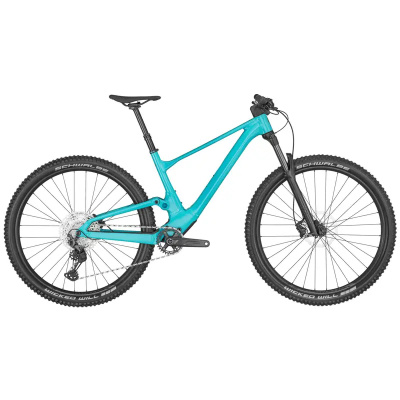
Scott Spark 960
Climb like an XC racer, descend with trail confidence, and switch character mid-ride.
- TwinLoc lever: instant climb/descend/lockout switch
- Integrated shock: protected, lower centre of gravity
- Adjustable head angle: ±0.6° for terrain tuning
- 130mm fork, 120mm rear: downcountry sweet spot
- Shimano XT rear mech, Deore 10-51T cassette
- Syncros dropper post: 125 - 150mm travel by size
Scott Spark 960 Deals

Prices and availability can change quickly. Delivery charges are not always included in listed prices.
Final price, stock status and delivery terms are set by retailer. We may receive a commission on purchases made.
Bikesy's Verdict
The Spark 960 is the rare bike that genuinely delivers on the 'one bike for everything' promise. You get Scott's clever integrated shock, the game-changing TwinLoc system, and adjustable geometry - all wrapped in a proven alloy frame that won't punish your wallet. It climbs with the efficiency of an XC race bike, descends with the poise of a trail machine, and adapts mid-ride with a single lever press.
If you're tired of choosing between speed and capability, or you're stepping up from a hardtail and want a bike that'll grow with your skills, the Spark 960 makes a compelling case. It's not the lightest option, and it's not designed for bike-park laps, but for technical XC, all-day epics, and varied trail riding, it's hard to fault. Ride it, dial in the suspension, and you'll wonder why more bikes don't offer this much versatility at this price.
Pros
- TwinLoc system transforms the bike's character instantly - climb, trail, descend modes at a thumb press
- Integrated shock design protects the unit and lowers centre of gravity for sharper handling
- Adjustable head angle (±0.6°) lets you fine-tune stability vs agility for your terrain
- Excellent climbing efficiency thanks to steep seat angle, lockout, and manageable weight
- Shimano XT rear mech and wide-range 10-51T cassette deliver reliable, precise shifts
- Comfortable geometry and capable suspension make it a genuine all-day trail partner
Cons
- Heavier than carbon alternatives if you're chasing outright race weight
- TwinLoc lever can feel cluttered alongside brake and dropper controls until you adapt
- Stock brakes are dependable but lack the power and modulation of four-piston options if you ride steep, technical descents regularly
About the Scott Spark 960
The Spark 960 lands in that fertile zone where XC efficiency meets trail capability - what the industry's taken to calling downcountry. Scott's alloy SL 6011 frame wraps around an integrated shock (tucked inside the seat tube for protection and a lower centre of gravity), pairs 130mm up front with 120mm out back, and hands you a TwinLoc lever that rewrites the bike's personality with a single thumb press. It's the sort of machine that'll let you lock out both ends for a fire-road sprint, then open everything up when the trail tilts down and the rocks pile up.
What makes the 960 compelling isn't just the tech - it's how accessible Scott's made it. You're getting the same integrated suspension platform and adjustable head-angle headset as the carbon Sparks, wrapped in a proven alloy frame that keeps the price realistic. The Shimano XT rear mech and Deore 12-speed cassette deliver clean, wide-range shifts; the RockShox Judy Silver fork and X-Fusion NUDE rear shock aren't boutique names, but they're well-damped and responsive when you dial them in. Add a dropper post, 29-inch wheels on 30mm-internal rims, and Schwalbe Wicked Will rubber, and you've got a bike that doesn't ask you to choose between climbing fast and descending with confidence.
It's aimed squarely at riders who want one bike for technical XC loops, all-day epics, and the occasional cheeky descent - without the weight penalty (or price tag) of carbon. If you're stepping up from a hardtail or looking for a versatile trail partner that won't punish you on the ups, the Spark 960 makes a persuasive case.
Scott Spark 960 geometry
The numbers translate to a bike that sits you upright enough to breathe on climbs but forward enough to weight the front wheel when things get steep. The 75.7 - 76.7° seat angle (depending on size) plants you over the cranks, so your quads fire efficiently rather than fighting the bike's balance. Reach grows steadily from 410mm (S) to 500mm (XL), giving taller riders room to move without feeling cramped, while stack climbs just enough to keep the bars accessible.
The 65.8° head angle - adjustable by ±0.6° via the Syncros headset cups - strikes a middle ground. In the slacker setting you gain composure on fast, rough descents; flip it steeper and the front end quickens for tight, technical climbs or twisty singletrack. Chainstays hold steady at 437.5mm across all sizes, short enough to flick the rear wheel through switchbacks but long enough to keep the bike planted under power. The result is a bike that feels nimble without being nervous, stable without feeling sluggish - a balance that suits riders who cover a lot of ground in a single ride.
When you drop the saddle and point it downhill, the geometry doesn't fight you. The front centre is long enough to inspire confidence, the BB sits low enough (43.5mm drop) to anchor your weight, and the 29-inch wheels smooth out the chatter. It's not an enduro sled, but it's far more capable than the travel numbers might suggest.
Component choices & upgrades
The stock build is thoughtfully assembled. Shimano's XT rear derailleur is a workhorse - precise, durable, and paired with a Deore 10-51T cassette that covers everything from lung-busting climbs to flat-out sprints. The Praxis Cadet crankset with a 32T ring is a sensible choice for mixed terrain, and the KMC X12 chain will take plenty of abuse before needing replacement. Shimano MT501 brakes with 180mm rotors front and rear offer predictable power; they're not the flashiest stoppers, but they're easy to bleed and reliable in all conditions.
The Syncros X-30SE rims (30mm internal width) are tubeless-ready and wide enough to support the Schwalbe Wicked Will 2.4-inch tyres at lower pressures, which improves grip and compliance on rough trails. The RockShox Judy Silver fork and X-Fusion NUDE rear shock both feature lockout and rebound adjustment - enough to tune the bike for your weight and riding style without overwhelming you with dials.
If you're chasing marginal gains or riding harder terrain, a few upgrades make sense. The fork is the obvious first step: a RockShox Pike or Fox 34 (still 130mm) would bring stiffer chassis, better damping, and more precise small-bump sensitivity. If you're regularly riding steep, technical descents, a four-piston brake upgrade - Shimano XT or SRAM Code R - adds modulation and power without much weight penalty. Tyres are always personal; if you're on drier, hardpack trails, a faster-rolling rear (Maxxis Rekon or Schwalbe Racing Ray) will save watts without sacrificing too much grip. The dropper post works well, but if you want more travel and your frame allows it, a longer stroke (170mm on XL frames) opens up more room to move on descents.
That said, the stock spec is well-sorted for the bike's intended use. Don't feel pressured to upgrade immediately - ride it, learn what you need, then spend wisely.
Where the Scott Spark 960 excels
This bike is outstanding at covering big distances efficiently while still handling technical terrain with poise. If your typical ride mixes long fire-road climbs, rooty singletrack, and the odd rocky descent, the Spark 960 is in its element. The TwinLoc system is the star here: flick it to lockout for smooth climbs, drop it to traction control for undulating trails, and open it fully when gravity takes over. That versatility means you're not constantly stopping to fiddle with suspension settings - you adapt on the fly and keep momentum.
It's also brilliant for riders who want trail capability without the weight and sluggishness of a longer-travel bike. The 130/120mm suspension soaks up enough to keep you comfortable and in control, but it doesn't wallow or bob when you're out of the saddle hammering. The geometry is modern enough to inspire confidence on descents - you can push into corners, weight the front wheel, and trust the bike to hold a line - but it's not so slack that it feels cumbersome on tight, technical climbs.
Where it's less ideal: if you're regularly riding bike-park laps, big jumps, or genuinely gnarly enduro stages, you'll eventually want more travel and a burlier frame. The alloy construction is robust, but it's not designed for repeated heavy impacts. Similarly, if you're a pure XC racer chasing every gram and prioritising outright speed over versatility, the carbon Spark models or a dedicated race hardtail will be lighter and stiffer. But for the vast majority of riders who want one bike that does it all - and does it well - the Spark 960 hits the mark.
Scott Spark 960 FAQs
What is the Scott Spark 960 good for?
The Spark 960 is designed for downcountry and trail riding - technical XC routes, all-day epics, and varied terrain that demands both climbing efficiency and descending capability. It's also a strong choice for riders moving up from a hardtail who want the comfort and control of full suspension without sacrificing speed.
How much travel does the Scott Spark 960 have?
It runs 130mm of travel up front (RockShox Judy Silver) and 120mm at the rear (X-Fusion NUDE). The TwinLoc system can reduce rear travel to 80mm or lock it out entirely for climbs, giving you three distinct suspension modes on the fly.
Is the Scott Spark 960 a good climber?
Yes, it's an excellent climber. The steep seat angle positions you efficiently over the pedals, the suspension locks out cleanly to eliminate bob, and the relatively low weight for an alloy full-suspension bike means you're not hauling unnecessary mass uphill. The TwinLoc lever makes steep ascents noticeably easier by firming up both ends instantly.
What is the TwinLoc system on a Scott Spark?
TwinLoc is a single handlebar-mounted lever that simultaneously controls both the fork and rear shock, offering three modes: Descend (full travel, open damping), Traction Control (reduced travel, firmer damping for rolling terrain), and Lockout (minimal travel, maximum efficiency for smooth climbs). It allows you to adapt the bike's character mid-ride without stopping to adjust individual suspension units.
What is the weight of the Scott Spark 960?
The complete bike weighs approximately 14.9 kg (32.96 lbs) with inner tubes fitted. That's competitive for an alloy full-suspension trail bike with this level of capability and componentry.
Is the Scott Spark 960 suitable for beginners?
It's well-suited to intermediate riders or confident beginners who've outgrown a hardtail and want a versatile, capable trail bike. The TwinLoc system is intuitive once you understand the three modes, and the geometry is forgiving enough to build confidence. That said, it's a performance-oriented machine - absolute beginners might find a simpler, less technical bike easier to learn on.
What are the differences between Scott Spark models?
The Spark range spans from alloy models (like the 960) to high-end carbon versions (900 series). Carbon frames are lighter and stiffer, and higher-spec models feature upgraded suspension (Fox or RockShox Pike/SID), lighter wheelsets, and premium drivetrains (Shimano XT, XTR, or SRAM XX1/X01). The 960 offers the same core technologies - integrated shock, TwinLoc, adjustable geometry - at a more accessible price point with a proven alloy frame.
Can I fit wider tyres on the Scott Spark 960?
The frame typically accommodates up to 29 x 2.4-inch tyres, which is what it ships with (Schwalbe Wicked Will). You might squeeze a 2.5-inch tyre on depending on tread pattern and rim width, but clearance will be tight, especially in muddy conditions. For most riders, 2.4-inch is the sweet spot for this bike's intended use.
Key Features & Benefits
- TwinLoc suspension system with three modes: Adapt the bike's character instantly - lock out for climbs, open up for descents, or split the difference for rolling trails - without stopping to adjust individual suspension units.
- Integrated shock housed inside the seat tube: Protects the rear shock from trail debris and weather, lowers the centre of gravity for more planted handling, and delivers a cleaner, more refined frame aesthetic.
- Adjustable head angle via Syncros headset (±0.6°): Fine-tune handling to suit your terrain - slacken it for confidence on fast, rough descents or steepen it for nimble, technical climbing and tight singletrack.
- Shimano XT rear derailleur with Deore 10-51T cassette: Wide-range gearing covers steep climbs and flat sprints with precise, durable shifts that hold up to hard use and muddy conditions.
- 130mm RockShox Judy fork and 120mm X-Fusion rear shock: Enough travel to smooth out rough trails and inspire confidence on descents, yet efficient enough to keep you fast on climbs and rolling terrain.
Scott Spark 960 2024 & 2023 differences
The 2025 Spark 960 is virtually identical to the 2024 model in terms of frame, suspension, drivetrain, and brakes. Both years feature the same Spark Alloy SL 6011 frame with integrated shock, RockShox Judy Silver TK fork (130mm), X-Fusion NUDE 5 RLX rear shock (120mm), Shimano XT/Deore 12-speed drivetrain, and Shimano MT501 brakes. The Syncros X-30SE wheelset and Schwalbe Wicked Will 2.4-inch tyres carry over unchanged, as does the TwinLoc 2 system and adjustable head-angle headset.
The 2023 model shares the same core platform and geometry but featured some component variations. Earlier builds used Syncros X-25 rims (25mm internal width) instead of the X-30SE, and some spec sheets listed Maxxis Rekon tyres rather than the Schwalbe Wicked Will. The frame, suspension design, and TwinLoc system remained consistent across all three years, meaning the ride character and capabilities are effectively unchanged. If you're considering a previous-year model, you're getting the same proven package with only minor component differences.
Alternatives to Consider
Within Scott's own Spark lineup, the Spark 950 steps up with a carbon frame that sheds weight and adds stiffness, plus upgraded Fox suspension and a Shimano XT drivetrain - worth considering if you're chasing lighter, more responsive handling and have the budget. Conversely, the Spark 970 (where available) offers a similar alloy platform with slightly more modest componentry, making it a sensible choice if you're prioritising value and plan to upgrade parts over time.
Cross-brand, the Trek Top Fuel 7 is a direct rival: alloy frame, 120mm travel front and rear, Shimano drivetrain, and a similar downcountry ethos. It lacks the TwinLoc system but offers Trek's ABP suspension and a slightly more trail-focused geometry. The Specialized Stumpjumper Alloy brings 130/140mm travel, a more aggressive stance, and SWAT storage, making it a better pick if you lean towards rowdier descents but still want to climb efficiently. For a lighter, more XC-focused option, the Giant Trance X 29 3 delivers Maestro suspension, a proven alloy frame, and solid Shimano componentry at a competitive price. Finally, the Norco Fluid FS A2 offers 120mm travel, modern geometry, and a playful character that suits riders who prioritise fun and versatility over outright race pace.
Reviews
TwinLoc changes the bike's mood at a thumb-press, and that versatility defines the ride. Lock it out and the Spark 960 pedals like a hardtail - stiff, direct, no wasted energy - yet drop it to traction control and the suspension breathes over roots and rocks without bobbing under power. Open it fully and you've got a composed trail bike that holds a line through rough sections and inspires confidence on descents that would rattle a pure XC machine.
Climbing is where it shines brightest. The steep seat angle plants you over the cranks, the lockout eliminates suspension squat, and the manageable weight means you're not hauling unnecessary mass uphill. When the gradient kicks up and the trail narrows, the bike feels eager rather than laboured - you can stay seated and spin or stand and punch without the rear end sagging or the front wheel lifting. Switchbacks are tidy thanks to short chainstays and a responsive front end.
Descending reveals more capability than the travel numbers suggest. The 130mm fork and 120mm rear soak up trail chatter and bigger hits with composure, the low centre of gravity (courtesy of the integrated shock) keeps the bike planted, and the adjustable head angle lets you dial in the right balance of stability and agility. We found the stock tyres grip well in mixed conditions, and the dropper post gives you room to move when the trail tilts down. It's not a mini-enduro bike, but it's far more capable than a traditional XC rig.
Because the alloy frame is heavier than carbon alternatives, you'll notice the difference if you're chasing outright race pace or hauling the bike up long, sustained climbs. The TwinLoc lever takes a ride or two to master - it's one more control to juggle alongside brakes and dropper - but once it's second nature, you'll wonder how you managed without it. Stock brakes are dependable but not exceptional; if you're regularly riding steep, technical descents, a four-piston upgrade adds welcome power and modulation.
What impresses most is how well the bike adapts. One moment you're locked out and hammering a fire road, the next you're threading through technical singletrack with the suspension open and the geometry dialled slack. It's a genuine one-bike solution for riders who cover varied terrain and don't want to compromise on climbs or descents.
Full Specification
| Frame Material | Spark Alloy SL 6011 aluminium |
| Fork | RockShox Judy Silver TK Solo Air, 130mm travel |
| Rear Shock | X-Fusion NUDE 5 RLX Trunnion, 120mm travel |
| Suspension System | TwinLoc 3-mode (Lockout, Traction Control, Descend) |
| Shifters | Shimano Deore SL-M6100-R Rapidfire Plus |
| Rear Derailleur | Shimano XT RD-M8100 SGS Shadow Plus |
| Crankset | Praxis Cadet M24, 32T |
| Cassette | Shimano Deore CS-M6100-12, 10-51T |
| Chain | KMC X12 |
| Brakes | Shimano MT501 hydraulic disc, 180mm rotors |
| Rims | Syncros X-30SE, 30mm internal width |
| Front Hub | Shimano HB-MT410-B, 15x110mm |
| Rear Hub | Shimano FH-MT410-B, 12x148mm Boost, Micro Spline |
| Tyres | Schwalbe Wicked Will 29x2.4" Performance, TLR, Addix |
| Handlebar | Syncros Fraser 2.0 DC Alloy, 760mm, 8° backsweep |
| Stem | Syncros DC 3.0/2.0, 31.8mm clamp, 0° rise |
| Grips | Syncros Pro Lock-On |
| Headset | Syncros Acros Angle Adjust, ±0.6° adjustment |
| Seatpost | Syncros Duncan Dropper 2.0/2.5, 31.6mm (125mm S/M, 150mm L/XL) |
| Saddle | Syncros Tofino 2.5 Regular |
| Bottom Bracket | Praxis M24 BB92, 41x92mm |
| Rear Axle | 148x12mm Boost, 55mm chainline |
| Approximate Weight | 14.9 kg with tubes |