
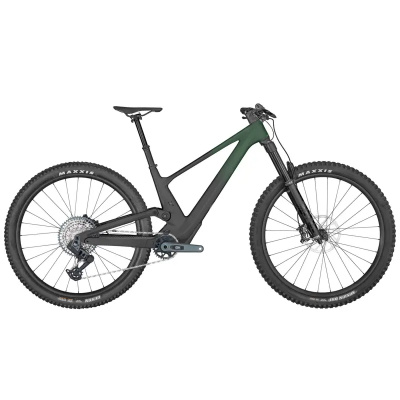
Scott Genius 910 TR
Enduro descending confidence with trail-bike climbing manners, wrapped in integrated tech that works.
- 160mm Öhlins fork and Fox Float X shock
- TwinLoc remote: three suspension modes at a thumb-press
- Integrated shock lowers centre of gravity, protects internals
- SRAM GX Eagle AXS wireless shifting
- 29×2.6" tyres: grip and rollover for technical trails
- 14.1 kg tubeless-ready weight
Scott Genius 910 TR Deals

Prices and availability can change quickly. Delivery charges are not always included in listed prices.
Final price, stock status and delivery terms are set by retailer. We may receive a commission on purchases made.
Bikesy's Verdict
The Genius 910 TR is a bike for riders who want enduro capability without the enduro penalty. It descends with the confidence and control of a gravity-focused machine, but it climbs well enough that you won't dread the approach. The integrated shock design isn't just a styling trick - it genuinely improves handling by lowering the centre of gravity and keeping the damper protected from trail muck. TwinLoc suspension adjustment and the Öhlins fork's damping range mean you can tune the bike to suit the terrain, your weight, and your riding style without needing a workshop.
Component spec is strong across the board: SRAM's wireless shifting, Shimano's four-piston brakes, and a Fox rear shock that's custom-tuned for the kinematics. The geometry is modern and confidence-inspiring, with enough reach and wheelbase to feel stable at speed but not so much that tight trails become a chore. If your riding mixes long, varied days with technical descents that matter, this bike makes sense. It's not the lightest or the slackest, but it's versatile, capable, and built to handle the kind of riding that demands both climbing efficiency and descending prowess.
Pros
- Integrated shock drops centre of gravity, improves handling and protects damper from trail debris
- TwinLoc remote switches suspension modes instantly, no need to stop and adjust
- Öhlins fork and Fox shock offer wide-ranging damping adjustment for precise tuning
- Steep seat angle and efficient kinematics make it a strong climber for a 160mm bike
- Stable, confidence-inspiring geometry on fast, rough descents
Cons
- Heavier than pure XC or lightweight trail bikes if you're chasing race times
- Integrated shock and internal routing make maintenance more involved than external setups
- Longer wheelbase feels less nimble in tight, twisty singletrack compared to shorter bikes
About the Scott Genius 910 TR
The Genius 910 TR sits in Scott's Super Trail lineup as a bike that wants to be everywhere at once - and largely succeeds. With 160 millimetres of travel front and rear, it's built for riders who chase steep, technical descents but refuse to suffer on the way up. The integrated shock design tucks the Fox Float X inside the carbon mainframe, dropping the centre of gravity and giving the bike a taut, planted feel when the trail tilts down. That hidden shock isn't just aesthetic sleight of hand; it shields the damper from trail grime and keeps the silhouette clean enough to turn heads in the car park.
Öhlins suspension up front and SRAM's wireless GX Eagle AXS transmission signal intent: this is a bike for riders who've outgrown compromise. The TwinLoc remote on the bar lets you flip between Climb, Traction Control, and Descend modes without breaking rhythm, so you're not fumbling with shock dials mid-stage. It's a tool for all-day epics where the terrain swings from fire-road slogs to root-choked chutes, and you need the bike to keep pace with both.
Scott pitches the Genius as a Super Trail machine, and the 910 TR spec backs that claim. It's not a pure enduro sled - chainstays are a touch shorter, the geometry a fraction less slack than the burliest bikes in the category - but that's the point. You get enduro capability without the penalty when the trail flattens or kicks up. If your riding mixes long approaches with rowdy payoffs, this bike makes sense.
Scott Genius 910 TR geometry
Reach grows from 430 millimetres in small to 510 in extra-large, and the stack climbs with it, so taller riders aren't folded over the front end. The head angle sits at 63.9 degrees in its slackest setting - the Acros headset lets you dial in plus or minus 0.6 degrees - which plants the front wheel ahead of you on steep descents and keeps the bike composed when speed builds. It's not the slackest number out there, but it's calm enough to inspire confidence without making tight switchbacks feel like piloting a barge.
Seat angle is steep - 76.8 to 77.4 degrees effective, depending on sag - so your weight stays forward on climbs and you're not fighting the bike to keep the front tyre grounded. Chainstays are a uniform 440 millimetres across all sizes, short enough to let you snap the rear end around on tight trails but long enough to keep the bike stable at speed. Bottom bracket drop is 33 millimetres, a middle-ground figure that balances cornering grip with pedal clearance on rock gardens.
Wheelbase stretches from 1,182 millimetres in small to 1,294 in extra-large, and you feel that length as high-speed stability. The bike doesn't dart or twitch; it holds a line and lets you commit. When the trail gets rough, that longer front centre absorbs chatter and keeps your hands relaxed. The trade-off? You'll need to muscle it a bit more in tight, technical sections where a shorter bike would pivot on a penny. But for most riders tackling natural trails and bike-park flow, the geometry strikes a sweet spot between agility and poise.
Component choices & upgrades
The stock build is already well sorted. Öhlins RXF36 m.2 Air fork brings high- and low-speed compression adjustment plus low-speed rebound, so you can tune the front end to match your weight, riding style, and terrain. The Fox Float X rear shock is a custom-tuned Nude unit with a piggyback reservoir and three-position TwinLoc control; it's a proven damper that balances support and sensitivity. Shimano XT four-piston brakes deliver consistent power, and the 203-millimetre front rotor gives you plenty of bite when the trail steepens.
SRAM's GX Eagle AXS wireless transmission shifts cleanly and eliminates cable drag, though the battery does need charging every few weeks. The Syncros Revelstoke 2.0 TR wheels are tubeless-ready with a 30-millimetre internal width, wide enough to support the 2.6-inch Maxxis tyres without squirm. Those tyres - Minion DHF up front, Dissector out back - offer decent grip, but they're not the stickiest rubber Maxxis makes. If you're riding wet roots or loose-over-hard conditions regularly, swapping to a grippier compound (MaxxGrip or at least a dual-compound DHR II rear) will unlock more traction and confidence.
The Syncros Hixon integrated carbon bar and stem clean up the cockpit and drop a bit of weight, though some riders prefer the fit flexibility of a separate stem. If you're chasing grams or want to fine-tune your position, an aftermarket carbon wheelset will shave half a kilo and sharpen acceleration. A coil shock conversion is an option if you prioritise small-bump sensitivity and consistent damping over weight, though the stock air shock is more than capable for most riders. The Duncan dropper post offers 140 to 200 millimetres of travel depending on frame size, which is generous; no need to upgrade unless you want a specific lever feel.
Where the Scott Genius 910 TR excels
This bike is outstanding at technical descending where you need both speed and control. The low centre of gravity from the integrated shock, the Öhlins fork's damping finesse, and the stable geometry combine to let you carry momentum through rough sections without getting bucked off line. It's a bike that rewards commitment: the faster you go, the better it feels. On natural trails with roots, rocks, and off-camber turns, the Genius holds traction and lets you focus on line choice rather than fighting the chassis.
It's also a very capable climber for a bike with this much travel. The steep seat angle and TwinLoc's Climb mode firm up the rear end enough that you're not bobbing away watts on long fire-road grinds. The front end stays planted, so you can attack technical climbs without the wheel lifting or wandering. It's not as efficient as a 120-millimetre trail bike, but it's far more capable when the descent matters as much as the ascent.
Where it's less ideal: pure cross-country racing or ultra-long endurance rides where every gram and every watt counts. The Genius is quick, but it's not a lightweight XC weapon. If your riding is mostly smooth flow trails or you rarely encounter genuinely rough terrain, you're carrying suspension and frame heft you won't use. It's also not the bike for riders who want maximum adjustability without tools - the integrated shock and internal cable routing make trailside tweaks more involved than on bikes with external routing.
Tight, twisty singletrack in dense woods can feel a bit cumbersome compared to shorter-wheelbase trail bikes. The Genius prefers open trails where you can let it run. And if you're new to mountain biking or still building confidence, the bike's capability might outpace your skills; a more forgiving trail bike with less travel could be a better starting point.
Scott Genius 910 TR FAQs
What is the travel of the Scott Genius 910 TR?
It runs 160 millimetres of travel front and rear. The Öhlins RXF36 fork and Fox Float X shock are both adjustable for compression and rebound, and the rear shock offers three TwinLoc modes to suit the terrain.
Is the Scott Genius 910 TR good for enduro riding?
Yes, it's built for it. The geometry, suspension tune, and component spec are all aimed at aggressive trail and enduro use. It climbs well enough to handle long stages, and it descends with the confidence and control you need when the trail gets steep and technical.
What are the key features of the Scott Genius 910 TR?
Integrated shock design for a lower centre of gravity and cleaner looks, TwinLoc remote for on-the-fly suspension adjustment, Öhlins fork with high- and low-speed damping control, SRAM GX Eagle AXS wireless shifting, and adjustable head angle via the Acros headset. It's a bike that blends modern tech with proven suspension kinematics.
What type of suspension does the Scott Genius 910 TR have?
It uses Scott's Virtual 4 Link kinematic with an integrated Fox Float X Nude shock housed inside the frame. The fork is an Öhlins RXF36 m.2 Air with 160 millimetres of travel. Both ends are fully adjustable, and the rear shock connects to the TwinLoc remote for mode switching.
What are the recommended tyre pressures for the Scott Genius 910 TR?
Start around 25 to 28 psi for a 75-kilogram rider, then adjust based on terrain, riding style, and personal preference. Lower pressures improve grip and comfort but increase pinch-flat risk; higher pressures reduce rolling resistance but can feel harsh. Tubeless setup lets you run lower pressures safely.
How does the TwinLoc system on the Scott Genius 910 TR work?
A thumb lever on the handlebar switches the rear shock between three modes: Climb (firm platform for efficient pedalling), Traction Control (mid-stroke support for mixed terrain), and Descend (full travel and sensitivity). It's a mechanical remote that adjusts the shock's compression damping, so you can adapt the bike's character without stopping.
What is the weight of the Scott Genius 910 TR?
It weighs approximately 14.1 kilograms with a tubeless setup. That's competitive for a 160-millimetre enduro bike with this level of spec, though lighter builds exist if you're willing to spend more or sacrifice durability.
Can I fit wider tyres on the Scott Genius 910 TR?
The frame clears 29-inch tyres up to 2.6 inches wide, which is what it ships with. Rear clearance is noted as tight, so going wider isn't recommended unless you're prepared for potential rub under full compression or in muddy conditions. The stock width is a good balance of grip and rollover for most riders.
Key Features & Benefits
- Integrated Fox Float X shock with TwinLoc remote: Lower centre of gravity for planted handling, plus instant suspension mode changes to match climbs, descents, or mixed terrain without stopping
- Öhlins RXF36 m.2 Air fork with HSC, LSC, and LSR adjustment: Fine-tune front-end damping to suit your weight, speed, and trail conditions for maximum control and comfort
- SRAM GX Eagle AXS wireless transmission: Clean cockpit, precise shifts under load, and no cable drag or housing maintenance
- Adjustable head angle via Acros headset (±0.6°): Dial in stability for steep descents or sharpen handling for tighter trails without swapping parts
- Syncros Revelstoke 2.0 TR wheels with 30mm internal width: Support wide tyres for better grip and compliance, tubeless-ready for lower pressures and fewer flats
Scott Genius 910 TR 2024 and 2023 differences
The 2025 model retains the Öhlins RXF36 m.2 Air fork and Fox Float X Nude rear shock that appeared on some 2023 builds, while the 2024 iteration often shipped with a Fox 36 Float Performance Elite Air FIT4 fork and Fox Nude 5T rear shock. Wheel spec shifted from Syncros Revelstoke 1.5 rims in 2024 to the wider Revelstoke 2.0 TR (30mm internal width) in 2025, improving tyre support and tubeless performance. Tyre choice has varied across model years: 2023 bikes ran Maxxis Minion DHF front and rear on some configurations, while 2024 and 2025 models pair a Minion DHF up front with a Dissector rear for lower rolling resistance. Dropper post travel lengths were adjusted slightly between 2023 and later years, with medium and large frames gaining an extra 10 millimetres of drop in 2024 and 2025. Core geometry, frame design, and the TwinLoc suspension system have remained consistent across all three years, so the ride character and handling are largely unchanged.
Alternatives to Consider
Within Scott's range, the Genius 900 Tuned steps up with a full carbon rear end and Fox Factory suspension, while the Genius 920 drops to a Fox 36 Rhythm fork and SRAM NX Eagle mechanical shifting, saving cost but sacrificing some damping refinement and wireless convenience. Both share the same frame platform and geometry, so the ride character stays consistent.
Cross-brand, the Trek Slash 8 offers similar 160-millimetre enduro capability with a more rearward axle path and Mino Link geometry adjustment, though it's a touch slacker and longer. The Specialized Enduro Comp brings 170 millimetres of travel and a more gravity-focused tune, making it burlier on descents but less efficient on climbs. For riders who want a bit less travel but similar versatility, the Santa Cruz 5010 X01 (130mm rear, 140mm front) is more playful and nimble, while the Giant Reign Advanced 1 (160mm) leans into a more planted, DH-inspired feel with Maestro suspension. The Norco Range C2 splits the difference with adjustable geometry and a slightly more aggressive stance than the Genius, appealing to riders who prioritise descending over climbing efficiency.
Reviews
Geometry strikes a balance that's rare in the 160-millimetre category: long enough to inspire confidence at speed, short enough in the rear to let you snap the bike around when the trail tightens. Reach and stack numbers put you in a centred, athletic position that works whether you're grinding up a fire road or leaning into a berm. The adjustable head angle is a practical touch - slacken it for bike-park days, steepen it for tighter natural trails - and the steep seat angle keeps your weight forward on technical climbs without feeling like you're perched on the nose.
TwinLoc changes the bike's mood at a thumb-press. Climb mode firms the rear shock enough to kill bob on long ascents, Traction Control opens up mid-stroke support for rolling terrain, and Descend mode unleashes full travel and sensitivity. When you're linking sections that demand different suspension behaviour, not having to stop and twist dials is a genuine advantage. The Öhlins fork backs that up with damping that stays composed through repeated hits, and the high- and low-speed adjusters let you dial in support without losing small-bump compliance.
Descending is where the integrated shock design pays off. Lower centre of gravity translates to a bike that feels glued to the ground, even when the trail surface is trying to buck you sideways. You can carry more speed into rough sections because the chassis isn't pitching or wallowing; it just tracks. The Fox Float X rear shock is well tuned for the kinematics, offering enough mid-stroke support to resist bottoming but enough sensitivity to keep the rear tyre hooked up on roots and rocks.
Climbing performance surprises riders who expect a bike this capable on descents to be a slog uphill. Because the seat angle is steep and the suspension platform efficient, you're not fighting the bike on long grinds. Lock the rear shock into Climb mode and it pedals like a trail bike with more travel. The front end stays planted on technical climbs, so you can attack steep, loose pitches without the wheel lifting or wandering off line.
Stock tyres are the weak link. Maxxis Minion DHF and Dissector are solid all-rounders, but the casing and compound aren't the grippiest options in the Maxxis range. On wet roots, off-camber rock, or loose-over-hard conditions, you'll feel the rear tyre hunting for traction. Swapping to a stickier compound or a more aggressive tread pattern unlocks another level of confidence, especially if you're riding steep, technical terrain regularly. The Syncros wheels are stout and wide enough to support those tyres well, so no complaints there.
SRAM GX Eagle AXS wireless shifting is clean and precise, though the battery does need charging every few weeks depending on how much you ride. Shifts are crisp under load, and the lack of cables means one less thing to maintain or replace. Shimano XT brakes deliver consistent power with good modulation, and the four-piston callipers give you plenty of stopping force when the trail gets steep. Rotor size is sensible - 203 millimetres up front, 180 rear - and heat management is solid on long descents.
Weight sits at 14.1 kilograms tubeless, which is competitive for a bike with this much travel and this level of spec. It's not a featherweight, but it's light enough that you're not cursing the bike on climbs or when you need to hoist it over a log. The integrated cockpit and carbon mainframe keep the overall mass in check without sacrificing stiffness or durability.