
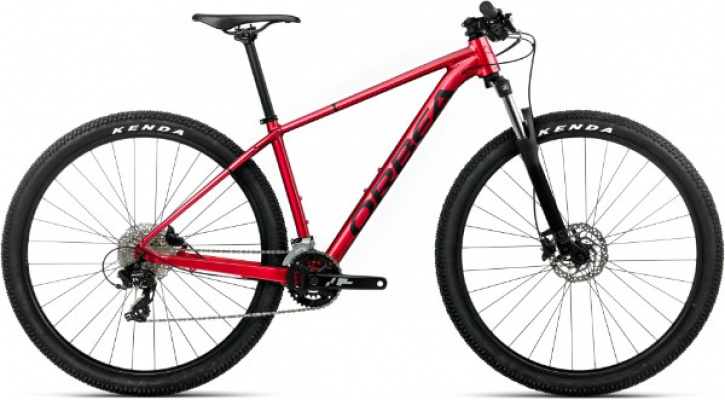
Orbea Onna 50
Build confidence on dirt with stable geometry, reliable hydraulic brakes, and a frame that'll outlast your first few seasons.
- Balanced geometry builds confidence from first ride
- Shimano MT200 hydraulic discs: reliable all-weather stopping
- 100mm SR Suntour fork smooths trail chatter
- Internal cable routing keeps things clean and quiet
- 25-year frame warranty backs long-term durability
- 2x8 Shimano drivetrain covers climbs and cruising
Orbea Onna 50 Deals

Prices and availability can change quickly. Delivery charges are not always included in listed prices.
Final price, stock status and delivery terms are set by retailer. We may receive a commission on purchases made.
Bikesy's Verdict
The Orbea Onna 50 does exactly what it sets out to do: it gets you riding off-road without fuss, without drama, and without demanding skills you haven't learned yet. The geometry is calm and forgiving, the Shimano hydraulic brakes inspire confidence from the first squeeze, and the 25-year frame warranty tells you Orbea isn't cutting corners where it counts. Yes, the coil fork and entry-level drivetrain will show their limits once your ambitions grow, but that's the trade-off for a price that leaves room in your budget for kit, coaching, or just more riding.
If you're new to mountain biking or returning after years away, this is the bike that'll hook you on singletrack without punishing mistakes or emptying your wallet. It's not trying to be a race weapon or a trail shredder - it's trying to be the bike you actually ride, and it succeeds with quiet competence. Upgrade the fork when you're ready, swap the tyres for something grippier, and you'll have a capable companion for years of weekend adventures. That's the kind of value that matters more than a flashy spec sheet.
Pros
- Shimano MT200 hydraulic brakes deliver confident stopping power at this price
- Balanced geometry makes learning intuitive and builds confidence quickly
- 25-year frame warranty underscores long-term durability and quality
- Tapered head tube opens upgrade path to better forks when skills progress
- Internal cable routing keeps things clean and reduces maintenance faff
Cons
- SR Suntour coil fork lacks small-bump sensitivity if you tackle rougher trails regularly
- Weight sits around 14.5 kg, heavier than racier options when climbs get long
- Entry-level Tourney/Microshift drivetrain won't satisfy riders chasing speed or precision
About the Orbea Onna 50
The Orbea Onna 50 is built around a simple idea: get you riding off-road without fuss, without drama, and without emptying your wallet. This aluminium hardtail sits squarely in the entry-level cross-country camp, but Orbea's shaped-tube frame and thoughtful geometry mean it doesn't ride like a budget afterthought. You're looking at a bike that prioritises balance and intuition over outright speed, making it a natural choice if you're stepping up from towpaths or want something capable for weekend trail exploration without the complexity of full suspension.
Orbea matches wheel size to frame size - smaller frames roll on 27.5-inch hoops, larger ones on 29ers - so the handling stays consistent whether you're five-foot-two or six-foot-four. The tapered head tube opens the door to fork upgrades down the line, and internal cable routing keeps things tidy when you're threading through brambles or hosing off mud. It's not trying to be a race weapon; it's trying to be the bike that gets you hooked on singletrack, and it does that job with quiet competence.
Shimano's MT200 hydraulic brakes anchor the spec, delivering predictable bite that inspires confidence when the trail tilts down. The SR Suntour XCE coil fork won't win awards for suppleness, but it takes the sting out of roots and rocks well enough for your first seasons on dirt. Orbea backs the frame with a 25-year warranty, a statement of intent that speaks louder than marketing copy ever could.
Orbea Onna 50 geometry
The Onna 50's geometry is calibrated for stability rather than aggression. The head angle sits at a steady 68.5 degrees across all sizes, which translates to calm, predictable steering that won't dart away from you when the trail gets choppy. Reach grows progressively from 365 millimetres in extra-small to 468 in extra-large, keeping your weight centred without stretching you into an uncomfortable crouch. Stack climbs in step, so you're upright enough to scan the trail ahead and breathe easily on climbs, yet not so bolt-upright that you feel perched when the gradient reverses.
Chainstays measure 430 millimetres on the two smallest frames and stretch to 440 on medium through extra-large, a modest length that keeps the rear wheel tucked in for snappy acceleration and nimble cornering. The wheelbase grows from just over a metre in extra-small to nearly 1.2 metres in extra-large, so larger riders enjoy the same planted feel as smaller ones. Bottom-bracket drop hovers around 23 millimetres, low enough to plant your feet through corners but not so low you're clipping pedals on every rock garden.
What does all that mean when you're actually riding? You'll find the bike easy to point where you want it, forgiving when you misjudge a line, and stable enough that you can relax and enjoy the view rather than wrestling the bars. It's not a bike that rewards aggressive body English or rewards late braking into tight switchbacks, but it won't punish you for being tentative, either. If you're learning to read trail features or building fitness on fire roads, this geometry gives you room to grow without feeling like you're fighting the bike.
Component choices & upgrades
The stock build is honest about its place in the pecking order. Shimano's Tourney rear mech and Microshift shifters handle the 2x8 drivetrain duties without fuss, offering a 22/36-tooth chainring pairing and an 11-34 cassette that covers most climbs you'll encounter as a newer rider. It's not slick or particularly light, but it shifts reliably and parts are cheap to replace when wear catches up. The Shimano MT200 hydraulic brakes are the spec highlight - consistent lever feel, easy to bleed, and powerful enough that you won't be white-knuckling the levers on steep descents.
The SR Suntour XCE coil fork is functional rather than inspiring. It'll soak up the worst of the bumps and keep your front wheel tracking, but it lacks the small-bump sensitivity and adjustability of an air-sprung fork. If you find yourself riding more often and tackling rougher trails, a mid-range air fork - something with rebound damping and a lockout - will transform the front end and is the single most impactful upgrade you can make. The Kenda K1153 tyres are adequate for dry hardpack and light trail use, but swapping to a grippier tread pattern will pay dividends in wet roots or loose corners.
The Mach1 ER20 rims are sturdy enough for learning, though they're not especially wide by modern standards. If you're staying on moderate terrain, they'll serve you well. The alloy cockpit - 720-millimetre flat bar, seven-degree stem - is sensible and comfortable, though taller riders might appreciate a wider bar for more leverage. The 27.2-millimetre seatpost diameter means you can slot in an internal dropper post if you want to tackle more technical descents without stopping to lower your saddle manually, though that's an upgrade to consider once you've outgrown the stock setup rather than something you need on day one.
Where the Orbea Onna 50 excels
This bike is outstanding at one thing: getting you comfortable on dirt. If you're new to mountain biking or returning after years away, the Onna 50's forgiving geometry and predictable handling make it easy to build skills without feeling overwhelmed. It's the bike for weekend trail centre loops, canal-path commutes with a detour through the woods, and fitness rides on gravel byways where the surface varies from smooth hardpack to rutted doubletrack. The hydraulic brakes and stable steering mean you can focus on reading the trail rather than managing the bike, and the 2x8 drivetrain gives you enough gears to spin up climbs without grinding.
It also does well on moderate cross-country routes - nothing too technical, but rolling singletrack with the occasional root section or rocky climb won't faze it. The 100-millimetre fork and wide tyres smooth out trail chatter enough that you're not rattled to pieces, and the upright position keeps you fresh over a couple of hours in the saddle. If your local trails are more about flow and fitness than drops and jumps, the Onna 50 will keep pace without complaint.
Where it's not ideal: aggressive trail riding, bike parks, or anything involving sustained technical descents. The coil fork and entry-level drivetrain will hold you back once your ambitions outgrow mellow XC terrain, and the weight - around 14.5 kilograms - means you'll feel every extra gram on long climbs. It's also not the bike for riders chasing Strava segments or racing; the geometry and spec are tuned for stability and accessibility, not outright speed. If you know you want to ride hard and fast from the start, look higher up the range or at a different category altogether.
Orbea Onna 50 FAQs
What size Orbea Onna 50 should I get?
Orbea publishes a detailed size chart based on rider height, and it's worth trusting those numbers. Extra-small suits riders from 156 to 166 centimetres, small from 163 to 174, medium from 171 to 182, large from 179 to 189, and extra-large from 185 to 195. If you're between sizes, go smaller for nimbler handling or larger for more stability and room to move on descents. A test ride will settle any doubts.
Is the Orbea Onna 50 good for beginners?
Absolutely. The balanced geometry, reliable brakes, and forgiving ride character make it an excellent first mountain bike. You won't be fighting the handling or worrying about component failures, and the 25-year frame warranty means you can focus on riding rather than fretting about durability. It's also priced to leave budget for a helmet, shoes, and maybe a skills course.
What is the weight of the Orbea Onna 50?
Orbea doesn't publish an official weight, but independent sources put it around 14.5 to 14.9 kilograms for a large frame. That's heavier than race-focused hardtails but typical for an entry-level aluminium bike with a coil fork and 2x drivetrain. You'll notice it on long climbs, but it's not a deal-breaker for the intended use.
What are the main differences between Orbea Onna models?
The Onna range is tiered by component quality. The Onna 50 sits at the entry level with a coil fork, 2x8 drivetrain, and basic finishing kit. Step up to the Onna 20 or Onna 10 and you'll find air forks, 1x drivetrains with wider-range cassettes, and lighter wheels. The frame geometry and construction remain consistent, so upgrades are about performance rather than fundamental ride character.
Can I upgrade the fork on an Orbea Onna 50?
Yes, and it's the most worthwhile upgrade you can make. The tapered head tube accepts a wide range of aftermarket forks, so you can swap in an air-sprung model with rebound damping and a lockout. Stick to 100 millimetres of travel to maintain the geometry, and budget for a quality fork from RockShox, Fox, or Marzocchi. The difference in small-bump sensitivity and control will be immediately noticeable.
What kind of riding is the Orbea Onna 50 best suited for?
Cross-country trail riding, gravel exploration, and fitness-focused off-road rides. It's happiest on rolling singletrack, fire roads, and moderate climbs where stability and comfort matter more than outright speed. It's not designed for technical descents, jumps, or aggressive trail riding, but it'll handle the occasional rough section without drama.
How does the Orbea Onna 50 compare to the Trek Marlin 5?
Both are entry-level aluminium hardtails with coil forks and 2x drivetrains, so they occupy similar territory. The Onna 50 edges ahead with hydraulic disc brakes as standard, while the Marlin 5 typically ships with mechanical discs. Geometry is comparable, though the Onna's tapered head tube offers more upgrade flexibility. Either will serve a new rider well; your choice may come down to local dealer support and which frame fits you better.
Key Features & Benefits
- Shimano MT200 hydraulic disc brakes: Reliable, consistent stopping power in all weather builds confidence on descents and technical sections
- Balanced 68.5° head angle and progressive reach: Stable, predictable steering that won't dart or punish mistakes, letting you focus on reading the trail
- Tapered head tube and internal cable routing: Future-proofs fork upgrades and keeps cables protected from trail debris and weather
- Wheel-size-to-frame-size matching (27.5"/29"): Consistent handling across all rider heights, so smaller and larger riders enjoy the same planted feel
- 25-year frame warranty: Peace of mind that your investment is protected for the long haul, backed by Orbea's quality commitment
Orbea Onna 50 2025, 2024 & 2023 differences
The Onna 50 has remained remarkably consistent across the 2023, 2024, 2025, and 2026 model years, with Orbea sticking to a proven formula rather than chasing annual spec changes. All four years share the same aluminium frame construction with internal cable routing, tapered head tube, and balanced geometry - 68.5-degree head angle, progressive reach, and wheel-size-to-frame-size matching. The SR Suntour XCE coil fork with 100 millimetres of travel, Shimano Tourney TX800 rear derailleur, Microshift TS38 shifters, and Shimano MT200 hydraulic disc brakes have carried over unchanged, as have the Kenda K1153 tyres and Mach1 ER20 rims.
The only notable variation appears in minor finishing kit details - some sources list the handlebar width as 720 millimetres for earlier years and 740 millimetres for later ones, though this may reflect regional spec differences or supplier changes rather than a deliberate update. The 2024 model year saw some sources mention a remote lockout feature for the fork, though this hasn't been consistently confirmed across all markets. Frame sizes, geometry figures, and the 2x8 drivetrain layout have remained identical, so a 2023 Onna 50 rides effectively the same as a 2026 model. If you're shopping used or clearance stock, any of these model years will deliver the same experience, and parts compatibility is seamless across the range.
Alternatives to Consider
Within Orbea's own stable, the Onna 20 steps up with an air fork, 1x drivetrain, and lighter wheels, making it worth the stretch if your budget allows and you know you'll ride often. The Onna 10 pushes further still with higher-tier components and a more refined ride, though it edges towards intermediate territory. If you're confident the Onna 50's spec will leave you wanting more within a season, either of those models will grow with you longer.
Cross-brand, the Trek Marlin 6 offers similar geometry and intent but typically ships with mechanical disc brakes, so the Onna 50's hydraulics give it an edge in stopping power and maintenance ease. The Specialized Rockhopper is another natural rival, often spec'd with a coil fork and 2x drivetrain; it's a solid choice if your local dealer is Specialized-focused, though the ride character is broadly comparable. The Giant Talon 3 undercuts on price slightly and delivers a capable entry-level package, though component choices vary by region. For a bit more refinement, the Cube Attention SL brings a 1x drivetrain and air fork into play, making it a strong contender if you're willing to spend a touch more for better trail manners. The Vitus Nucleus 27 VR is worth a look if you prioritise value and don't mind hunting for stock, often punching above its weight with spec choices that rival bikes costing more.
Reviews
Balanced geometry and intuitive handling make the Onna 50 a natural confidence-builder for riders finding their feet on dirt. Stability comes first here: the 68.5-degree head angle and progressive reach keep the front wheel planted through choppy sections, and the upright position lets you scan ahead rather than staring at your stem. When the trail tilts up, the 2x8 drivetrain offers enough range to spin rather than grind, and the seated position keeps your weight centred so traction stays glued. It's not quick by race standards, but it's never flustered, either.
Shimano's MT200 hydraulic brakes earn their keep every ride. Lever feel is consistent, modulation is predictable, and you're never hunting for bite when the trail gets steep or slick. For an entry-level spec, they're a genuine highlight and remove one of the usual compromises at this price point. The SR Suntour XCE fork does its job - it absorbs the worst hits and keeps the front wheel tracking - but it lacks the small-bump sensitivity and adjustability that would let you fine-tune for different trails. On smoother cross-country routes it's adequate; push into rougher terrain and you'll feel every limitation.
Weight hovers around 14.5 kilograms, which you'll notice on long climbs or when manhandling the bike over obstacles. Because the frame is well-built and the geometry sound, the extra mass doesn't ruin the ride; it just means you're working a bit harder than you would on a lighter machine. Kenda's K1153 tyres grip well enough on dry hardpack but can feel vague in wet roots or loose corners, so a tyre swap is an easy win if you're riding year-round in British conditions. The alloy cockpit is comfortable and the saddle doesn't demand an immediate swap, which is more than you can say for many bikes at this level.
We rate the Onna 50 as a smart entry point if your goal is to ride more and worry less. It won't flatter you with race-bike speed or spoil you with high-end suppleness, but it will get you out on trail, build your skills, and leave enough budget for the helmet, shoes, and maybe a weekend away to ride somewhere new. When you're ready to upgrade, the tapered head tube and solid frame mean a better fork and drivetrain will transform the bike rather than expose its limits. That's the kind of value that lasts longer than a flashy spec sheet.
Full Specification
| Frame Material | Orbea Onna Alloy (Aluminium) |
| Fork | SR Suntour XCE 28 Coil, 100mm travel |
| Shifters | Microshift TS38 |
| Rear Derailleur | Shimano Tourney TX800 |
| Front Derailleur | Shimano M315 |
| Crankset | Forged alloy, 22×36t |
| Cassette | Sun Race CSM66 11-34t, 8-speed |
| Chain | KMC X8 |
| Brakes | Shimano MT200 hydraulic disc |
| Brake Rotors | 160mm, post mount |
| Rims | Mach1 ER20 19c |
| Tyres | Kenda K1153, 29×2.35" |
| Handlebar | Alloy, 31.8mm, flat, 720mm |
| Stem | Alloy, 7º |
| Headset | 1 1/8" semi-integrated |
| Seatpost | Alloy, 27.2mm, setback 0 |
| Saddle | Essax Adv soft 135mm for Orbea |
| Pedals | VP-537 Black |
| Bottom Bracket | BSA, 73mm, threaded |
| Rear Axle | 9×135mm quick-release |