
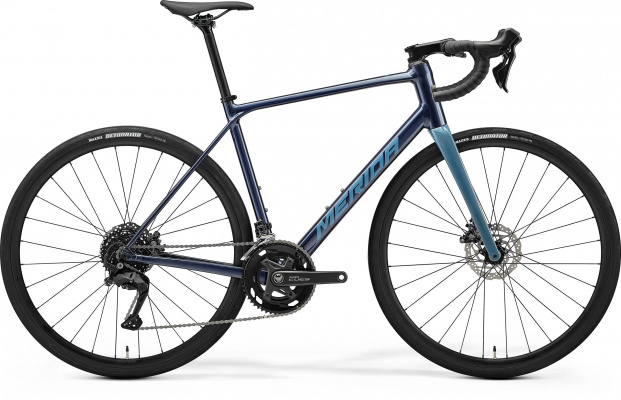
Merida SCULTURA ENDURANCE 200
Comfortable, stable, and dependable for long tarmac miles, with generous tyre clearance and all-weather braking.
- Triple-butted 6066 aluminium: light, stiff, all-day durable
- Clearance for 35c tyres: plush comfort over rough tarmac
- Shimano CUES 2×9: reliable wide-range gearing
- Endurance geometry: upright comfort, stable handling
- Internal cable routing: clean cockpit, tidy aesthetic
- Mechanical disc brakes: all-weather stopping confidence
Merida SCULTURA ENDURANCE 200 Deals


Prices and availability can change quickly. Delivery charges are not always included in listed prices.
Final price, stock status and delivery terms are set by retailer. We may receive a commission on purchases made.
Bikesy's Verdict
The Scultura Endurance 200 nails the brief: a comfortable, stable, dependable road bike for riders who measure success in hours rather than watts. Merida's endurance geometry genuinely delivers all-day comfort without sacrificing responsiveness, the generous tyre clearance opens the door to plush rubber and rough-road versatility, and the mechanical disc brakes offer consistent stopping power in any weather. The Shimano CUES 2×9 drivetrain is reliable and wide-ranging, the aluminium frame punches above its weight in ride quality, and the tidy internal cable routing and thoughtful frame details give it a more expensive look than the price suggests.
It's not the bike for chasing KOMs or racing crits - the relaxed geometry and slightly heavier weight will leave you working harder than riders on racier machines - but if you're stepping into endurance cycling, commuting year-round, or simply want a capable all-rounder that won't punish you after five hours in the saddle, the Scultura Endurance 200 is a smart, sensible choice. Ride it as it comes, identify what you actually need rather than what sounds appealing, and you'll find it rewards patience rather than punishing ambition.
Pros
- Endurance geometry delivers genuine all-day comfort and stable, confidence-inspiring handling
- Clearance for 35c tyres transforms rough tarmac and opens the door to light gravel
- Shimano CUES 2×9 drivetrain is reliable, wide-ranging, and easy to service
- Mechanical disc brakes offer consistent all-weather stopping power
- Triple-butted aluminium frame balances stiffness, compliance, and durability
- Internal cable routing and tidy frame details punch above the price point
Cons
- Heavier than carbon endurance bikes if you're chasing KOMs or racing
- Mechanical disc brakes lack the modulation and power of hydraulic systems when descending hard
- CUES groupset is entry-level; shift quality and refinement trail higher-tier options
About the Merida SCULTURA ENDURANCE 200
Merida's Scultura Endurance 200 lands squarely in the sweet spot where comfort meets capability. Built around a triple-butted 6066 aluminium frame with endurance geometry that prioritises all-day poise over race-day aggression, it's aimed at riders who measure success in hours rather than watts - though you'll find enough snap in the frame to keep things lively when the road tilts up or the pace lifts. The 2026 spec centres on Shimano's CUES 2×9 drivetrain, a sensible wide-range mechanical setup that keeps things simple and serviceable, paired with mechanical disc brakes that deliver dependable stopping in any weather. Clearance for 35c tyres (32c with mudguards) opens the door to proper cushioning over chipseal, patched tarmac, and the occasional gravel byway.
This isn't a bike chasing podiums or Strava crowns. It's designed for riders who want a stable, confidence-inspiring platform for long weekend loops, charity rides, or daily commutes where comfort trumps outright speed. The longer head tube and slacker head angle dial back the twitchiness you'd find on a pure race machine, trading razor-sharp steering for planted, predictable handling that won't punish you after five hours in the saddle. Merida's kept the aesthetic tidy - internal cable routing through the headset, a hidden seat clamp, and a removable rear seat-stay bridge for mudguard mounting - so it looks as sorted as it rides. At around 10.1 kg, it's not featherweight, but the frame's hydroformed tubes and smooth welding deliver a ride quality that feels more expensive than the spec sheet suggests.
Where the Scultura Endurance 200 really earns its keep is in versatility. You're not locked into narrow race rubber; fit a set of 32c or 35c tyres, drop the pressure a notch, and suddenly rough lanes and potholed B-roads lose their sting. The 50-34 chainset and 11-36 cassette give you enough range to spin up long drags without grinding, while the mechanical disc brakes - Shimano CUES levers and 160mm rotors - offer consistent bite when the weather turns. It's a bike that rewards patience rather than punishing ambition, and for riders stepping into endurance cycling or looking for a dependable all-rounder on a sensible budget, that's exactly the point.
Merida SCULTURA ENDURANCE 200 geometry
The Scultura Endurance 200's geometry is built around one clear goal: keeping you comfortable and composed when the miles stack up. Merida's stretched the wheelbase, lifted the head tube, and slackened the head angle compared to the racier Scultura models, so you sit more upright with less weight pressing through your palms. That taller front end takes the strain off your lower back and neck, which matters more at hour four than hour one, and the calmer steering angle means the bike tracks steadily rather than darting at every input. You won't carve switchbacks with the same urgency as a crit racer, but you'll hold a line through fast descents without white-knuckling the hoods.
The longer wheelbase adds stability, especially when you're loaded with a saddlebag or riding no-hands to unwrap a bar. It's not sluggish - the aluminium frame still responds crisply when you stand and accelerate - but it prioritises predictability over twitchiness. When you're threading through traffic or navigating a tight corner on tired legs, that planted feel is reassuring rather than dull. The geometry scales sensibly across the size range, from XXXXS to XL, with stem lengths and handlebar widths adjusted to keep the cockpit proportional; smaller riders get an 80mm stem and 380mm bars, while XL frames stretch to a 110mm stem and 420mm bars. The result is a bike that feels balanced whether you're 5'2" or 6'4", with a riding position that encourages you to settle in rather than hunch over.
Component choices & upgrades
The stock build on the Scultura Endurance 200 is thoughtfully sorted for its intended use. Shimano's CUES 2×9 drivetrain is an entry-level groupset, but it's reliable, easy to service, and offers a sensible gear range - the 50-34 chainset paired with an 11-36 cassette gives you enough climbing gears to spin up steep lanes without resorting to a granny ring, and enough top end for fast descents or tailwind sprints. Shifts are mechanical rather than electronic, which means cable adjustments rather than battery charging, and for many riders that's a feature rather than a compromise. The mechanical disc brakes - CUES levers and 160mm rotors - deliver consistent stopping power in wet or dry conditions, though they lack the feather-light modulation and outright power of hydraulic systems.
If you're planning to ride this bike hard for years, a few upgrades will sharpen the experience without breaking the budget. Swapping to hydraulic disc brakes is the most transformative change - you'll gain finer control, less hand fatigue, and more stopping power, especially on long descents where mechanical cables can heat up and fade. A cassette upgrade to an 11-speed or 12-speed groupset (which would require new shifters, derailleurs, and wheels or a new freehub body) is a bigger investment, but it smooths out gear steps and opens the door to wider range options if you're tackling mountainous terrain. The Maxxis Detonator tyres are decent all-rounders, but if you're chasing comfort, a set of supple 32c or 35c tyres from Continental, Schwalbe, or Panaracer will transform the ride quality over rough surfaces. Finally, the MERIDA COMP SL saddle is serviceable, but saddles are personal - if you're not comfortable after a few rides, invest in a proper fitting and a saddle that suits your sit-bone width and riding style.
That said, the stock spec is more than capable for the vast majority of riders. The MERIDA COMP SL II wheels are tubeless-ready with a sensible 23mm internal width, the cockpit components are well-proportioned, and the frame's 27.2mm seatpost offers a bit of natural flex for compliance. Don't feel pressured to upgrade immediately; ride the bike as it comes, identify what you actually need rather than what sounds appealing, and spend your money where it'll make the biggest difference to your riding.
Where the Merida SCULTURA ENDURANCE 200 excels
The Scultura Endurance 200 is outstanding at one thing above all: keeping you comfortable and confident on long tarmac rides. If your typical weekend involves three to five hours in the saddle, mixing smooth A-roads with rougher backroads and the occasional potholed lane, this bike will soak up the worst of it without complaint. The endurance geometry and generous tyre clearance mean you can run plush rubber at lower pressures, turning chipseal and patched tarmac into a tolerable surface rather than a bone-rattling ordeal. It's equally at home on charity rides, audax events, or daily commutes where reliability and comfort matter more than outright speed.
Beyond its primary mission, the Scultura Endurance 200 handles a surprising range of secondary tasks. It's stable enough for light touring - add a saddlebag and frame bag, and you've got a capable overnighter - and the mechanical disc brakes and wide tyre clearance make it a sensible choice for year-round riding in British weather. The 2×9 gearing is wide enough for hilly terrain without being overly complex, and the aluminium frame shrugs off the kind of abuse that would leave a carbon frame cracked or chipped. If you're new to road cycling or returning after a break, the upright position and predictable handling are forgiving rather than intimidating.
Where it's not ideal: pure speed. If you're chasing KOMs, racing crits, or regularly riding in fast club chains, the Scultura Endurance 200's relaxed geometry and slightly heavier weight will leave you working harder than riders on racier machines. It's not sluggish, but it's not built for explosive accelerations or knife-edge handling. Similarly, if you're planning serious off-road adventures - gravel racing, bikepacking on rough trails - the Scultura Endurance 200's road-focused geometry and narrower handlebar won't offer the control or comfort of a dedicated gravel bike like Merida's own Silex. It's a tarmac bike that can handle rough edges, not a gravel bike that tolerates smooth roads.
Merida SCULTURA ENDURANCE 200 FAQs
What is the maximum tyre clearance on a Merida Scultura Endurance 200?
The frame officially clears up to 35c slick tyres, or 32c if you're fitting mudguards. That's enough width to run lower pressures for comfort over rough tarmac and light gravel, and it gives you flexibility to swap between fast road rubber and more robust all-weather tyres depending on the season.
Is the Merida Scultura Endurance 200 good for long rides?
Absolutely. The endurance geometry - longer head tube, slacker head angle, extended wheelbase - is designed specifically to keep you comfortable over multi-hour efforts. The upright position reduces strain on your back and neck, the stable handling inspires confidence when you're tired, and the wide tyre clearance lets you prioritise comfort over speed.
What is the difference between Merida Scultura and Scultura Endurance?
The standard Scultura is a race-oriented road bike with more aggressive geometry, a lower front end, and typically narrower tyre clearance. The Scultura Endurance prioritises comfort and stability with a taller head tube, slacker angles, and clearance for wider tyres - it's built for long days rather than short, sharp efforts.
Can I fit wider tyres on the Merida Scultura Endurance 200?
Yes, up to 35c slick tyres will fit without mudguards, or 32c if you're adding guards. The frame's generous clearance is one of its key strengths, allowing you to run plush rubber at lower pressures for a more comfortable ride over imperfect surfaces.
Is the Shimano CUES groupset suitable for road cycling?
It's an entry-level mechanical groupset, but it's reliable, easy to maintain, and offers a sensible gear range for endurance riding. Shifts are crisp enough for road use, and the 2×9 setup with an 11-36 cassette gives you plenty of climbing gears without unnecessary complexity. It won't match the refinement of higher-tier groupsets, but it's more than adequate for the bike's intended purpose.
What type of bottom bracket does the Merida Scultura Endurance 200 have?
It uses a Pressfit 86.5 (BB86/BB92) bottom bracket standard. Pressfit systems can be lighter and stiffer than threaded alternatives, though they require proper installation and occasional maintenance to avoid creaking.
Is the Merida Scultura Endurance 200 a good bike for beginners?
Yes. The upright riding position, stable handling, and forgiving geometry make it an excellent choice for riders new to road cycling. The mechanical drivetrain and brakes are straightforward to use and service, and the wide tyre clearance lets you prioritise comfort while you're building fitness and confidence.
How much does the Merida Scultura Endurance 200 weigh?
Around 10.1 kg for the complete bike. That's not featherweight, but it's reasonable for an aluminium endurance bike at this price point, and the frame's ride quality more than compensates for the extra grams.
Key Features & Benefits
- Endurance geometry with longer head tube and slacker head angle: Upright position reduces back and neck strain on long rides; stable handling inspires confidence when you're tired or navigating rough surfaces
- Clearance for up to 35c tyres (32c with mudguards): Run lower pressures for plush comfort over chipseal and patched tarmac; versatility to fit all-weather or light gravel rubber
- Shimano CUES 2×9 drivetrain with 50-34 chainset and 11-36 cassette: Wide gear range tackles steep climbs without grinding; reliable mechanical shifting is easy to adjust and service yourself
- Mechanical disc brakes with 160mm rotors: Consistent, dependable stopping power in wet or dry conditions; less maintenance than hydraulic systems for year-round commuting
- Triple-butted 6066 aluminium frame with hydroforming and internal cable routing: Light, stiff, and durable construction with a clean aesthetic; frame absorbs road buzz without feeling flexy under power
Merida SCULTURA ENDURANCE 200 2024 & 2023 differences
The 2026 model introduces Shimano's CUES 2×9 drivetrain as standard, replacing the Shimano Sora groupset found on 2024 and 2023 versions. CUES offers a similar gear range (the 11-36 cassette remains) but with updated ergonomics and slightly refined shift action. Tyre clearance has been officially expanded to 35c slick tyres (32c with mudguards) for 2026, whereas earlier models were often quoted at 28mm or 32mm maximum depending on the specific variant. Internal cable routing through the headset is now emphasised across the range, contributing to a cleaner cockpit aesthetic.
Component choices have shifted slightly: the 2026 spec uses MERIDA COMP SL II wheels with a 23mm internal width, whereas some 2024 models featured narrower rims. The Maxxis Detonator 700x32C tyres are now standard, replacing the Maxxis Pursuer 25c or 28c rubber found on earlier builds. Mechanical disc brakes remain consistent across all three years, with Shimano CUES levers and 160mm rotors on the 2026 model versus Shimano Sora levers on 2024 and 2023 versions. Frame geometry and material - triple-butted 6066 aluminium with endurance-focused angles - have remained largely unchanged, preserving the bike's core ride character across model years.
Alternatives to Consider
Within Merida's own range, the standard Scultura 200 offers a more race-focused geometry with a lower front end and typically narrower tyre clearance - choose it if you're chasing speed over comfort. Step up to the Scultura Endurance 400 and you'll gain hydraulic disc brakes and a higher-tier groupset (often Shimano Tiagra or 105), which sharpens braking modulation and shift quality without abandoning the endurance platform. For riders tempted by gravel, Merida's Silex 200 shares the aluminium construction and relaxed geometry but adds flared handlebars, wider tyre clearance, and off-road-ready rubber - it's the choice if you're mixing tarmac with bridleways and forest tracks.
Cross-brand, the Cube Attain SL offers a similar aluminium endurance frame with mechanical disc brakes and Shimano Sora or Tiagra gearing, often at a comparable price point; it's a direct peer with slightly different frame shaping and component choices. The Cannondale Synapse Disc Sora brings Cannondale's SAVE micro-suspension into the mix, adding a layer of compliance through the seatstays and fork for riders prioritising comfort above all else. The Specialized Allez Elite leans more towards sport than pure endurance, with a slightly racier geometry and narrower tyre clearance, but it's worth considering if you want a bit more snap and don't mind sacrificing some long-distance comfort. Finally, the Giant Contend AR 3 offers endurance geometry, wide tyre clearance, and Shimano Sora gearing in an aluminium package that's often priced competitively - it's another solid all-rounder if you're shopping on value.
Reviews
Longer rides reveal the frame's real character: planted, composed, and reassuringly stable when fatigue starts to nibble at your concentration. The endurance geometry isn't just marketing - you genuinely sit more upright, with less weight grinding through your palms and lower back, and after four or five hours that difference becomes tangible rather than theoretical. Handling is calm rather than nervous; the bike tracks confidently through fast descents and holds a line through corners without demanding constant micro-corrections, which matters more when you're threading through traffic or navigating unfamiliar lanes on tired legs.
Tyre clearance is the unsung hero. Fit a set of 32c or 35c tyres, drop the pressure a few PSI, and suddenly chipseal and patched tarmac lose their sting - the frame absorbs the worst of it without feeling vague or flexy under power. We rate the mechanical disc brakes as dependable rather than spectacular; they offer consistent bite in wet weather and enough power for controlled descents, but they lack the feather-light modulation and outright stopping force of hydraulic systems. When you're hauling speed down a long descent, you'll notice the difference.
Shimano's CUES 2×9 drivetrain is straightforward and serviceable. Shifts are crisp enough for road use, the 11-36 cassette gives you plenty of climbing gears without resorting to a triple, and the mechanical setup means cable adjustments rather than battery management. It's not as refined as higher-tier groupsets - there's a bit more clunk under load, and the shift action isn't quite as light - but it's reliable, easy to maintain, and more than adequate for the bike's intended purpose. The aluminium frame delivers a ride quality that feels more expensive than the spec sheet suggests, with enough compliance to smooth rough surfaces and enough stiffness to respond crisply when you stand and accelerate. At around 10.1 kg it's not featherweight, but the weight penalty is reasonable for an aluminium endurance bike at this price point, and the frame's durability and ride quality more than compensate.
Full Specification
| Spec | Value |
|---|---|
| Frame Material | Lite aluminium, triple-butted 6066 aluminium with hydroforming and smooth welding |
| Frame Design | Endurance geometry with longer head tube, slacker head angle, extended wheelbase |
| Frame Features | Internal cable routing through headset, V-mounts, removable rear seat stay bridge for mudguard mounting |
| Tyre Clearance | Up to 35c slick tyres; 32c with mudguards |
| Bottom Bracket | Pressfit 86.5 (BB86/BB92), Shimano SM-BB71-41B |
| Rear Axle | 142x12mm bolt-through |
| Front Axle | 100x12mm |
| Fork | Full carbon tapered, rigid |
| Drivetrain | 2x9-speed |
| Shifters | Shimano CUES Mechanical Disc |
| Rear Derailleur | Shimano CUES SGS |
| Front Derailleur | Shimano CUES |
| Crankset | Shimano CUES, 50-34 teeth |
| Crank Length | 165mm (4S-3S/XXS/XS); 170mm (S/M); 172.5mm (L/XL) |
| Cassette | Shimano LG300-9, 11-36 teeth, 9-speed |
| Chain | KMC xGlide |
| Brakes | Mechanical Disc Brakes |
| Brake Levers | Shimano CUES |
| Calipers | Shimano CUES mechanical disc |
| Rotors (Front) | Shimano RT10, 160mm |
| Rotors (Rear) | Shimano RT10, 160mm |
| Rims | MERIDA COMP SL II, 23mm internal width, 24mm height |
| Spokes | Black stainless |
| Hubs (Front) | Joytech D981-12, 100x12mm, 6-bolt disc mount |
| Hubs (Rear) | Joytech D872SB, 142x12mm, 6-bolt disc mount |
| Tyres (Front) | Maxxis Detonator, 700x32C |
| Tyres (Rear) | Maxxis Detonator, 700x32C |
| Handlebar | MERIDA EXPERT SL II; 380mm (XXXXS-S), 400mm (M-L), 420mm (XL) |
| Stem | MERIDA TEAM CC III, -6° angle; 80mm (XXXXS-XXXS), 90mm (XXS-S), 100mm (M), 110mm (L-XL) |
| Headset | Acros ICR MERIDA external neck with diecast splitring |
| Seatpost | MERIDA COMP CC, 27.2mm diameter, 0mm setback, aluminium |
| Saddle | MERIDA COMP SL, 25% recycled material, V-mount |
| Grips/Tape | Merida Road Expert |
| Weight (Approx) | 10.1 kg |
| Available Sizes | XXXXS, XXXS, XXS, XS, S, M, L, XL |