
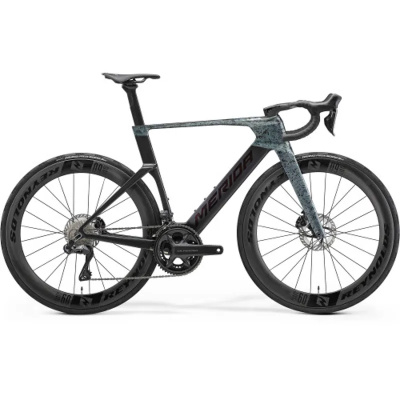
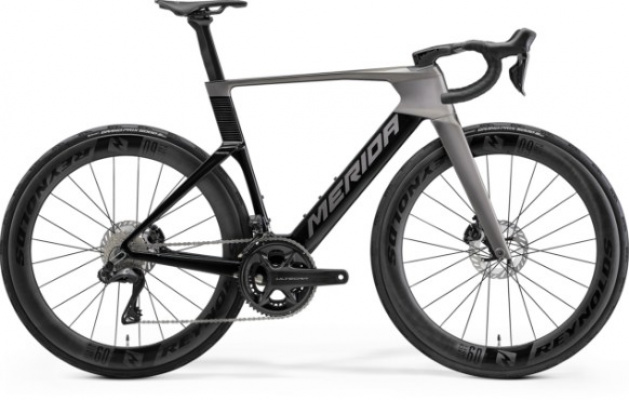
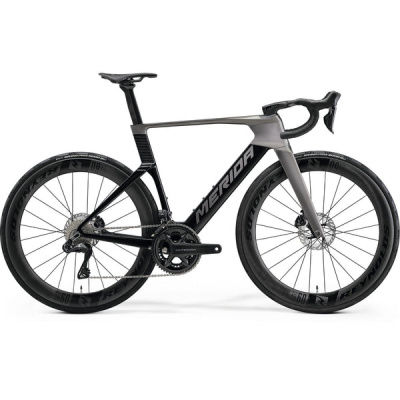
Merida REACTO 9000
Aero speed that climbs with urgency and corners with precision, comfortable enough to ride hard all day.
- CF5 carbon frame: 950g in size M
- Vision Metron integrated cockpit slashes frontal drag
- Disc Cooler fins drop brake temps 35%
- S-Flex seatpost absorbs chatter without aero penalty
- 4iiii power meter built into Ultegra crankset
- Reynolds 60mm carbon wheels: fast, stable
Merida REACTO 9000 Deals
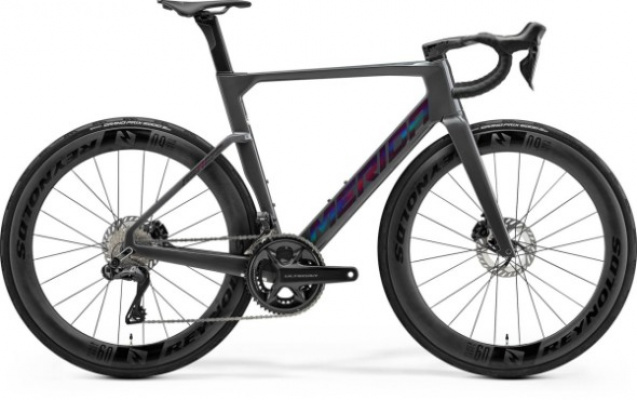
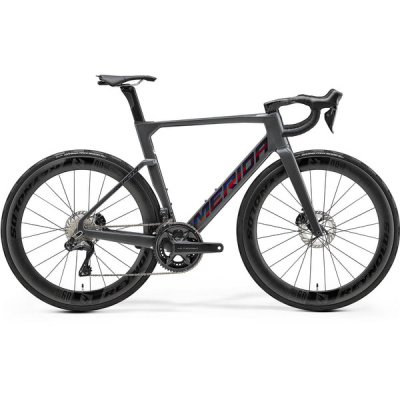
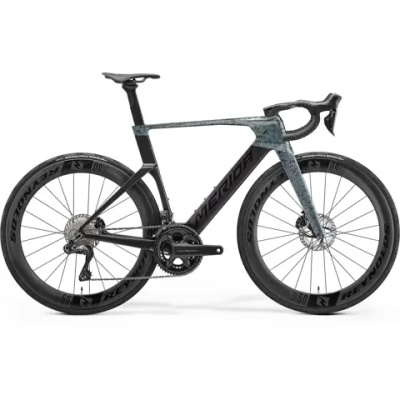
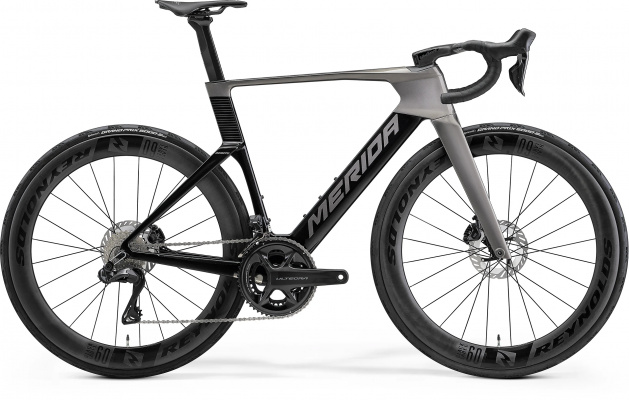
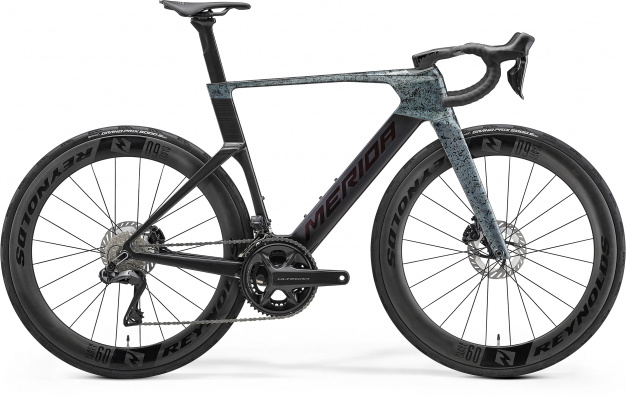
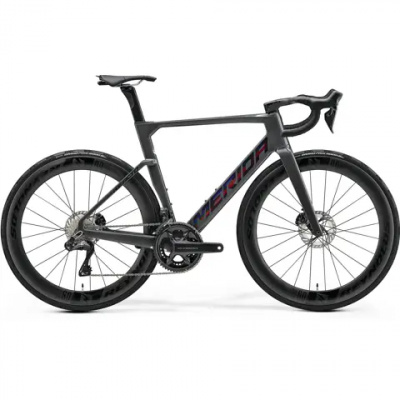
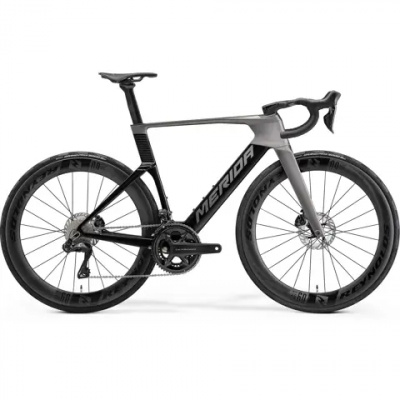
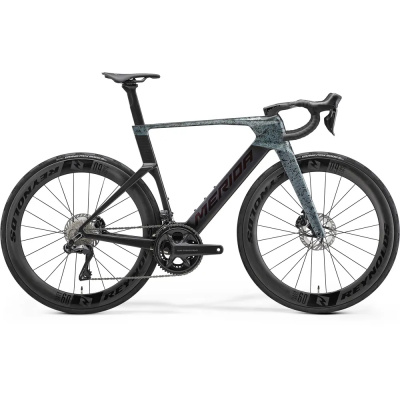
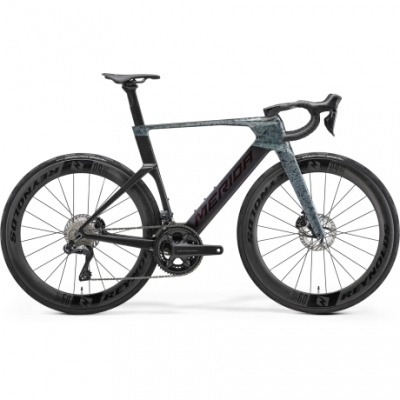



Prices and availability can change quickly. Delivery charges are not always included in listed prices.
Final price, stock status and delivery terms are set by retailer. We may receive a commission on purchases made.
Bikesy's Verdict
The Reacto 9000 is the bike you choose when speed matters but you're not willing to suffer for it. Merida's built a machine that cuts through air with purpose, climbs with genuine urgency, and handles with the kind of precision that flatters your cornering - all while keeping you comfortable enough to ride it hard for five hours without regretting your choices. The CF5 carbon frame, integrated cockpit, and Disc Cooler tech aren't just marketing; they're functional advantages that show up every time you pin it on a fast descent or hold a high tempo into a headwind.
Ultegra Di2, Reynolds carbon wheels, and a built-in power meter mean the spec is sorted from the moment you roll out of the shop. It's not the cheapest aero road bike, but it's priced fairly for what you're getting, and it'll reward the effort you put in. If your ambitions live on tarmac and your idea of a good ride involves averaging serious speed, this machine will meet you there - and probably push you a bit harder than you expected.
Pros
- Exceptional aero performance without sacrificing real-world comfort
- Sharp, precise handling inspires confidence in fast corners
- Lightweight for an aero platform - climbs with genuine urgency
- Integrated cockpit and Disc Cooler tech are functional, not just aesthetic
- Ultegra Di2 and Reynolds carbon wheels: sorted from the box
Cons
- 30mm tyre clearance feels dated if you encounter rough tarmac regularly
- Race-oriented geometry won't suit riders seeking upright, relaxed positions
- Single-sided power meter if you need dual-leg balance data
About the Merida REACTO 9000
The Reacto 9000 lands squarely in the territory where pure speed meets real-world usability. Merida's flagship aero road machine doesn't ask you to choose between wind-cheating pace and the ability to ride it hard for five hours without your fillings rattling loose. That CF5 carbon frame - 950 grams in a medium, shaped with NACA Fastback aerofoils and dropped seatstays - cuts through air with the single-minded focus of a pursuit rider, yet the layup and that clever S-Flex seatpost conspire to take the sting out of poor tarmac. You're looking at a bike that'll hold 45 km/h on a rolling dual carriageway without punishing you, then carve through a technical descent with the precision of something far more race-strung.
What sets this iteration apart is the maturity of the package. Shimano's Ultegra Di2 twelve-speed drivetrain brings crisp, reliable shifts under load; the Vision Metron 5D ACR EVO integrated cockpit isn't just clean to look at, it genuinely reduces drag and cable clutter; and those Reynolds BL60 Expert carbon hoops - sixty millimetres deep, twenty-one millimetres internal - spin up fast and hold momentum when the road tilts upward. Merida's Disc Cooler technology, with its aluminium fins tucked behind the chainstay-mounted calipers, sheds heat so effectively that fade becomes a non-issue even on long Alpine descents. Add the 4iiii power meter on the left crank arm and you've got data-driven training baked in, no aftermarket faff required.
This is the bike for riders who want to be fast - properly fast - without needing a team car and a soigneur. Whether you're chasing personal bests on local climbs, holding wheels in a fast club run, or pinning it in a criterium, the Reacto 9000 responds with an urgency that flatters your effort. It's not the most forgiving endurance sled, and it won't swallow gravel tracks, but if your ambitions live on tarmac and your idea of a good Sunday involves averaging north of thirty kilometres per hour, this machine will meet you there.
Merida REACTO 9000 geometry
Merida pitches the Reacto's geometry firmly in the race-ready zone, but stops short of the hyper-aggressive positions that leave you gasping after an hour. Reach figures climb steadily from 364 millimetres in the tiny 3XS up to 425 in the XL, giving taller riders proper room to stretch out without cramming shorter cyclists into a pretzel. Stack grows in step - 507 to 567 - so you're not forced into a slammed position unless you choose it; there's enough height in the head tube to run a few spacers and still look purposeful. The head angle steepens from 70.5 degrees on the smallest sizes to 72 degrees on medium and above, which translates to sharper, more immediate steering as frame size increases. You feel that directness the moment you lean into a corner: the front end bites, tracks your line, and rewards commitment.
Chainstays hold steady at 402 millimetres across the range, keeping the rear end tight and responsive - power goes straight to the tarmac, and the bike accelerates out of bends with a snap that flatters your sprint. Bottom-bracket drop sits at seventy millimetres for the smaller sizes, then drops to sixty-eight for medium and up, lowering your centre of gravity just enough to add stability at speed without making pedal strikes a worry on fast, sweeping roads. The seat angle - 73.5 degrees throughout - puts you in a forward, engaged position that suits sustained efforts and climbing without tipping you so far over the front that your lower back protests after two hours.
What does all that mean when you're actually riding? You sit low, weight centred, with enough reach to open your chest and breathe deeply but not so much that you're constantly braced against the bars. The bike feels planted at speed - no nervous shimmy when a lorry blasts past - and it changes direction with the kind of precision that lets you apex late and still make the exit clean. It's not a sit-up-and-beg tourer, but neither is it a time-trial torture rack; you'll finish a long sportive tired from effort, not from fighting the position.
Component choices & upgrades
The Reacto 9000 arrives with a build that's already sorted for serious riding. Shimano's Ultegra Di2 groupset is the sweet spot in electronic shifting: reliable, precise, and light enough that you're not hauling extra grams for marginal gains. The 52/36 chainrings paired with an 11-30 cassette cover everything from flat-out sprints to steep ramps, and the shifts - front and rear - are crisp even when you're cross-chained and breathing hard. The 4iiii power meter on the left crank arm gives you single-sided data that's accurate enough for training zones and pacing efforts; if you're chasing watts-per-kilogram gains, it's already there.
Reynolds BL60 Expert carbon wheels are a strong choice: sixty-millimetre depth offers genuine aero benefit without turning into a sail in crosswinds, and the twenty-one-millimetre internal width supports the Continental Grand Prix 5000S TR tyres - twenty-eight millimetres wide, tubeless-ready - with a stable, rounded profile. Those Contis are fast, grippy, and durable; you could swap to a twenty-five if you're chasing every watt on glass-smooth tarmac, or push to the frame's thirty-millimetre limit if your local roads are more pothole than paradise. Tubeless setup is straightforward and worth doing: lower pressures, better grip, fewer punctures.
The Vision Metron 5D ACR EVO integrated cockpit is part of the bike's aero story, and swapping it out would undo some of that work - but if you need a different reach or width, Vision offers compatible extensions and spacers. The Prologo Nago R4 PAS saddle is firm and supportive; if it doesn't suit your sit bones, a saddle swap is the easiest upgrade on any bike. The S-Flex carbon seatpost does real work damping vibration, so resist the urge to replace it unless you're chasing the last few grams for a hillclimb.
Where might you spend money? If you're racing crits or chasing Strava segments, a set of deeper carbon wheels - Reynolds AR80 or similar - will shave seconds on flat, fast courses, though you'll pay for it in weight and crosswind handling. A power meter upgrade to dual-sided (Shimano's own or a Quarq spider) gives left-right balance data if you're working on pedalling asymmetry. Beyond that, the stock build is dialled; your money's better spent on tyres, chain lube, and entry fees.
Where the Merida REACTO 9000 excels
This bike is built for speed on tarmac, full stop. If your riding revolves around fast club runs, sportives, criteriums, or solo efforts where average speed matters, the Reacto 9000 delivers. It holds momentum with minimal effort - those aerofoil tube shapes and the integrated cockpit genuinely work - and when you put the power down, the stiff bottom bracket and tight rear end translate every watt into forward drive. On long, rolling roads where you're holding a high tempo for hours, the bike feels effortless in a way that lighter, less aero machines don't; you're working just as hard, but the speed reads higher.
It climbs with more urgency than you'd expect from an aero platform. The low weight - 7.5 kilograms claimed - means it doesn't anchor you on steep pitches, and the geometry keeps you centred and engaged so you can stand and attack without the bike wandering. It's not a pure climber's weapon, but it won't cost you time on the way up, and you'll claw back every second on the descent and the flat run-in. Handling is sharp and confidence-inspiring: the front end tracks cleanly through fast corners, the bike stays composed when you're leant over, and you can get your weight forward for grip without feeling like you're going to loop over the bars.
Comfort - relative to other aero road bikes - is a genuine strength. The S-Flex seatpost and the frame's carbon layup absorb high-frequency buzz from rough tarmac, so you're not beaten up after a long day. It's not an endurance bike - you'll still feel big hits and poor surfaces - but it's far more liveable than many race machines. The Disc Cooler tech means braking stays consistent even on long descents, which matters when you're carrying speed into technical sections or managing a fast group.
Where it's not ideal: gravel, rough lanes, and anything unpaved. The thirty-millimetre tyre clearance is the limiting factor here; you can fit a twenty-eight or a thirty, but that's not enough cushion or grip for proper off-road work. The geometry and the build are optimised for smooth, fast tarmac, and asking it to do anything else is asking it to work outside its brief. If your routes mix significant gravel or you want a bike that doubles as a rough-stuff tourer, look elsewhere. Similarly, if you're after an ultra-relaxed, sit-up position for gentle weekend pootles, the Reacto's race-oriented fit won't suit.
Merida REACTO 9000 FAQs
What is the tyre clearance on the Merida REACTO 9000?
The frame and fork will take up to 700x30C tyres, which is enough for a bit of extra comfort on rough tarmac but not generous by current standards. If you're planning mixed-surface adventures, that thirty-millimetre limit will feel tight; for pure road riding, it's adequate.
How much does the Merida REACTO 9000 weigh?
Merida claims 7.5 kilograms for a size medium, which is competitive for an aero road bike with this level of kit. Real-world weight will vary slightly depending on size, build spec, and whether you've added pedals and cages, but it's light enough that you won't notice it holding you back on climbs.
Is the Merida REACTO 9000 comfortable for long rides?
Yes, relative to other aero race bikes. The S-Flex seatpost and the frame's carbon layup do a solid job of damping road buzz, and the geometry isn't so aggressive that you're fighting the position after three hours. It's not an endurance bike - big potholes and truly rough roads will still rattle through - but it's far more liveable than many pure race machines, and you can ride it hard all day without feeling beaten up.
What groupset does the Merida REACTO 9000 come with?
The 2026 model is specced with Shimano Ultegra Di2 twelve-speed, which is electronic, reliable, and offers crisp shifting under load. It's the sweet spot in Shimano's range: lighter and more refined than 105 Di2, but without the price premium of Dura-Ace. The 4iiii power meter on the left crank arm is a welcome inclusion.
What are the key differences between the Merida REACTO 9000 and the Scultura?
The Reacto is Merida's aero race bike: deeper tube profiles, integrated cockpit, and a geometry optimised for speed and aggressive riding. The Scultura is their all-rounder, lighter and more versatile, with a slightly more relaxed position and better tyre clearance. If you want pure speed and you're riding smooth, fast roads, the Reacto is the choice; if you value versatility, comfort, and a bit more compliance, the Scultura makes more sense.
Is the Merida REACTO 9000 a good bike for racing?
Absolutely. It's designed for exactly that: criteriums, road races, fast sportives, and any event where aerodynamics and power transfer matter. The handling is sharp enough for tight corners, the frame is stiff enough to sprint out of the saddle, and the aero profile genuinely saves watts at speed. If you're racing or training seriously, this bike will do the job.
What year was the Merida REACTO 9000 first released?
The Reacto platform has been around for several generations, but the current CF5 IV frame architecture - with the integrated cockpit, Disc Cooler tech, and refined aero shaping - debuted a few years ago and has been iteratively updated. The 2026 model continues that evolution with updated paint, spec tweaks, and a broader model range, but the core frame design is proven and mature.
Does the Merida REACTO 9000 have a power meter?
Yes, the 2026 Reacto 9000 comes with a 4iiii power meter integrated into the left crank arm. It's single-sided, so it doubles your left-leg data to estimate total power, which is accurate enough for training and pacing. If you want dual-sided measurement for left-right balance, you'd need to upgrade to a different system, but for most riders the 4iiii unit does everything you need.
Key Features & Benefits
- CF5 IV carbon frame with NACA Fastback aerofoils: Cuts drag and holds speed with less effort on long, fast roads
- S-Flex carbon seatpost with compliance zone: Absorbs road buzz and harsh vibrations without aero penalty
- Disc Cooler aluminium fins on brake calipers: Drops brake temperatures 35%, preventing fade on long descents
- Vision Metron 5D ACR EVO integrated cockpit: Reduces frontal drag and cable clutter for cleaner airflow
- 4iiii power meter on Ultegra crankset: Delivers accurate training data without aftermarket installation
Merida REACTO 9000 2025 and 2024 differences
The 2026 model carries forward the proven CF5 IV frame architecture with minimal technical changes, focusing instead on updated paint schemes and subtle spec tweaks. The core aero profile, Disc Cooler technology, and S-Flex seatpost remain unchanged, so the ride character is consistent with the 2025 iteration.
The 2025 Reacto 9000 featured the same Shimano Ultegra Di2 twelve-speed groupset, Reynolds BL60 Expert carbon wheelset, and Continental GP5000S TR tyres in twenty-eight-millimetre width. Some configurations included the 4iiii power meter; others did not. Claimed weight for 2025 was cited at 7.7 kilograms, slightly heavier than the 2026 claim of 7.5, though real-world variance and measurement methodology may account for the difference.
The 2024 model marked a notable departure in drivetrain choice, speccing SRAM Force eTap AXS wireless twelve-speed instead of Shimano. The cockpit was the Vision Metron 1P, and the wheels were Reynolds BL60 PR carbon with Continental 5000S TR tyres in twenty-five-millimetre width - narrower than the current twenty-eight. The shift back to Shimano for 2025 and 2026 reflects Merida's preference for the Ultegra Di2 platform's reliability and integration with the 4iiii power meter.
Earlier 2023 models ran Shimano Ultegra Di2 in eleven-speed (pre-twelve-speed update), paired with Reynolds Aero 65 DB wheels and twenty-five-millimetre Contis. Weight was cited around 7.4 to 8.1 kilograms depending on size and spec. The move to twelve-speed, wider tyres, and the refined BL60 wheelset represents the most significant evolution over the past three years, with the 2026 model refining rather than reinventing the package.
Alternatives to Consider
Within Merida's own range, the Scultura 9000 offers a lighter, more versatile all-rounder with better tyre clearance and a slightly more relaxed geometry - ideal if you value comfort and mixed-terrain capability over pure aero speed. Step down to the Reacto 7000 and you'll find a similar frame with a more accessible build, typically Shimano 105 Di2 and alloy wheels, saving a chunk of money without losing the core aero DNA.
Cross-brand, the Specialized Tarmac SL7 is the benchmark aero-meets-lightweight road bike, with broader tyre clearance and a slightly more forgiving ride, though it commands a premium. The Trek Madone SLR 7 brings IsoFlow compliance and adjustable geometry, making it more adaptable for long sportives and varied terrain. The Cannondale SystemSix Hi-Mod is Merida's direct aero rival, offering similar speed and stiffness with a slightly sharper race focus. For pure wind-cheating performance, the Cervélo S5 Ultegra is hard to beat, though it sacrifices some comfort for outright aerodynamic efficiency. Finally, the Scott Foil RC Pro delivers comparable aero gains with a race-ready build and slightly more aggressive geometry, appealing to riders who prioritise handling precision over all-day comfort.
Reviews
Aerodynamics and real-world usability rarely coexist this comfortably. The frame's stiffness translates power cleanly - stand on the pedals mid-climb and the bike surges forward without flex or complaint. When the road tilts down, the handling inspires confidence: weight over the front end, lean into the apex, and the Reacto holds its line with the precision of something far more expensive. That Vision cockpit isn't just for show; the clean front end genuinely cuts drag, and you feel it when you're holding a high tempo on rolling terrain.
Comfort surprises. The S-Flex seatpost and the frame's carbon layup absorb high-frequency chatter from poor tarmac, so you're not rattled to pieces after four hours. It's not plush - big hits still come through - but for an aero race bike it's remarkably liveable. Disc Cooler tech works as advertised: brake hard into a steep hairpin after a long descent and there's no fade, no drama, just consistent power. The Ultegra Di2 shifts crisply under load, and the 4iiii power meter delivers reliable data without fuss.
Thirty-millimetre tyre clearance is the one dated note. While twenty-eight-millimetre Contis are fast and grippy, you're left wishing for another five millimetres of breathing room when the road surface deteriorates. Climbs reveal the bike's urgency - it's light enough to punch above its aero weight, and the geometry keeps you engaged and efficient. Fast.
Full Specification
| Spec | Value |
|---|---|
| Frame Material | CF5 IV Carbon |
| Frame Weight (approx., size M) | 950g |
| Frame Features | NACA Fastback aerofoils, dropped seatstays, internal cable routing, Disc Cooler technology, 700x30C max tyre clearance |
| Available Sizes | 3XS, XXS, XS, S, M, L, XL |
| Bottom Bracket | Pressfit 86.5 (Shimano SM-BB72) |
| Rear Axle | 142x12mm |
| Fork | Merida Reacto CF5 IV Disc full carbon, tapered steerer |
| Shifters | Shimano Ultegra Di2 |
| Rear Derailleur | Shimano Ultegra Di2 (RD-R8150) |
| Front Derailleur | Shimano Ultegra Di2 (FD-R8150) |
| Crankset | Shimano Ultegra, 52-36T, with 4iiii power meter (left arm) |
| Crank Length (3XS) | 160mm |
| Crank Length (XXS/XS) | 165mm |
| Crank Length (S/M) | 170mm |
| Crank Length (L/XL) | 172.5mm |
| Cassette | Shimano Ultegra R8101, 11-30T, 12-speed |
| Chain | Shimano M8100-12 |
| Brakes | Hydraulic disc, Shimano Ultegra, flat mount |
| Brake Rotors | Shimano CL800, 160mm front and rear |
| Brake Features | Disc Cooler fins, calipers mounted on chainstay for heat dissipation |
| Wheelset | Reynolds BL60 Expert DB carbon |
| Rims (internal width) | 21mm, 60mm height |
| Hubs (Front) | Reynolds, 100x12mm, Centerlock |
| Hubs (Rear) | Reynolds, 142x12mm, Centerlock |
| Spokes | Reynolds |
| Tyres (Front) | Continental Grand Prix 5000S TR, 700x28C, tubeless ready |
| Tyres (Rear) | Continental Grand Prix 5000S TR, 700x28C, tubeless ready |
| Handlebar | Vision Metron 5D ACR EVO integrated carbon cockpit |
| Handlebar Width (3XS - S) | 380mm |
| Handlebar Width (M - L) | 400mm |
| Handlebar Width (XL) | 420mm |
| Stem (integrated with handlebar) | Vision Metron 5D ACR EVO |
| Stem Length (XXS/XS) | 90mm |
| Stem Length (S) | 100mm |
| Stem Length (M/L) | 110mm |
| Stem Length (XL) | 120mm |
| Headset | FSA ACR NO.55R |
| Seatpost | Merida S-Flex Carbon Aero Post, 15mm setback |
| Saddle | Prologo Nago R4 PAS |
| Bar Tape | Merida Road Expert |
| Approximate Weight (size M) | 7.5kg |