
X Fusion Suspension Forks
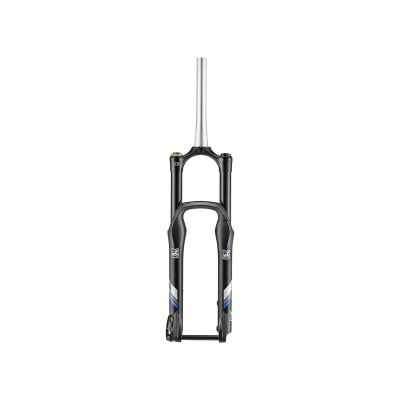
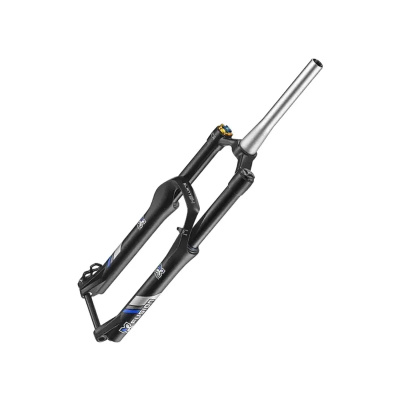
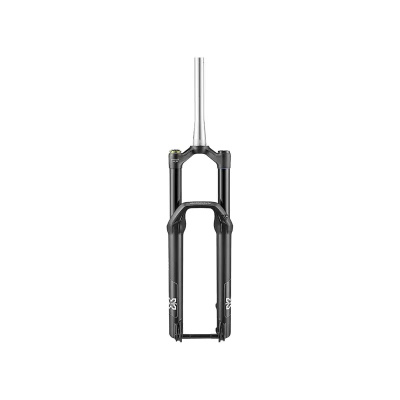
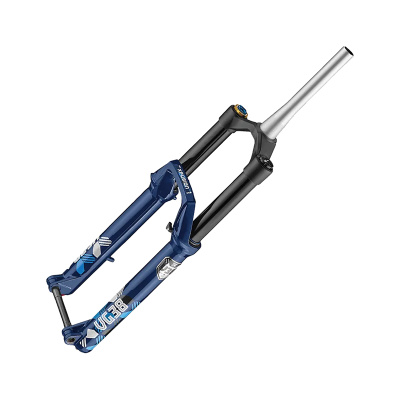
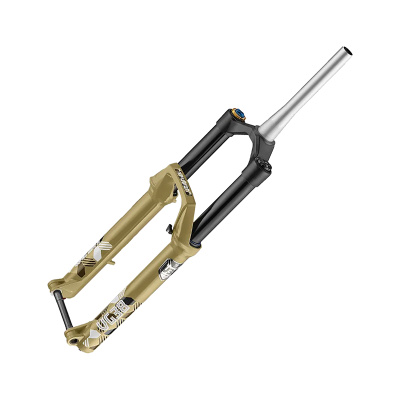
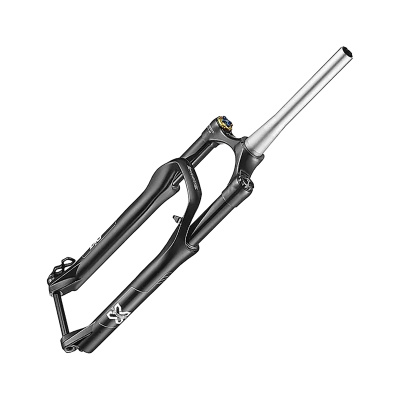
X Fusion suspension forks have quietly built a loyal following among riders who'd rather spend money on performance than on a badge. While Fox and RockShox dominate the marketing spend, X Fusion has been producing forks with fully metal internals, advanced damping cartridges, and proper engineering at a price point that makes a genuinely capable trail build feel achievable. No gimmicks, no shortcuts on the bits that matter.
If you're piecing together a winter hardtail that needs to survive Peak District grit and Welsh mud without falling apart at the seams, or you're upgrading a budget full-suspension rig and want damping that actually works, X Fusion deserves a serious look. The Roughcut HLR damper - a fully sealed expanding bladder cartridge - is the kind of tech you'd normally find on forks costing considerably more. Pair that with ultra-low friction Nvolve wiper seals and a tool-less axle system, and you've got a fork built for riding, not just speccing sheets. Mechanics rate them. Riders who've been burnt by cheap alternatives rate them. And they're far easier to service at home than most of the competition.
Prices and availability can change quickly. Delivery charges are not always included in listed prices.
Final price, stock status and delivery terms are set by retailer. We may receive a commission on purchases made.
Decoding the X Fusion MTB Fork Lineup
X Fusion organises its range around wheel size and discipline, which makes picking the right model fairly straightforward once you know the families. The Trace is the 29er trail and enduro option - 34mm stanchions, longer travel choices, and a chassis stiff enough to handle proper rowdy riding on 29-inch wheels. The Sweep covers the same trail and enduro brief but sized around 27.5-inch wheels. Think of the Trace and Sweep as siblings doing the same job on different wheel sizes, both sharing a robust enduro chassis philosophy. So what's the difference between X Fusion Trace and Sweep? Wheel compatibility, essentially - the Trace is engineered specifically around 29er geometry, while the Sweep is dialled for 27.5. Damper options and stanchion specs are closely matched across both.
The Slant sits in a different world - 26 and 27.5-inch wheel sizes, shorter travel, designed for dirt jump and aggressive trail use where you want a stiffer, more responsive feel underfoot. It's not a fork you'd spec for long descents; it's for technical, punchy riding where weight and responsiveness matter more than plush compliance. Then there's the Metric, X Fusion's freeride and big-hit enduro option, running 36mm stanchions and built for riders who need maximum chassis rigidity under serious loads.
Within each family, trim levels change how much adjustment you get. The entry RL2 damper gives you rebound control and a lockout - clean, simple, effective for most riders. Step up to the HLR and you gain both high and low-speed compression adjustment, which is a meaningful difference. Low-speed compression controls how the fork reacts to rider-input forces like pumping through berms or pushing into corners. High-speed compression governs the big impacts - rock gardens, roots, drops. Having both means you can actually tune the fork to your riding style and the trail, rather than accepting whatever middle-ground setting a simpler damper gives you. If you're comparing X Fusion MTB forks and weighing up whether the HLR trim is worth it, the answer depends on how much you enjoy dialling in your setup - most riders who try it don't go back.
The Tech Behind the Forks: Why Metal Internals Matter
X Fusion's engineering approach centres on durability and tunability over cost-cutting. The Roughcut HLR damper is central to that. It uses a fully sealed cartridge with an expanding bladder system - as the damper oil heats up and moves under hard use, the bladder expands to accommodate it rather than allowing oil to aerate. Aerated oil is foamy, inconsistent damping oil. It's the reason cheaper forks feel vague and unpredictable on a long, rough descent when they've been working hard for twenty minutes. The Roughcut HLR doesn't have that problem. The damping stays consistent from the top of the run to the bottom, which is exactly what you want on something like a long Welsh trail centre descent where the fork doesn't get a rest.
The ITA (Internal Travel Adjust) system is the other piece of tech worth understanding. Most forks lock you into a travel figure - want more or less, buy new parts. X Fusion's push-pin ladder system lets you change travel internally, in 10mm or 20mm increments depending on the model, just by removing the lower legs and repositioning a pin on the air spring. No new air shafts, no specialist tools, no bill from the bike shop. For riders building a bike that might need to shift between 130mm for tight singletrack and 150mm for bigger days out, it's a genuinely practical feature. This is one of the cleaner answers to how to adjust travel on an X Fusion fork - it's designed to be done by the owner, not just a workshop.
The Syntace 15mm tool-less axle system deserves a mention too. Quick to remove, solid when locked, and compatible with a wide range of hubs - it's not a flashy feature, but it's one less thing to faff with at the trailhead. Small detail, but you notice it.
Running an X Fusion Fork Through a UK Winter
If you've ever had cheap fork seals turn your stanchions into grinding paste after a few months of winter riding, you'll appreciate what X Fusion's Nvolve wiper seals bring. They're designed for ultra-low friction - so the fork rides small bumps and chatter properly rather than sticking - but they're also effective at keeping grit and mud out of the lower legs. Welsh winter mud and Peak District grit are genuinely abrasive. Forks with mediocre seals will show wear on the stanchions within a season. The Nvolve seals give you a reasonable degree of confidence that the internals are staying clean, even when the trails are at their worst.
Lower-leg services on X Fusion forks are also notably straightforward for anyone comfortable with basic home maintenance. Remove the axle, crack off the lower legs, drain and replace the oil, clean the seals and bushings, reassemble. The all-metal internals mean you're not dealing with fragile plastic components that need careful handling. For a winter hack bike that's going out twice a week in the mud, that serviceability is a real advantage - you're more likely to actually do the service if it's not intimidating. Compared to some competitors where a lower-leg service feels like defusing something, X Fusion keeps it accessible.
Are X Fusion forks any good, then? Among mechanics and riders who've put real miles on them, the reputation is consistently positive - particularly for the price bracket they sit in. They're not trying to out-market Fox suspension forks or compete directly with RockShox forks on brand recognition. What they do is offer a mechanically sound, well-damped fork that holds up to serious use. Riders comparing budget X Fusion MTB forks against something like Marzocchi forks will find X Fusion competitive on both damper quality and long-term durability. DVO forks sit in a similar performance-focused niche if you want another reference point.
If you're building out a full suspension setup, it makes sense to look at X Fusion rear shocks alongside the fork - the brand's damper philosophy carries through to the rear, and running matched suspension tends to make setup more intuitive. Worth also checking out X Fusion dropper posts to finish the build; their posts carry the same no-nonsense engineering approach as the forks.
X Fusion Suspension Forks FAQs
Are X Fusion forks any good?
Yes, genuinely. X Fusion forks use all-metal internals and the Roughcut HLR damper - a fully sealed cartridge system that stays consistent under hard use - which puts them well ahead of what the price tag suggests. Mechanics rate them for serviceability; riders rate them for damping quality. They're a serious option for trail and enduro builds where budget matters but performance can't be compromised.
How do I adjust the travel on an X Fusion fork?
X Fusion's ITA (Internal Travel Adjust) system handles this without buying new parts. Remove the lower legs, locate the push-pin on the air spring ladder, and reposition it to your chosen travel setting - typically adjustable in 10mm or 20mm increments depending on the model. It's designed to be done by the rider at home with basic tools, not a workshop job.
What is the difference between X Fusion Trace and Sweep?
Wheel size, primarily. The Trace is built for 29-inch wheels; the Sweep is designed around 27.5-inch wheels. Both run a 34mm stanchion chassis and share similar damper options - including the Roughcut HLR at the premium end - so the choice comes down to your wheel size rather than any meaningful difference in performance capability.