
X Fusion Rear Shocks
X Fusion rear shocks have quietly become the go-to choice for privateer racers and canny trail riders who want genuinely capable damping without remortgaging for a Fox or RockShox. Whether you're breathing new life into an older frame or ditching a spongy stock unit, X Fusion's lineup covers the full spectrum - from featherlight XC air shocks through to burly coil options that'll soak up whatever a Scottish winter throws at them.
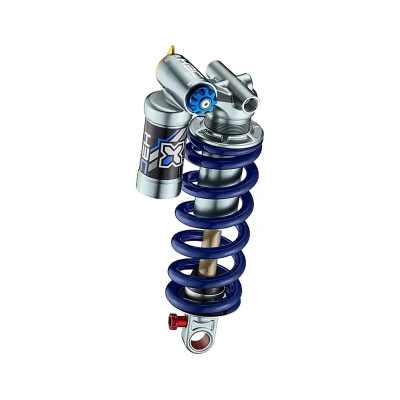
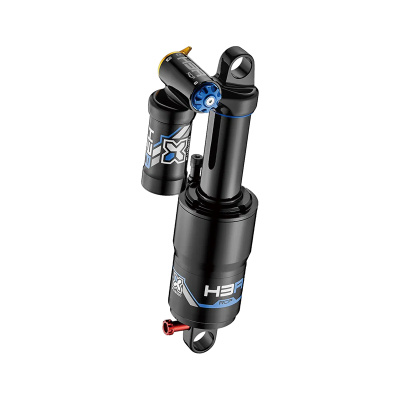
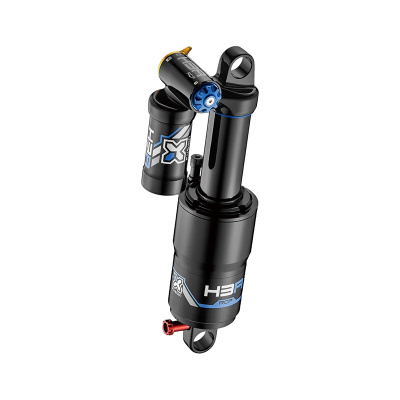
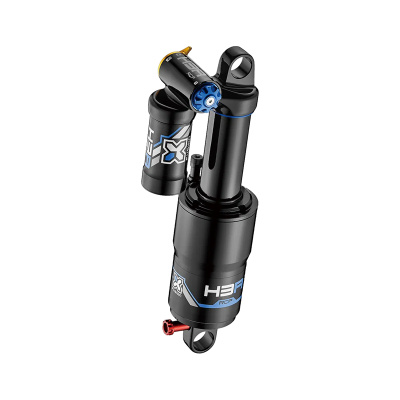
The range breaks down clearly. The O2 Pro series targets XC and trail riders who need a responsive, tuneable air shock at a sensible price. The Vector steps things up for enduro and gravity riding, available in both air and coil flavours. Then there's the H3C, a modern lightweight coil shock built specifically for today's longer, slacker enduro geometry. Each model comes in multiple trim levels - RL, RC, and HLR - so you're not paying for adjustments you'll never use.
Sizing matters, too. X Fusion supports both metric shock sizing and trunnion mount configurations across the range, making fitment straightforward on most modern frames. Pair your shock with an X Fusion suspension fork or a X Fusion dropper post and you've got a cohesive, well-matched suspension package that won't break the bank.
Prices and availability can change quickly. Delivery charges are not always included in listed prices.
Final price, stock status and delivery terms are set by retailer. We may receive a commission on purchases made.
Decoding the X Fusion Rear Shock Lineup
Three families, clearly defined. The O2 Pro is X Fusion's air shock workhorse for XC and trail - light, tuneable, and built around an enlarged negative air chamber that makes the first part of the stroke feel genuinely plush rather than sticky. It's the shock you'd spec on a trail hardtail conversion or a mid-travel full-suss where weight still matters.
Move up to the Vector and you're into enduro and gravity territory. X Fusion offers this one in both air and coil, which is useful if you're not yet convinced coil is for you but want to keep the option open. The Vector's chassis is beefier, the damper more heavily valved, and the overall package designed to handle repeated, heavy impacts rather than the occasional rowdy descent.
The H3C is where things get interesting for modern enduro riders. It's a dedicated coil shock - no air spring option - built specifically around the geometry and kinematics of today's longer, slacker frames. The low-speed compression and rebound adjustments are notably refined for a coil at this price point, which matters when you're threading through tight Tweed Valley singletrack as much as charging open DH lines.
Trim levels are worth understanding before you buy. RL gives you rebound and a lockout - enough for most trail riders. RC adds a compression adjuster, useful if you're on varied riding with some climbing. HLR is the full package: independent high-speed and low-speed compression alongside rebound. More on that system below. Before ordering, always confirm the eye-to-eye length and stroke length against your frame's shock spec - X Fusion shocks are available in both standard metric shock sizing and trunnion mount configurations, but getting that wrong is an expensive mistake.
The X Fusion Tech Philosophy
X Fusion's engineering approach is refreshingly uncluttered. Where some brands pile on proprietary systems that require a laptop to decode, X Fusion builds around durability, tuneability, and consistent performance across a wide temperature range. Practical, not flashy.
The headline piece of technology is the HLR damping system - High/Low-speed compression and Rebound. The distinction between high-speed and low-speed compression is the critical one. High-speed compression damping controls the shock's response to sharp, sudden inputs: square-edged roots, drops, rock strikes. Low-speed compression handles slower, more predictable forces: pedalling bob, railing a berm, pushing through a compression. Being able to tune these independently means you can run a plush, active feel through technical chop without the shock wallowing on sustained climbs or in corners. At this price point, that level of adjustment is not a given - compare the spec sheets of equivalent Marzocchi rear shocks or DVO rear shocks and you'll see what we mean.
The O2 Pro air spring system is the other standout. The enlarged negative air chamber - the part of the air spring that pulls the shock into the initial part of its travel - means better off-the-top sensitivity without sacrificing mid-stroke support. It's the difference between a shock that feels alive on small trail chatter and one that sits high in its travel waiting for a big hit. Some rival shocks charge a significant premium for this kind of air spring sophistication. X Fusion builds it in as standard.
Shim-stack design underpins the damper itself. X Fusion uses robust shim stacks rather than relying purely on needle valves for damping control, which contributes to consistency across varying temperatures - relevant when you're riding in January and the damper oil is doing everything it can to thicken up on you.
Living with an X Fusion Shock in the UK
UK conditions are a proper test of any shock's seals and consistency. Peak District grit gets into everything. Welsh winter mud is relentless. A shock that feels crisp in September can feel vague and sticky by February if the seal heads aren't up to the job. X Fusion's wiper seals are notably robust - riders running O2 Pro shocks through full British winters consistently report clean bushings and minimal stiction build-up with basic maintenance. That said, a regular air-can service - cleaning and re-greasing the negative chamber and wipers - is worth doing every 50 hours or so, especially if you're riding in heavy muck.
Cold-weather damping consistency is worth flagging. X Fusion's choice of damper oil and shim-stack tuning means the HLR system holds its character reasonably well as temperatures drop, but don't expect miracles below five degrees - no shock is truly immune to oil thickening. If you're regularly heading out on frosty mornings, it's worth giving the shock a few minutes to warm up before you start pushing hard through compressions. It makes a real difference.
Serviceability is a genuine strength here. X Fusion shocks are designed with home mechanics in mind - the air-can service in particular is straightforward with basic tools and a shock pump. Full damper rebuilds are more involved, but dedicated suspension service centres in the UK - and X Fusion's own service documentation - make it achievable without specialist dealer visits. Compared to some brands where even a basic service requires proprietary tools, that's a meaningful practical advantage. If you're weighing X Fusion against RockShox rear shocks or Fox rear shocks, factor in long-term service costs and parts availability - X Fusion's openness to home servicing can offset a lot over a few seasons. One honest caveat: sourcing specific spare parts quickly can occasionally mean a wait if your local shop doesn't stock them, so keeping a basic spares kit - spare O-rings, wiper seals - is sensible forward planning.
Bottom-out resistance is handled well across the range, particularly on the H3C coil where X Fusion has tuned the progression to avoid that jarring end-stroke clunk that cheaper coil shocks can suffer from. It's not a volume-spacer system like you'd find on an air shock, but the coil rate selection and damper tuning work together to keep bottom-out resistance feeling controlled rather than abrupt.
X Fusion Rear Shocks FAQs
Are X Fusion rear shocks any good?
Genuinely, yes. X Fusion shocks offer damping control and build quality that competes with brands charging considerably more. They're well-regarded among privateer racers precisely because the performance is consistent and reliable without needing constant fettling. If you're upgrading from a budget stock shock, the difference will be immediately obvious.
How do I set up my X Fusion O2 Pro rear shock?
Start with sag. Kit up fully - pack, helmet, the lot - and set sag to around 25 - 30% of the shock's stroke length using a shock pump. From there, dial rebound so the shock recovers quickly after compression without flicking you forward. On HLR models, set low-speed compression first, then fine-tune high-speed from there.
What is the difference between X Fusion Vector and H3C?
The Vector is a heavy-duty platform covering both air and coil options for aggressive enduro and freeride use - it's built around volume and durability. The H3C is a newer, purpose-built lightweight coil shock designed specifically for modern enduro geometry, with more refined low-speed compression and rebound adjustment. If you're on a current-generation enduro frame, the H3C is the sharper tool.