
Vp Pedals
VP Pedals sit at a quietly interesting corner of the market - serious manufacturing pedigree, sensible pricing, and a range that covers everything from school-run commuters to proper enduro flats. VP Components has been making pedals and components since the late 1980s, and that depth of production experience shows in the details: chromoly axles, sealed cartridge bearings, and their proprietary LSL (Lightweight Self-Lubricating) bushings that keep things spinning freely even when the axle profile is kept deliberately slim. These aren't pedals that shout about themselves. They just work.
For UK riders, that reliability matters more than marketing. Whether you're running flats on Pennine moorland, clipping in for a gravel loop out of the Peaks, or just commuting through winter slop, VP's range has an answer. The forged and CNC machined aluminum bodies on the trail-focused models are built to take rock strikes without folding, and the VX Series clipless pedals bring SPD compatible engagement to riders who want a familiar two-bolt cleat standard without paying Hope or Crank Brothers money. Wide platforms, low stack heights, replaceable traction pins - the spec reads right. The price usually surprises people too, and not in a bad way.
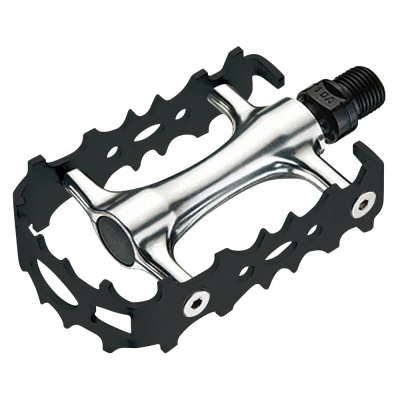
Prices and availability can change quickly. Delivery charges are not always included in listed prices.
Final price, stock status and delivery terms are set by retailer. We may receive a commission on purchases made.
Fitting VP Pedals: Thread Standards and Q-Factor
Almost every adult VP pedal uses the standard 9/16 inch thread, so fitting is straightforward on any modern crank arm - road, gravel, or mountain. If you're running kids' bikes or older one-piece cranks, double-check before you order, but for the vast majority of riders browsing here, 9/16 is what you've got and what VP supplies. Worth knowing: pedal axle length and the resulting Q-factor (the lateral distance between your pedal surfaces) does vary slightly between VP's platform and clipless models, so if you're switching from a wide enduro flat to the VX Series for XC or gravel, your knee tracking may need a little time to adjust. Not a drama, just something to be aware of over the first few rides.
For the VX clipless range specifically, VP uses an SPD-compatible two-bolt binding design, so your existing Shimano SPD cleats will drop straight in. For replacement cleats and to understand float options for your VX pedals, visit our dedicated VP Cleats page.
VP Product Hierarchy: Nylon, Alloy, and Clipless
VP's range splits into three reasonably clear tiers, and understanding where each sits stops you overspending - or worse, underspending for what you actually need.
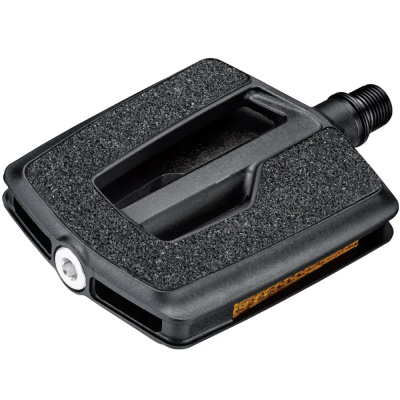
At the entry level, models like the VP-536 use glass-reinforced nylon or polycarbonate bodies. They're light, corrosion-resistant, and perfectly fine for commuting and leisure riding. The platform is modest, the pins are short and fixed, and grip is decent on dry days. But push them into trail riding or regular wet-weather use and the limitations show - the body flexes under hard loads, and pin grip on wet roots isn't confidence-inspiring. Fine for what they are; just know what they are.
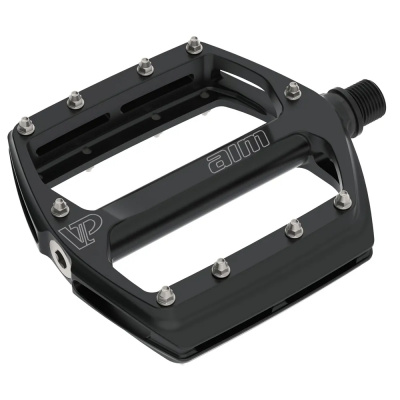
Step up to the alloy trail and enduro flats - the VP-Harrier being the headline model - and the conversation changes. Forged and CNC machined aluminum bodies give you a stiff, concave platform that actually cups your foot rather than just sitting under it. Replaceable traction pins let you run aggressive grip and swap out anything that gets bent on a rock strike. The platform concavity is real, not cosmetic, and that matters on a loose, slabby descent. If you've ridden DMR pedals or Burgtec pedals before, you'll find the VP-Harrier sits in broadly the same territory - wide, grippy, confidence-giving - at a keener price point. Whether that trade-off works for you depends on how much you weight brand cachet versus spec-per-pound.
The VX Series brings VP into clipless territory with SPD compatible double-sided engagement and adjustable release tension via the VX Series binding mechanism. As you move up within the VX range, you get better mud-shedding geometry, lighter bodies, and improved bearing seals - genuinely useful upgrades if you ride through October to March regularly rather than just occasionally. Crank Brothers and HT Components offer compelling alternatives at the clipless end, but for riders already invested in SPD cleats, the VX route is a tidy, cost-effective choice.
UK Durability and Keeping VP Pedals Running Through Winter
UK riding is genuinely hard on pedals. Peak District grit acts like grinding paste inside axle systems, chalk and wet roots demand serious pin bite, and thick winter mud can pack a clipless mechanism so thoroughly that you're wrestling to unclip on the exact wrong climb. VP's engineering addresses most of this - but it needs a little help from you.
The LSL (Lightweight Self-Lubricating) bushings are VP's answer to keeping low-profile axle systems running smoothly without constant intervention. The self-lubricating material reduces metal-on-metal wear even when contamination gets in, which is a genuine advantage over plain bushings when you're riding through sustained mud. Pair that with sealed cartridge bearings at the outboard end and you've got a system that resists water ingress better than open-bearing designs - but sealed doesn't mean immune. If you're riding through British winters from September to April, a seasonal service is sensible rather than optional.
Servicing is straightforward. Remove the end cap, unbolt the axle nut, and slide the pedal body off the chromoly axle. Clean out any grit from the LSL bushing, inspect the cartridge bearing for roughness, repack with waterproof grease, and reassemble to the manufacturer's torque spec. Do this once a season and the axle will outlast the pins by a long way. Speaking of pins - check them after any rocky ride. A bent traction pin left in place will work itself looser with each pedal stroke and eventually seize in the alloy body, turning a five-minute swap into a drill-and-extraction job. Pull bent pins early, replace with the correct thread size, and move on.
If you're refreshing contact points ahead of the winter riding season, it's worth sorting grips and headset at the same time - see the VP Grips and VP Headsets pages for what VP offer across those categories. Keeping the whole contact-point system consistent in quality makes a noticeable difference to how a bike feels and responds, especially on technical days when you're relying on every bit of feedback you can get.
Vp Pedals FAQs
Are VP pedals SPD compatible?
VP's VX Series clipless pedals are fully compatible with Shimano SPD cleats, using the same two-bolt mounting standard. Release tension is adjustable, so you can dial in how easily the cleat disengages to suit your riding style and conditions.
How do you service VP pedal bearings?
Remove the end cap and axle nut, then slide the pedal body off the chromoly axle. Clean the LSL bushing and cartridge bearing, apply waterproof grease, and reassemble to the factory torque spec - a straightforward job that's worth doing once a season if you ride through UK winters.
How to remove VP pedals from a bike crank?
Use an 8mm hex key from behind the crank arm or a 15mm pedal wrench on the flats. The left pedal has a reverse thread, so turn clockwise to loosen it. Before refitting any pedals, apply anti-seize compound or copper grease to the threads - it takes seconds and prevents the kind of seized pedal that ruins a pre-ride morning.