
Van Rysel Aero TT Helmets
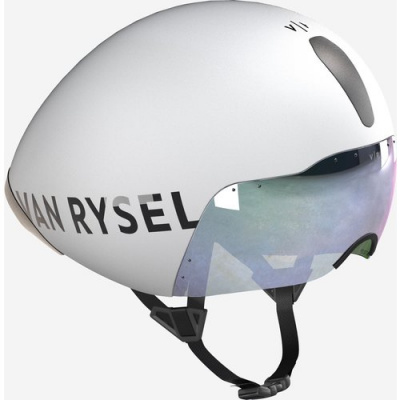
Van Rysel Aero TT Helmets are built around one idea: get you down the road faster without costing you a fortune. Where other aero lids charge a premium just for the badge, Van Rysel brings wind-tunnel tested shapes, integrated magnetic visors, and drag-reducing profiles to riders who'd rather spend the savings on race entries.
Every second counts in a time trial. A proper aero helmet is consistently one of the highest-return upgrades you can make - more watts saved per pound than most upgrades you'll bolt onto your bike. Van Rysel's range covers both the committed club TT rider chasing a personal best on a misty Tuesday morning and the triathlete who needs a fast transition as well as a fast helmet.
Key features across the range include Fidlock magnetic buckles for rapid clip-in under pressure, integrated magnetic visors with anti-fog and anti-scratch coatings, and internal airflow channelling that keeps your head cool without punching a hole in the aerodynamic profile. If you want a vented lid for everyday road riding, head over to our standard Van Rysel pages instead - this range is strictly for when the clock is running.
Prices and availability can change quickly. Delivery charges are not always included in listed prices.
Final price, stock status and delivery terms are set by retailer. We may receive a commission on purchases made.
Aerodynamics and Visor Technology
The shapes Van Rysel uses here aren't guesswork. Both short-tail and teardrop profiles have been refined in wind tunnel testing, with the goal of minimising drag across the range of head angles a real rider holds during a TT effort - not just the textbook-perfect tuck. That matters because most of us drift slightly during a 25-mile effort, and a helmet optimised only at one precise angle can actually cost you time the moment your head moves.
The integrated magnetic visor does two jobs at once. It smooths airflow across the face, removing the turbulent gap you get with separate eyewear, and it snaps on and off cleanly without fumbling with clips under race stress. Optically, the lenses are treated with anti-scratch and anti-fog coatings - genuinely useful when you roll up to a 6am club 10 on a damp September morning in the kind of air that fogs everything within seconds. Clarity matters when you're holding a line at 30mph with your chin on the bar.
Compared to lids like those from Kask or Giro at higher price points, Van Rysel delivers the core aerodynamic gains without premium materials like full carbon shells - a fair trade-off if you're not racing at national level and want to keep the budget for a Van Rysel time trial or triathlon bike.
Getting the Van Rysel TT Fit Right
A TT helmet that fits badly is slower than a road helmet that fits well. Full stop. The tail has to sit flush against your back or skinsuit when you're in the aero tuck - if it's sticking up, it's acting like a brake. That means the fit isn't just about head circumference; it's about your riding position too. Sort your tuck first, then check where the tail sits.
For Van Rysel aero helmet sizing, measure your head at the widest point and cross-reference the brand's size chart carefully - aero helmets have less adjustment range than open road lids, so getting the band right from the start is important. The retention system should hold the helmet snug without creating pressure points above the ears or across the forehead. On a 40km effort, even mild hotspots become distracting fast.
Sit the helmet low on the forehead to close the gap between your eyes and the visor or eyewear. That gap is a drag source people often overlook. Once it's positioned correctly, tighten the retention dial until the helmet doesn't shift when you shake your head, but back it off one click so you're not fighting a headache by kilometre 20. The Fidlock magnetic buckle on the chinstrap clicks together one-handed with satisfying precision - useful in transition, and reassuring at the start line when nerves are making fingers clumsy.
Ventilation, Heat, and UK Course Conditions
British time trials don't always play nice. You might line up on a muggy August evening in the Midlands with temperatures sitting stubbornly in the mid-20s, or push into a stiff crosswind on an exposed dual carriageway somewhere in East Anglia where the road is flat but the air is anything but cooperative. Van Rysel's aero helmets are designed with both scenarios in mind.
Internal ventilation channels route air through the structure of the helmet to cool the head without breaking the external aerodynamic profile. It's a meaningful distinction - some cheaper aero lids simply block all airflow and rely on you being fast enough that it doesn't matter. On longer efforts or in warm conditions, that approach gets uncomfortable quickly. Van Rysel's channelling isn't as aggressive as you'd find on a dedicated climbing helmet, but it keeps things manageable on a standard CTT course.
The short-tail design deserves specific mention for UK riding. Long teardrop tails look fast in a velodrome, but on an out-and-back dual carriageway with crosswinds gusting off open fields, they can push your head around and disturb your position. Short-tail helmets sacrifice a small aerodynamic margin in perfectly still air but behave far more predictably when the wind shifts. For most club riders on exposed UK courses, that stability trade-off is worth it. Helmets from MET and Lazer take similar approaches at comparable price points if you want to compare options.
Worth pairing your helmet with a Van Rysel skinsuit - the system gains from matching a smooth helmet profile to a close-fitting suit are well documented in wind tunnel data, and the two are designed to work together at the neck and shoulder transition. If you're racing triathlon, Van Rysel tri clothing is worth a look for the same reason.
Van Rysel Aero TT Helmets FAQs
How much time does an aero TT helmet save?
Across a 40km time trial, a quality aero helmet typically saves 30 to 60 seconds compared to a standard road lid. The actual gain depends on your speed and how consistently you hold your aero position - the faster and flatter you ride, the more the drag reduction compounds. It's one of the most cost-effective speed upgrades available.
How should a Van Rysel time trial helmet fit?
Snug with no pressure points, sitting low on the forehead to close the gap to your visor. The critical check is in your actual race tuck - the helmet tail must sit flush against your back or skinsuit, not pointing upward. If it's lifting, you're adding drag rather than reducing it. Get your position dialled before finalising fit.
Can I wear a TT helmet for a triathlon?
Yes - Van Rysel TT helmets work well for triathlon, and the Fidlock magnetic buckles make T1 transitions noticeably cleaner. One caveat: on longer Ironman-distance courses with significant climbing, keep an eye on ventilation. At slower speeds up extended gradients, heat builds faster and the internal channelling has to work harder to compensate.