
Van Rysel Skinsuits
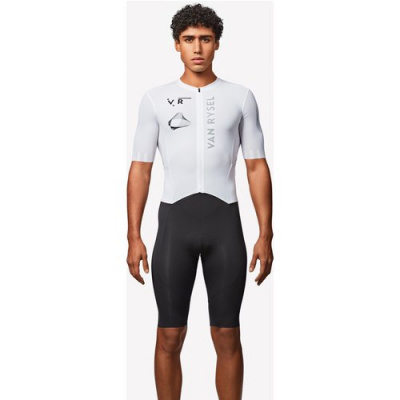
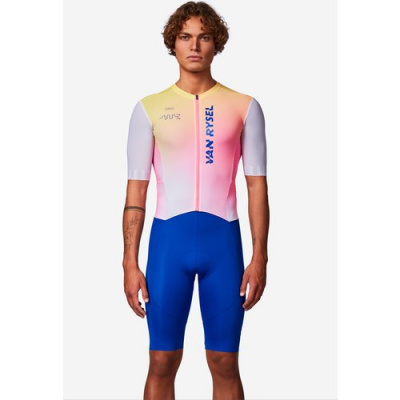
When race day finally arrives, Van Rysel skinsuits are one of the most direct routes to free speed you'll find at this price point. Built around wind-tunnel testing that feeds directly into the professional peloton, these suits bring genuine aerodynamic engineering to riders who aren't on WorldTour contracts but still want to chase down a PB on a dual carriageway TT course or go deep in a summer criterium sprint.
The core idea is simple: eliminate every wrinkle, every bubble of fabric, every source of unnecessary drag. Van Rysel achieves this through compressive, second-skin fabrics that lock to your body in the riding position - not standing in the car park, but actually on the bike, in the drops or over the aero bars. Textured aero fabrics on the sleeves and shoulders work actively to reduce aerodynamic drag, not just passively fit closely. Add a high-density chamois pad designed for aggressive, forward-rotated positions, and laser-cut leg grippers that transition cleanly from fabric to skin, and you've got a suit engineered for the sharp end of amateur racing.
Whether you're lining up for a club ten or targeting a podium in a regional road race, there's a Van Rysel option worth serious consideration.
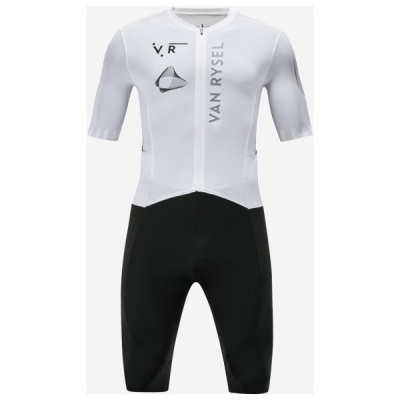
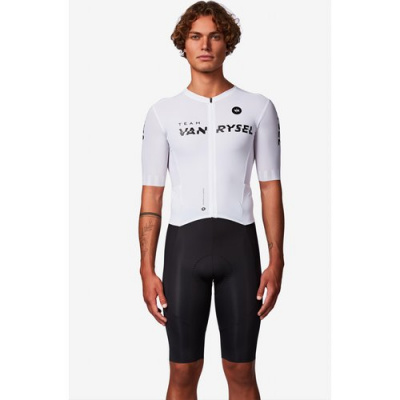
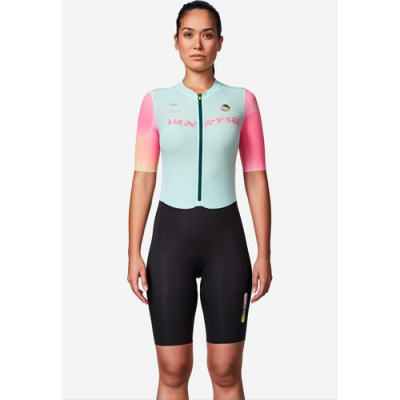
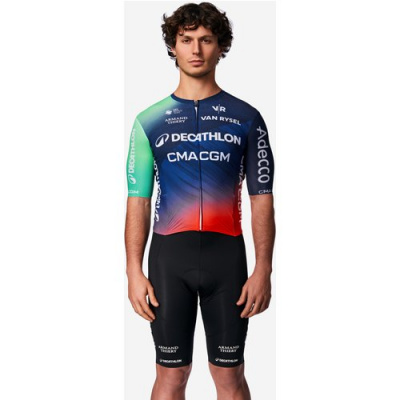
Prices and availability can change quickly. Delivery charges are not always included in listed prices.
Final price, stock status and delivery terms are set by retailer. We may receive a commission on purchases made.
Fabric Tech and Aerodynamic Performance
The fabrics in a Van Rysel aero suit aren't just smooth - some are deliberately textured. That might sound counterintuitive, but the science is solid: microscopic surface texture on the sleeves and shoulders trips the boundary layer of air flowing over the suit, reducing aerodynamic drag in the same way dimples work on a golf ball. It's wind-tunnel tested behaviour, not marketing shorthand, and it's the kind of detail that separates a genuine speedsuit from a tight pair of bibs and a jersey.
For UK summer criteriums - think mild, humid evenings where you're going deep for 45 minutes in a tight circuit - breathability matters as much as aero. Van Rysel's compressive fabrics pull moisture away quickly, so you're not carrying a sweat-soaked suit into the final sprint. The raw-cut, laser-cut leg grippers with silicone micro-dots are another considered detail: no bulky elastic band to create a pressure ridge or a visible bump under the fabric, just a clean, seamless transition that keeps the suit sitting exactly where it should throughout the effort. If you're comparing to what Castelli skinsuits offer at a higher price point, Van Rysel holds up well on the technical fabric side - particularly given what you're paying.
Crosswinds on open dual carriageway TT courses are a genuine issue for UK time trialists, and a suit that stays stable and doesn't catch wind erratically matters more than most riders realise until they've raced in one. The tighter the weave and the more consistent the fit, the more predictable the suit behaves when a gust hits from the side.
Understanding the Van Rysel Fit and Range
A Van Rysel road skinsuit needs to feel uncomfortably tight when you're standing upright. That's not a sizing error - that's correct. The compressive fabric is cut and tensioned for a body in a flexed, forward position on the bike. When you drop into the drops or get low over aero bars, the suit should feel perfectly contoured, with zero fabric bunching across the back or shoulders. If it feels fine standing up, it'll likely ripple in the riding position, and ripples mean drag.
Within the range, there's a meaningful split between pure TT suits and road speedsuits. Traditional TT suits have no rear pockets and no full-length zip - maximum aero, minimum compromise, used for efforts where you won't be eating a gel from a pocket or unzipping on a descent. The Van Rysel TT suit sits firmly in that category. Road speedsuits add a full front zip and often a small rear pocket, making them practical for road races and crits where you might need quick access or a bit of ventilation on a fast descent before a finishing circuit. Neither is better in absolute terms - it's about what you're racing.
If you're after something for a triathlon that involves swimming and running as well as cycling, a standard cycling skinsuit isn't the right tool. Head to our Van Rysel tri clothing category for suits designed specifically for multi-sport use. For sizing, Van Rysel skinsuits tend to follow standard European sizing, but given the compressive nature of the fabric, checking the brand's specific size guide is worth doing - particularly around chest and hip measurements, where a size up or down can make the difference between a suit that performs and one that just looks right on a hanger. Brands like Bioracer take a similarly precise approach to fit, so if you're used to their sizing, use that as a reference point.
Layering and Care for UK Racing
Early morning ten-mile TTs in April aren't warm. The question of whether to wear a base layer under a skinsuit is a practical one, and the answer depends on temperature rather than principle. A lightweight, open-mesh base layer adds meaningful core warmth on a cold start without adding bulk that ruins the aero profile - provided it fits tightly and doesn't bunch under the suit. Van Rysel's own base layers are worth pairing here, since they're cut with a similar body-mapped approach and won't fight the skinsuit's compression. For summer crits above 18°C, skip it entirely.
On the Endura skinsuit side of the market, layering advice is broadly the same - the principle holds regardless of brand. What changes is how each suit's fabric reacts to a base layer underneath, so thinner is always better if you're going that route.
Care is where a lot of riders inadvertently shorten the life of an expensive suit. Wash cold, inside out, on a gentle cycle. Never tumble dry - the heat degrades the elastane fibres that give the suit its compression, and once that's gone, you're left with a suit that fits like a baggy jersey rather than a second skin. The chamois pad, particularly if it's an Elastic Interface construction, also needs cold washing to keep the foam density intact. Hang to dry in the shade. It takes a bit more effort than bunging it in with the rest of your kit, but a Van Rysel skinsuit that's properly cared for will hold its performance properties through a full season of racing. Pair it with a set of Van Rysel socks and you've got a consistent aero package from ankle to shoulder. And if you're looking at the full race-day setup, a Van Rysel time trial bike is a logical next step for riders committed to chasing serious TT times.
Van Rysel Skinsuits FAQs
How tight should a Van Rysel skinsuit be?
Tight enough to feel genuinely restrictive when you're standing still. That's by design. The suit is cut for a flexed riding position - in the drops or over aero bars - where it should sit perfectly contoured with no bunching or wrinkles. Loose fabric creates aerodynamic drag, so if it feels comfortable upright, it's probably too big.
Do you wear a base layer under a skinsuit?
For warm summer criteriums, no - the suit handles moisture management on its own. For chilly early morning UK time trials, a lightweight mesh base layer adds useful core warmth without wrecking the aero fit, provided it's close-fitting and thin. Go for the thinnest option you can find and make sure it doesn't bunch under the suit.
Are skinsuits only for time trials?
Not at all. Classic TT suits with no pockets are still the go-to for pure time trial efforts, but modern road speedsuits - including options in Van Rysel's range - come with full front zips and rear pockets, making them fully practical for road races and criteriums where you need a bit of access or ventilation.