
Upgrade Road Wheels
Upgrade Road Wheels sit at that practical crossroads between genuine performance gains and real-world durability - which matters a lot when your Tuesday evening ride involves more potholes than podiums. Cutting rotational weight is one of the most noticeable upgrades you can make to a road bike, and a well-chosen wheelset changes how the bike accelerates out of corners, climbs, and holds speed on the flat. These aren't marginal gains territory; you'll feel it on the first ride.
The range spans shallow-section alloy hoops built for year-round graft all the way up to deep-section carbon aero wheels optimised for racing and time trials. Tubeless-ready rim beds feature across much of the lineup, so you can ditch the inner tube, run lower pressures, and stop worrying every time you hear gravel pinging off the downtube. Sealed cartridge bearings keep the grit and winter rain where it belongs - outside the hub. The aerodynamic rim profiles are shaped with crosswind stability in mind, so a sudden gust on an exposed ridge road doesn't suddenly turn your front wheel into a sail. Whatever your riding, there's an Upgrade wheelset calibrated for it.
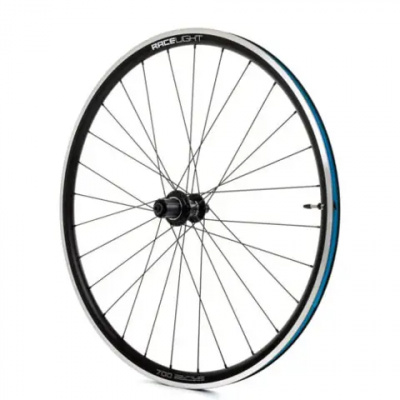
Prices and availability can change quickly. Delivery charges are not always included in listed prices.
Final price, stock status and delivery terms are set by retailer. We may receive a commission on purchases made.
Axle Standards, Disc Mounts, and Getting the Fit Right
Before anything else, check your frame's axle standard. Most modern road bikes run 12x100mm thru-axle up front and 12x142mm at the rear - and the majority of current Upgrade disc wheels are built around those dimensions. If you're on an older frame with quick-release dropouts, that's still catered for across the alloy range, but it's worth confirming before you click buy. Thru-axle setups give stiffer wheel location and better brake caliper alignment, which is why the industry shifted so decisively in that direction.
On disc rotor mounts, you'll find both Centerlock and 6-bolt options in the Upgrade range. Centerlock is the cleaner standard to work with - one lockring, easy to torque correctly, and compatible with Shimano's broad ecosystem. If your rotors are 6-bolt, adapters exist, but it's simpler to match from the start. Hub internals and axle end-caps across the Upgrade range are fully modular, so swapping between standards doesn't mean buying new wheels. For specific end-cap dimensions and freehub fitment details, head to the Upgrade Freehub Bodies & Spares and Upgrade Adapters pages - everything you need for conversion is listed there by axle size and hub model.
Shallow Alloy vs Deep Carbon: What You're Actually Paying For
The honest answer is that a shallow-section alloy wheel is the sensible choice for most riders most of the time. They're robust, they handle crosswinds without drama, and they don't complain when you've left them propped against a wet wall in January. Upgrade's alloy hoops use a reinforced rim structure with high spoke tension from the factory, designed to absorb the kind of sharp-edged impact you get from B-road potholes rather than flex and ping a spoke. For winter training or anything where reliability matters more than lap time, this is where to start.
Step up to the carbon deep-section wheels and the picture changes. The aerodynamic rim profiles aren't just a shape choice - they're optimised to manage airflow and reduce drag at road-riding speeds, with the crosswind stability built into the profile geometry rather than bolted on as an afterthought. Bladed spokes cut through air rather than pushing it, and the high-engagement multi-pawl hub internals mean the drivetrain bites almost instantly when you accelerate - no lag between the pedal stroke and the wheel responding. That's a real-world difference on punchy climbs or sprint finishes, not just a spec-sheet number. You're also carrying less rotational weight, which makes the bike feel livelier at the point where it matters most: changes in pace. If you're comparing options, DT Swiss road wheels and Mavic road wheels occupy similar territory at the performance end, though Upgrade's pricing tends to sit more accessibly for the specification on offer.
Surviving UK Roads: Maintenance That Actually Matters
UK riding is hard on wheels. Flint, grit, standing water, and road surfaces that look smooth on Google Maps but feel like cobblestones - your wheels deal with all of it. The tubeless-optimised rim bed designs on Upgrade wheels make setting up tubeless genuinely straightforward: the bead seats reliably, and the rim profile holds pressure without fuss. Run a quality sealant and top it up every two to three months - more often in winter, when thorns and sharp debris are a weekly hazard. Tubeless won't prevent every puncture, but it handles the small ones silently while you carry on riding.
After your first 100 miles on new wheels, check spoke tension. Spokes bed in and can loosen slightly as the nipples settle, particularly after a few hard efforts or a rough road section. A spoke key is a cheap tool that saves expensive trips to the workshop. Catch it early and the wheel stays true; ignore it and you're looking at a full retension job. The sealed cartridge bearings in Upgrade hubs hold up well to wet and grit, but they're not self-maintaining. Every few months, check for any roughness or play by spinning the wheel and rocking it laterally in the frame. If it feels gritty or notchy, the bearings want attention - either repack or replace. You'll find the right tools for both jobs in the Upgrade Tools section, including cassette lockring tools and spoke keys worth having in your workshop. While you're sorting the bike, it's worth checking our Upgrade Helmets range too - a new wheelset deserves a lid that keeps pace with it. For broader wheel comparisons at the performance end, Fulcrum road wheels and Campagnolo road wheels are worth a look if you want Italian engineering in the mix.
Upgrade Road Wheels FAQs
Are Upgrade road wheels tubeless ready?
Most current Upgrade road wheels are tubeless ready, with rim beds shaped specifically for a reliable bead seat and airtight setup. You'll need tubeless-compatible rim tape, valves, and sealant to complete the conversion - none of which are complicated to fit at home with a track pump and a bit of patience.
What freehub body do I need for Upgrade wheels?
That depends on your drivetrain. Shimano HG, SRAM XDR, and Campagnolo N3W are the main standards to know. Upgrade hubs use a modular freehub design, so if you switch groupsets later, you swap the freehub body rather than the whole wheel. Check the <a href="https://bikesy.co.uk/b/upgrade/freehub+bodies+&+spares/">Freehub Bodies & Spares</a> page for your specific fitment.
How do I convert Upgrade road wheels to thru-axle?
If your Upgrade wheels have modular hubs - which most current models do - you swap the push-fit end caps to match your frame's axle standard. The most common road conversion is to 12x142mm rear and 12x100mm front. Buy the correct adapters for your frame's dimensions and the job takes minutes. See the <a href="https://bikesy.co.uk/b/upgrade/adapters/">Adapters</a> page for compatible options.