
Tufo Tubulars
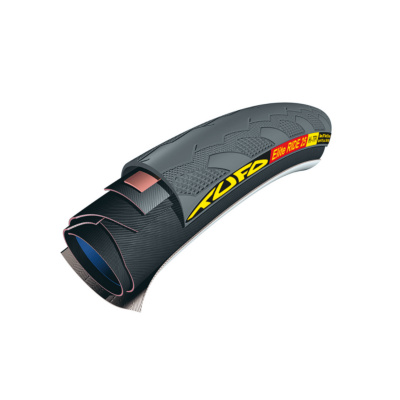
TUFO tubular tyres take a different approach to a format that's been around since the penny-farthing era - and the difference matters on race day. Where most tubulars rely on a separate latex or butyl inner tube stitched inside a cotton casing, TUFO's construction wraps the vulcanised casing completely around the air chamber, leaving no inner tube to pinch, crease, or fail. The result is a perfectly round profile that rolls with real consistency and a construction that handles the kind of flint-scattered B-roads that make lesser tyres weep.
That true tubular construction also means the tread sits over an integrated Puncture Proof Ply rather than relying on casing thickness alone, so you're not trading protection for suppleness. CRX Light Compound keeps rolling resistance honest, while the SPC Silica compound option adds wet-weather grip - relevant about nine months of the year if you're riding the UK's damp lanes seriously.
Installation gets a practical upgrade too. TUFO's double-sided gluing tape bonds the base tape to the rim bed instantly, with no 24-hour curing window and none of the mess that comes with traditional mastic glue. For riders who swap tyres between training wheels and race wheels, or who travel to events, that's a genuine time-saver rather than a marketing detail.
Prices and availability can change quickly. Delivery charges are not always included in listed prices.
Final price, stock status and delivery terms are set by retailer. We may receive a commission on purchases made.
Fitting TUFO Tubulars: Rim Compatibility and Installation
First, the non-negotiable: TUFO tubulars fit tubular-specific rims only. Clincher rims and tubeless-ready hookless rims won't work - the rim bed profile is fundamentally different, and there's no safe workaround. If you're unsure whether your wheels are tubular-compatible, check the rim bed for the shallow, slightly concave channel that's distinct from the hooked walls of a clincher.
Once you've confirmed compatibility, you have two mounting options. Traditional mastic glue works fine, but cold, damp UK weather slows curing times significantly - leave it overnight in a British November garage and you might still be waiting come morning. TUFO's own gluing tape is the more practical solution for most riders: it's double-sided, bonds the base tape to the rim bed on contact, and is available in widths to match modern aero rims (19mm and 22mm being the most common). Wider rims need the wider tape - using the wrong width leaves exposed adhesive or an uneven bond, neither of which you want mid-race.
Valve length is worth thinking about before you buy. Deep-section carbon rims - anything over 40mm - will need valve extenders. TUFO tubulars feature a removable valve core, which is important: position the extender so the valve core sits at the top, accessible for sealant injection if you need it. Get that detail wrong and injecting TUFO Extreme Sealant post-puncture becomes a roadside puzzle you don't want to solve.
Road and Cyclocross: How the Range Breaks Down
TUFO's road range is tiered by intended use rather than price alone, and understanding where each model sits stops you buying a race tyre for a training wheel or vice versa.
The S33 Pro sits at the durable end. It's heavier than the rest of the range, but the trade-off is a casing and tread compound built for consistent mileage over harsh surfaces. If you're running a second set of wheels for winter training or long audax-style days on rough country roads, this is the one that earns its keep. Don't expect the liveliness of the upper-tier models - it's a workhorse, not a racer.
Step up to the Hi-Composite Carbon and you get a more balanced picture. The puncture-proof ply is integrated directly under the tread, the compound rolls faster, and the weight drops to a point where you'd be comfortable racing on it. For UK riders who want genuine tubular ride quality across mixed mileage - a club ride on Thursday, a local race on Sunday - this sits in a practical middle ground. Continental tubulars at a similar price point are worth comparing if you're undecided, though the TUFO's construction approach gives it a distinct feel underfoot.
The Elite series is where the high-TPI casing and lightest compounds come together. Suppleness is noticeably better - the casing conforms to road texture in a way the S33 Pro simply doesn't - and rolling resistance drops again. These are pure race-day tyres. They'll survive training if treated carefully, but that's not what they're optimised for. Vittoria tubulars and Dugast tubulars play in the same high-end space and are worth a look if you're comparing outright race performance at the top of the market.
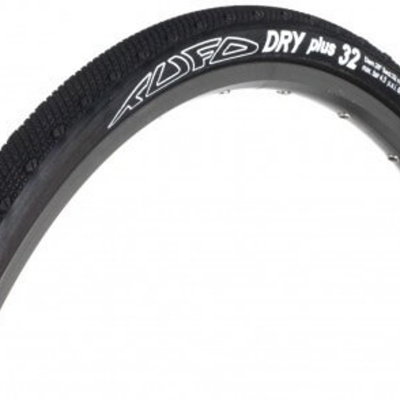
For cyclocross, the tread choice matters as much as the construction. The Cubus is built for deep, clinging mud - the kind of conditions you find at National Trophy rounds in Yorkshire or the North West, where the course turns into something resembling a ploughed field by the second lap. The Primus covers the majority of UK 'cross conditions: mixed mud and grass, intermediate going, the sort of race where you're never quite sure what the first lap will feel like. The Dry Plus suits hardpack and sandy circuits - less common in the UK but relevant for late-season races on firmer ground. Challenge tubulars are a strong alternative for 'cross if you're weighing up options, particularly in the open-tubular category.
UK Roads, Mud, and Keeping TUFOs Rolling
British roads aren't kind to tyres. Wet flint on chalk downland cuts through tread compounds that would last seasons elsewhere; farm debris on Cumbrian lanes makes a mockery of delicate race casings. TUFO's vulcanised construction resists surface cuts better than hand-stitched cotton tubulars - the tread bonds to the casing structurally rather than being a layer applied on top. That matters when you're descending a wet Welsh lane at speed and the road surface looks like it's been scattered with broken crockery.
Puncture repair with TUFOs is straightforward once you understand the construction. Because there's no separate inner tube, you can't unstitch the casing and patch it in the traditional way - the repair protocol is injection, not surgery. Remove the valve core (that removable valve core design earns its keep here), inject TUFO Extreme Sealant directly into the tyre, rotate to distribute it, and re-inflate. It works on smaller cuts and holes; a significant sidewall tear is a different matter and means the tyre is done. Carry a sealant cartridge and a spare valve core tool if you're racing or riding somewhere remote - it's the same logic as carrying a tubeless plug kit. Michelin tubulars are worth considering if you want a cotton-cased alternative that can be unstitched and patched in the traditional manner, though that process has its own demands on time and skill.
Cold weather slows everything down, and traditional tubular glue curing in a UK winter is a particular frustration. The TUFO tape system sidesteps that entirely - the adhesive works at low temperatures, which is genuinely useful if you're prepping race wheels the night before an early-morning 'cross event in January. Just make sure the rim bed is clean and dry before you apply it; a quick wipe with isopropyl alcohol makes the bond noticeably more reliable.
Tufo Tubulars FAQs
Do TUFO tubulars need glue or tape?
You can use either traditional mastic glue or TUFO's own double-sided gluing tape. The tape is the easier option for most riders - it bonds the base tape to the rim bed instantly, requires no curing time, and works reliably in cold conditions where mastic glue can take far longer to set than the label suggests.
How do you repair a punctured TUFO tubular?
TUFO tubulars have no separate inner tube to patch, so the repair method is injection rather than stitching. Remove the valve core, inject TUFO Extreme Sealant directly into the tyre, rotate the wheel to spread it, and re-inflate. It handles smaller punctures well; a large sidewall cut will likely end the tyre's life.
What is the difference between TUFO Elite and Hi-Composite tubulars?
The Elite uses a higher-TPI casing and lighter compounds - it's noticeably more supple and faster rolling, built for race day. The Hi-Composite Carbon adds an integrated puncture-proof ply and a more durable tread compound, making it a better fit for training mileage and rougher UK roads where outright speed matters less than longevity.