
TSG Kids Helmets
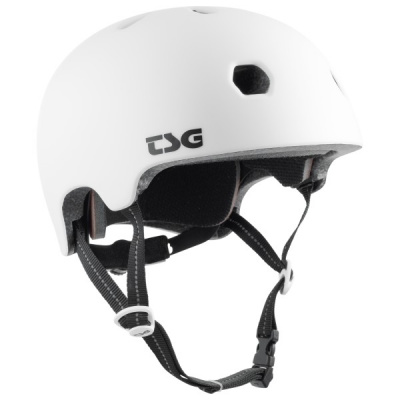
TSG kids helmets take the brand's action-sports credibility and scale it down to the heads that matter most. These aren't just shrunken adult lids with a fresh colourway slapped on - TSG has thought carefully about how a child actually wears a helmet, and the result is something parents and kids both buy into. The signature Low Fit design is the headline feature: the shell sits lower around the head, covering the temples and the atlas at the base of the skull - areas that a standard cycling helmet typically leaves exposed. That extended coverage also kills the bobblehead wobble that puts kids off wearing their lid in the first place.
The range runs from the Nipper Mini for toddlers through to the Nipper Maxi and Meta Youth, so there's a fit for most ages and disciplines. All models are EN 1078 certified, which means they're cleared for cycling, skateboarding, and scootering under UK and EU safety law. Whether your child is learning to balance on the driveway, sessioning the local pump track on a Saturday morning, or pedalling to school in the drizzle, TSG delivers protection that's practical and genuinely comfortable - which is the only way you'll actually get them to keep it on.
Prices and availability can change quickly. Delivery charges are not always included in listed prices.
Final price, stock status and delivery terms are set by retailer. We may receive a commission on purchases made.
Shell Construction and How It Handles the Heat
TSG uses two distinct construction methods across the kids' range, and the difference is worth understanding before you buy. The Nipper Mini and Nipper Maxi use In-mold construction, where the outer polycarbonate shell is fused directly to the EPS foam liner during manufacturing. The result is a lighter, more integrated structure - less bulk on a small head, which makes a real difference over a long ride or a full afternoon at the skatepark. The Meta Youth, meanwhile, uses an ABS hardshell: a tougher outer casing that's better suited to the repeated knocks of trick-based riding where a single-impact foam liner would retire early.
EPS foam is the core of the protection story in both cases. It's a closed-cell expanded polystyrene that compresses on impact to absorb and dissipate energy before it reaches the skull - think of it as a controlled crumple zone. It doesn't bounce back, which is why any helmet that takes a significant knock should be replaced regardless of how it looks on the outside.
Ventilation is measured and deliberate rather than aggressive. The vent channels keep air moving during a hard pump-track session in July without turning the helmet into a wind scoop on a cold January school run. It's a sensible balance for the UK's variable conditions, where the weather can shift from warm sunshine to a sharp headwind inside twenty minutes.
Getting the Fit Right Across the Range
The TSG kids' helmet lineup divides neatly by age and head circumference. The Nipper Mini targets toddlers, typically covering head sizes from around 48 - 51 cm, while the Nipper Maxi steps up to 52 - 54 cm for older children. The Meta Youth caters to older kids moving into more technical riding. If you're unsure which model your child needs, grab a soft tape measure, wrap it around the head roughly a centimetre above the eyebrows and ears, and match that figure in centimetres to the TSG sizing chart - that's the most reliable method, far more accurate than going by age alone.
The Tuned Fit System is what gives these helmets genuine longevity. TSG includes pads of varying thickness so you can adjust the internal fit as your child grows. Swap in thinner pads to open up the fit slightly, or use thicker ones to tighten it - a genuinely useful feature when kids' heads can jump a centimetre in circumference over a single school year. Combined with the anatomical Snug Fit shell shape, it eliminates the side-to-side rocking that signals a lid is too big. A helmet that moves on impact is one that isn't doing its job properly.
The Low Fit design sits noticeably deeper on the head than a standard road-style helmet. That's intentional - it mirrors the coverage you'd find on a skate helmet, protecting the temporal area and the base of the skull where serious injuries often occur in falls. It also happens to look less awkward on younger riders, which helps with the daily battle of getting them to put it on without complaint.
If your child is pushing into downhill trail riding, they'll need dedicated facial protection alongside their lid. Have a look at our full-face helmets section for options that cover the chin and jaw. For adult sizing, browse the full TSG helmets range on Bikesy. Alternatively, if you're weighing up other brands at this age group, Fox kids helmets and Bell kids helmets are strong alternatives worth comparing.
Keeping the Lid Fresh Through a UK Winter
Muddy bridleways, wet pump tracks, and the general grime of UK autumn riding mean the inside of a kids' helmet can get unpleasant quickly. Fortunately, TSG fits washable pads throughout the range - pull them out, hand-wash them in warm water with mild soap, and let them air dry away from any direct heat source. That last part matters: EPS foam degrades when exposed to sustained heat, so drying pads on a radiator after a soggy ride is a habit worth breaking early.
For the shell itself, a damp cloth and mild soapy water is all you need. Avoid solvent-based cleaners, aerosol sprays, or anything with a strong chemical base - they can attack the EPS foam beneath the polycarbonate or compromise the ABS hardshell's structural integrity without leaving any visible sign of damage. The harm is invisible until it isn't.
Store the helmet somewhere cool and dry, away from direct sunlight. UV exposure and heat both degrade EPS foam over time, which is why leaving it on the back shelf of a car during summer isn't a great long-term plan. A hook inside a cupboard or a dedicated shelf in the garage is ideal. Most manufacturers, TSG included, recommend replacing a helmet every three to five years regardless of visible condition - the foam hardens with age and loses its ability to absorb impact energy effectively. If the helmet takes a hard knock - even one that looks minor - replace it. You can't inspect EPS damage from the outside.
For riders in the Giro kids helmets or MET kids helmets consideration set, the same care principles apply across the board - it's worth checking pad removal on whichever lid you choose before you commit.
TSG Kids Helmets FAQs
How do I measure my child's head for a TSG helmet?
Use a soft tape measure and wrap it around the head about a centimetre above the eyebrows and ears - that's the widest point. Note the circumference in centimetres and match it against the TSG sizing chart. Don't rely on age guides alone; children's head sizes vary considerably, and a correct measurement is the only way to guarantee a snug, wobble-free fit.
What is the difference between TSG Nipper Mini and Nipper Maxi?
The Nipper Mini is sized for toddlers, typically fitting head circumferences of around 48 - 51 cm. The Nipper Maxi steps up to cover roughly 52 - 54 cm, suiting older children and younger juniors. Both share the same lightweight In-mold construction and Low Fit shell design - the Maxi simply scales the same protection up for a larger head.
Are TSG kids helmets suitable for both cycling and skateboarding?
Most TSG youth helmets carry dual certification including EN 1078, which covers cycling, skateboarding, and scootering under UK and EU safety standards. Always check the safety sticker on the specific model before using it across disciplines - the certification details are listed there, not just on the packaging.