
Trek Road Wheels
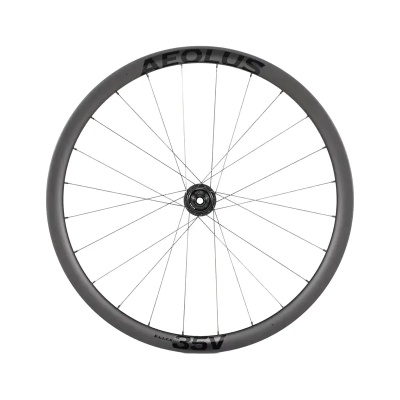
Trek road wheels have quietly become one of the more serious upgrade options on the UK market - whether you're replacing a stock wheelset or speccing a build from scratch. Historically sold under the Bontrager name, Trek's top-tier road wheels now carry the Trek badge directly, most visibly on the Aeolus range. The construction centres on Trek's proprietary OCLV (Optimum Compaction Low Void) carbon, a layup process that chases maximum stiffness-to-weight by minimising resin voids in the carbon fibre - practical on a Surrey Hills climb, not just a marketing claim.
Most current models are TLR (Tubeless Ready), which matters on UK roads where a latex buffer between you and a pothole can save your evening. Hub quality varies across the range, from reliable Rapid Drive 108 pawl systems on mid-tier models to DT Swiss internals on the flagship RSL. Disc brake compatibility is standard across modern Trek road wheels, using Centerlock rotor mounts and thru-axle fitment front and rear. For tubeless valves, rim tape, or freehub spares to complete your setup, we have dedicated pages for each. This page covers the wheel ranges themselves - what they are, who they suit, and what to check before you buy.
Prices and availability can change quickly. Delivery charges are not always included in listed prices.
Final price, stock status and delivery terms are set by retailer. We may receive a commission on purchases made.
Axle Standards, Freehub Bodies, and TLR Compatibility
Get the fitment right before anything else. Modern Trek disc road wheels use 12x100mm thru-axle at the front and 12x142mm thru-axle at the rear - the current standard across virtually all disc-equipped road and gravel bikes, so compatibility is rarely an issue on any frame from the last five or six years. Rotor attachment is Centerlock throughout, which gives a more precise interface than six-bolt and makes rotor swaps faster. You'll need a Centerlock lockring tool and a torque wrench; don't skip the latter.
Freehub body options split along drivetrain lines. Shimano HG shells cover 11-speed setups, while 12-speed Shimano Hyperglide+ requires the MicroSpline body. Running SRAM? You'll need the XDR freehub. Check before ordering - swapping a freehub body is straightforward on DT Swiss-based hubs, less so on proprietary systems. Trek's Aeolus RSL and Pro wheels accept interchangeable freehub bodies, which makes them genuinely future-proof if you're likely to switch groupsets.
On tubeless: TLR-spec rims have a shaped bead seat and come with a moulded rim strip from the factory, but you'll still need tubeless valves and sealant to complete the setup. For everything involved in that process, our Trek rim tape page covers compatible tape options, and there's a separate page for tubeless valves. One thing worth knowing - TLR rims can still run standard clincher tyres with inner tubes if you haven't committed to tubeless yet.
Aeolus RSL, Pro, and Elite: What You Actually Get at Each Level
The Aeolus name runs across three tiers, and the differences are meaningful rather than cosmetic. At the top, the Aeolus RSL (Race Shop Limited) uses Trek's lightest OCLV carbon layup and is paired with DT Swiss 240s internals featuring the Ratchet EXP engagement system - 54 points of contact, near-instant pickup, and a hub that's been proven in wet northern European racing. This is the wheelset that competes directly with ENVE road wheels and the upper end of DT Swiss's own road range. Rim depth options at RSL level run to 37mm and 51mm - the 37mm is the one to pick if your rides regularly involve exposed moorland lanes or the kind of crosswind that turns the Humber Bridge into a wrestling match.
The Aeolus Pro sits a step down. Carbon construction throughout, but a slightly heavier layup than RSL, and the hub steps to DT Swiss 350 internals - still a ratchet-based system, still serviceable, still genuinely good. For most riders doing sportives, club runs, and the occasional race, Pro-level wheels are the sensible call. The weight difference versus RSL is real but unlikely to matter on a Derbyshire sportive. Rim depths mirror the RSL range, with a 51mm option covering most all-road aero use.
The Aeolus Elite and Comp models bring the price down considerably. These use alloy rims or carbon-fairing alloy hybrids rather than full OCLV carbon, and the hubs run Trek's own Rapid Drive 108 pawl system - 108 points of engagement, which is competitive, but pawl-based mechanics do need more frequent attention in UK winter conditions. Rim depth options at this level are shallower, typically suited to riders prioritising durability and value over aero gains. If you're comparing at this price point, Mavic road wheels are a reasonable alternative with their own integrated tyre ecosystem.
On rim depth generally: 37mm is the climbing and crosswind depth, low enough to handle a gust on an exposed Welsh ridge without pulling the bars. 51mm covers most riders most of the time - enough aero advantage to feel on a flat section, manageable in a headwind. Go 62mm or deeper only if you're doing time trials or riding circuits where crosswinds simply aren't a factor.
Keeping Trek Wheels Rolling Through UK Winters
UK roads are hard on wheels. B-road chip seal, council potholes that appear overnight, and six months of wet grit - none of it is gentle on rims or hub bearings. The good news on OCLV carbon: Trek's layup process produces a rim that handles sharp impacts better than many competitors at equivalent weight, and Trek backs the range with their Carbon Care Wheel Loyalty Programme, which offers replacement pricing on crash-damaged carbon wheels. Worth registering the wheels when you buy.
Hub maintenance intervals depend on which tier you're running. DT Swiss Ratchet EXP systems - found in RSL and Pro - are sealed well enough to handle winter riding without constant intervention. A full strip, clean, and regrease once or twice a season with the correct DT Swiss grease is enough for most riders. The ratchet ring design means servicing is quick once you've done it once; Trek-compatible tools make the job easier. Rapid Drive 108 pawl hubs on Elite and Comp models need more regular attention - if the pawls sit in dirty water between rides, they can stick, and a slow-engaging rear hub on a wet morning descent isn't where you want to discover the issue. Pull the cassette, clean the freehub body, and lube the pawls every few weeks in winter.
Spoke tension is the other thing to check periodically. Even well-built wheels can detension slightly over a British winter of rough roads. A basic spoke key and a few minutes checking tension across the wheel costs nothing and can catch a developing problem before it becomes a buckle. If you're not confident doing it yourself, any good shop will check it quickly. Also worth noting: Bontrager road wheels from earlier model years share the same hub standards as current Trek-branded wheels, so spare parts and freehub bodies cross over without issue.
Trek Road Wheels FAQs
Are Trek and Bontrager road wheels the same?
Yes - Trek owns Bontrager and has used the name for its wheel range for years. More recently, Trek has moved its flagship road wheels, including the Aeolus RSL, onto direct Trek branding. Older Bontrager-labelled wheels are built to the same standards and share compatible hub and axle specs with current models.
Can I run tubeless tyres on Trek road wheels?
Most current Trek and Bontrager road wheels carry TLR (Tubeless Ready) spec, meaning the rim profile and bead seat are shaped for a reliable tubeless seal. You'll still need compatible rim tape or the moulded strip, tubeless valves, and sealant to complete the setup - the rim alone doesn't make it tubeless-ready to ride.
What hubs are used in Trek carbon road wheels?
It depends on the tier. Aeolus RSL wheels use DT Swiss 240s internals with Ratchet EXP engagement - fast, reliable, and straightforward to service. Pro models step to DT Swiss 350 internals, which are still ratchet-based and very capable. Mid-range Elite and Comp models use Trek's own Rapid Drive 108 pawl-based hubs, which need more frequent cleaning in wet conditions.