
SRAM 10 Speed Front Derailleurs
A worn or sluggish front mech is usually what kills an otherwise solid 2x10 drivetrain, and a SRAM 10 speed front derailleur is one of the more cost-effective ways to bring it back to life. Whether you're running a road setup built around Apex, Rival, or Force, or trying to squeeze more miles from an X5 or X7 mountain bike, SRAM's 10-speed front mechs are engineered to deliver decisive chainring transitions without the faff.
The key to that precision is Exact Actuation - SRAM's 1:1 cable pull ratio that keeps shifts consistent and predictable whether you're hammering up a Welsh drag or trying to stay smooth on a technical bridleway descent. Pair that with X-Glide chainring geometry, which is optimised for shifting under load, and dropping into the little ring mid-climb stops feeling like a gamble.
For road riders, Yaw technology is arguably the bigger deal. The cage rotates to maintain chain alignment across the entire cassette, which means no more fiddling with trim - you just shift and get on with it. Mounting standards vary across frame types, so check your seat tube carefully before buying. We've aggregated current UK prices below, covering braze-on, band-on, and direct mount options across the full SRAM range.
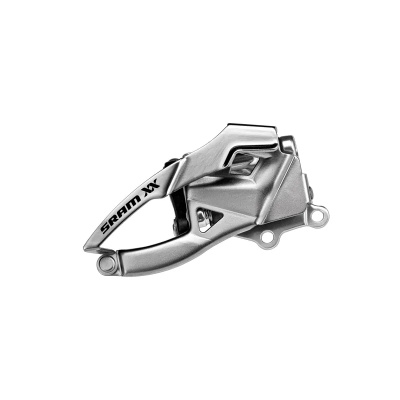

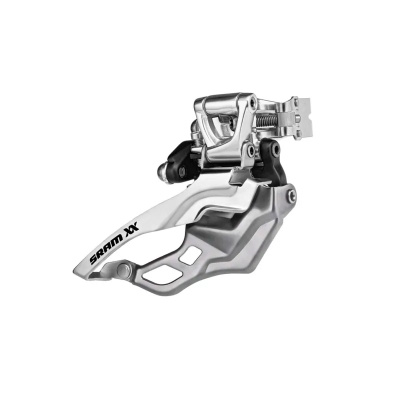
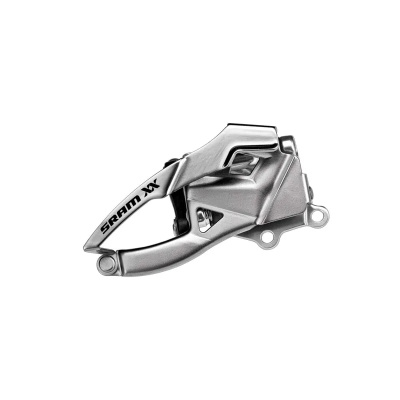
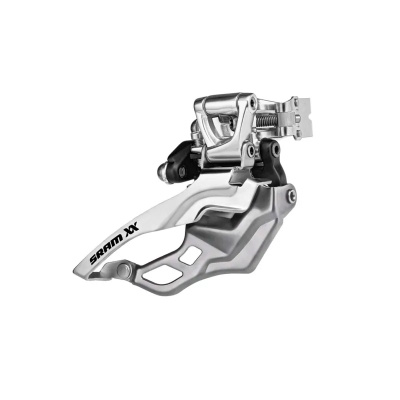
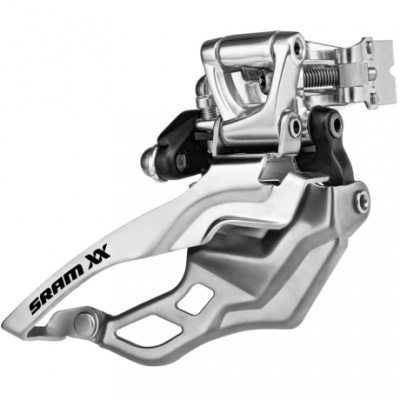
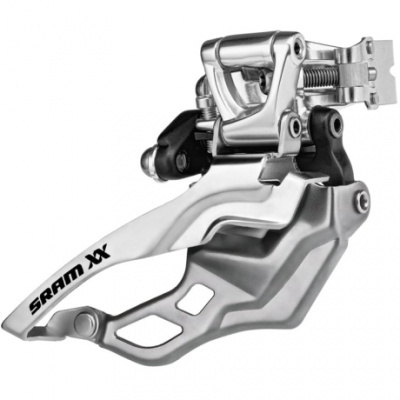
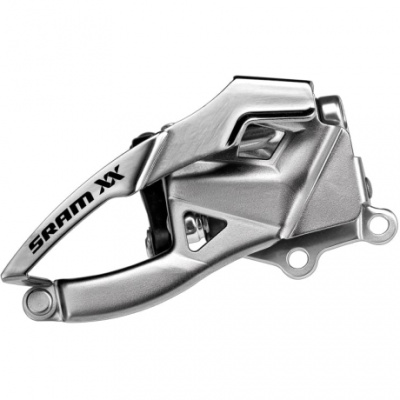
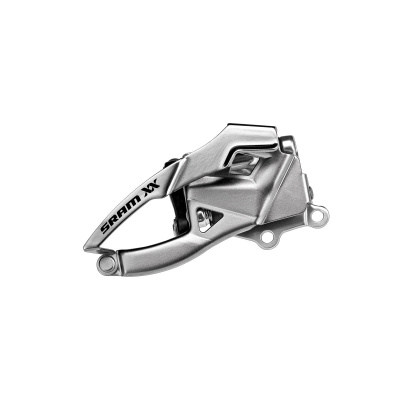
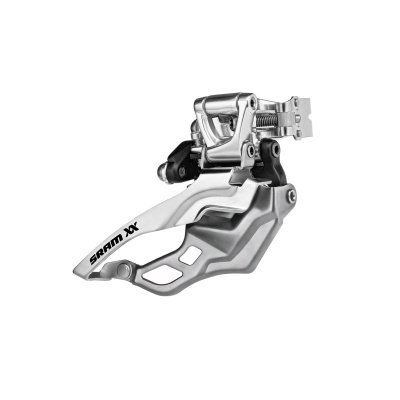
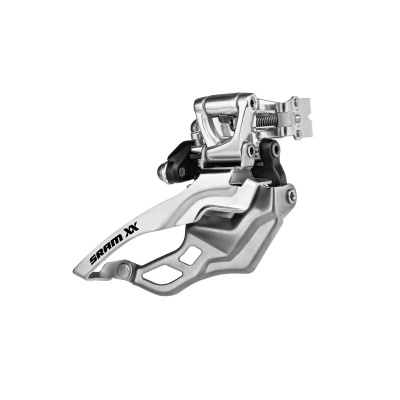
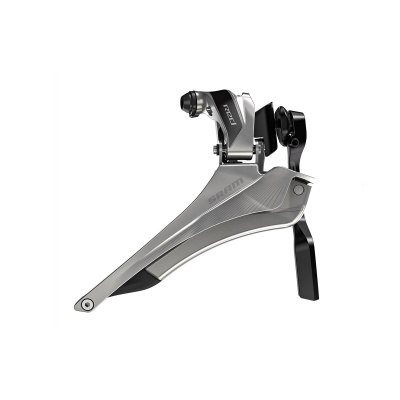
Prices and availability can change quickly. Delivery charges are not always included in listed prices.
Final price, stock status and delivery terms are set by retailer. We may receive a commission on purchases made.
Getting the Mount Right Before Anything Else
Before you look at cage material or tier level, nail the mounting standard - get this wrong and the derailleur simply won't fit. There are two main options for most riders: braze-on and band-on. Braze-on derailleurs bolt directly onto a threaded tab built into the frame - common on road bikes and modern MTBs. If your frame has a smooth, round seat tube with no tab, you need a band-on derailleur, and the clamp diameter has to match the tube exactly. The two most common sizes are 31.8mm and 34.9mm - measure before you order, not after. If your frame is braze-on but the tab is damaged or missing, an adapter from our SRAM derailleur clamps page can bridge the gap.
For mountain bike frames, it gets slightly more involved. High Direct Mount and Low Direct Mount systems position the derailleur at different heights relative to the bottom bracket shell, which affects cage alignment and chainline. Get that wrong and you'll never dial the shift in properly. Cable routing matters too: top pull suits frames with cables routed from above, bottom pull from below, and dual pull handles both - useful if you're building up a frame with non-standard cable routing or running a dropper post with limited space around the seat tube.
One point worth flagging: SRAM's 10-speed road and MTB front derailleurs both use Exact Actuation, but the cage profiles differ. Road cages are shaped for compact doubles, MTB cages for wider chainring combinations. Mixing them across disciplines will cause rubbing regardless of how well you set the limit screws.
Road vs MTB: Working Out Where You Sit in the Range
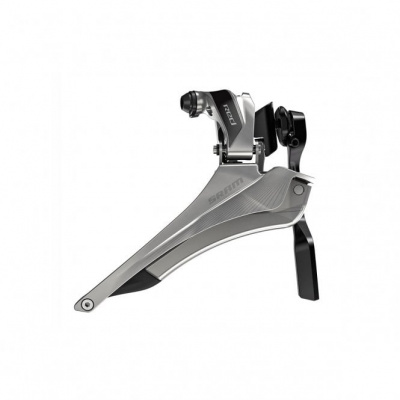
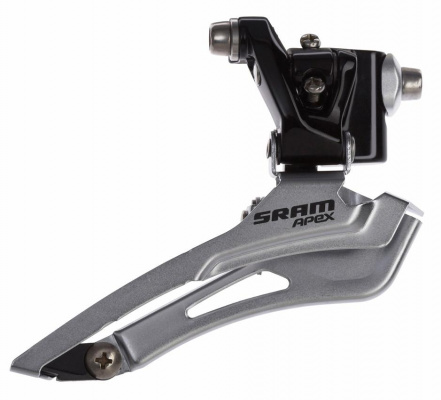
SRAM's SRAM 2x10 front mech lineup splits cleanly into road and MTB families, each with a clear hierarchy. On the road side - Apex, Rival, Force, Red - the main thing that changes as you move up is cage material and overall mass. Entry-level Apex uses a stamped steel cage, which is heavier but durable. Rival steps up to aluminium, stiffening the cage and quickening the shift feel. Force and Red move further still, with lighter alloys and tighter manufacturing tolerances that make shifts feel almost mechanical in their snap. The pivot hardware also improves, which matters if you're covering high mileage in poor weather.
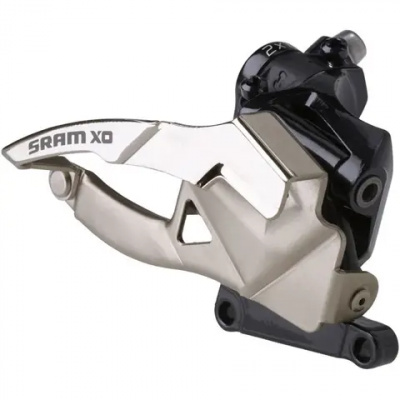
On the MTB side - X5, X7, X9, X0 - the upgrade path follows a similar logic but with an emphasis on durability under mud and load rather than outright weight saving. Higher-tier mechs like the X9 and X0 use beefier pivot pins and springs that resist deformation after repeated impacts, which is relevant if your rides regularly involve rocky bridleways or gritty winter lanes. The X7 sits in a practical middle ground: solid hardware, decent cage stiffness, and widely available as a replacement part.
One genuinely useful thing about SRAM's Exact Actuation system is the flexibility it gives you within a discipline. Because the cable pull ratio is consistent across the road range, a Force front derailleur will work correctly with Rival shifters. That makes it worth considering if you're upgrading a bike in stages rather than all at once - pair a higher-spec mech with your existing shifters and the shift quality improves without a full groupset swap. Check compatibility with your SRAM 10 speed rear derailleur and SRAM 10 speed cassette while you're at it, since the whole drivetrain works as a system.
If you're shopping across brands, Shimano 10 speed front derailleurs offer a strong alternative at most price points, and Campagnolo 10 speed front derailleurs are worth a look for road builds where the rest of the groupset is already Campag. Neither is a drop-in swap with SRAM shifters, though - actuation ratios differ, and indexed shifting won't work correctly if you mix them.
It's also worth pairing the right SRAM Exact Actuation front derailleur spec with a matched SRAM chainset, especially if you're running X-Glide rings. The ramp and pin geometry on X-Glide chainrings is optimised to work with SRAM's cage movement, and you'll feel the difference on shifts under power - less chain slap, cleaner engagement.
Keeping Things Moving Through a UK Winter
This is where a lot of front derailleurs quietly give up. The parallelogram pivots on any front mech are small, close-tolerance, and almost impossible to seal properly - and a British winter is basically a sustained attack on exactly those weak points. Road grit and salt work into the pivot pins and springs on winter lanes; wet mud from bridleways packs into the mechanism on MTB setups, slowing the spring return until downshifts become a two-fingered shove rather than a flick.
The fix isn't complicated, but it needs to be regular. After a few wet rides, flush the parallelogram pivots with a light degreaser - a thin nozzle applicator lets you get into the joints without soaking the cable or housing. Follow it immediately with a dry PTFE lube, which keeps things moving without attracting grit the way a wet lube does. Speaking of which: avoid heavy wet lube on the derailleur spring. It feels like the right call in November, but it creates a grinding paste with road or trail mud that will seize the mechanism far faster than leaving it dry. PTFE or a dry wax-based product only.
On MTB setups with dual-pull mechanisms, mud packing is the bigger concern. If you're riding the Peak District or similar in winter, check the mechanism after every muddy outing and clear any compacted material before it dries solid. A stiff brush and a low-pressure rinse is usually enough - you don't need a jet wash anywhere near derailleur pivots.
For the best SRAM 10 speed front derailleur for road longevity specifically, the higher-tier mechs do hold up better in sustained wet use. The tighter pivot tolerances on Force and above mean less play develops over time, so indexing stays consistent through winter rather than gradually drifting. It's a real-world argument for spending a bit more if you ride year-round.
SRAM 10 Speed Front Derailleurs FAQs
Are SRAM 10 speed front derailleurs compatible with Shimano shifters?
No - not for indexed shifting. SRAM's Exact Actuation system uses a 1:1 cable pull ratio that differs from Shimano's actuation standard. Mix the two and your shifts will be inconsistent or miss positions entirely. Stick to SRAM shifters with SRAM mechs across the whole drivetrain.
What is SRAM Yaw technology on front derailleurs?
Yaw allows the derailleur cage to rotate slightly on a non-parallel axis as it shifts outward. This keeps the cage at a consistent angle relative to the chain regardless of which sprocket you're on at the rear. The practical result: no chain rub, no need to trim the shifter, ever. It's fitted to SRAM's road-specific front derailleurs.
How do I know if I need a braze-on or band-on front derailleur?
Look at your frame's seat tube. A threaded metal tab welded to the tube means you need a braze-on derailleur. A smooth, uninterrupted tube means you need a band-on, sized to match the tube diameter - measure it, as 31.8mm and 34.9mm are both common and not interchangeable. If in doubt, a local shop can measure it in seconds.