
Scott Socks
The best Scott cycling socks are the ones you completely forget you're wearing. If your feet are on your mind mid-ride - hot-spots forming, fabric bunching, toes going numb on a damp Welsh descent - something has already gone wrong. Scott's sock range is built around that principle: eliminate the distraction, lock the foot in place, and let you get on with the riding.
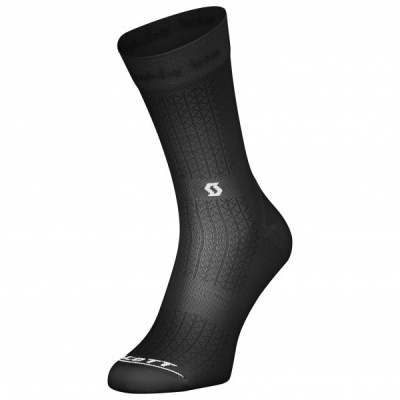
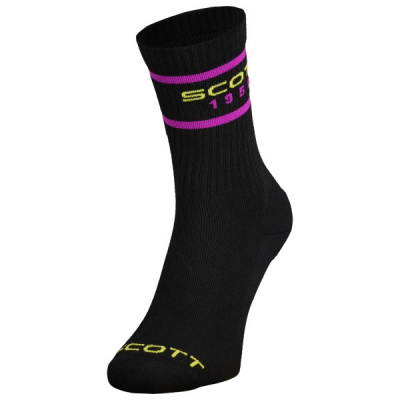
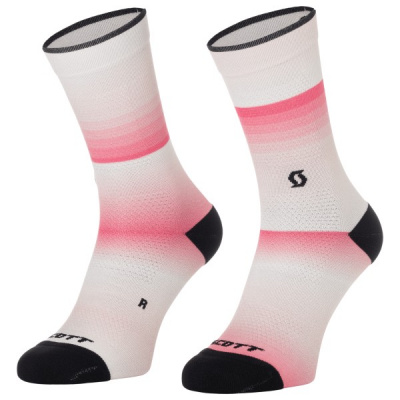
The range splits broadly into three lanes. Their road and aero-focused options use a compressive, anatomical fit with breathable mesh panels and antibacterial Q-Skin yarn to keep things fresh on long summer days in the saddle. The Trail and MTB line adds reinforced heel and toe boxes for durability, a touch more volume, and enough vibration damping to take the edge off rough ground. Then there are the Merino blends - the ones you reach for when November arrives and the road spray starts flying.
Across all of them, Scott applies arch support, flatlock seams, and moisture-wicking construction as standard. These aren't details you'll read in a race report, but they're what separates a sock that works from one that just covers your foot. Whether you're on road, gravel, or trail, there's a Scott option worth knowing about.
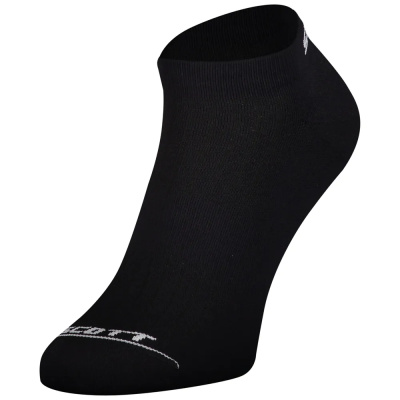
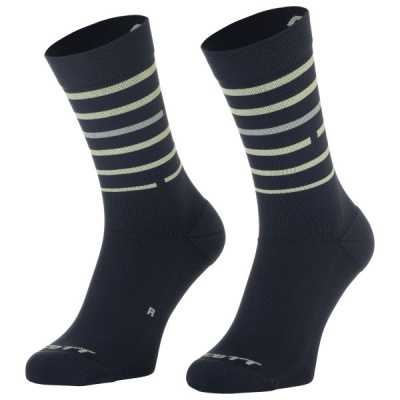
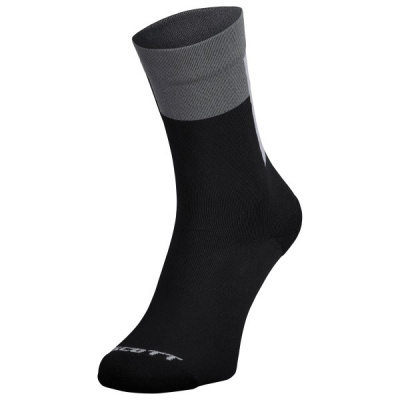
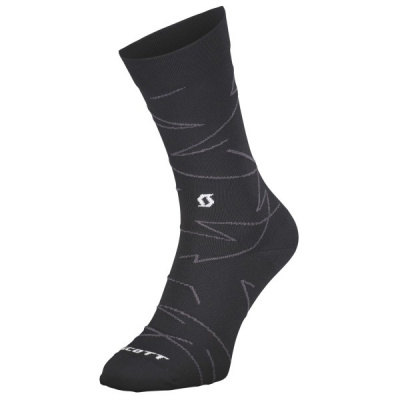
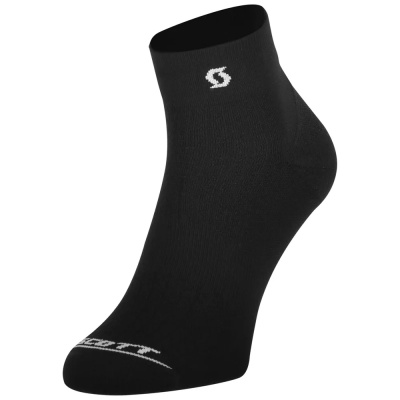
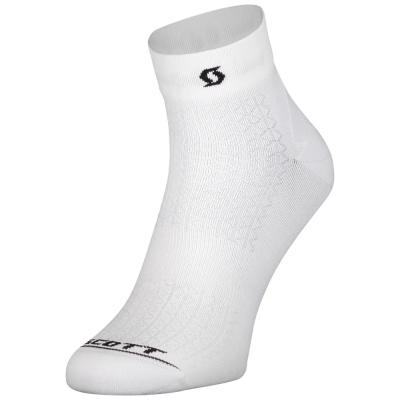
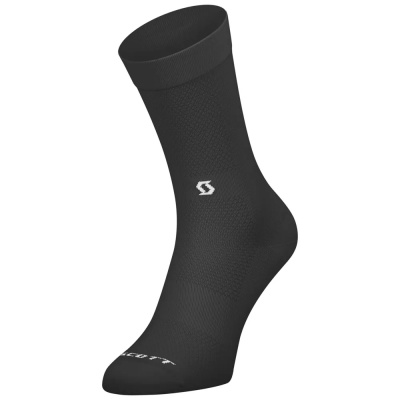
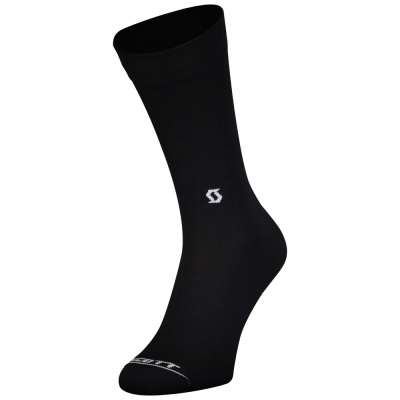
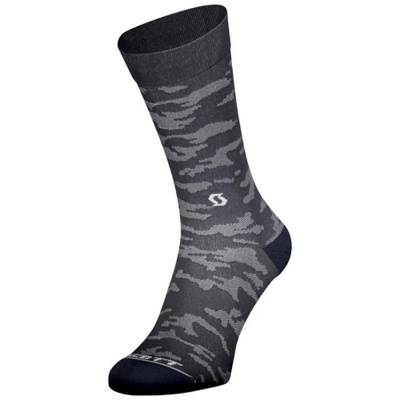
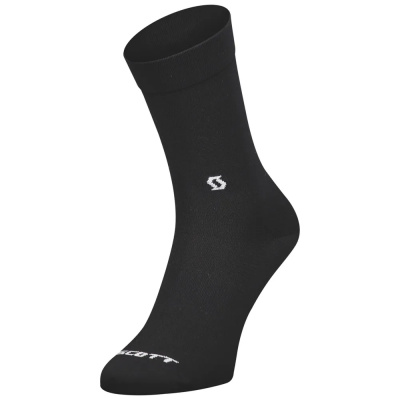
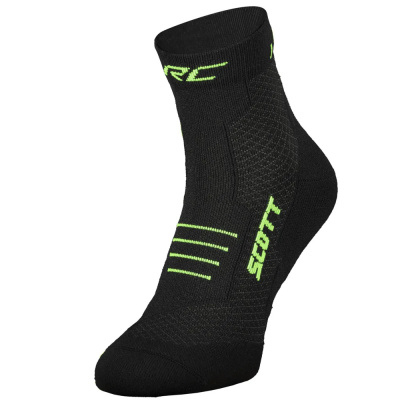
Prices and availability can change quickly. Delivery charges are not always included in listed prices.
Final price, stock status and delivery terms are set by retailer. We may receive a commission on purchases made.
Fabric Tech and Weather Performance
Start with Q-Skin yarn, because it's the foundation of most of Scott's performance socks. It's an antibacterial fibre treatment that inhibits the bacterial growth responsible for that familiar post-ride odour - useful on a two-hour club run, genuinely important on a full day in the saddle. The yarn itself wicks moisture away from the skin efficiently, which matters more than most riders expect. A damp sock isn't just uncomfortable; it's a friction problem, and friction on a long climb is how blisters start.
Scott pairs Q-Skin construction with strategic mesh ventilation panels across the top of the foot. These open zones act as a heat exhaust, drawing warm air away from the foot during hard efforts. On a humid British summer day - think sticky South Downs lanes in July - this makes a noticeable difference to how fresh your feet feel in the final hour. The mesh panels are positioned to avoid structural zones, so you don't sacrifice fit stability to get the airflow.
Flip the calendar to winter and the logic inverts. Scott's Merino blend socks swap breathability-first construction for thermal regulation. Merino is one of the few fibres that insulates effectively even when wet, which makes it well-suited to the kind of riding where you're getting road spray from every puddle between here and the café stop. The wool content also handles moisture absorption without feeling clammy against the skin - a meaningful trade-off versus a purely synthetic winter sock. Pair them with neoprene overshoes and your feet stay functional well into sub-five-degree mornings.
Road vs Trail: Understanding the Scott Range
Scott's road socks are cut for stiff shoes and performance fits. The compressive fit is deliberate - it keeps the sock anchored without mid-ride slippage, which matters when you're putting power through a carbon-soled shoe where any movement is wasted energy. Ribbed cuffs hold the crew length in place, and the overall profile is slim enough to sit cleanly under a shoe's closure system without adding bulk. If you're comparing these against something like Castelli socks or Assos socks at the aero end of the market, Scott's road options are competitive on fit precision and fabric quality.
The MTB and Trail socks are a different animal. They carry more volume through the foot, which accommodates the thicker sole units and wider lasts common in flat-pedal and clipless trail shoes. The heel and toe boxes use abrasion-resistant construction - these are the zones that take punishment from walking technical sections, clipping in and out repeatedly, and general trail debris. There's also a degree of cushioning through the sole that the road socks don't offer, which takes some of the repetitive impact out of rough ground riding. For gravel riders sitting between both worlds, the Trail sock usually works better than the road option if your shoes have any volume to them at all.
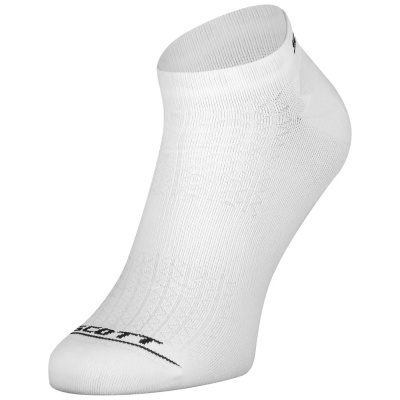
On cuff length: Scott offers ankle cuts for summer road use and classic crew lengths across most of the range. The crew length is the more versatile choice - it stays put better, gives the compressive fit something to work with, and avoids the sock-slip that can happen with ankle options on longer efforts. Worth knowing if you're replacing a pair mid-season rather than starting fresh.
If you're building out a full kit alongside these socks, Scott bib shorts and Scott base layers are worth a look - the brand's sizing tends to be consistent across categories, which makes mixing pieces straightforward. For an alternative approach to the MTB end of the sock market, Endura socks and GripGrab socks are both worth comparing on cushioning and cuff options.
Layering, Pairing, and Keeping Them in Good Shape
For road use in summer, the thinner Scott options work best when you're not fighting for space inside the shoe. A compressive sock in a road shoe should feel snug but not restrictive - if you're losing sensation on the outside of your foot after an hour, the fit is too tight or the shoe is too small, not the sock. Make sure you're pulling the sock fully up before clipping in; a wrinkle across the arch will cause a pressure point that gets worse as your foot swells with heat.
Winter layering is where most riders go wrong. A Merino Scott sock under a neoprene overshoe is a solid combination, but you need to leave room. Over-tightening overshoe closures to compensate for cold feet compresses the sock's insulation layer and cuts off circulation - the opposite of what you want. Fit the overshoe so it's secure but your toes can still move freely. If you're going out in genuinely cold conditions, Scott gloves alongside a proper winter sock setup will cover the extremities that suffer most.
Care is straightforward but worth getting right. Synthetic Scott socks - anything in the road or Trail range using Q-Skin yarn - should be washed at 30 degrees. Avoid fabric softener; it coats the fibres and blocks the moisture-wicking channels, which defeats the point of the technology. For Merino blends, use a wool-safe detergent on a gentle, cool cycle and lay them flat to air-dry. The tumble dryer is not an option - the heat shrinks the wool content and distorts the arch support structure. Treated correctly, a good pair of Merino socks will outlast several seasons of regular use.
Scott Socks FAQs
Are Scott cycling socks true to size?
Generally, yes. Scott socks use an anatomical, compressive construction that fits true to the size guide. If you're sitting between two sizes, go smaller rather than larger - excess fabric inside a cycling shoe will fold under the foot and cause pressure points before you've made it out of the car park.
What is the difference between Scott road and MTB socks?
Scott road socks are thinner, tightly compressive, and built for stiff shoes where volume is limited. MTB socks add reinforced heel and toe construction to handle trail walking and clip-in wear, along with more cushioning through the sole and a slightly roomier fit to suit trail and flat-pedal shoes.
How do I wash merino cycling socks to prevent shrinking?
Use a cool, gentle machine cycle at 30°C or below with a wool-safe detergent. No fabric softener - it clogs the fibres. Never put Merino in a tumble dryer; lay them flat to air-dry instead. This keeps the shape, arch support structure, and thermal properties intact across many washes.