
Scott Goggles
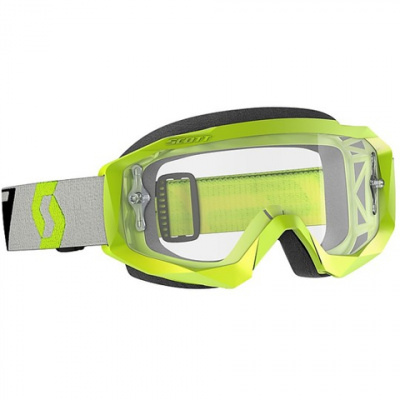
Scott MTB goggles have built a serious reputation among downhill, enduro, and aggressive trail riders who need their vision locked in when things get fast and loose. Scott's goggle lineup centres on two core technologies that genuinely matter on UK trails: the Amplifier lens, which filters specific light wavelengths to pull contrast out of flat, grey skies and murky woodland light, and the Lens Lock System, a four-pin retention mechanism that keeps the lens seated even after a proper face-plant. No rattle, no pop-out mid-run.
The NoSweat face foam uses a three-layer moulded construction with a microfiber inner layer that wicks moisture rather than soaking it up, which matters more than it sounds when you're grinding up a technical Welsh climb before pointing it back down. Pair that with Scott's NoFog™ anti-fog treatment on the lens interior and you're getting genuine clarity rather than a marketing promise. The field of vision across the range is wide - genuinely so - and both the flagship Scott Prospect and the Scott Fury carry enough lens real estate to make narrow-framed goggles feel like looking through letterboxes. Whether you're a bike park regular or a weekend enduro rider, there's a Scott goggle configured for how you ride.
Prices and availability can change quickly. Delivery charges are not always included in listed prices.
Final price, stock status and delivery terms are set by retailer. We may receive a commission on purchases made.
Seeing Through the UK Slop: Lens Tech and Weather Performance
Flat light is the enemy of clean trail reading, and most of Britain serves it up generously for at least nine months of the year. Scott's Amplifier lens technology addresses this directly by filtering out specific wavelengths that cause visual noise in overcast conditions, sharpening the contrast between roots, ruts, and the trail surface beneath them. In dense woodland - the kind you get across the Forest of Dean or the Tweed Valley - the difference between a standard tinted lens and an Amplifier-equipped goggle is genuinely meaningful. Roots stop blending into the loam.
The NoFog™ anti-fog treatment is applied to the interior face of the lens at the factory. It works, but it needs looking after. Never wipe the inside of the lens with a cloth or your glove when it mists - that degrades the coating faster than anything else. Shake moisture off, let airflow do the work, or simply give the goggle a shake and tuck it somewhere warm at the top of the climb.
For winter riding, Scott goggles are compatible with standard tear-offs and the WFS (Works Film System) roll-off mechanism. The roll-off system uses a canister mounted to the frame that pulls a fresh film strip across the lens with a cable pull - useful when you're three laps deep in Peak District mud and tear-offs are long gone. If you're looking to stock up on replacement lenses or film kits for your Scott goggles, our Scott accessories pages carry a range of compatible spares. Check the sunglasses and goggle spares section for the full lens and film system selection.
Prospect vs. Fury: Which Scott Goggle Is for You?
Scott runs a clear hierarchy across their goggle range, and understanding where each model sits saves you buying the wrong one. The Scott Prospect is the flagship. It carries articulated outriggers - small pivoting arms where the strap meets the frame - that let the goggle conform to your face shape regardless of the helmet you're running. Combined with the Lens Lock System's four retention pins, the Prospect stays put. It's the goggle Scott's World Cup DH athletes run, and the fit refinement shows. The NoSweat foam on the Prospect uses that three-layer construction throughout, and the strap is wider with a silicone grip backing.
The Scott Fury takes a more straightforward approach. Same large field of vision, same lens format and tear-off compatibility, but the frame is simpler and the strap system loses the articulated outriggers. That brings the price down without sacrificing the core optics. For a privateer enduro rider or someone who wants a solid bike park goggle without paying flagship money, the Fury does the job with less fuss. Think of it as the no-nonsense option - less adjustment, more just-get-on-with-it. Compared to alternatives like Fox goggles or 100% goggles at similar price points, the Scott range holds its own on lens quality and foam spec, particularly the Prospect's foam construction which outlasts cheaper single-layer alternatives in wet conditions.
One thing worth flagging: if you're after UV protection for road or gravel rides rather than full eye protection on the trail, goggles aren't the right tool. Our Smith Optics and Oakley goggle pages can point you toward sport-specific eyewear better suited to open-road conditions, and we also carry a dedicated sunglasses category for road and gravel riding.
Helmet Fit, Compatibility, and the OTG Question
A goggle that fits beautifully on the shelf but gaps at the nose on your actual helmet is a waste of money. Scott has thought about this more carefully than most. The extra-wide strap on both the Prospect and Fury uses a silicone-ribbed backing that grips helmet foam without sliding - a small detail, but one that matters after a rough landing when everything shifts. On the Prospect specifically, those articulated outriggers let the frame pivot at the attachment points, so the goggle face sits flush against your cheeks and brow regardless of whether you're running a Troy Lee D4, an MX-style full-face, or an open-face trail lid.
The field of vision on both models is wide enough that peripheral awareness stays solid even with a full-face helmet's chin bar in the way. That's not always a given - some narrower goggle frames choke your sightlines down to a slot when combined with a deep-cut visor.
If you wear prescription glasses, standard Scott goggles can be a squeeze. Scott produces dedicated OTG (Over The Glasses) variants with a deeper frame cavity and pre-cut channels in the face foam that route your glasses arms through without pressure points or distortion. Worth seeking out specifically - don't just try to force a standard frame over your glasses and hope for the best. If you're putting together a complete Scott setup, their Scott gloves and Scott mountain bikes range are worth a look while you're here.
Scott Goggles FAQs
What is the difference between Scott Prospect and Fury goggles?
The Prospect is Scott's top-tier goggle, with articulated outriggers for helmet integration, the four-pin Lens Lock System, and premium three-layer NoSweat foam. The Fury shares the same wide field of vision and lens compatibility but uses a simpler frame and standard strap - solid performance at a lower entry point.
Do Scott MTB goggles fit over prescription glasses?
Standard Scott goggles are a tight fit over glasses frames. Scott makes dedicated OTG (Over The Glasses) models with a deeper cavity and pre-cut channels in the face foam to accommodate glasses arms comfortably - these are worth seeking out specifically rather than forcing a standard goggle to work.
How do I stop my mountain bike goggles from fogging up?
Scott's NoFog™ coating is factory-applied to the inner lens face - the main thing that kills it is wiping the inside with fabric, so resist that instinct when things mist up. On slow climbs, pull the goggle slightly away from your face to open airflow, or rest it on your helmet until you're ready to descend.