
Scott Gilets
Scott cycling gilets are built around a simple truth: UK weather doesn't commit, and neither should your kit choices. A gilet is the one piece of clothing that lets you roll out on a crisp autumn morning with a protected core, then stuff it in your back pocket when the sun finally shows up somewhere past the feed stop. Scott's lineup covers that brief with real precision - windproof fronts, breathable rears, and DWR coatings that handle road spray without making you feel like you're pedalling in a bin bag.
At the sharper end of the range, the RC (Racing Concept) series is cut for riders who want aerodynamic fit and zero fabric flutter on fast club runs or sportive descents. Further along the spectrum, the Endurance and Gravel-oriented vests trade a few grams of aggression for extra movement and the freedom to layer up properly for longer, harder days. Whether you're after a Scott windproof cycling gilet for hammering exposed moorland roads or a Scott thermal cycling gilet to see you through deep-winter base miles, there's a model dialled for the job. Scott's proprietary DURObreeze and DRYOzone fabrics do the heavy lifting, and the packability across the range means there's no excuse to leave the house underprepared.
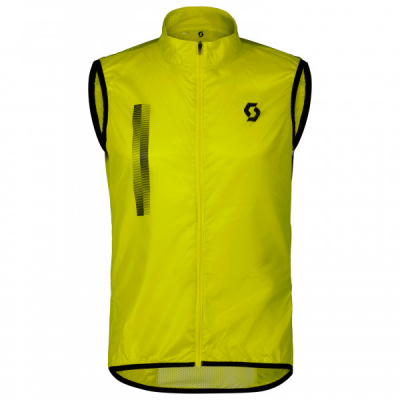
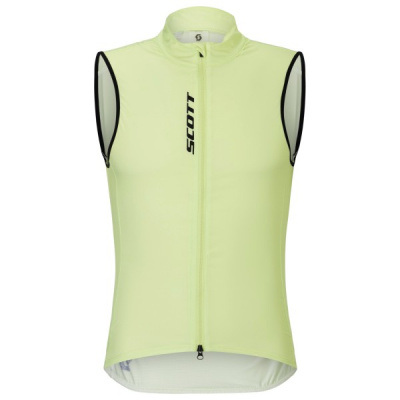
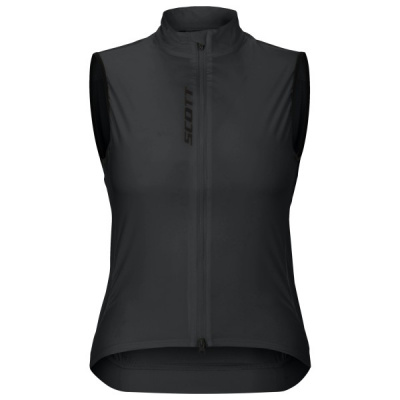
Prices and availability can change quickly. Delivery charges are not always included in listed prices.
Final price, stock status and delivery terms are set by retailer. We may receive a commission on purchases made.
Fabric Tech and Weather Performance
The core of any Scott gilet is DURObreeze technology - a windproof fabric engineered to block the kind of cold air blast you get on the back side of a long Welsh climb or a fast Peak District descent after a sweaty hour in the saddle. Wind chill is what gets you on those days, not the actual temperature, and DURObreeze shuts that down at the front panels where it matters most.
For wet-road days, DRYOzone is the DWR (durable water-repellent) coating applied to the outer face of the fabric. It causes water to bead and roll off rather than soak in, which keeps the gilet light and keeps you dry through light showers and road spray. Worth being straight with you here: DRYOzone handles drizzle and splatter well, but it's not a substitute for a waterproof jacket when the heavens properly open. If a front is rolling in off the Atlantic, reach for a Scott jacket instead.
The laser-cut mesh back panels are the other side of the coin. Ventilation is the reason you'd choose a gilet over a jacket in the first place, and the perforated or open-mesh rear construction lets heat and moisture escape during hard efforts - so you're not arriving at the top of a climb in a steam room. It's a deliberate asymmetry: wind block at the front, heat dump at the back.
For deeper winter use, select Scott thermal gilets use Polartec Alpha insulation. Alpha is an active insulation designed for high-output activities - it breathes better than standard wadding so it doesn't trap sweat during climbs, while still providing genuine warmth when you stop moving. If you're riding through December and January rather than just commuting short hops, a Polartec Alpha model is worth the step up. Compare it with what Castelli gilets offer in the thermal category and you'll find Scott competitive on both warmth-to-weight and breathability.
How the Scott Range Fits Together
The RC line is where aerodynamics and weight savings take priority. These gilets use a race fit - close to the body, short at the front hem (so it doesn't bunch when you're in an aggressive position), and long enough at the rear to cover your lower back properly. The cut sits flush against a bib jersey with no loose fabric to catch air. If your riding is mostly fast-paced, position-sensitive work - chain gang Tuesday nights, sportives, or time trialling - the RC fit makes sense. A Scott RC weather vest layers cleanly over a lightweight base layer or race jersey without compromising your position.
The Endurance range relaxes the geometry. There's slightly more room across the chest and shoulders, the hem length is more forgiving, and the overall cut accommodates a thicker mid-layer without pulling across the back. If you're pairing your gilet with a heavier Scott jersey or adding a thermal layer for early-morning starts in autumn, the Endurance fit won't pinch or restrict arm movement when you're reaching for the bars on a longer ride.
The Gravel and off-road variants push that logic further still - a bit more freedom in the shoulders for technical movement, occasionally with pockets repositioned or reinforced for rough-road use. These aren't radically different garments, but the small fit adjustments add up over a four-hour mixed-surface day in the Peaks or on the South Downs. Endura gilets are a useful reference point in this bracket - both brands take a practical, weather-first approach to their off-road vests rather than chasing gram counts above all else.
Sizing tends to run true across the Scott range, but if you're between sizes and planning to layer heavily, size up. The RC line in particular is cut slim and doesn't have much give over bulky kit.
Layering, Packing, and Looking After Your Gilet
A Scott gilet earns its place in a UK layering system precisely because it slips in and out of the stack so easily. On a cold but dry autumn morning - think a 7am start somewhere like the Trough of Bowland - the formula is a Scott base layer, a long-sleeve jersey, and the gilet on top. That combination handles temperatures down to around 5 - 8°C on the move without overheating on the climbs. Once you're generating heat consistently, the gilet comes off and packs away.
The two-way zipper is more useful than it sounds. Being able to unzip from the bottom gives you ventilation on tough climbs without fully opening the front and losing all the wind protection. It also makes stuffing the gilet into a jersey pocket far less awkward - open from the bottom, fold the sides inward to match pocket width, and roll tightly from the collar downward to squeeze the air out. Scott's lighter packable cycling gilet models compress down to roughly the size of a large apple. Keep that in mind when you're deciding how full your pockets already are.
Care is straightforward but non-negotiable if you want the DRYOzone coating to last. Wash at 30 degrees on a gentle cycle, use a technical apparel cleaner (something like Nikwax Tech Wash), and avoid fabric softener entirely - it clogs the DWR treatment and kills the water-beading performance within a few washes. Tumble dry on low heat or hang dry, and if the DWR starts to lose its bead after a season, a Nikwax TX.Direct re-treatment will bring it back. Compared with brands like Assos, Scott's DRYOzone sits in the same ballpark for longevity when maintained properly.
Scott Gilets FAQs
Should a Scott cycling gilet be tight?
It should fit snugly - enough to prevent wind flap, which kills aerodynamics and lets cold air in around the edges. That said, it needs to zip comfortably over a loaded jersey with full rear pockets. If it pulls across the back when you reach forward, size up, especially in the RC range.
Are Scott gilets waterproof or just windproof?
Windproof primarily, with the DRYOzone DWR coating handling light showers and road spray well. They're not waterproof in any sustained sense - persistent heavy rain will eventually get through. For proper downpours, swap to a dedicated waterproof jacket rather than pushing the gilet beyond its design brief.
How do you pack a cycling gilet into a jersey pocket?
Zip it halfway, fold the sides inward to match your pocket width, then roll firmly from the collar down to push air out as you go. Scott's packable gilet models are cut with exactly this in mind and compress to roughly the size of an apple - manageable even when your pockets are already carrying snacks and a tube.