
Rockrider Kids Helmets
Rockrider kids bike helmets bring genuine mountain bike protection to young riders without asking you to spend a fortune or wrestle with complicated fittings. Each helmet is built around an EPS foam core that absorbs impact energy on contact, paired with a polycarbonate outer shell and a 3D dial fit system that you can adjust on the fly - handy when your child's head seems to grow between breakfast and the trailhead. All models meet EN 1078 certification, which is the baseline safety standard for cycling helmets sold in the UK, so you're not guessing on protection. The anti-pinch buckle design means no more pinched chins at the start of a ride, and the removable internal padding keeps things fresh over a full season. Ventilation channels run front to back to shift warm air efficiently, which matters on muggy summer days as much as it does on a blustery school run. High-visibility colour options and reflective detailing add a practical layer of awareness during short winter daylight. Whether your child is learning to balance on a Rockrider kids bike or pushing into proper singletrack, there's a helmet in this range sized and specced to match where they are right now.
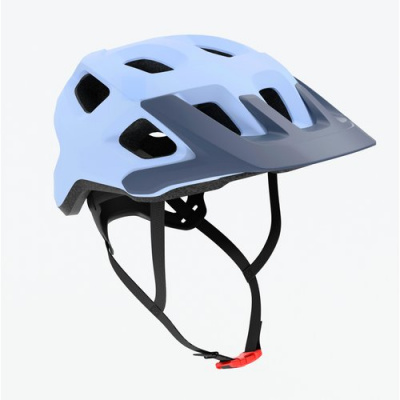
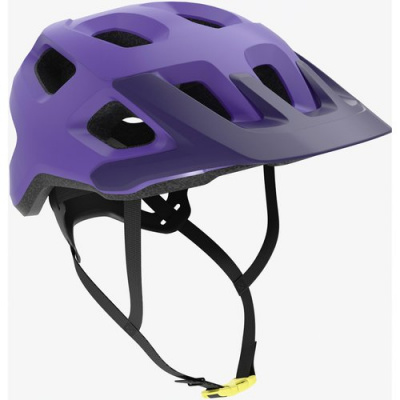
Prices and availability can change quickly. Delivery charges are not always included in listed prices.
Final price, stock status and delivery terms are set by retailer. We may receive a commission on purchases made.
How the Protection Actually Works
The core job of any helmet is to manage impact energy before it reaches the skull, and Rockrider does this with an EPS foam liner that compresses on impact to absorb the force. It's the same principle used in helmets costing three times the price - the physics don't change based on budget. The polycarbonate shell sits over the top in an in-mold construction, bonding shell to foam during manufacture rather than gluing them together afterwards. That process improves structural integrity and keeps overall weight down, which young riders notice immediately - a heavy helmet is one they'll resist wearing.
All Rockrider children's cycling helmets carry EN 1078 certification, the European standard that covers impact attenuation, retention system strength, and field of vision. It's the legal minimum for cycling helmets in the UK, and Rockrider hits it across the range. What the certification doesn't cover is ventilation performance, and that's where the channel design does real work. Multiple vents run from the forehead rearward, channelling air across the EPS foam and out through exhaust ports at the back. On a humid climb in the Chilterns or a warm trail centre session in the Forest of Dean, that airflow prevents the kind of sweaty discomfort that makes kids pull helmets off mid-ride. Compared to similarly priced options from Bell kids helmets or BTwin kids helmets, Rockrider's vent layouts tend to prioritise coverage-to-ventilation balance rather than maximising vent count, which keeps the shell more protective at the sides.
Reflective decals on several models are a straightforward addition that earns its place in the UK, where autumn and winter rides often happen in low light. It's not a substitute for lights, but it does add visibility from the side - useful on a school run or a shared path at dusk.
Sizing, the Dial System, and Finding the Right Fit
Rockrider helmets are sized by head circumference measured in centimetres, which is the most reliable method for kids because head shape varies far more than age or height would suggest. Wrap a flexible tape measure around your child's head just above their eyebrows and level across the back - that number is what you're matching to the size guide. Most Rockrider youth models cover a range of roughly 48cm to 58cm across small, medium, and large options, but check each product listing since ranges shift between models.
The 3D dial adjustment system - a turn-ring at the rear of the helmet - is where Rockrider earns its keep for growing children. Twist it clockwise to tighten, anticlockwise to loosen, and you can fine-tune the fit in seconds without taking the helmet off. It also means a helmet bought to fit snugly at 51cm can often accommodate a head that's grown to 53cm by the following summer, giving you more seasons from a single purchase. The adjustable chin strap works in conjunction with the dial - both need to be set correctly for the helmet to stay in place during a fall. The strap should sit flat under the chin with roughly a finger's width of clearance when the mouth is closed.
Toddler-oriented models in the range typically feature flatter rear profiles and lower-sitting backs, designed partly to be comfortable when a child is in a trailer or cargo bike seat with their head resting against a surface. Youth MTB models shift toward more extended rear coverage and deeper side protection to account for the higher-consequence falls that come with trail riding. If your child's head circumference is pushing past 55cm to 56cm, they're likely approaching the top of the youth sizing range. At that point, it's worth browsing Rockrider's adult helmet range, where the fit systems and protection levels step up to match bigger heads properly. Squeezing a head into a helmet dialled to its maximum adjustment isn't a safe compromise.
Are Rockrider kids helmets suitable for mountain biking? The youth MTB models are specifically built for off-road use, with the extended rear coverage and robust EPS construction to handle trail falls. They're not full-face helmets, so for aggressive or jump-focused riding, a full-face would be worth considering - but for trail riding and bike park sessions at a measured pace, the open-face youth models cover the brief well. You might also want to pair them with Rockrider gloves for complete hand protection on rougher trails.
Keeping the Helmet Working Through UK Seasons
A thin thermal skull cap under a helmet is a common solution for cold winter rides, and it works - with one condition. The cap must be thin enough that the dial system can still bring the helmet into full contact with the head. If you're spinning the dial to its maximum just to compensate for the cap's bulk, the helmet's protective position is compromised. Keep the cap lightweight, no more than a single-layer thermal, and re-check the fit every time you add or remove it. The helmet should sit level, not tilted back.
The removable and washable internal padding is worth using properly. Pull the pads out every few weeks during regular riding and hand wash them in warm water with mild soap - nothing stronger, as harsh detergents break down the foam backing over time. Let them air dry completely before refitting. Sweat and bacteria build up quickly in kids' helmets, and clean pads make a helmet far more likely to actually get worn without complaint. The outer polycarbonate shell should be wiped down with a damp cloth only; solvents and spray cleaners can degrade the shell's surface integrity over time.
Storage matters too. Keep the helmet away from direct sunlight when it's not in use - UV exposure degrades EPS foam gradually, reducing its impact-absorbing capacity before there's any visible sign of damage. A helmet left on a south-facing windowsill for a summer isn't doing the job it should. A bag or a cool cupboard shelf is all it takes.
On the subject of replacement: swap the helmet immediately after any significant impact, even if the shell looks intact. EPS foam compresses permanently on impact and won't absorb a second hit in the same spot with the same effectiveness. If there's no crash to prompt a change, plan on replacing the helmet every three to five years as general EPS degradation sets in - or sooner if your child has maxed out the dial adjustment and outgrown the fit range. Compared to a Giro kids helmet at a higher price point, Rockrider's value proposition makes that replacement timeline significantly easier to act on without hesitation.
Before any ride, run through the same quick check: helmet level on the head, dial snug, chin strap flat and adjusted to a finger's width of clearance. Thirty seconds, every time. It's the kind of habit that makes the difference between a helmet that does its job and one that shifts on impact.
Rockrider Kids Helmets FAQs
How do I choose the right size Rockrider helmet for my child?
Measure your child's head circumference just above their eyebrows using a flexible tape measure and match the number in centimetres to the Rockrider size guide. Once you have the right size, use the dial fit system at the rear to snug the helmet securely - it should feel firm without pressing uncomfortably, and the chin strap should sit flat with roughly a finger's width of clearance.
Are Rockrider kids helmets suitable for mountain biking?
Yes, the youth MTB models are built with off-road riding in mind, featuring extended rear coverage to protect the back of the head during trail falls and robust EPS foam construction throughout. They meet EN 1078 certification for cycling use, though for particularly aggressive or jump-heavy riding, a full-face helmet would offer additional chin and face protection.
How often should I replace a child's bike helmet?
Replace it immediately after any significant crash - the EPS foam compresses permanently on impact and won't absorb a second hit the same way, regardless of how the shell looks. Without a crash, plan on a replacement every three to five years as the foam degrades naturally, or sooner if your child has outgrown the helmet's maximum dial adjustment range.