
Rockrider Kids Bikes
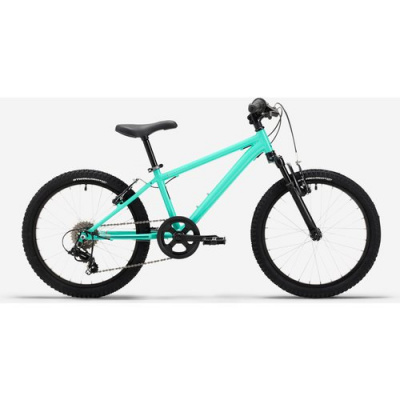
Rockrider kids bikes sit in a genuinely useful gap in the market - proper off-road geometry, scaled down for younger riders, without the weight penalty that makes a lot of kids' MTBs a misery to push uphill. Developed by Decathlon's dedicated mountain bike division, the range runs from first-trail 20-inch models right through to 26-inch bikes that can handle a blue-grade trail centre run without drama.
What separates these from the pile of bikes you'll find in supermarket aisles is the detail. 6061 aluminium frames keep weight honest. The EasyBrake system puts levers within reach of smaller hands and cuts the pull-force needed by 30%, so a child can actually modulate their speed on a wet descent rather than just squeezing and hoping. A sloping top tube drops standover height, which matters the moment a root sends them sideways and they need to get a foot down fast.
Whether they're getting their first taste of woodland singletrack in the Chilterns or working up to something more technical, Rockrider gives kids a bike that doesn't fight them. These are machines that grow confidence rather than frustrate it. Here's how the range breaks down and what to look for.
Prices and availability can change quickly. Delivery charges are not always included in listed prices.
Final price, stock status and delivery terms are set by retailer. We may receive a commission on purchases made.
Decoding the Rockrider Kids Lineup
The Sport Trail (ST) range is built around a clear progression tied to wheel size and riding ambition. The 20-inch models suit most children aged roughly six to nine - light enough to manoeuvre, short enough in the reach that smaller riders aren't stretching to the bars. Step up to the Rockrider 24 inch mountain bike and you're looking at nine to twelve year olds who've outgrown the smaller wheels and want something that rolls properly on uneven ground. The 26-inch bikes are transition machines - a sensible stopping point before a rider moves into adult sizing.
Within each wheel size, trim level is where the real choices happen. The ST 100 runs a rigid fork and V-brakes, keeping overall weight low and maintenance simple. It's a solid first off-road bike for riders who'll mostly be on gravel paths and gentle woodland tracks. The ST 500 adds a front suspension fork and knobby tyres, which opens up bumpier ground without asking too much from the rider's arms on a long day out. At the top, the ST 900 fits mechanical disc brakes and a more capable fork - the bike to choose if your child is ready for something with proper trail ambition, where braking performance in gritty, wet conditions actually matters.
If your child is already pushing the limits of a 26-inch bike, it's worth browsing the Rockrider mountain bikes range for adult or near-adult sizing options. Brands like Cube kids bikes also offer a strong progression range if you want to compare across manufacturers.
The Tech Behind the Fit
Rockrider's approach to kids' bike geometry isn't just adult bikes with smaller tyres bolted on. The sloping top tube is the most visible decision - it pulls the standover height down so that a child who's still gaining confidence can get both feet flat on the ground without a scramble. On a first ride at somewhere like Cannock Chase, that matters more than any spec sheet number.
The EasyBrake system deserves a closer look. Standard adult levers require a hand-spread and pull-force that most children under ten simply can't generate reliably, especially mid-descent when fatigue kicks in. Rockrider's levers are shaped for smaller palms and reduce the mechanical effort needed by 30%. In practice, this means a child can actually feather the brakes rather than grabbing and locking up - a meaningful safety benefit, not just a marketing point.
Crank length is one of those details that rarely gets mentioned but has a real effect. Short cranks reduce the arc of each pedal stroke, which does two things: it lowers the chance of a pedal clipping a root or rock on tight singletrack, and it puts less rotational strain on developing knees over a long ride. Combined with child-optimized grip shifters - shorter barrel, lighter action - the cockpit is genuinely designed for hands that are still growing rather than adapted from adult components as an afterthought.
The lightweight alloy frame construction uses 6061 aluminium throughout, which keeps the overall weight down without sacrificing the stiffness needed for trail use. A heavy kids' bike is a confidence-killer on climbs - children who struggle to push a bike uphill quickly decide they'd rather not bother.
Riding a Rockrider in the UK Year-Round
UK woodland trails in autumn and winter are a specific kind of brutal - greasy roots, standing water, and the sort of thick mud that packs into every recess it can find. It's worth thinking about that before choosing between the ST 100 and the ST 500 for a child who'll be riding through November. The suspension fork on the 500 and 900 adds capability on rough ground, but it also adds weight and gives mud somewhere to accumulate around the stanchions. For a lighter child who'll be riding mostly in the wetter months, a well-specced rigid ST 100 is often faster and easier to clean.
The grip shifters on the ST range are fine under normal conditions, but grit works its way into the mechanism over time. A quick rinse after muddy rides and an occasional drop of light lubricant into the barrel keeps them crisp. Ignore them through a whole winter and shifting becomes sticky - annoying on the flat, genuinely frustrating mid-climb.
Tyre clearance on the Rockrider 24 inch mountain bike models is generous enough to fit a wider, more aggressive mud tyre if you find the stock rubber isn't shedding properly on the kind of clay trails you get across the Welsh Marches or the South Downs in January. Check the frame's stated maximum tyre width before buying, but in most cases there's room to go up a step. You can browse Rockrider MTB tyres to see compatible options.
The drivetrain components across the range use rust-resistant finishes which hold up reasonably well to the damp, but no kids' bike survives a season of regular trail use without a wipe-down and re-lube of the chain. Build that into a post-ride habit early and you'll avoid the seized-link surprise mid-ride.
Before heading out, make sure your child has the right protection sorted. A well-fitted lid and a pair of gloves make a real difference - check the Rockrider kids helmets and Rockrider gloves ranges for options that pair naturally with these bikes. If you're also weighing up alternatives to the ST range, Btwin kids bikes and Carrera kids bikes cover similar ground at comparable price points and are worth a side-by-side look.
Rockrider Kids Bikes FAQs
What age is a Rockrider 24 inch bike for?
The 24-inch Rockrider models are generally suited to children aged nine to twelve, or roughly 135cm to 150cm tall. Age is a rough guide though - standover height is the number that actually matters. Your child should be able to get both feet flat on the ground without stretching.
Are Rockrider kids bikes good for trails?
The ST 500 and ST 900 are genuinely trail-capable - proper off-road geometry, suspension forks, and knobby tyres that handle UK woodland singletrack and trail centre blues without fuss. The ST 100 is better suited to gravel paths and smoother ground. It's not a one-answer-fits-all range, which is the point.
How heavy are Rockrider kids mountain bikes?
Most models fall between 11kg and 14kg depending on wheel size and spec level. The 6061 aluminium frames keep weight reasonable for the price bracket. Rigid fork models like the ST 100 sit at the lighter end, which makes them easier to manoeuvre for smaller or less confident riders on climbs.