
Progress MTB Wheels
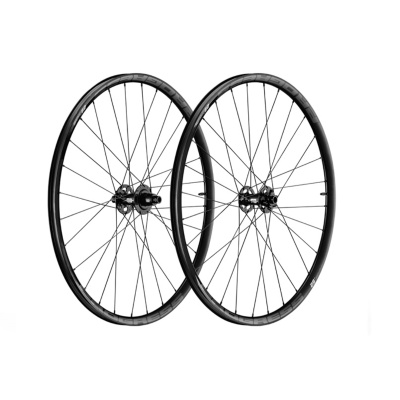
Progress MTB Wheels have quietly built a strong reputation for hitting a genuinely useful strength-to-weight ratio without asking you to remortgage for the privilege. Whether you're putting together a light, nimble XC setup or something more capable for chunky enduro days in the Brecon Beacons or the Lakes, Progress gives you access to proprietary tech that punches well above its price bracket.
The two headline materials tell the story. DYNAMal is Progress's own aerospace-grade alloy - noticeably stiffer and lighter than bog-standard 6061 - and it underpins the brand's alloy range. Step up to carbon and you're into Graphene Carbon Rims, where multi-layer carbon infused with graphene delivers around 20% more impact resistance than conventional layups. That's meaningful on rocky UK trail centres where a standard carbon rim might crack where a graphene-reinforced one shrugs it off and keeps rolling.
Hub-side, the Nitro hub system uses oversized ceramic bearings and a CNC-machined body to cut friction and sharpen engagement. Out of a slow, off-camber corner, that snap of drive matters. Wide internal rim widths across the range support lower tyre pressures for proper grip on wet roots - exactly what UK riding demands. Browse the range below to match your axle standard and freehub spec.
Prices and availability can change quickly. Delivery charges are not always included in listed prices.
Final price, stock status and delivery terms are set by retailer. We may receive a commission on purchases made.
Will They Fit Your Bike? Axle Standards and Drivetrain Compatibility
Before anything else, get the axle spacing right. Most modern trail and enduro frames run Boost spacing - that's 15x110mm at the front and 12x148mm at the rear - and Progress wheels are built around this as standard across the majority of their range. If you're on an older frame with non-Boost spacing, or a burlier enduro build using SuperBoost 157mm at the rear, check the specific wheelset listing carefully. Getting this wrong means the wheel either won't sit flush in the dropout or, worse, creates chainline problems you don't want to diagnose mid-ride.
Freehub body selection is the other thing worth sorting before you buy. Progress Nitro and Turbine hubs use interchangeable freehub bodies, so you're not locked in if your drivetrain changes later - a genuinely useful feature if you're planning a groupset swap down the line. Right now though, pick the body that matches your cassette: Shimano HG covers standard 10- and 11-speed setups, Shimano Micro Spline is what you need for Shimano's 12-speed Eagles and equivalents, and the SRAM XD driver suits SRAM's 11- and 12-speed cassettes. None of these are interchangeable, so don't guess.
Brake mount standard is the final check. Progress wheels come in both 6-bolt and Centerlock variants. If your rotors and hubs don't match, you'll need an adapter - not a disaster, but an unnecessary faff. Check your existing rotors first and order accordingly. Compared to some brands like DT Swiss MTB wheels or Hope MTB wheels, Progress keeps the compatibility options clear and well-documented, which helps.
Carbon vs. Alloy: Which Progress Wheelset Suits Your Riding?
Progress structures their range to give you a logical step-up path rather than forcing you straight to carbon to get something decent. At the alloy end, the Revo series uses DYNAMal - that proprietary aerospace alloy - to keep weight competitive with some lower-tier carbon options while remaining significantly more forgiving of hard impacts. If you're an XC rider who wants snappy acceleration without spending carbon money, the Revo is the sensible starting point. It's not a budget compromise; it's a considered choice.
Step across to the enduro-focused MT Plus and the construction gets beefier - wider internal rim widths, reinforced spoke beds, and geometry suited to aggressive trail riding where the wheels are taking real punishment. Think Cwmcarn on a wet Saturday, or anything in the Tweed Valley with rocks buried under leaf litter. The MT Plus is built to take those hits repeatedly without the rim folding or the spokes pulling through.
The EB Plus sits in a slightly different category - it's designed specifically for e-MTBs, where the hub and rim have to deal with the sustained, higher torque loads that a motor-assisted drivetrain produces. Standard MTB wheels can develop spoke tension issues and freehub wear under e-MTB use surprisingly quickly. The EB Plus is engineered to resist exactly that.
Then there's the Graphene Carbon range, where the real rotational weight savings live. Less rotating mass means the bike responds faster to acceleration and direction changes - it's one of those improvements you feel immediately, especially on technical, punchy climbs. The graphene infusion in the carbon layup also gives the rims meaningful extra impact resistance, which addresses the usual hesitation about running carbon on rocky UK trails. For riders wanting the most refined, responsive setup - and who are willing to pay the premium - this is where Progress puts their best work. Brands like ENVE MTB wheels operate in a similar premium carbon space, though at a notably higher price point. Mavic MTB wheels offer another comparison point if you're weighing alloy vs. carbon across brands.
Straight pull spokes feature across much of the Progress range. They're less prone to twisting under load during truing and tend to stay in tension better over time - a practical advantage if you're the type who wants to go longer between wheel checks.
Keeping Them Running: Hub Maintenance for UK Conditions
UK riding is genuinely hard on hub internals. Peak District grit in particular is abrasive enough to work its way into poorly sealed bearings faster than you'd expect, and winter slop compounds the problem. Progress Nitro hubs use oversized sealed cartridge bearings - larger contact surfaces mean more load capacity and, generally, a longer service life - but they still need attention.
After muddy winter rides, rinse the hubs with low-pressure water (not a jet wash directly at the bearing seals) and let them dry before storing the bike. Every six months or so, spin each bearing by hand and feel for any roughness or side-to-side play. If either is present, the bearings need replacing. It's a straightforward job for any mechanic and much cheaper than ignoring it until the hub shell is damaged.
Freehub pawl maintenance is the other thing most riders overlook until the freehub starts slipping under hard torque on a cold morning - exactly the wrong moment. Use a light, low-viscosity oil on the pawls rather than heavy grease. In freezing temperatures, thick grease stiffens and can prevent the pawls from engaging cleanly, which feels like a slipping chain but is actually the hub not picking up drive. A drop of light oil keeps everything moving freely. This applies to both the Nitro and Turbine hub systems. If you're coming from a brand like Crank Brothers MTB wheels, the maintenance logic is similar but Progress's pawl access is generally more straightforward.
All Progress MTB wheels are tubeless ready from the factory - pre-taped and supplied with valves. The rim bed sealing is solid, so first-time tubeless setup is straightforward. Add your preferred sealant, seat the tyre, and you're done. Running tubeless isn't optional for wet UK riding; it's the difference between grip and sliding. Lower pressures become possible without pinch-flat risk, and wider internal rim widths across the Progress range - many at 30mm or beyond - give the tyre sidewall the support it needs to hold its shape under lateral load on off-camber trails.
Progress MTB Wheels FAQs
Are Progress MTB wheels tubeless ready?
Yes. Every current Progress MTB wheelset leaves the factory tubeless ready - pre-taped rim beds and tubeless valves are included. Setup is straightforward: add sealant, seat the tyre, and you're running. No extra tape or adapters needed.
Which freehub body do I need for Progress wheels?
Match your cassette: Shimano HG for 10- or 11-speed, Shimano Micro Spline for Shimano 12-speed, and SRAM XD for SRAM 11- or 12-speed. Progress Nitro and Turbine hubs use interchangeable freehub bodies, so switching drivetrain standards later doesn't mean buying a new wheelset.
How often should I service Progress hub bearings?
For regular UK winter riding, check the bearings every six months - spin them by hand and feel for roughness or lateral play. Clean and re-lubricate freehub pawls with a light oil rather than grease, especially before cold-weather rides, to keep engagement reliable under torque.