
POC Saddle Bags
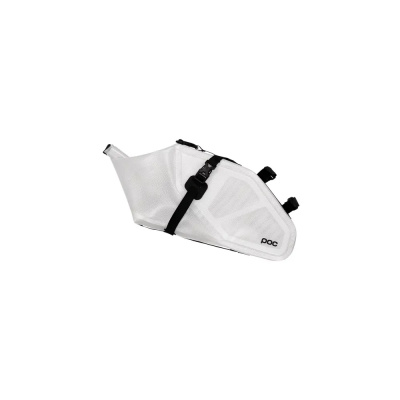
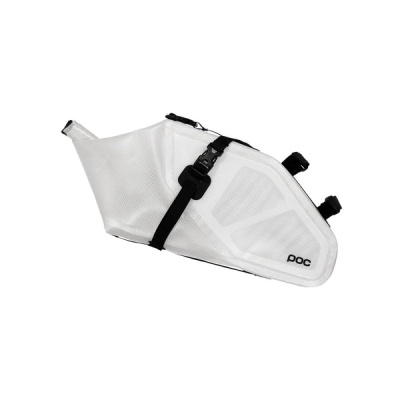
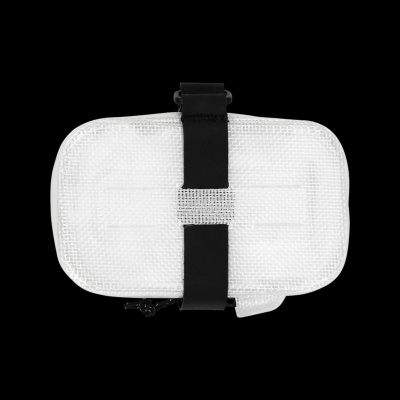
POC Saddle Bags bring the same considered Swedish design that defines their helmets and eyewear to your under-seat storage - compact, secure, and built with the kind of material spec that holds up on genuinely grim days. The shell is cut from high-abrasion polyamide fabric, which resists the constant wire-brushing effect of gritty rear-wheel spray far better than basic nylon constructions. A fluorocarbon-free DWR treatment handles the wet - not perfectly in a monsoon, but more than capable of keeping your spare tube dry through a typical soaking UK ride.
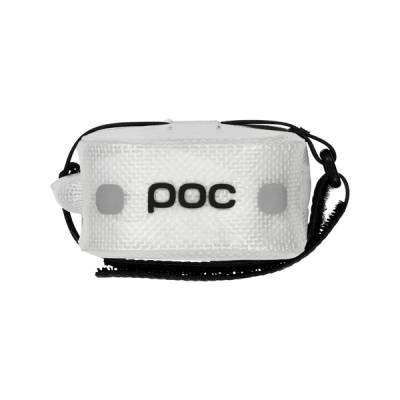
Reflective POC logo detailing on the bag adds a small but meaningful visibility boost when the light drops, which on a November commute or a February club run happens earlier than anyone wants. Retention is rattle-free across the range, with Velcro strap systems that clamp the bag tight against the seatpost to stop the pendulum swing that cheaper bags develop on rough roads. Whether you're running a quick road loop with just a tube and a CO2 canister, or loading up for a longer gravel day with a multi-tool and a few links of chain, there's a POC saddle bag sized for the job. Compare UK prices across the range below.
Prices and availability can change quickly. Delivery charges are not always included in listed prices.
Final price, stock status and delivery terms are set by retailer. We may receive a commission on purchases made.
Saddle Rail Fit and Seatpost Clearance Explained
Getting the fit right matters more than most riders expect. POC saddle bags are designed to interface with the two most common saddle rail standards - standard 7x7mm alloy rails and the wider 7x9mm carbon rails found on most performance road and gravel saddles. The retention straps thread over the rails and should sit just behind the seatpost clamp, not on top of it; that positioning stops the bag creeping forward under load and keeps it stable on rough surfaces.
Seatpost clearance is where it gets specific. Road riders on round or D-profile posts generally have no issues - the secondary Velcro strap wraps cleanly around the post with room to spare. Aero post shapes need a bit more care; check that the strap isn't bridging across the flat faces at an angle, which can introduce rocking. For mountain bikers, the dropper post situation is worth addressing directly: the seatpost strap must wrap around the static lower collar of the dropper, not the moving stanchion above it. Getting that wrong means the strap grinds against the stanchion every time you drop the post, which damages the surface finish and accelerates wiper seal wear. On shorter-travel droppers with tight clearance, check the bag's overall profile doesn't foul the back of the seat tube at full compression either. It's a quick check in the car park before the ride, not a problem once you're out.
If you're weighing POC's fitment system against other brands, Apidura saddle bags use a similar dual-strap approach with a slightly more modular buckle system, while EVOC saddle bags tend to offer broader compatibility with irregular post profiles.
Picking the Right Capacity for Your Ride
The honest answer to capacity is: start with what you actually carry and work backwards. A sub-1 litre bag handles a road tube, a CO2 inflator, a tyre lever, and a few gels without bulk - ideal for a POC road bike saddle bag setup where clean lines and low weight are the point. You don't want a half-empty bag flapping around on a fast group ride; a snug fit keeps the bag quiet and the mounting stable.
Step up to the mid-range capacities and you're into best POC saddle bag for gravel territory - enough room for a tube, a compact multi-tool, a couple of tyre plugs, and emergency food. Gravel riding in places like the Cairngorms or the Brecon Beacons puts you well away from a quick rescue, so carrying more just makes sense. The larger bags in the range suit those longer days where you need a spare gilet, a second tube, or a small first-aid kit.
If you need more than that, a saddle bag won't cut it. Distribute your load instead - explore our POC frame bags or POC hip packs for carrying capacity that doesn't compromise saddle bag stability.
For comparison, Carradice saddle bags offer larger traditional volumes for touring use, though with a very different aesthetic and mounting philosophy to POC's minimalist approach.
Keeping POC Saddle Bags in Good Shape on UK Roads
UK winter riding is genuinely hard on kit. The combination of abrasive silica grit, road salt, and constant rear-wheel spray creates a fine slurry that attacks zips, degrades fabrics, and works into any gap it can find. A POC waterproof saddle pack holds up well to this thanks to the polyamide outer and the DWR coating, but some maintenance keeps it performing properly over multiple seasons.
Zips are the first casualty on any bag. Once road salt crystals get into the coil, they cause corrosion that makes the zip stiff, then sticky, then broken. Running a thin coat of silicone spray or rubbing a stub of beeswax along the zip coil every few weeks keeps it moving freely - it takes thirty seconds and it's the kind of thing that stops a two-second bag opening becoming a fumbling disaster in the cold. Do it before the zip starts stiffening, not after.
Washing the bag needs a light touch. The fluorocarbon-free DWR treatment that makes the fabric shed water is heat-sensitive and degrades quickly with biological or enzyme-based detergents. A cool hand wash with a mild, non-bio soap is enough to shift road grime. If the DWR starts beading less effectively after repeated washing, a low-heat tumble dry or a careful pass with a cool iron over a cloth can re-activate it - the treatment isn't gone, it just needs warming to reset.
Reflective detailing on the bag should be checked periodically too. The high-vis POC reflective logo does wear with abrasion and repeated washing; wipe it clean rather than scrubbing it, and it'll stay visible for longer. On dark Peak District lanes or a wet Scottish B-road in October, that rear reflection is doing real work.
It's worth pairing your saddle bag with quality riding kit for longer days - take a look at POC jackets and POC bib shorts if you're building out a complete system. And if you want a broader saddle bag comparison, Lezyne saddle bags are worth a look for riders who prioritise integrated tool storage in a compact format.
POC Saddle Bags FAQs
How do you attach a POC saddle bag securely?
Thread the primary straps over your saddle rails, positioning them behind the seatpost clamp to stop the bag sliding forward. Then fasten the Velcro strap firmly around the seatpost itself. That two-point system - rails plus post - is what kills the lateral rattling and wobble that single-strap bags develop over rough surfaces.
Are POC saddle bags fully waterproof?
Highly water-resistant, not fully waterproof. The fluorocarbon-free DWR coating and polyamide fabric deflect rear-wheel spray and light rain well, which covers most UK riding scenarios. In a genuine downpour or a deep ford crossing, slip any electronics or paper documents into a small dry bag inside for extra peace of mind.
Will a POC saddle bag fit with a dropper seatpost?
Yes, but placement is critical. The seatpost strap must go around the static lower collar - the fixed section below the dropper mechanism - not the moving stanchion above it. Strapping around the stanchion causes abrasion damage to the post surface and accelerates wiper seal failure. Check clearance at full compression before riding.