
POC Jackets
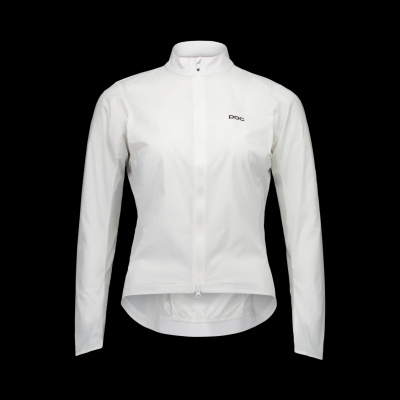
POC cycling jackets are engineered in Sweden with a clear brief: keep you dry, visible, and comfortable when British weather does its worst. That means November drizzle on the Peaks, sudden squalls on a Welsh ridgeline, or a four-seasons-in-one-day road loop out of Edinburgh. POC covers the full spectrum - from featherlight windproof shells that scrunch into a jersey pocket to full-on, 3-layer waterproof jackets with fully taped seams for sustained downpours.
Every jacket in the range uses a fluorocarbon-free DWR coating that beads water off the outer fabric without relying on chemistry that's increasingly under environmental and regulatory pressure. Step up to the serious rain jackets and you get high hydrostatic head ratings - 10,000mm and above - alongside breathability that stops you cooking on a steep climb. Safety is built in too: RECCO reflectors and twICEme NFC Medical ID appear across the range, while AVIP colour options keep you visible in the grey half-light of a December commute.
Road riders get aerodynamic, close-cut shells that don't balloon at speed. MTB riders get roomier fits designed to sit over VPD compatibility armour without bunching. Whichever direction you ride, there's a POC jacket calibrated for it.
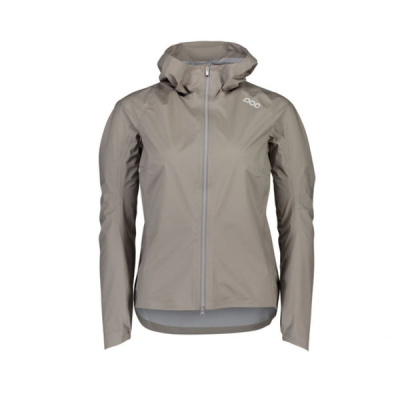
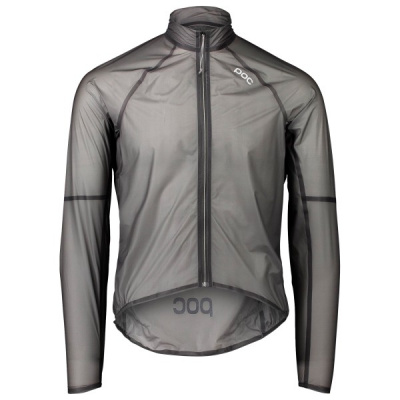
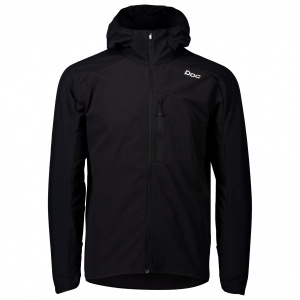
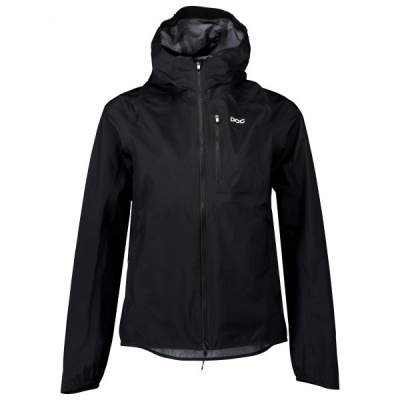
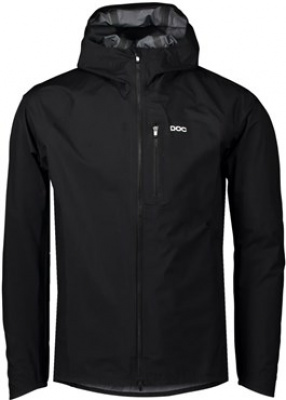
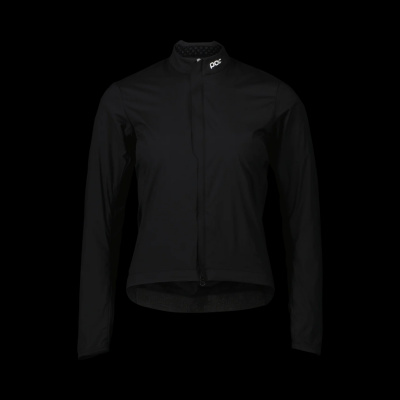
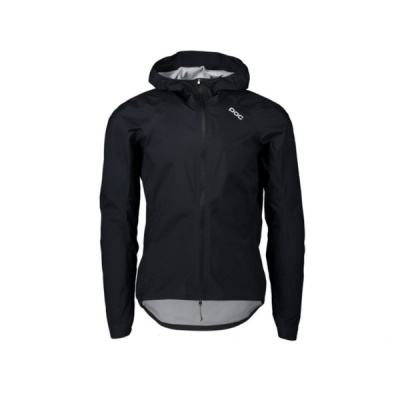
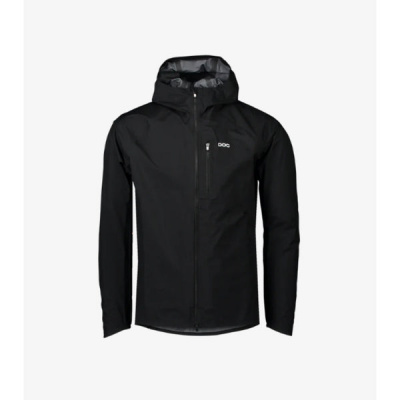
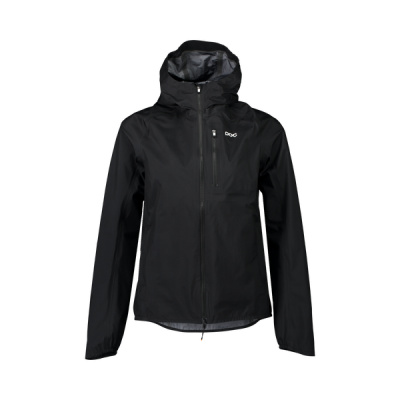
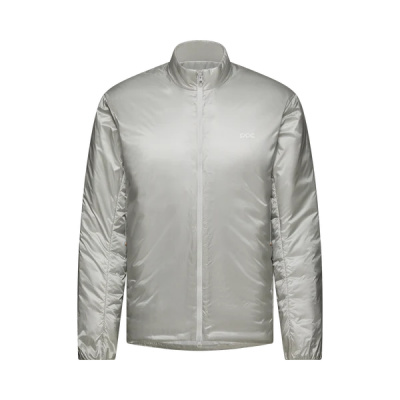
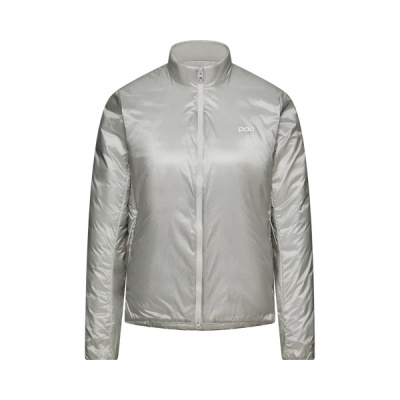
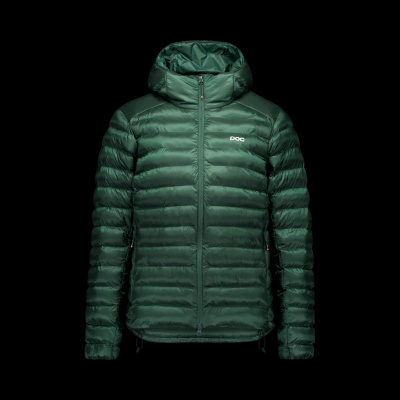
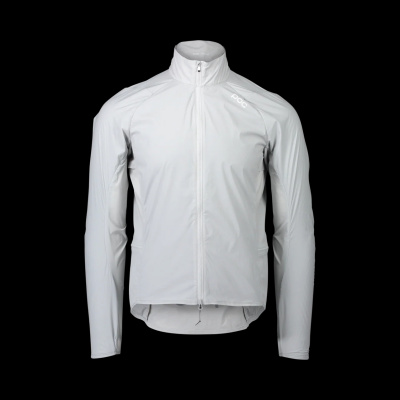
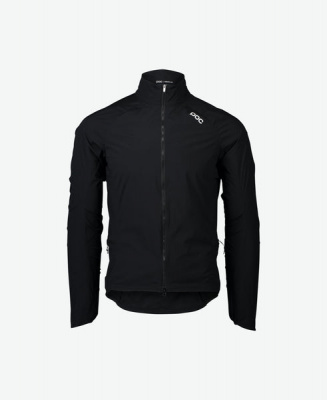
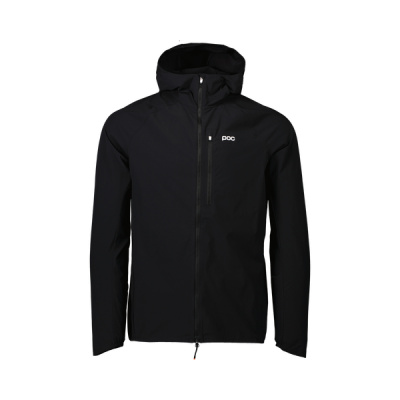
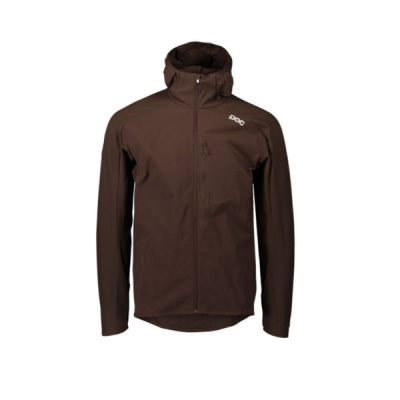
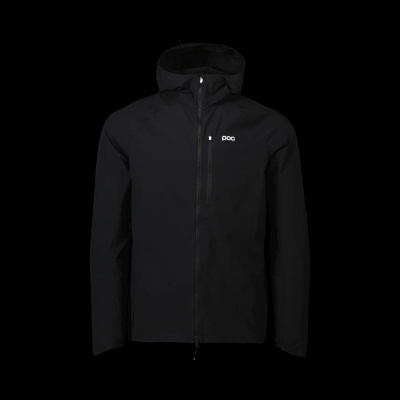
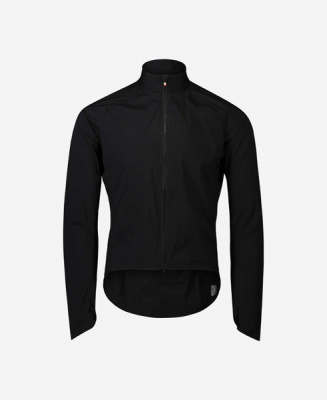
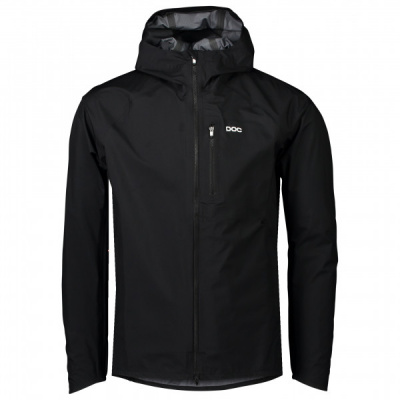
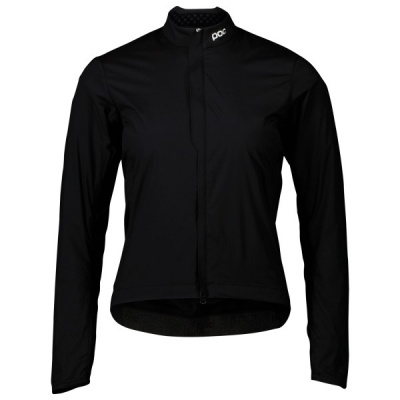
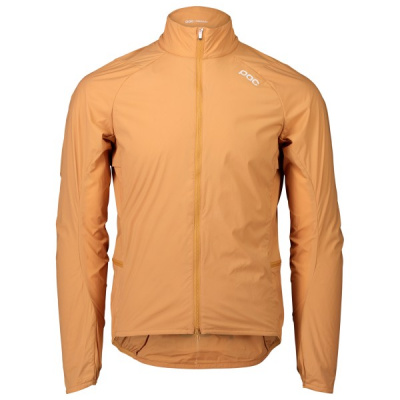
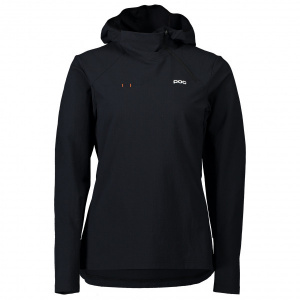
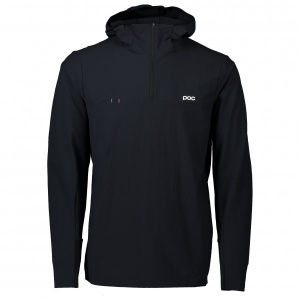
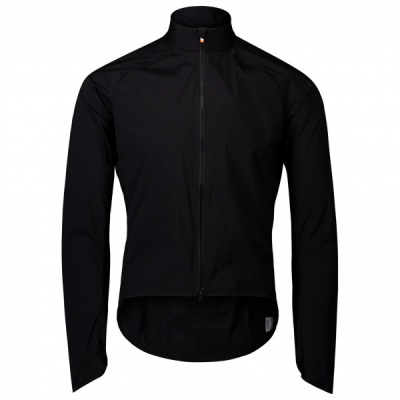
Prices and availability can change quickly. Delivery charges are not always included in listed prices.
Final price, stock status and delivery terms are set by retailer. We may receive a commission on purchases made.
Fabric Tech and Weather Performance
The divide in POC's jacket range comes down to one question: are you managing wind chill or actual rain? Lightweight windproof shells use ripstop fabrics that resist tearing when you clip a branch or scrape a wall, and they pack small enough to stuff into a back pocket before a fast descent. They're not designed for standing in a monsoon - they're for that 20-minute window when the wind picks up and the temperature drops. Get that right and you ride far more comfortably far more often.
For genuine wet-weather protection, POC steps up to 3-layer waterproof fabric constructions with taped seams throughout. The outer face repels water immediately thanks to the DWR coating; the membrane blocks anything that gets through; the inner layer manages moisture from your body. Hydrostatic head ratings of 10,000mm or higher mean these jackets handle prolonged, heavy UK rain - the kind that starts on the moors and simply doesn't stop. Critically, POC pairs this with serious breathability ratings and, on select models, pit-zip venting. That matters enormously on a long Welsh climb where humidity is already high and your effort is pushing sweat outward. Without adequate breathability, even a technically waterproof jacket becomes miserable.
POC's shift to fluorocarbon-free DWR treatments is worth noting. Traditional PFC-based DWR coatings are effective but persistent environmental pollutants. POC's fluorocarbon-free alternative performs comparably in real riding conditions and aligns with where the industry is heading. It does mean diligent care matters more - more on that below. Cordura reinforcements appear on MTB-oriented jackets at high-abrasion zones like shoulders and elbows, adding durability without significant weight penalty. Reflective detailing is woven into most models rather than bolted on as an afterthought, which keeps the jacket cleaner-looking while still doing its job in low light.
Understanding the POC Fit and Range
Fit is where POC road and MTB jackets part company sharply. Road models - the Supreme and Pro Thermal lines sit here - use an aggressive, aerodynamic cut that sits close to the body and keeps fabric locked down at speed. There's no excess material to catch wind or flutter on a fast descent. The trade-off is that layering underneath requires thought: a race fit jacket over a thick mid-layer can feel restrictive, so if you're riding in genuinely cold conditions with a chunky base layer beneath, sizing up is worth considering.
MTB jackets like the Signal and Consort take a noticeably more relaxed approach. The extra room isn't slack design - it's deliberate space to accommodate VPD compatibility body armour and elbow pads beneath without the jacket riding up or restricting movement on technical sections. If you're heading out on Peak District singletrack or the Shore trails at Dalby, that freedom of movement matters as much as the waterproofing. The longer back hem on MTB models also does useful work: it stays tucked in when you're leaned forward over the bars rather than exposing your lower back mid-descent.
If you're after sleeveless core protection for milder days when a full jacket feels excessive, take a look at POC gilets - they pair well with an arm-warmer setup and keep the options flexible. And if you want something for off-bike use or casual warmth that isn't built around riding position, POC hoodies are worth browsing separately. For pure jacket alternatives from other brands, Endura jackets offer strong UK-focused weather protection at competitive price points, and Castelli jackets are a natural comparison for road riders who want Italian-engineered aerodynamic fits.
Layering and Jacket Care for UK Riding
A POC waterproof cycling jacket performs best when what's underneath is doing its job too. Pair a breathable shell with a POC base layer that actively moves moisture away from your skin - cotton holds sweat against you and undermines everything the jacket is trying to do. On colder days, a merino or synthetic mid-layer between base and shell adds warmth without bulk, and merino in particular handles the stop-start pace of a UK club ride without getting clammy. Check the POC overtrousers and POC gloves if you're building a complete wet-weather system - jacket protection is undermined quickly by soaked hands or legs.
Washing a POC jacket incorrectly will progressively destroy its DWR performance, and it happens faster than most riders expect. Use a dedicated tech-wash - Nikwax Tech Wash or similar - on a gentle machine cycle. Standard biological detergents and fabric softeners are the enemy here: they clog the membrane's pores and contaminate the DWR surface, reducing both waterproofing and breathability. Rinse thoroughly.
Once washed, reactivating the DWR is the step most people skip. Heat does it: a low tumble-dry cycle or a careful pass with a warm iron (through a cloth, not directly) gets the DWR molecules standing upright again so water beads properly. If your jacket is older and water is no longer beading but instead soaking into the outer fabric - that's called wetting out - a spray-on reproofer like Nikwax TX.Direct applied after washing will restore performance. Do this regularly and a quality POC jacket will stay genuinely waterproof for years rather than seasons. Worth checking your POC jerseys use the same gentle washing approach too, since technical fabrics across the board respond poorly to standard detergents.
POC Jackets FAQs
Are POC cycling jackets true to size?
Generally yes, but road-cut models like the Supreme use a close aerodynamic fit that can feel snug if you're layering heavily underneath. If you're planning to wear a thick mid-layer or simply prefer more movement, go a size up - MTB fits are roomier by design and tend to be more forgiving across sizes.
How waterproof are POC bike jackets?
POC's dedicated rain jackets use 3-layer membranes with fully taped seams and hydrostatic head ratings of 10,000mm or higher - comfortably capable of handling heavy, sustained UK downpours. Lightweight windproof shells offer splash resistance but aren't built for prolonged rain; check the product spec to see which construction you're getting.
How do I wash and reproof my POC jacket?
Use a tech-wash on a gentle cycle and avoid biological detergents or fabric softeners entirely - both degrade the membrane and DWR coating. After washing, reactivate the DWR with a low-heat tumble dry or a warm iron through a cloth; if water is soaking into the fabric rather than beading, apply a spray-on reproofer like Nikwax TX.Direct.