
Pinnacle Smart Turbo Trainers
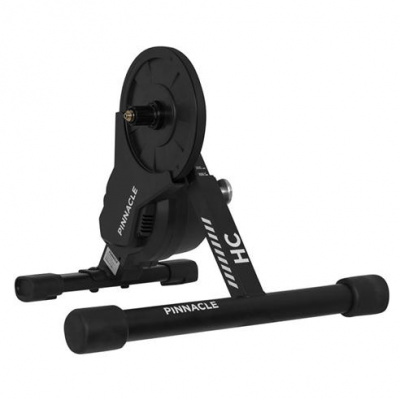
When the roads turn greasy and the days shrink to nothing, Pinnacle Smart Turbo Trainers give you a reliable way to keep the legs turning without stepping outside. These direct drive units are built around one idea: make structured indoor training accessible without the eye-watering price tags you'll find elsewhere. Whether you're grinding through a TrainerRoad base block or chasing watts on Zwift, you get real power data, responsive ERG mode control, and a ride feel that doesn't feel like pedalling through porridge.
Pinnacle's smart trainers broadcast over both Bluetooth FTMS and ANT+ FE-C simultaneously, so pairing with your iPad, Apple TV, laptop, or head unit is straightforward. Gradient simulation reaches up to 20%, which is enough to make a virtual Alpe du Zwift feel genuinely uncomfortable. The direct drive format ditches tyre slip and the associated noise - useful if you're training in a flat or a terrace where 6am efforts require a degree of neighbourly diplomacy. A flywheel weight of 5kg-plus keeps momentum feeling natural over rolling virtual roads rather than that choppy, artificial resistance feel you get from cheaper wheel-on trainers. For UK riders who need a dependable winter training tool without overspending, Pinnacle is a genuinely sensible starting point.
Prices and availability can change quickly. Delivery charges are not always included in listed prices.
Final price, stock status and delivery terms are set by retailer. We may receive a commission on purchases made.
Connectivity, App Support and ERG Mode
The Pinnacle indoor bike trainer broadcasts on both Bluetooth Smart (FTMS) and ANT+ FE-C at the same time. In practice, that means you can have Zwift controlling the resistance on your laptop while a Garmin head unit logs your power data simultaneously - no choosing between protocols. Pairing is plug-and-play: power the trainer up, open your app's sensor menu, and it appears as a controllable trainer within seconds.
Zwift, Rouvy, TrainerRoad, Wahoo's SYSTM - all of them recognise the trainer's standard broadcast. If you're comparing options, Wahoo smart trainers sit at the premium end of this compatibility spectrum, and Tacx smart trainers offer strong Garmin ecosystem integration - but Pinnacle covers the same app territory at a considerably lower outlay. ERG mode is where structured training gets serious. The trainer locks resistance to a specific power target regardless of your cadence, so if your TrainerRoad plan says 250W, the trainer holds you there. It removes any temptation to soft-pedal through an interval. For FTP tests and threshold blocks, it's a significant advantage over manually adjusting resistance throughout a session.
Flywheel, Power Accuracy and Acoustic Performance
A 5kg-plus flywheel is what separates a trainer that feels like cycling from one that feels like operating a piece of gym equipment. Heavier flywheels carry momentum through your pedal stroke, so when you crest a virtual rise and soft-pedal briefly, the resistance doesn't drop dead instantly - it behaves more like a real road. That matters during long endurance rides where the rhythm of your pedalling needs to feel natural rather than mechanical.
Power accuracy sits at roughly +/- 2 - 3% depending on the specific model. That's sufficient for consistent FTP testing - you're not going to see wild swings session to session, so progression tracking is meaningful. It won't match the lab-grade accuracy of a dedicated power meter, but for training purposes it's more than adequate. If you're also running Pinnacle bib shorts for long indoor sessions, matching your training data to reliable power numbers makes those extended efforts worthwhile.
Noise is the practical consideration that rarely gets enough attention in specs sheets. Direct drive trainers are substantially quieter than wheel-on units - no tyre-on-roller contact, just the drive train and flywheel. That said, no trainer is silent. You'll still get some transmission noise, and vibration through the floor is a real concern in flats. A training mat underneath reduces both. The direct drive design on Pinnacle's smart trainers is a meaningful step forward for anyone training in a terraced house or above ground-floor level - the difference compared to a wheel-on trainer is audible immediately.
Against alternatives like Elite smart trainers, Pinnacle holds its own on acoustic performance at this price bracket. The sprint resistance ceiling of 1800 - 2000W also means even stronger riders won't hit a hard cap during high-intensity efforts.
Getting Set Up, Cassettes and Looking After Your Kit
Out of the box, setting up a Pinnacle direct drive trainer is straightforward - but there's one thing to sort before you start pedalling. Direct drive trainers require a cassette, and it's almost never included. You'll need one that matches your bike's drivetrain: if you're running Shimano 11-speed on the road bike, fit an 11-speed Shimano cassette to the trainer's freehub body. SRAM drivetrains follow the same logic. You'll need a chain whip and a lockring tool to install it - if those aren't already in your kit, pick them up alongside; Pinnacle tools cover the basics without fuss.
Once the cassette is on, setting up Pinnacle smart trainer connectivity takes minutes. Move the bike onto the trainer, re-route the rear derailleur cable tension slightly if needed (the trainer's cassette spacing may differ from your wheel's), and do a spin-down calibration in your training app before the first serious session. Most apps prompt you through this automatically. Repeat it whenever you've moved the trainer or if temperatures have changed significantly - an unheated garage in January will affect your baseline readings.
Speaking of garages: sweat is corrosive. This doesn't get mentioned enough. Forty-five minutes of hard effort produces a surprising amount of salt-laden moisture, and if it drips into your frame tubes, headset, or the trainer's internal components, it causes damage over time. Drape an old towel over the top tube and stem, wipe the trainer down after every session, and consider a small fan - it keeps you cooler and reduces how much sweat actually reaches the bike. Firmware updates are worth doing periodically too; manufacturers push fixes that improve ERG mode response and connectivity stability, so keeping the trainer current is a five-minute job that pays off.
If your training eventually outgrows what a Pinnacle unit can offer, Garmin smart trainers represent a natural step up in ecosystem integration and power accuracy. But for most riders working through winter base miles or following a structured plan, Pinnacle's Zwift compatibility and direct drive performance do the job cleanly. Pair it with a decent Pinnacle jersey for ventilation during those longer sessions and you've got a solid indoor setup sorted.
Pinnacle Smart Turbo Trainers FAQs
Is the Pinnacle turbo trainer compatible with Zwift?
Yes. Pinnacle smart trainers broadcast via Bluetooth FTMS and ANT+ FE-C, both of which Zwift recognises as controllable trainer connections. The app will adjust resistance automatically based on virtual gradients, so you get full interactive control without any workarounds or adapters needed.
How do I connect my Pinnacle smart trainer to Bluetooth or ANT+?
Power the trainer on and open the sensor or device menu in your training app or bike computer. The trainer broadcasts both protocols simultaneously, so it should appear straight away as a controllable power source. No manual Bluetooth pairing codes or ANT+ dongles required on most setups - just select it and you're away.
Do I need a specific cassette for a Pinnacle direct drive trainer?
You do. The cassette isn't included and needs to match your bike's drivetrain - speed count and brand compatibility both matter. An 11-speed Shimano bike needs an 11-speed Shimano-compatible cassette on the trainer's freehub. You'll also need a chain whip and lockring tool to fit it correctly before your first ride.