
Pas Normal Studios Overshoes
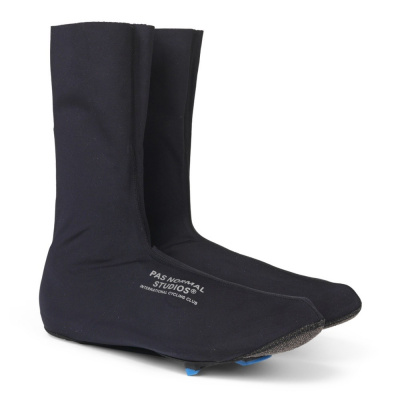
Pas Normal Studios overshoes sit at the sharper end of what's available for road riders who refuse to let a grim British winter dictate their training. Cold feet aren't just uncomfortable - they're distracting, and once they're gone, your focus goes with them. PNS addresses that directly, with a range that spans lightweight aero shoe covers for damp spring mornings through to thick neoprene-insulated models built for the kind of sub-zero January rides where your water bottle freezes before you've crested the first climb.
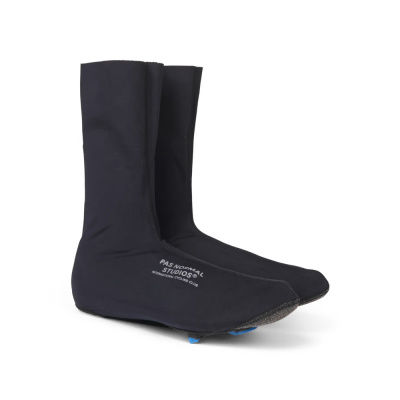
The design logic is tightly controlled. High-stretch neoprene delivers thermal insulation without the bulk you'd expect, while taped seams and DWR coatings work together to deflect the relentless road spray you pick up on wet B-roads. Kevlar reinforcements on the toe and heel mean they survive the inevitable café stop or traffic-light unclip without wearing through in a fortnight. The zipperless ankle cuffs are a considered detail too - fewer gaps for water to find its way in, and no zip to chafe against your calf over three hours in the saddle.
If your rides regularly end with soaked feet, these are worth a serious look.
Prices and availability can change quickly. Delivery charges are not always included in listed prices.
Final price, stock status and delivery terms are set by retailer. We may receive a commission on purchases made.
Fabric Tech and Weather Performance
The core material across the PNS winter range is high-stretch neoprene - the same family of fabric used in wetsuits, chosen here for its ability to trap a thin layer of warmth against your foot while remaining flexible enough to move with you through the pedal stroke. It's not a rigid shell; it works with the foot rather than around it. That stretch also contributes to the aero fit, keeping fabric drum-tight against the shoe rather than flapping in the wind at 40kph.
What makes PNS overshoes genuinely capable in UK conditions is the combination of taped seams and a DWR coating applied to the outer surface. The taped seams close off the stitching lines - typically the first point of failure when road spray is hammering up from the front tyre. DWR treatment causes water to bead and run off rather than saturate the face fabric. Together, they handle the kind of persistent drizzle and grit you encounter on a wet Welsh valley road or a mucky Peak District lane with real composure. They won't make the overshoe fully waterproof - nothing short of a sealed bootie truly is - but they dramatically slow the point at which you start to feel it.
The Kevlar reinforcements on the toe box and heel deserve mention. These are the points that contact the ground during a cleat clip-in fumble or a café stop, and without reinforcement, standard neoprene wears through surprisingly fast. PNS uses Kevlar precisely here, extending the working life considerably. It's a practical detail that matters across a full winter of use.
The PNS Overshoe Range and What Separates Each Model
PNS structures its overshoe offering around clearly distinct use cases. The lighter, aero-focused models - the Mechanism line sits here - are cut for riders prioritising a flush, low-profile fit on cool but not freezing days. Think early-season racing, sportives in changeable spring weather, or commutes where windchill is the primary problem rather than sustained cold. The neoprene is thinner, the fit is compressive, and they add minimal visual bulk over a race shoe.
Step up to the heavier winter models and the neoprene thickness increases, adding meaningful thermal protection that keeps feet functional when temperatures drop towards zero. These are the ones suited to those grim January base miles - the sort of ride where you'd otherwise be counting down to the turbo. The protection runs from around -5°C up to roughly 10°C, so there's a reasonable window before they become too warm to be useful.
Across the range, the zipperless cuff design is a consistent feature. Rather than a zip running up the back - which creates a potential ingress point and a ridge against the calf - PNS uses a compressive ankle opening that stretches over the heel and grips the lower leg. The result is a seal that works better under sustained spray, and a cleaner silhouette that sits properly under bib tights without bunching. If you've used Castelli overshoes or Rapha shoe covers, the compression fit will feel familiar - PNS simply takes the minimalist execution a step further.
Worth noting for those considering alternatives: Spatzwear overshoes and GripGrab offer competitive neoprene options at various price points, with their own takes on seam sealing and durability. PNS differentiates primarily on fit precision and the overall integration with the rest of the PNS kit system.
Getting Them On, Pairing Them Up, and Keeping Them Going
The zipperless construction means there's a specific order of operations for putting these on - and skipping it makes the process far harder than it needs to be. Pull the overshoe up your leg past the ankle before you put your cycling shoe on. Get your shoe fitted and dials tightened, then pull the overshoe down over the heel and toe. Trying to wrestle them on over a fitted shoe is a car park argument you won't win, especially with cold hands.
For complete coverage with no gaps, pair them with PNS bib tights - the cut is designed to work together, with the tight leg sitting cleanly over the overshoe cuff and eliminating the exposed ankle strip that lets cold air funnel straight to your foot. Adding PNS Merino socks underneath gives you an extra layer of thermal regulation without adding bulk, particularly useful on longer winter rides where sustained cold becomes cumulative. On days where rain is more of a concern than temperature, lighter PNS leg warmers give you flexibility to layer up or down mid-ride.
Care is straightforward but worth doing properly to preserve the neoprene and keep the seam tape bonded. Hand wash in cold water where possible. If you're using a machine, a cold delicate cycle in a mesh bag is acceptable. Never tumble dry - the heat degrades the neoprene and can lift the taped seams. Hang them to dry away from direct heat sources. Treated correctly, a quality pair of neoprene overshoes will last multiple seasons; cut corners on the care and you'll be replacing them by February.
Pas Normal Studios Overshoes FAQs
How do you put on Pas Normal Studios overshoes?
The zipperless design means you need to pull the overshoe up past your ankle before putting your shoe on - not after. Once your shoe is on and fastened, pull the overshoe down over the heel and toe. Attempting to fit them over an already-worn shoe is a frustrating exercise, particularly with cold hands.
Are Pas Normal Studios overshoes fully waterproof?
Highly water-resistant, but not fully waterproof. Taped seams and DWR-treated neoprene handle road spray and persistent rain well, and the zipperless cuff reduces ingress points significantly. In heavy downpours or extended riding, some water can eventually enter through the cleat cutout or run down from wet legs.
What temperature are PNS winter overshoes suitable for?
The heavier neoprene winter models are rated for deep winter use, covering roughly -5°C to 10°C comfortably. Below that, you're into pogies or heated insoles territory. For milder, damp days above 10°C, the lighter aero models are a better fit - the winter versions will simply make your feet sweat.