
Rapha Overshoes
When the roads turn grey and the temperature sags below the point of optimism, Rapha overshoes are what stand between a productive winter training block and feet that check out somewhere around mile eight. Cold extremities kill effort faster than any hill, and Rapha have put serious thought into solving that problem across a full range - from razor-thin aero covers to thick neoprene deep-winter booties that'll keep warmth in even when the rain is relentless.
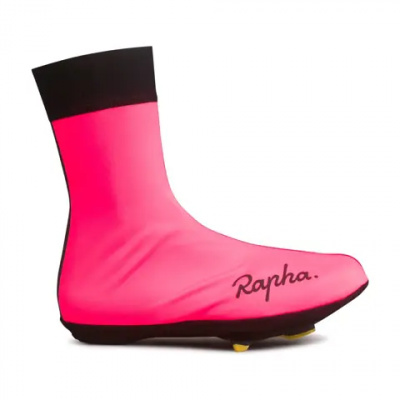
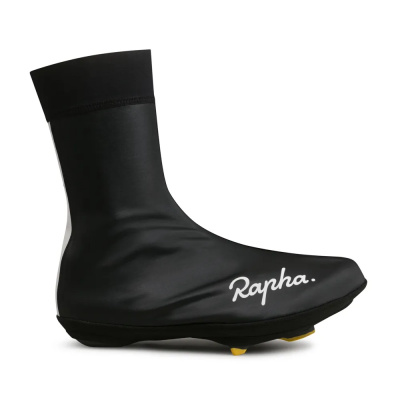
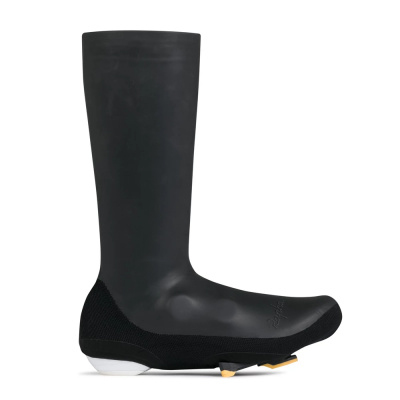
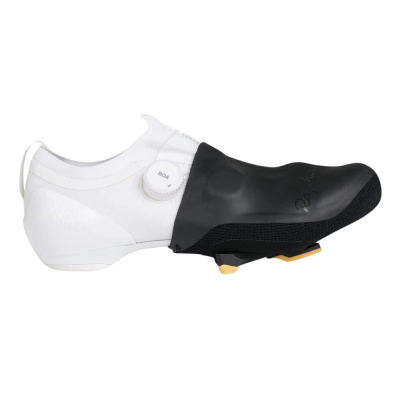
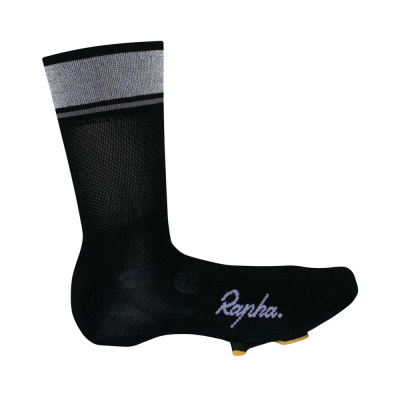
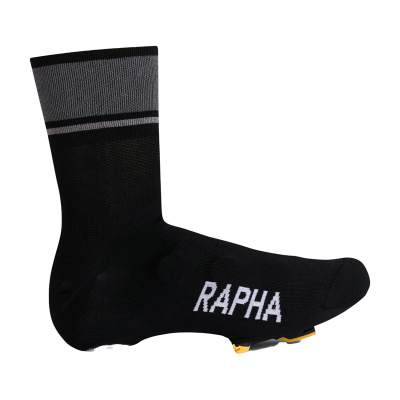
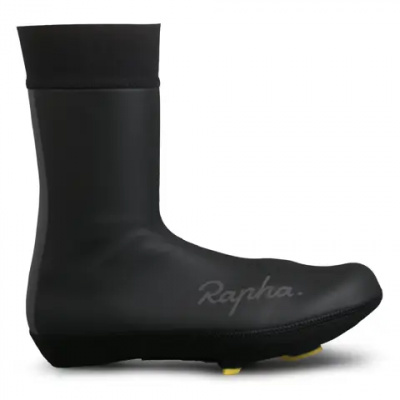
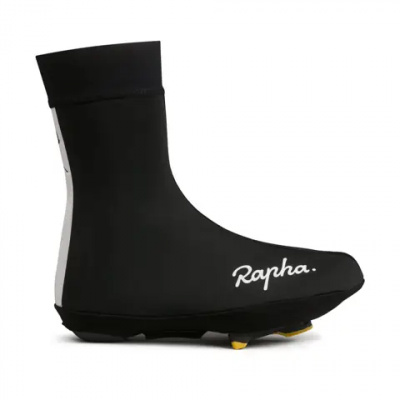
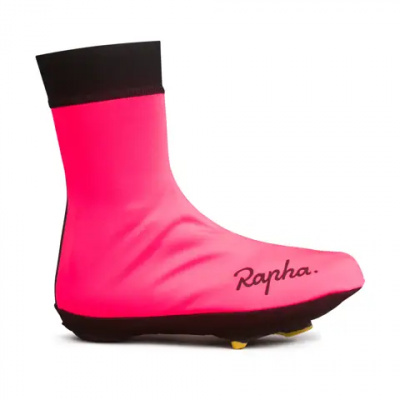
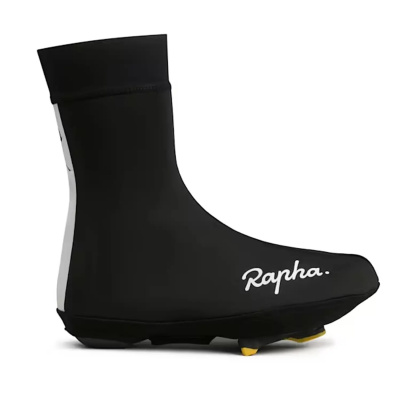
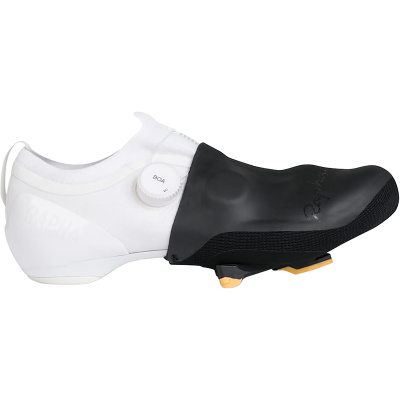
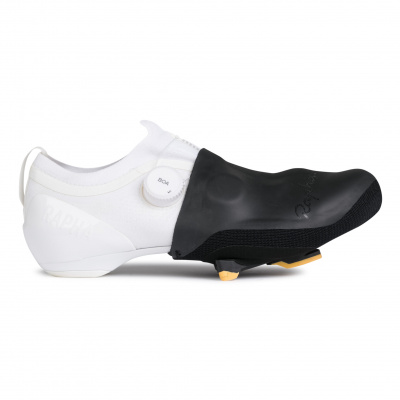
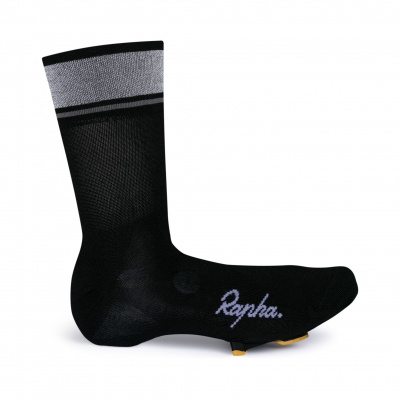
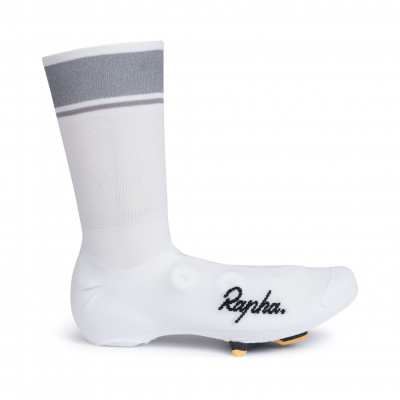
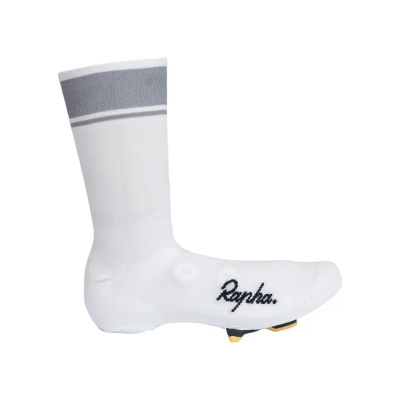
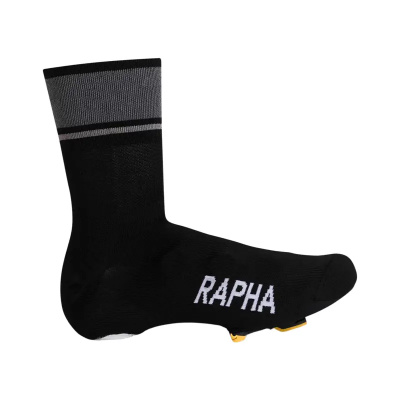
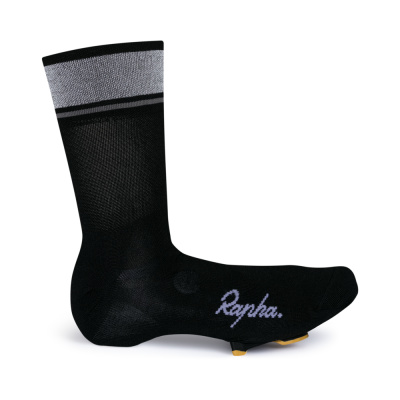
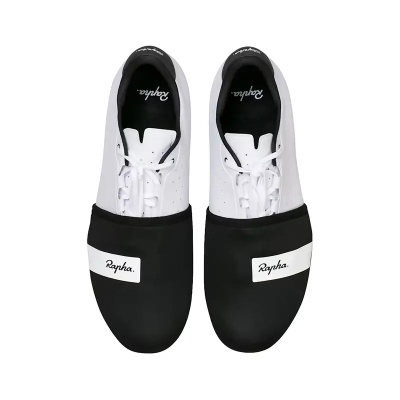
The Pro Team line runs tight and smooth, prioritising a second-skin aerodynamic profile and zipperless designs that add virtually nothing to your shoe's silhouette. Step down the range and the Brevet and Core models bring more accessible entry points - waterproof zips, slightly more forgiving fits - without abandoning the weather protection. Toe covers handle those ambiguous spring mornings where full booties feel excessive but bare shoes would be a mistake. Wherever you land in the range, you're getting Kevlar-reinforced soles that survive cafe-stop grovelling, taped seams that resist ingress, and reflective detailing for the kind of dull, overcast UK commutes where visibility matters. These are serious tools, not accessories.
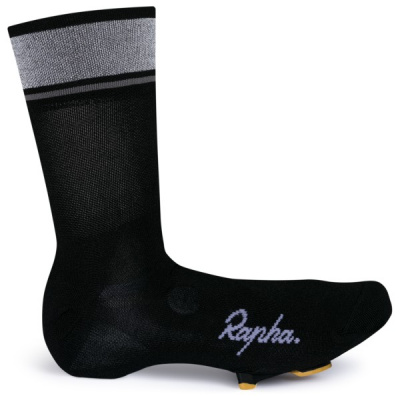
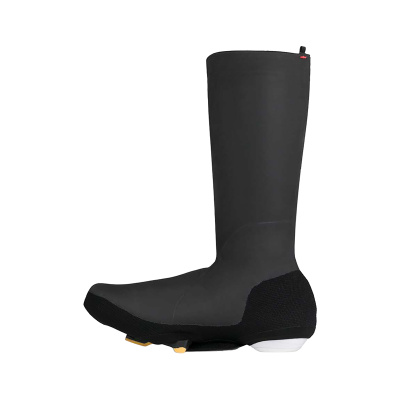
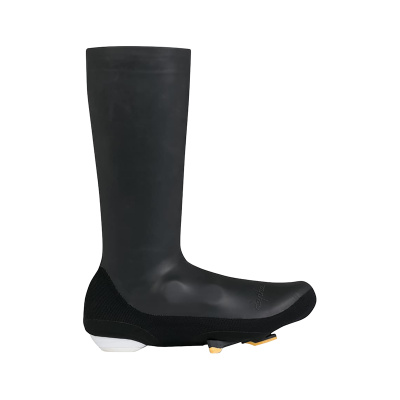
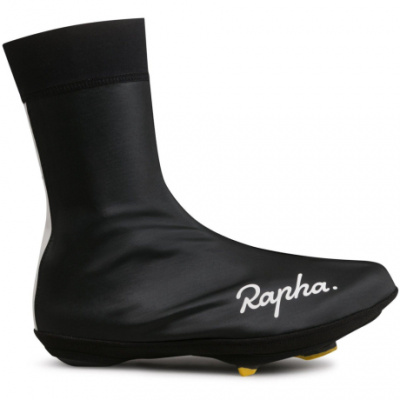
Prices and availability can change quickly. Delivery charges are not always included in listed prices.
Final price, stock status and delivery terms are set by retailer. We may receive a commission on purchases made.
Fabric Tech and Weather Performance
The materials Rapha use across the overshoe range are doing real, specific jobs - this isn't just a rubber sock. On the aero and shoulder-season models, a PU (polyurethane) coating forms a windproof, highly water-resistant outer skin that still stretches enough to sit flush against your shoe without bunching. That stretch is load-bearing: it's what allows the Pro Team zipperless designs to conform so closely to the calf and maintain an aerodynamic line without feeling like you've shrink-wrapped your foot.
Step into deep winter and the material stack shifts to thick neoprene - the same insulating fabric used in wetsuits, chosen precisely because it retains warmth even when wet. If you're grinding through a January morning in the Peak District and there's no dry line left anywhere on the road, neoprene is what keeps your toes functional by the time you reach the cafe. Taped seams reinforce this protection further, sealing the joins that water would otherwise exploit. It's not just about the face fabric repelling rain; it's about stopping ingress at the construction level.
The soles deserve a mention here. Kevlar-reinforced toe and heel panels resist the abrasion that comes from putting a foot down at traffic lights or clipping out on gravel - a detail that matters on UK roads, where grit and debris are a constant presence. Without reinforcement, standard overshoe materials shred quickly at the contact points. Rapha's approach adds meaningful longevity without noticeably thickening the sole.
Pro Team, Brevet, and Toe Covers: Knowing What You Need
Rapha's overshoe hierarchy maps reasonably cleanly onto how and when you ride. The Pro Team models are for riders who want to drop as little performance as possible while adding weather protection. The zipperless construction is the centrepiece here - no zip means no seam interruption across the instep, which keeps the profile sleek and eliminates a potential water entry point. Pulling them on requires a specific technique (more on that below), but once on, they sit like a second skin. If you're racing through winter, pacing a club run, or just particular about your setup looking right, the Pro Team route makes sense.
The Brevet range sits in more practical territory. Designed with longer, more demanding rides in mind - audax-style efforts, loaded gravel days, multi-hour winter road rides - these typically feature waterproof zips for easier entry and a fit that's a touch more accommodating over heavier socks or bulkier winter shoes. You trade a fraction of aerodynamic purity for genuine ease of use when your hands are cold and you're pulling kit on in a layby. Worth it for most riders, frankly.
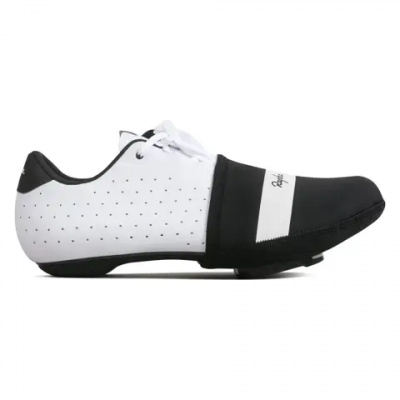
Toe covers are the option people overlook until they need them. On a crisp autumn morning in the Surrey Hills where the temperature reads six degrees at the bottom of a descent but climbs above ten once you're climbing, a full bootie is overkill. Toe covers take the wind-chill off the front of your vented summer shoes, pack down small enough to sit in a jersey pocket, and add almost nothing to the weight or bulk of your setup. Pair them with Rapha Merino socks and you've got a genuinely versatile shoulder-season combination. If you only want Rapha toe covers for occasional use, they're a far more considered buy than a full neoprene bootie you'll only reach for a few weeks a year.
Where do Rapha aero overshoes sit against the broader market? Brands like Castelli and Assos offer comparable zipperless designs at similar price points, and each has its own approach to stretch fabrics and sole reinforcement. Rapha's edge tends to be in fit refinement and the range depth - they cover more use cases within a single brand ecosystem, which matters if you're already running their kit.
Fitting, Layering, and Keeping Them in Good Shape
Zipperless overshoes confuse people the first time. The trick - and it's not obvious until someone tells you - is to get the overshoe up your ankle before your shoe goes on. Pull it partway up your lower leg, put on and dial in your shoe, then stretch the overshoe down over the heel and forward over the toe box. Trying to force it over a fastened shoe from the start risks tearing the material at the seams. Slightly damp hands help the material slide - a thin latex glove also works if you're in a rush.
Layering matters as much as the overshoe itself. Pull your Rapha bib tights over the top cuff of the overshoe, not inside it. If rain runs down your leg and finds a gap between tight hem and overshoe cuff, it'll pool straight into your shoe - the overshoe becomes irrelevant at that point. It sounds basic, but it's the kind of thing that only becomes obvious when you've had wet feet for three hours on a Welsh lane in November.
Care is straightforward but easy to neglect. Wipe down PU-coated models after rides rather than machine washing - repeated agitation degrades the coating faster than you'd expect. Neoprene booties can be rinsed under cold water and left to dry naturally. Avoid tumble dryers and direct heat sources on any model; the adhesive that seals the taped seams is heat-sensitive, and a single drying cycle can compromise seams that were doing their job perfectly. Store them flat or loosely rolled, not crushed under a bag.
If you're building out a full winter kit, Rapha's jacket range and winter gloves are the logical companions - addressing the other two extremities that suffer first in the cold. The waterproof cycling overshoes Rapha produces are designed to work within that broader system, so the fit and coverage logic carries across the range consistently.
One practical note on neoprene overshoes Rapha offer for deep winter: the cleat holes are a weak point in any bootie's waterproofing, regardless of brand. Water can wick up through the cleat aperture on the wettest days, and there's no clean fix for it - it's a structural compromise common to all overshoes. A bead of silicone around the cleat hole edge can slow it, but don't expect any bootie to be completely immune in sustained heavy rain.
For riders who are sizing between ranges or running particularly wide lasts, also worth checking the sock thickness you'll be wearing underneath - that combination affects how the overshoe fits at the cuff and whether it seals cleanly around the ankle.
Rapha Overshoes FAQs
How do I choose the right size Rapha overshoes?
Rapha overshoes generally match your standard cycling shoe size. If you're on the upper edge of a size bracket or wearing thicker winter shoes underneath, size up - overstretching the material at the seams is the main failure point, and a slightly generous fit avoids that problem without meaningfully affecting performance.
Are Rapha overshoes fully waterproof?
PU-coated models with taped seams are highly water-resistant and will block sustained heavy rain for several hours. They're not completely immune, though - cleat holes are an inherent weak point on any bootie, and in torrential conditions water can also work down from the cuff. For most UK rides, the protection is more than adequate.
How do you put on tight zipperless cycling overshoes?
Pull the overshoe up your lower leg before putting your shoe on. Once your shoe is fastened and set, stretch the overshoe down over the heel and forward over the toe. Trying to force it over an already-fastened shoe risks tearing the seams. Slightly damp hands or thin latex gloves make the process considerably easier.