
Castelli Overshoes
Castelli overshoes are one of the more reliable ways to keep a winter ride from turning into a sufferfest before you've cleared the first mile. Frozen toes aren't just uncomfortable - they kill your power output and your mood in roughly equal measure. Whether you're rolling out for a January club run into freezing road spray, chasing seconds in a summer time trial, or just trying to take the edge off a crisp October morning, Castelli have a cover built for the job.
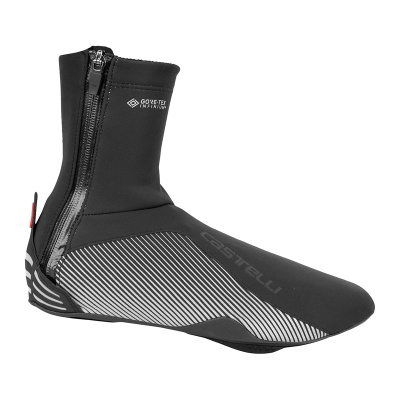
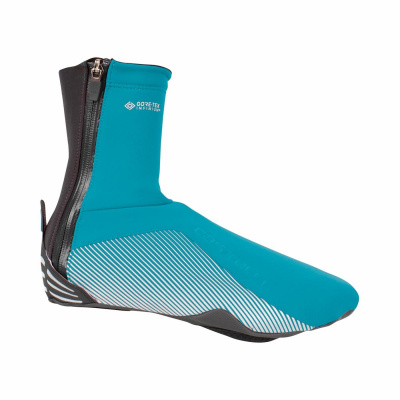
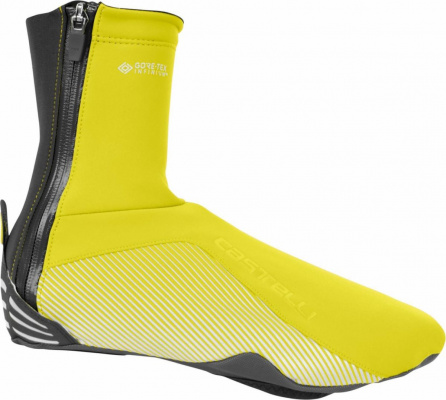
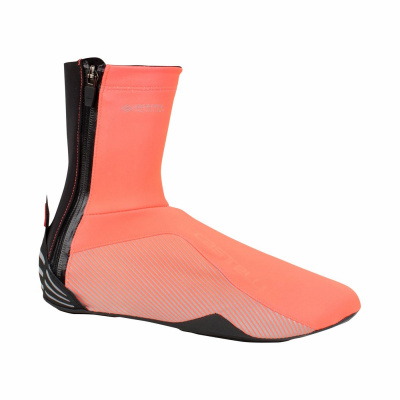
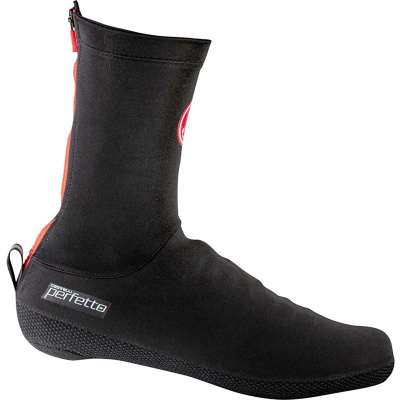
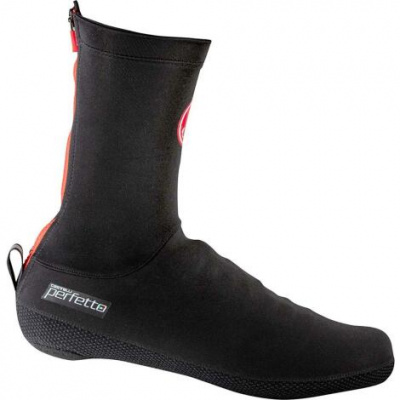
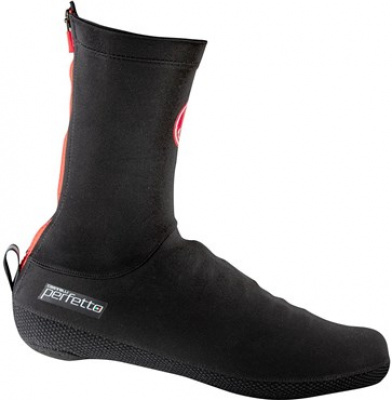
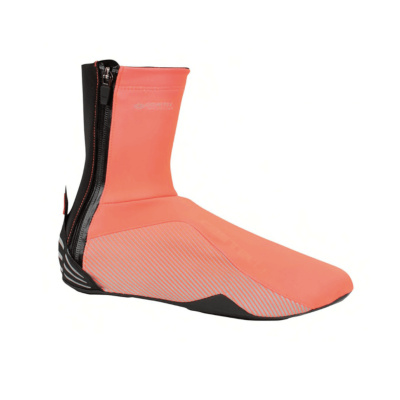
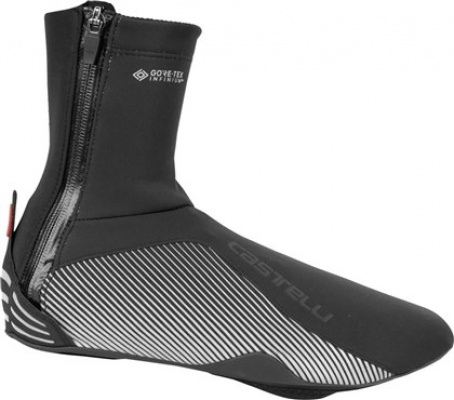
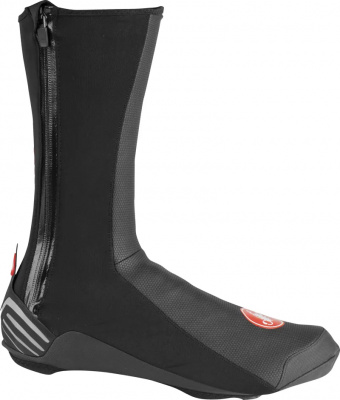
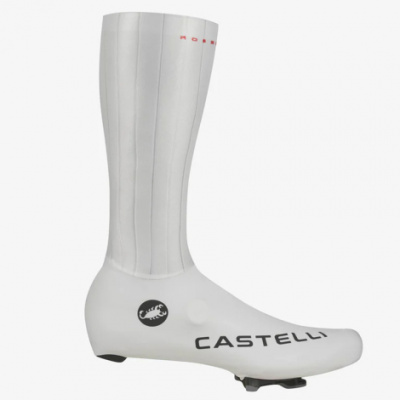
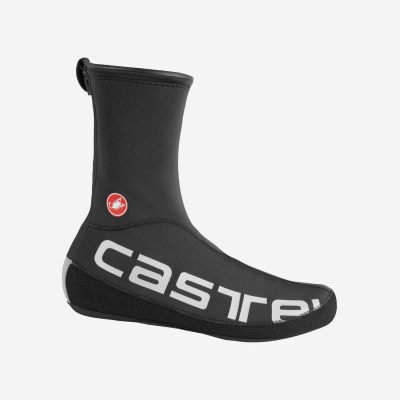
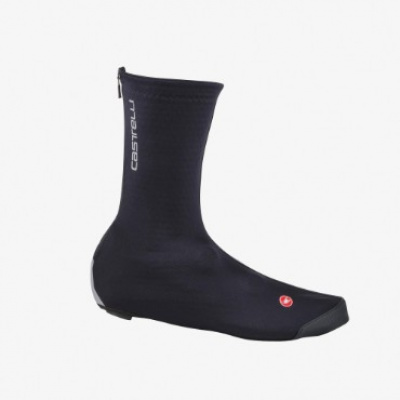
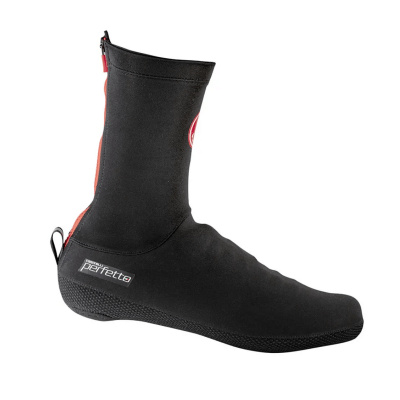
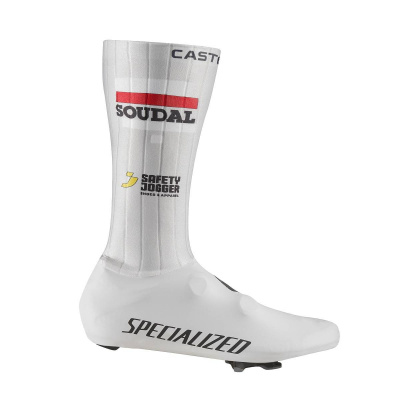
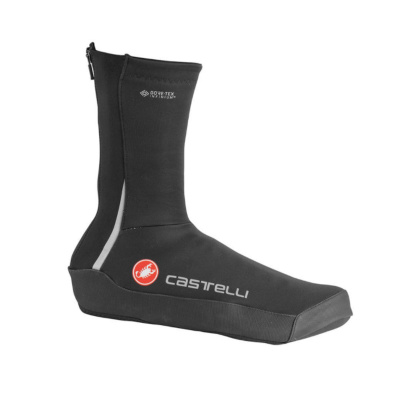
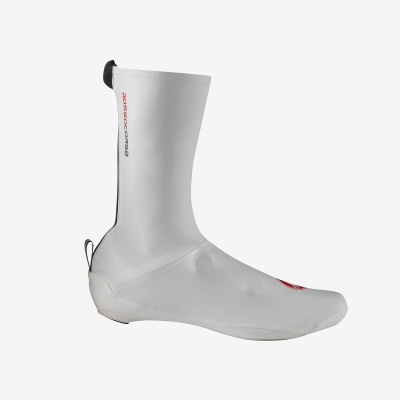
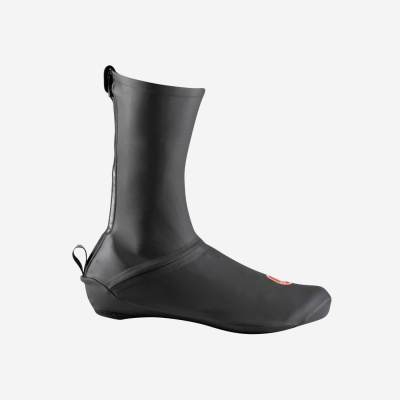
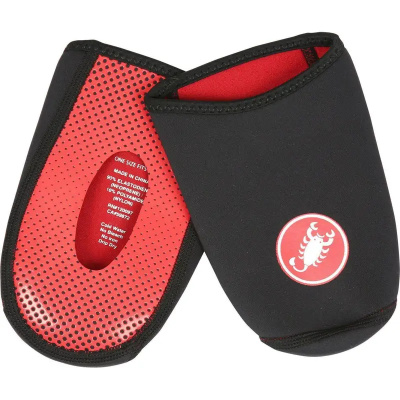
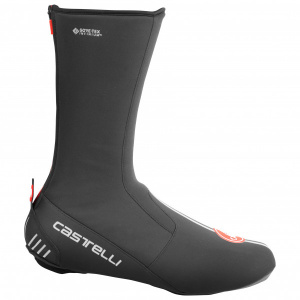
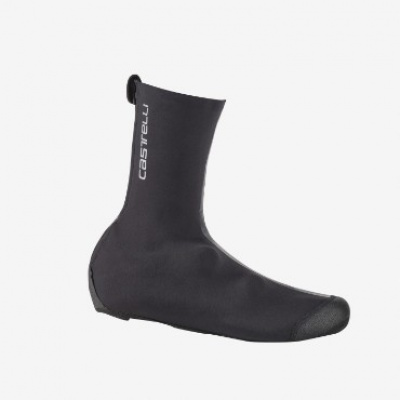
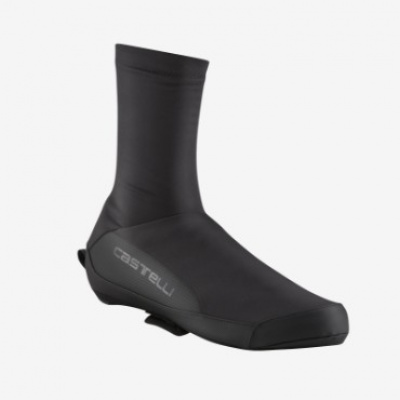
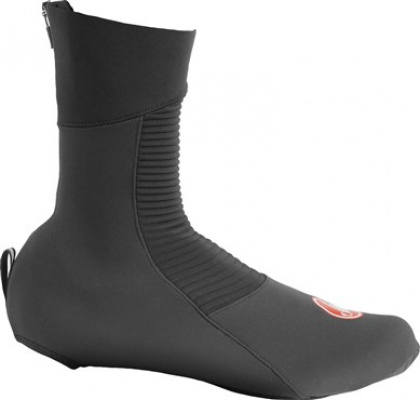
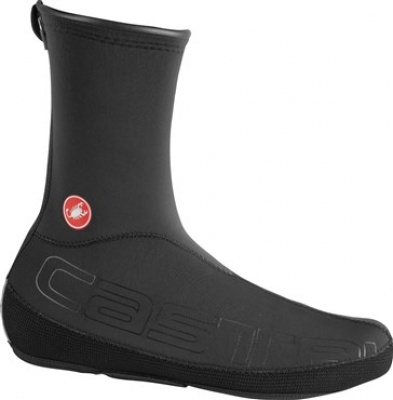
The range spans proper deep-winter neoprene in the Diluvio family, sleek PU-coated rain deflectors in the Pioggia line, breathable Gore-Tex Infinium windproof options for dry but biting cold, and aerodynamic Fast Feet covers that are more about speed than survival. The brand's RoS (Rain or Shine) technology threads through several models, balancing breathability on dry days with genuine protection when the skies open. Reflective detailing on key models matters here in the UK, where low light and grey overcast skies are the norm for a good chunk of the riding year. Whatever's on the forecast - and let's be honest, the forecast is usually wrong - there's a Castelli cycling overshoe calibrated for it.
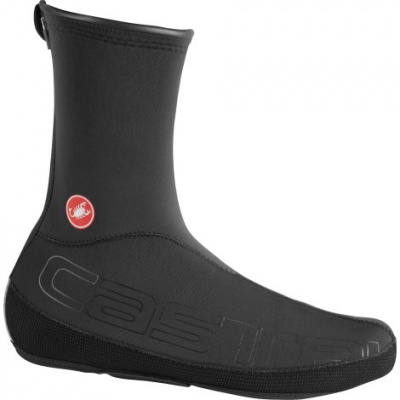
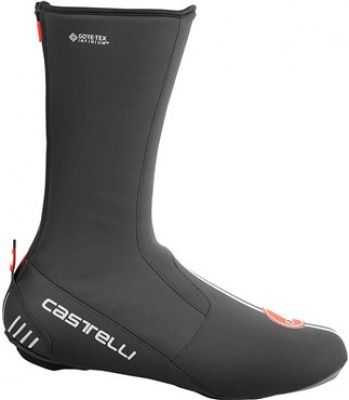
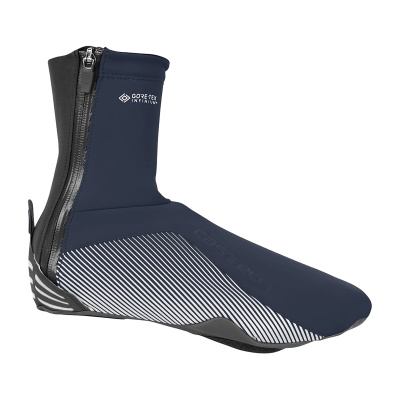
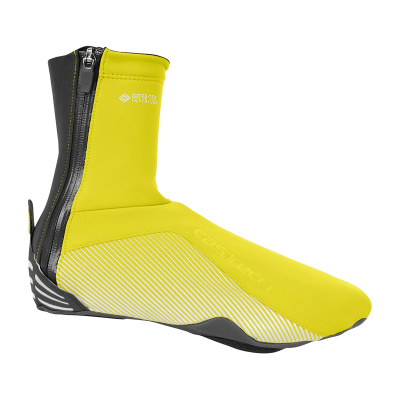
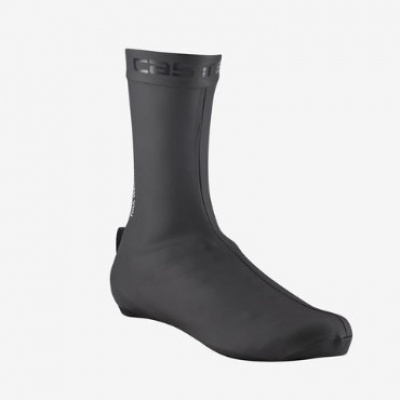
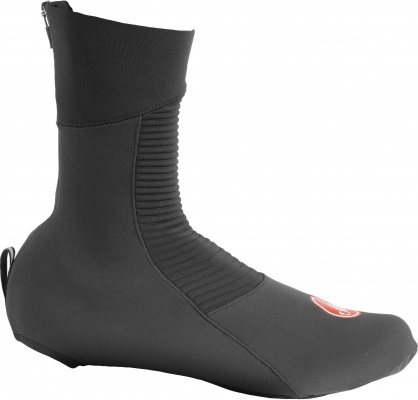
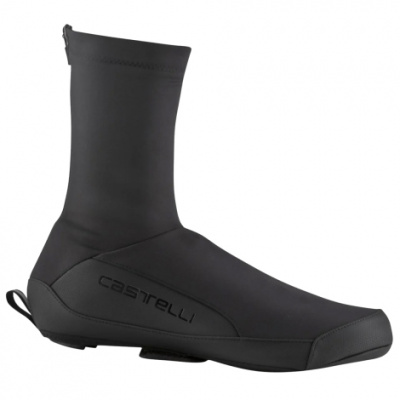
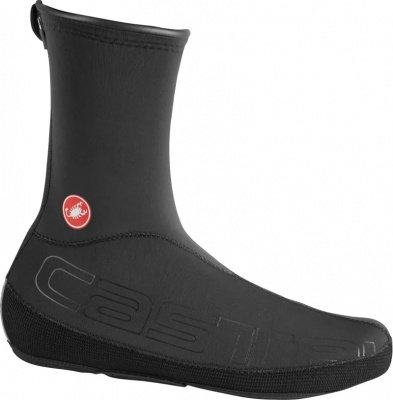
Prices and availability can change quickly. Delivery charges are not always included in listed prices.
Final price, stock status and delivery terms are set by retailer. We may receive a commission on purchases made.
Fabric Tech and Weather Performance
Castelli's overshoe range isn't a one-material-fits-all situation. Each sub-range uses a specific fabric system matched to a specific weather window, and knowing which is which saves you from turning up underdressed in February or sweating through a spring sportive.
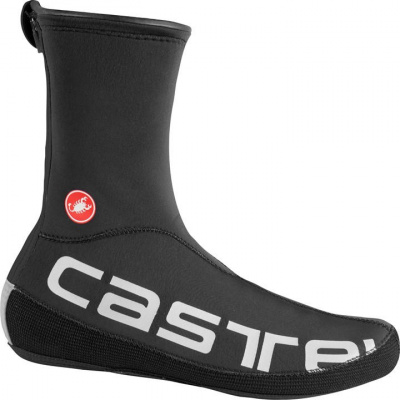
The Diluvio range is the deep-winter weapon. It uses premium neoprene - the same rubbery insulator you'd find in a wetsuit - to combine thermal insulation with solid water resistance. Neoprene holds warmth even when damp, which matters on long Welsh valley descents where road spray is relentless and your feet cop the worst of it. These are thick, structured covers built for sustained cold and wet, not mild autumn chills.
The Pioggia range takes a different approach. Polyurethane coatings are layered over the outer fabric to maximise rain deflection, making these the go-to when it's wet but not necessarily freezing. The PU shell sheds water aggressively - think of it like a waxed jacket for your shoes. They're more packable and less bulky than neoprene options, useful if you're heading out unsure whether the rain will actually materialise.
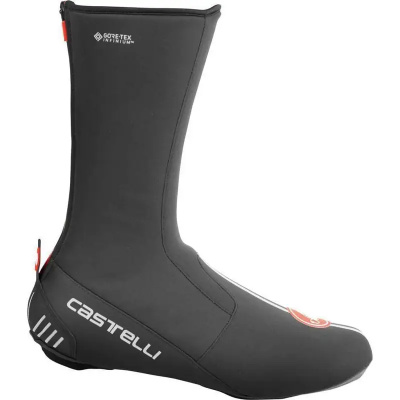
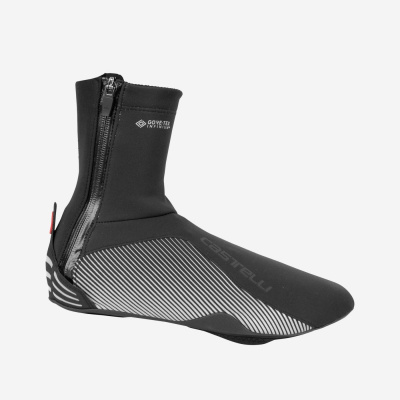
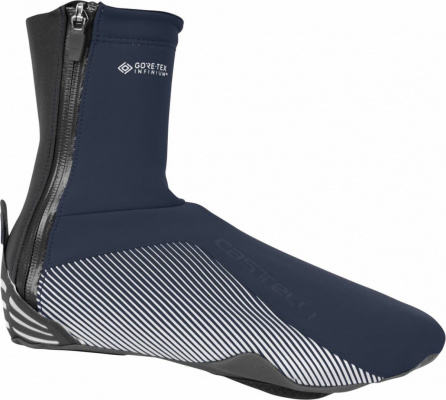
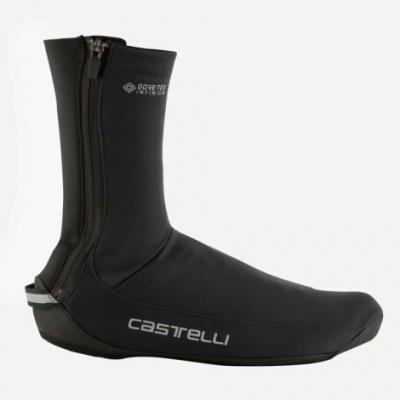
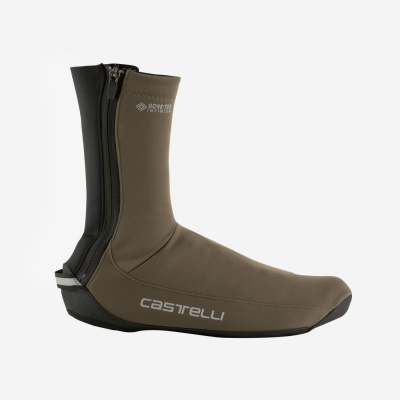
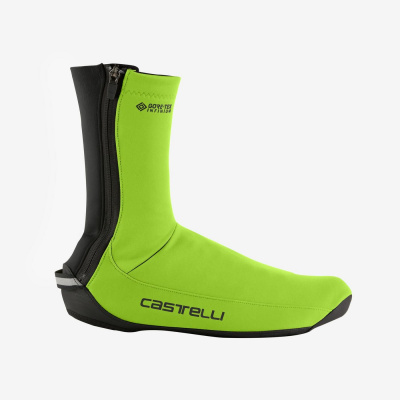
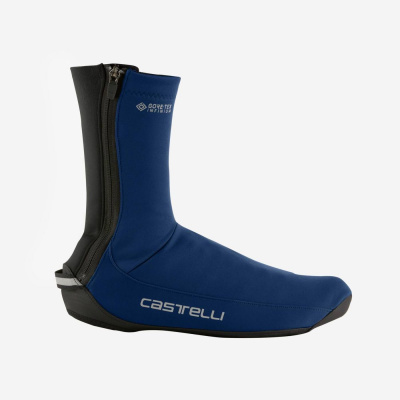
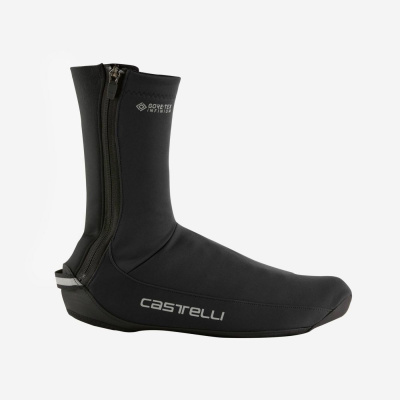
Gore-Tex Infinium Windstopper technology appears in Castelli's more refined options. It's breathable in a way neoprene isn't, making it ideal for dry, biting days where the wind is the problem rather than the rain - think exposed moorland riding in March, where you're generating heat on the climbs but the cold cuts through on descents. If you're also comparing options from other brands, Castelli jackets use similar Infinium fabrics, so there's a logic to running matching protection across your kit.
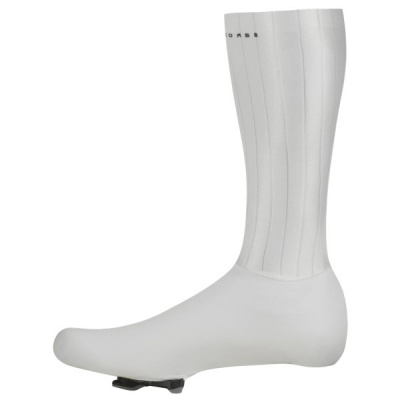
At the other end of the spectrum, the Fast Feet covers use aerodynamic grooved fabrics engineered to reduce drag. These aren't about warmth - they're a marginal-gains tool for time trials and fast road racing, smoothing over the lumpy profile of a road shoe. Lightweight, low-profile, and stripped of unnecessary features. If you're racing, they're worth having in the bag.
Getting the Fit Right Across the Range
Castelli overshoes are cut tight. That's deliberate - a race fit prevents the fabric from ballooning and flapping, which matters for aerodynamics and just general neatness on the bike. But it does mean sizing needs a bit of thought before you buy.
If you're sitting at the upper end of a size bracket, go up. Same applies if your cycling shoes have chunky BOA dials or thick winter treads - the extra bulk means the overshoe has more to stretch over, and forcing a size too small risks splitting the seams or making them miserable to get on in a cold car park. Castelli's sizing charts are based on shoe size, not foot length alone, so cross-reference both if you can.
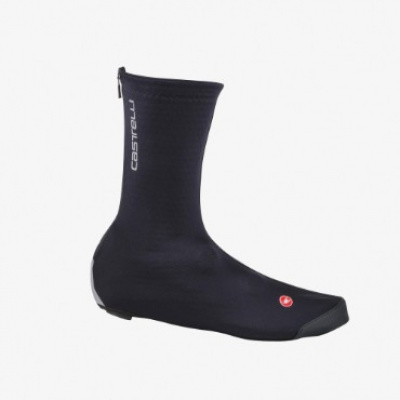
The shift towards zipperless overshoes is worth flagging. Older designs used a rear zip to make fitting easier, but that zip was always a weak point - a potential gap where water could sneak in. Zipperless constructions remove that vulnerability entirely, giving you a cleaner ankle seal and better long-term waterproofing. The trade-off is that they take a few tries to get used to (more on the technique below). Pair your overshoes with well-fitted Castelli socks underneath - a bulky sock changes how the overshoe sits, so factor that in when sizing.
Each cleat cut-out is sized to accommodate standard road and SPD-SL cleats, but check the specific model if you're running a less common cleat system. The cut-out design keeps the cleat engagement clean without compromising the structure of the sole panel.
Layering and Looking After Your Overshoes
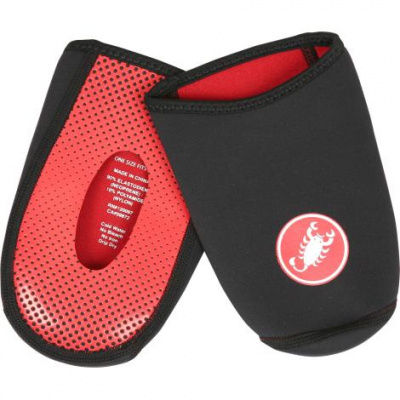
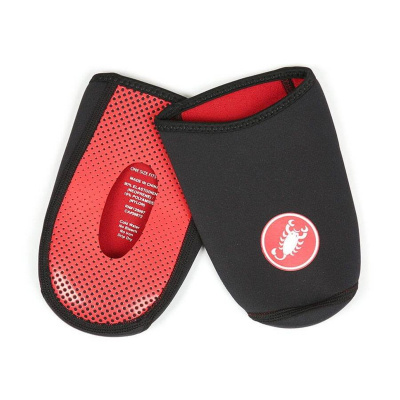
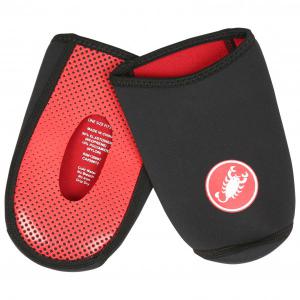
Overshoes work best as part of a system, not a standalone fix. On a proper winter ride, pair a neoprene Diluvio with merino Castelli socks - merino regulates temperature and manages moisture from the inside, while the overshoe handles everything coming from outside. That combination covers you from around zero degrees up to about eight or nine, depending on how hard you're riding. Above that, a lighter windproof cover or a toe cover is usually enough.
For full-body cold-weather protection, Castelli bib tights and Castelli gloves complete the layering picture - your feet, legs, and hands are the first places you lose sensation when the temperature drops, so it makes sense to treat them as a set rather than an afterthought.
Care is simple but easy to get wrong. Wash overshoes on a cool, gentle machine cycle - hot water degrades neoprene and strips the DWR (Durable Water Repellent) coating from outer fabrics faster than normal use ever would. Skip the fabric softener entirely; it coats the fibres and kills the water-resistant finish. Air dry away from radiators - direct heat is particularly damaging to neoprene, causing it to stiffen and crack over time. Hang them somewhere with decent airflow and let them dry naturally. A bit of basic maintenance goes a long way when you're asking the same pair to survive a full British winter.
Related searches:
Castelli Overshoes FAQs
How do you put on Castelli zipperless overshoes?
Pull the overshoe up your lower leg and over your ankle before your cycling shoe goes on. Once your shoe is on and any dials are tightened, stretch the overshoe down over your heel and work it over the toe box. It feels awkward the first couple of times - do it at home before a cold race morning and it'll make sense quickly.
Are Castelli overshoes fully waterproof?
The Pioggia and Diluvio models offer strong water resistance using PU coatings and neoprene respectively, and they handle typical UK rain well. In sustained downpours, water can eventually track through the cleat cut-out at the sole, or run down your legs into the cuff - no overshoe fully eliminates that risk.
Should I size up in Castelli overshoes?
Almost certainly yes if you're on the cusp of a size. Castelli cuts these tight for aerodynamic reasons, which means they leave little margin for bulky winter shoes with thick soles or large BOA dials. When in doubt, go up - a slightly roomy fit is far easier to live with than one that splits at the seams.