
Oxford Pannier Racks
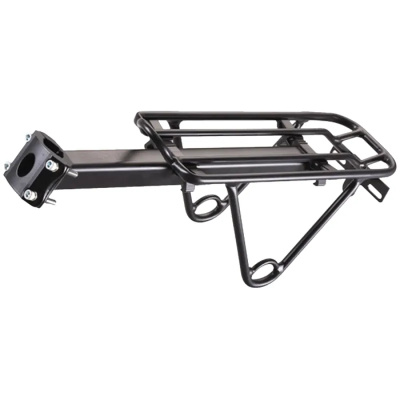
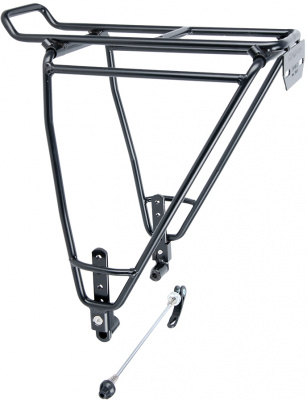
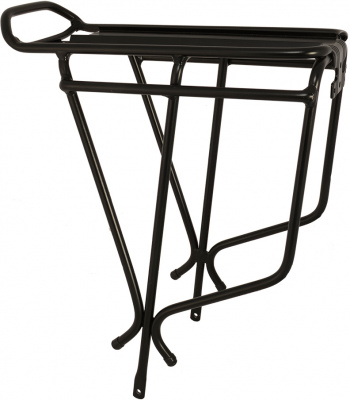
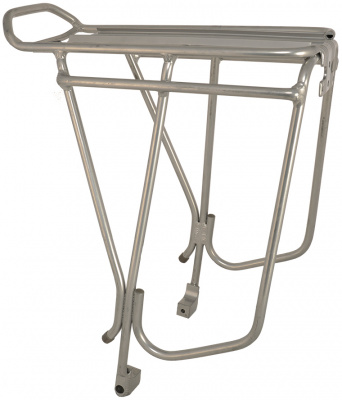
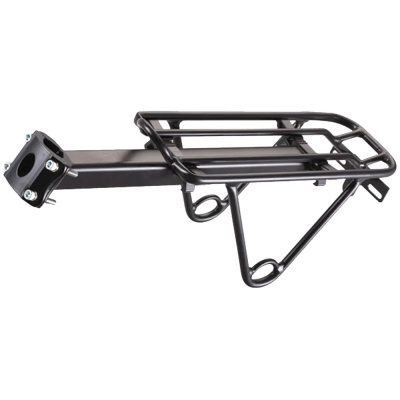
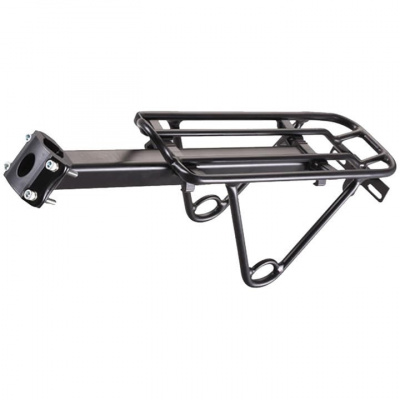
Oxford pannier racks are one of the more sensible decisions you can make for a commuter or touring bike - and that's not something we say lightly. Built from tubular T6 aluminium, they keep weight in check without sacrificing the rigidity you need when a fully loaded bag is swinging off the back in a crosswind. That strength-to-weight balance is what separates a decent rack from one that starts creaking halfway through your second month of daily use.
Oxford covers the main bases: standard racks for everyday riding, disc brake-compatible versions with extended standoff mounts to clear modern calipers, and adjustable leg struts that accommodate wheel sizes from 26-inch all the way to 29er and 700c. That adjustability matters - one rack can span several bikes in a household rather than sitting unused because your new gravel bike runs a different wheel size than your old tourer.
Whether you're hauling a laptop across town or loading up for a weekend away, a rigid, rattle-free rack is the foundation everything else depends on. Get it wrong and you're dealing with pannier rails that sway, bolts that won't stop backing out, and bags that kiss your tyre on every bump. Oxford's range is designed to avoid exactly that.
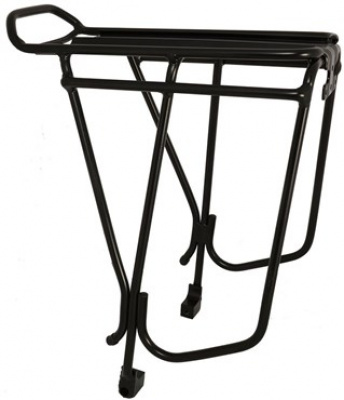
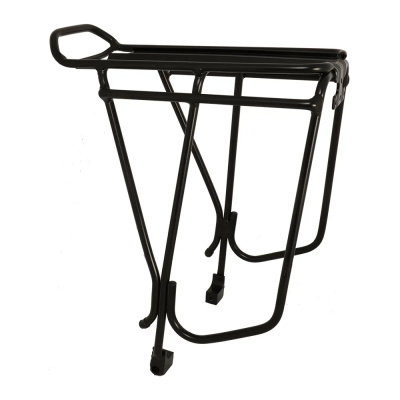
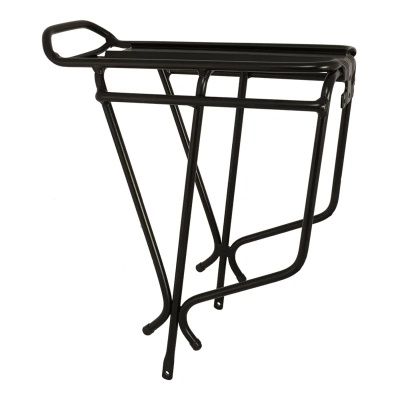
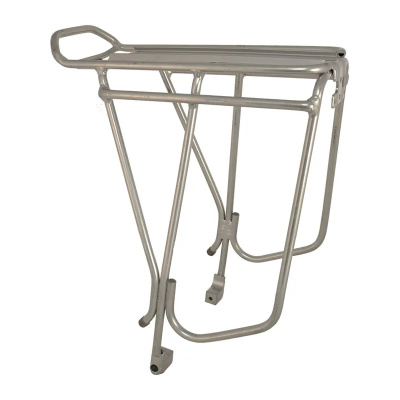
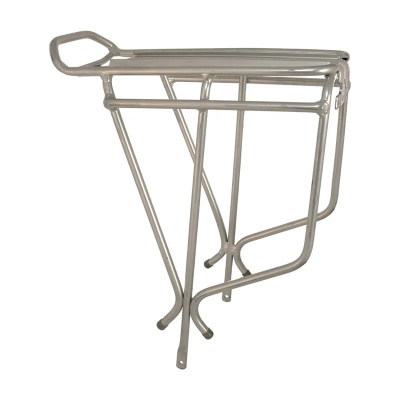
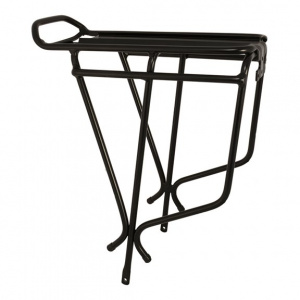
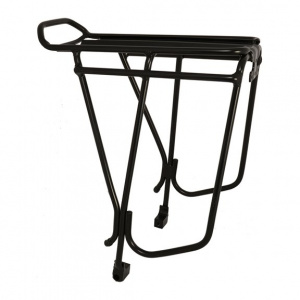
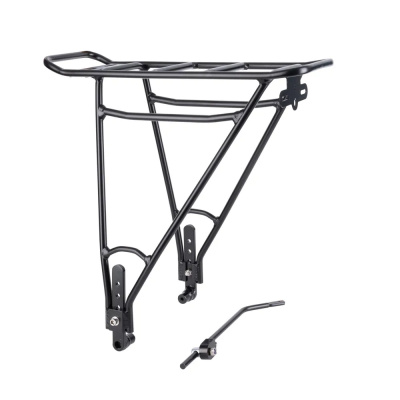
Prices and availability can change quickly. Delivery charges are not always included in listed prices.
Final price, stock status and delivery terms are set by retailer. We may receive a commission on purchases made.
Checking Compatibility Before You Buy
The first thing to do is walk round to the back of your bike and look for threaded holes - eyelets - at the dropout near the rear axle and at the top of the seatstays. Those are your mounting points. No eyelets, no standard rack mount. Most steel and aluminium touring, commuter, and hybrid frames have them as standard; many carbon road bikes and some lightweight alloy frames don't.
If your frame has lower dropout eyelets but lacks upper seatstay mounts, you've still got options. Rubberised P-clips clamp around the seatstay tubes and provide a secure upper fixing without drilling anything. They're not quite as solid as braze-ons, but for everyday commuting loads they do the job. Just check the tube diameter matches the clip size - most P-clips cover a range, but it's worth confirming.
Disc brakes change the equation at the lower mounts. A standard rack's legs sit where a disc caliper lives, so you need a disc brake-compatible rack with extended standoff mounts. These push the rack legs outward to clear both mechanical and hydraulic calipers cleanly. Trying to force a non-disc rack onto a disc-equipped bike is a recipe for rattling metal and, eventually, a damaged caliper. Oxford's disc-specific models handle this properly, with standoffs designed around real caliper dimensions rather than a rough guess.
Wheel size adjustability means the leg struts on Oxford racks can be set to suit 26-inch, 700c, and 29er wheels in the same product. That's worth knowing if you're speccing a rack for more than one bike, or if you're planning a wheel upgrade down the line. Looking for luggage to pair with your new rack? Browse our full range of Oxford Pannier Bags and Oxford Baskets.
Which Oxford Rack Suits Your Riding?
Oxford's rack lineup splits broadly into two camps: lighter commuter racks for daily use, and heavier-duty models aimed at loaded touring or higher mileage. The difference isn't just cosmetic. Thicker-gauge tubular aluminium, beefier welds at the pannier rails, and a higher rated load capacity - up to 25kg on the top-end models - make the touring-grade racks a different proposition when you're heading up to the Yorkshire Dales with four days of kit strapped on.
On the commuter side, the racks are trimmed down to reduce weight and keep the price accessible. They'll handle a pair of panniers with a laptop, lunch, and a change of clothes without complaint. If your daily load stays well under that 25kg ceiling, the lighter option is entirely adequate and puts less stress on your frame's eyelets over time.
The features worth paying more for: integrated rear reflector or light brackets (useful for UK winters when you're riding home in the dark), and secondary lower rails that drop the load closer to the axle. That lower centre of gravity genuinely changes how a loaded bike handles - less top-heavy sway when you're threading through traffic. It's the difference between a bike that feels stable and one that feels like it might make its own decisions at speed.
Disc-specific models sit across both tiers. If your bike has hydraulic disc brakes, that narrows your choice - but Oxford covers that ground, which not every brand does consistently. For comparison, Blackburn pannier racks and M Part pannier racks occupy similar territory if you want to weigh alternatives, while SKS pannier racks take a slightly different approach to the mounting system. Oxford's value is in the straightforward adjustability and clear disc-compatibility across the range.
Making It Last on UK Roads
Here's the bit most product pages skip. UK roads in winter are salted repeatedly, and road salt is corrosive. When steel bolts thread into aluminium rack legs or frame eyelets, you've got dissimilar metals sitting in a salty, wet environment - that's galvanic corrosion waiting to happen. Leave it long enough and those bolts won't come out without a fight, or at all.
The fix is simple and takes thirty seconds: coat every mounting bolt with copper slip or anti-seize compound before you install the rack. It prevents the metals bonding together and means the rack can be removed and reinstalled without drama. It's the kind of thing any mechanic will tell you, and it's the difference between a rack you can swap between bikes and one that lives permanently on the first frame you fitted it to.
Pothole-heavy roads - and there's no shortage of those anywhere from Stoke to Aberdeen - create persistent vibration that backs bolts out of their threads over time. Check torque on all mounting hardware every few weeks, especially in the first month of use when everything is bedding in. A small torque wrench and the correct spec for your frame's eyelet threads is the right approach; over-tightening aluminium threads strips them fast.
If you're regularly running at or near the maximum load capacity, check the rack welds at the pannier rail junctions periodically. Stress concentrates there. It's not a common failure point on a quality rack, but it's easier to catch a hairline crack early than to deal with a bag dropping into your rear wheel mid-ride. A quick visual inspection takes ten seconds. Pair your rack with an Oxford lock for overnight security, and if you're carrying more than just panniers, Oxford's frame bags distribute load further forward and keep the handling more neutral.
Oxford Pannier Racks FAQs
How do I know if a pannier rack will fit my bike?
Check for threaded eyelets near the rear dropout and at the top of the seatstays. Both points need to be present for a standard rack mount. No upper eyelets? Rubberised P-clips can clamp around the seatstay tubes as an alternative fixing. Most hybrid, touring, and commuter frames are eyelet-equipped from the factory - lightweight road and carbon bikes often aren't.
Can you fit a pannier rack to a bike with disc brakes?
Yes, but the rack has to be designed for it. Standard racks position their lower legs directly where the disc caliper sits. A disc-compatible rack uses extended standoff mounts that push the legs clear of both mechanical and hydraulic calipers. Oxford makes disc-specific racks for exactly this reason - don't try to adapt a non-disc model.
What is the weight limit for an Oxford pannier rack?
Oxford's heavier-duty rear racks are rated to a 25kg maximum load. Split that weight as evenly as possible between both panniers - lopsided loading puts asymmetric stress on the rack welds and makes the bike pull to one side under braking. Lighter commuter-spec racks in the range carry lower ratings, so check the individual model before loading up for a long tour.