
Oxford Child Seats
Oxford child bike seats offer families a genuinely reliable way into cycling together, without the head-scratching complexity of higher-end European rivals. Every seat in the range meets ISO 14344 safety standards, so you're starting from a solid baseline before you've even looked at the spec sheet. The 3-point harness is standard across the line-up - properly stitched, properly buckled, not the fiddly afterthought you sometimes find at this price point.
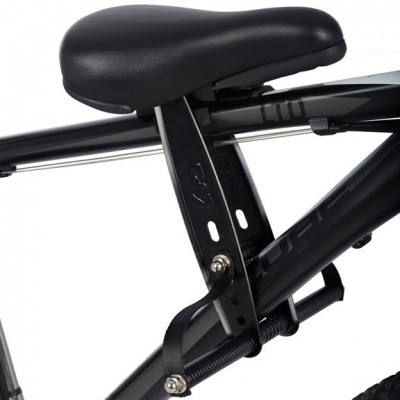
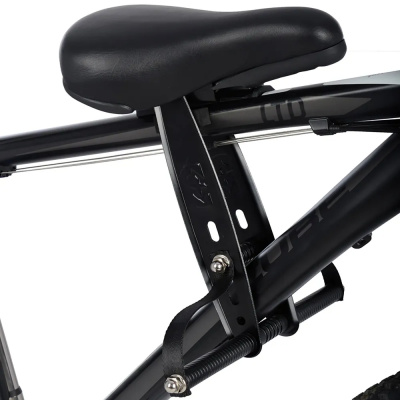
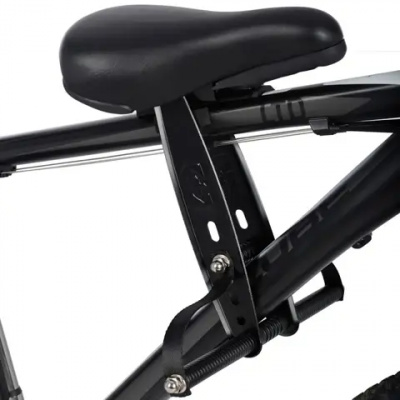
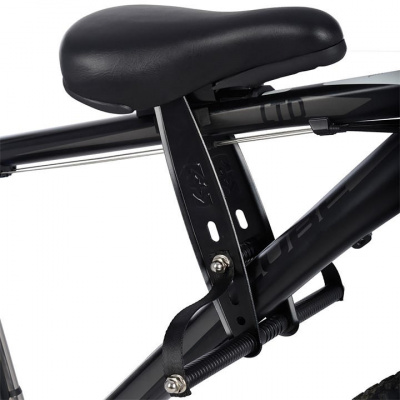
Oxford covers both main mounting approaches. Frame-mounted seats clamp to the seat tube and sit the child behind the rider, while front-mounted options use the top tube to position smaller passengers where you can see them. Which you need depends almost entirely on your bike's geometry and what your child's age and weight demand. Get that decision right first, and the rest follows.
The seats are designed to be fitted without a workshop full of tools, which matters when you're in a car park trying to get out before the rain properly sets in. Quick-release brackets, washable padding, and adjustable footrests mean the day-to-day reality of family riding stays practical rather than painful. If you're comparing Oxford against Hamax child seats or Polisport child seats, Oxford tends to win on straightforward value without cutting corners on the safety essentials.
Prices and availability can change quickly. Delivery charges are not always included in listed prices.
Final price, stock status and delivery terms are set by retailer. We may receive a commission on purchases made.
What Your Bike Actually Needs Before You Buy
Fitting a child seat isn't complicated, but it does require a few honest checks before you commit. Frame-mounted Oxford seats need a bare seat tube clearance of roughly 28 - 40mm in diameter. That rules out a lot of bikes immediately - particularly anything with a top-pull front derailleur, where the cable routing runs directly across the area the frame mount bracket needs to occupy. Carbon frames are also off the list; the clamping forces involved aren't compatible with carbon tubing, full stop.
For the Oxford rear child seat designed to sit over the back wheel, your bike needs a rear rack. Not just any rack - it must be ISO 11243 compliant and rated for a minimum 25kg load. A lightweight alloy commuter rack rated to 10kg won't cut it, and it's genuinely dangerous to assume otherwise. If your bike doesn't have a compatible rack already fitted, check out Oxford pannier racks, which are engineered to pair with the brand's own child seat fittings. That compatibility removes a lot of guesswork.
Cable routing deserves more attention than most instructions give it. When the bracket is clamped in place, walk the full length of your gear and brake cables and confirm nothing is pinched or redirected. A compressed cable doesn't always fail immediately - it degrades over time, which is worse in some ways because the warning signs are subtle.
Oxford Child Seat Hierarchy: Peppy vs. Little Explorer
Oxford's range is focused rather than sprawling, which makes the choice fairly direct. The Oxford Peppy is the rear-mounted option and the one most families will end up with. It handles children up to 22kg - broadly that's nine months through to around five years, depending on the child - and the wrap-around shell gives meaningful lateral support on longer rides or when a tired child starts to slump. The 3-point harness buckles are robust without being fiddly, and the integrated reflectors are a sensible addition for anyone doing school runs into autumn dusk.
The Oxford Little Explorer takes a different approach. It mounts forward of the rider on the top tube, which means your child sits within your arms and eyeline - genuinely useful for younger or more anxious passengers who find being behind you unsettling. The trade-off is a lower weight limit, typically around 15kg, because anything heavier shifts the bike's centre of gravity in ways that compromise steering. It suits the toddler stage well. Once your child grows out of it, you're moving to a rear seat anyway, so factor that transition into your thinking from the start.
The padding differs meaningfully between the two. The Peppy uses thicker, washable, shock-absorbing seat cushions with a non-absorbent outer that wipes clean after a muddy lane - relevant for anyone riding in the kind of persistent drizzle that's just a standard Tuesday in the Peaks. The Little Explorer's padding is adequate for shorter trips but thinner overall, which is fine given its intended use case. Neither seat needs tools for the day-to-day: the tool-free adjustable footpegs with secure retention straps take seconds to reposition as your child grows, and the quick release system on the frame bracket means swapping the seat between bikes (if you have more than one) is genuinely quick rather than theoretically quick.
Where Oxford sits relative to brands like Thule child seats is honest: Thule's premium models carry more adjustment range and refined recline systems, but at a significantly higher price. For most UK family riders doing weekend loops and the occasional commute, Oxford's spec is more than sufficient.
Keeping Things Working Through a UK Winter
The quick-release frame mounting brackets with safety indicators are one of Oxford's more practical features - the visual indicator tells you at a glance whether the seat is properly locked before you set off. But those locking pins and the bracket mechanism generally are vulnerable to the same thing that attacks every bit of steel on a winter bike: road grit, salt, and sitting damp.
Run a dry cloth over the bracket after wet rides and apply a light silicone spray to the locking pins every few weeks through winter. Silicone rather than a heavy lubricant - you don't want a magnet for grit building up around a mechanism you're relying on to keep a child secure. If the indicator starts feeling stiff or inconsistent, that's the time to clean it properly, not after the next ride.
The harness straps and padding will degrade faster if the seat lives outside permanently. Storing it indoors between rides, or at least using a cover, keeps the straps supple and the padding dry. A soaked harness buckle that's been through a few freeze-thaw cycles can become genuinely difficult to release quickly - not a scenario you want to be dealing with in a hurry. The ergonomic helmet recesses moulded into the seat back are a detail worth noting here too: they stop the child's helmet pushing their head forward when they doze off, which means the seat remains comfortable and correctly positioned even on longer rides without constant adjustment.
Pair the seat with a decent Oxford lock if you're leaving the bike anywhere, and consider a bell - a Oxford bell is a simple addition that earns its keep on shared paths where you're carrying a passenger who can't signal for you.
Oxford Child Seats FAQs
How do I fit an Oxford child seat to my bike?
Frame-mounted seats use a quick-release bracket that clamps to the seat tube - check for a bare 28 - 40mm tube diameter and confirm no cables are obstructed once it's in place. Rack-mounted versions clamp directly onto a compatible rear pannier rack. Either way, torque the bolts to the figure stated in the manual; guessing tends to mean under-tightening.
What is the weight limit for an Oxford child bike seat?
The Oxford Peppy rear seat is rated to 22kg, covering most children from nine months up to around five years. The Little Explorer front-mounted seat has a lower limit of approximately 15kg, which keeps steering manageable. Always check the specific model's label - the limit is there for structural reasons, not as a suggestion.
Can I put an Oxford child seat on a mountain bike?
Possibly, but it depends on the bike. Full-suspension frames and those with dropper posts often lack sufficient bare seat tube clearance for a frame-mounted bracket. If your MTB has no rack mounts or a complex rear linkage, a front-mounted top-tube seat like the Little Explorer is usually the more workable option.