
Ortovox Rucksacks
Ortovox rucksacks have quietly become a go-to choice for UK enduro and all-mountain riders who want alpine-grade build quality without sacrificing crash protection. Born in the Alps, these packs translate directly to aggressive trail riding - and the reason is simple: Ortovox engineer protection in from the start rather than bolting it on as an afterthought.
The headline feature is the integrated spine protection system. Depending on the model, you get either the SPS Flex back protector - a viscoelastic SAS-TEC foam insert that sits pliably against your spine at rest but hardens on impact - or the Clasp Spine Protector, a separate insert system that can be swapped out or upgraded. Either way, your vertebrae have meaningful coverage on an OTB moment, which is more than most packs offer.
Beyond the protection story, Ortovox packs are built from PU-coated ripstop nylon that handles trailside brambles, Welsh slate chippings, and gritty Peak District mud without the fabric pilling or delaminating. Hydration bladder routing is clean and well-thought-out, helmet nets work with both half-shell and full-face lids, and the fit systems keep the pack locked on through rough, rooty descents. If you've been carrying a basic daypack on technical rides, the difference is immediate.
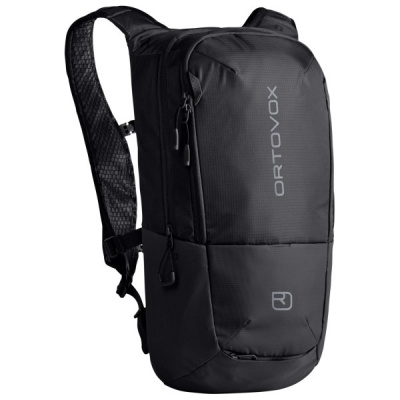
Prices and availability can change quickly. Delivery charges are not always included in listed prices.
Final price, stock status and delivery terms are set by retailer. We may receive a commission on purchases made.
Sizing and Hydration Compatibility
Getting the fit right on any protector pack matters more than people realise. If the back panel doesn't align with your actual spine, the SAS-TEC foam is protecting thin air rather than your vertebrae. Ortovox address this with two torso length options across most models - a Regular fit and a shorter 'S' variant. Measure your torso length (base of neck to the top of your hip bones) before buying. It's worth the 30 seconds; a pack that rides too high will gap away from your lower back on rough ground and lose its protective value.
Hydration bladder compatibility runs up to 3 litres depending on the model. The internal sleeve is dedicated - not shared with a laptop compartment or a first-aid kit - and there's a clearly marked routing port, usually tagged with an H2O symbol, that guides the hose to your shoulder strap. Thread the hose through, clip it to the elastic retaining loops on the strap, and it stays put even when you're wrestling the bike through tight switchbacks. No hunting around for where the port is mid-ride.
Helmet nets on Ortovox packs are more versatile than the basic bungee loops you find on budget options. The elastic webbing stretches to accommodate full-face helmets as well as half-shells, so you're not restricted to one lid type. If you ride different disciplines across a season - enduro one weekend, a more relaxed trail day the next - that flexibility is genuinely useful rather than just a spec sheet detail.
Free Rider vs Traverse: Choosing the Right Series
Ortovox's range for active riding splits into two clear camps, and picking the wrong one is an easy mistake if you go purely on volume or looks.
The Free Rider series is the one to reach for if you're riding enduro, gravity-focused all-mountain, or anything where a crash is a realistic part of the day. The fit is deliberately snug and close-to-body - think of it as the pack equivalent of a race-cut jersey rather than a relaxed trail top. That tight silhouette means it doesn't sway or bounce on technical descents, and it's built around the integrated SPS Flex or Clasp spine protector as a core feature rather than an optional add-on. If you've been running an EVOC rucksack or a Dakine pack and want to step up the protection spec, the Free Rider is the direct comparison point.
The Traverse series does a different job. It's engineered for long days - bikepacking overnights, multi-hour XC efforts, or alpine approaches where you need more volume, better load distribution via the Comfort Contact back system, and robust weather resistance. The Comfort Contact architecture spreads heavier loads across your hips and shoulders more evenly than a slim trail pack can manage, which matters when you're three hours into a day in the Cairngorms with a full kit change and waterproofs stuffed inside. Models in this range typically include an integrated rain cover for when Scottish weather does what Scottish weather does. The trade-off is that the Traverse isn't optimised for maximum protection in crashes - it's a volume and endurance tool, not a gravity weapon.
Worth pairing either series with Ortovox jackets if you're building a layered system for alpine or Scottish conditions, since the fit profiles are designed to work together. Their overtrousers follow the same logic - consistent sizing across the range makes mixing pieces straightforward.
Keeping the Pack Alive Through a UK Winter
British trail riding is hard on kit. Liquid mud gets into everything, grit works into zipper teeth, and a pack that survives a dry summer can start falling apart by February if you don't maintain it. A few minutes after each muddy ride makes a real difference.
Zippers are the first thing to fail. Fine grit from chalk and limestone trails, or the abrasive slurry you pick up on Peak District moorland, works into the teeth and causes them to jam or skip. After a muddy session, run a stiff brush along both sides of each zipper track before the mud dries solid. Once clean and dry, a light application of silicone spray - not WD-40, which degrades the zipper tape - keeps everything running smoothly through the season.
The PU coating on the ripstop nylon is what gives Ortovox packs their water resistance, and machine washing strips it faster than almost anything else. Don't do it. A sponge-down with lukewarm water and a small amount of mild soap is all you need for the shell fabric. Work it in gently, rinse thoroughly, and let the pack air dry naturally. Hanging it near a radiator to speed things up will damage both the PU layer and the foam components.
Speaking of foam - the SAS-TEC viscoelastic foam in the SPS Flex protector needs a little care too. Remove the insert from the pack before drying, and keep it away from direct heat sources. High heat degrades the viscoelastic properties over time, which means the foam loses its ability to stiffen on impact. A room-temperature dry is all it needs. If you're also running Ortovox MTB shorts with integrated protection, the same heat-avoidance rule applies to those inserts.
If you want to compare how Ortovox's durability approach stacks up against other brands in the same space, CamelBak rucksacks and Deuter rucksacks are worth browsing alongside - both take different approaches to fabric protection and back panel ventilation that suit different riding priorities.
Ortovox Rucksacks FAQs
Are Ortovox backpacks waterproof?
Ortovox rucksacks are highly water-resistant - the PU-coated ripstop nylon handles light rain and trail spray well - but they're not fully waterproof under sustained downpours. If you're heading out in classic UK winter conditions, deploy the integrated rain cover that comes with models like the Traverse and you'll be well covered.
How do I fit a hydration bladder in an Ortovox rucksack?
Drop the bladder into the dedicated internal sleeve, then thread the hose through the routing port - usually marked with an H2O symbol near the top of the pack. Run the hose out to your shoulder strap and clip it into the elastic retaining loops. It takes about a minute and keeps the hose accessible without flopping around.
Can you use Ortovox freeride backpacks for mountain biking?
Yes, and they work well for it. The Free Rider series in particular is a strong fit for enduro and all-mountain riding - the snug, close-body silhouette stays put on technical descents, and the integrated SAS-TEC spine protection gives you real coverage rather than just a thin foam pad. Hydration compatibility is built in too, so there's no need to compromise.