
MRP Rear Shocks
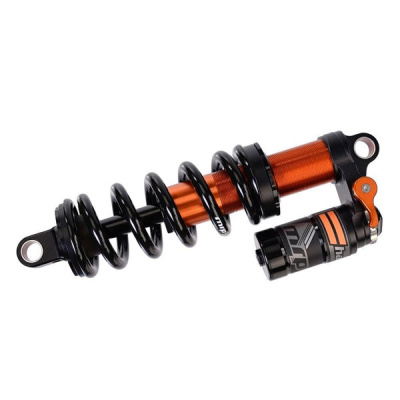
MRP rear shocks take a refreshingly focused approach to coil suspension - one model, dialled obsessively, rather than a sprawling catalogue of half-measures. The Hazzard is that model, and it's earned a serious reputation among enduro riders who want small-bump sensitivity and fade-free damping without fussing over air pressure at the trailhead. MRP ditches the air spring entirely in favour of a coil setup built around a low-pressure IFP that keeps stiction to a minimum from the very first millimetre of travel. The result is a rear end that tracks roots, rocks, and rough ground with a directness that air shocks genuinely struggle to match. For UK riders - where winter mud, freezing starts, and unpredictable conditions are just part of the deal - that consistency across temperatures is a practical advantage, not just a spec-sheet talking point. Whether you're running a longer-travel enduro bike through the Brecon Beacons or chasing chunk on the North York Moors, the Hazzard delivers the same feel on lap one as lap ten. Browse the best UK prices on MRP shocks and springs below.
Prices and availability can change quickly. Delivery charges are not always included in listed prices.
Final price, stock status and delivery terms are set by retailer. We may receive a commission on purchases made.
Decoding the MRP Rear Shock Lineup
MRP keeps things tight. Rather than a confusing family of models, the range centres squarely on the Hazzard coil shock - your configuration choices come from mount type, stroke length, and spring selection, not from picking between a dozen competing products. That focus means every bit of engineering effort goes into one thing done properly.
The first decision is mount type: standard eyelet or trunnion mount. Trunnion has become increasingly common on modern enduro frames - it sits lower and allows for a more compact rear triangle - so check your frame's spec sheet before you order. Getting this wrong means the shock simply won't fit, and it's an easy thing to confirm with a quick look at your bike's manual or the manufacturer's website.
Stroke length is equally critical. You'll need your frame's eye-to-eye measurement (the distance between the two mounting points) and its specified stroke length. These are usually listed in millimetres in your frame's geometry chart - something like 210x52.5 or 230x65. Running the wrong stroke length throws your suspension travel out completely, so double-check before buying. If your frame documentation isn't clear, the manufacturer's customer support is usually quick to confirm.
Then there's the spring. MRP offers standard steel springs and their Enduro SL Progressive Springs - more on those in the next section. Spring rate selection is covered in depth below, but the short version is: get your spring rate right and the Hazzard will reward you with a ride that feels uncannily planted. Get it wrong and no amount of rebound damping adjustment will save you.
The MRP Tech Philosophy: Grip Over Gimmicks
The Hazzard's standout feature isn't a flashy dial or a marketing acronym. It's the low-pressure IFP - Internal Floating Piston - and the difference it makes is immediately tangible. In a conventional shock, higher IFP pressure increases the force needed to get the damper moving at all. MRP's low-pressure design reduces that initial resistance dramatically, which means the shock reacts to small trail chatter before you've consciously registered it. Think of it as the difference between a stiff door hinge and one that swings freely - the Hazzard opens the conversation with the trail early, rather than waiting to be forced into it.
Alongside that, MRP's Shredkote spring coating deserves a mention. It's a hard-wearing finish applied to the coil spring that resists the kind of grit and slate dust that Welsh or Lakeland riding tends to throw at your bike's underside. Springs on uncoated shocks can corrode or abrade surprisingly quickly in genuinely wet, muddy conditions - Shredkote is MRP's practical answer to that.
The Enduro SL Progressive Springs solve a specific and common problem. Many mountain bike frames are designed with a progressive linkage that builds ramp-up naturally as the shock compresses - coil shocks work brilliantly with these. But plenty of frames, particularly older or more affordable ones, use a linear linkage design. Run a standard linear coil spring on one of these and you risk a shock that feels fine mid-stroke but crashes through to bottom-out on hard hits. MRP's progressive spring adds that ramp-up at the coil level instead, so your frame's linkage character doesn't limit your shock choice. It's a neat piece of engineering that widens compatibility considerably.
On high-speed compression and rebound damping, the Hazzard gives you external adjustment that's genuinely usable - not so many clicks that setup becomes a science project, but enough range to tune for your weight, riding style, and the kind of day you're having. Riders coming from Fox rear shocks or RockShox rear shocks will find the adjustment logic intuitive, though the coil character does feel fundamentally different - more linear in feedback, less dependent on getting the pressure exactly right.
Living with an MRP Shock in the UK
British winters are not kind to air shocks. Cold air contracts, which means the spring rate you set on a mild October morning can feel noticeably stiffer by the time you're halfway up a January climb in the Pennines. Coil shocks don't have that problem. The Hazzard delivers the same spring rate at 2°C as it does at 15°C - no pre-ride pressure checks, no thermal drift mid-ride. That alone makes a compelling case for the switch if you ride through the colder months.
Mud and water ingress is the other British reality. Air shock seals are more vulnerable to contaminated damper fluid and general muck than a well-built coil unit, and the Hazzard's simpler internals mean fewer things to go wrong after a proper soaking on the Quantock Hills or a spray-fest at Glentress. You'll still want to rinse it down after muddy sessions, but the maintenance burden is genuinely lower day-to-day.
Spring rate selection is where riders often go wrong, and it's worth being precise. Calculate your sag weight as your total riding weight - that means you in your kit, with your helmet, hydration pack, and anything else you typically carry. In UK winter conditions, that kit weight adds up fast: heavy waterproof jacket, full-finger gloves, a loaded pack. Riders who calculate sag using their body weight alone and then wonder why their shock feels harsh on big hits have usually just underestimated their loaded weight. Aim for around 25 - 30% sag as a starting point, then fine-tune from there. MRP publishes spring rate recommendations based on rider weight and leverage ratio - use them as your baseline rather than guessing.
If your frame runs a linear linkage and you want to avoid harsh bottom-outs, the Enduro SL Progressive Springs are the sensible choice here rather than hoping your high-speed compression adjustment picks up the slack. Pair the Hazzard with MRP chain guides and MRP fork spares if you're already in the MRP ecosystem - it keeps your setup consistent and sourcing straightforward. For riders weighing alternatives, Cane Creek rear shocks and Öhlins rear shocks occupy a similar premium coil space and are worth comparing on stroke length availability and damper adjustability before committing.
MRP Rear Shocks FAQs
Is the MRP Hazzard a good shock?
The Hazzard is genuinely well-regarded in the enduro world. Its low-pressure IFP keeps stiction low and small-bump sensitivity high, which translates to real traction gains on rough ground. It's a focused, well-engineered product rather than a feature-packed box-ticker - if coil suspension suits your riding, it's one of the better options at its level.
How do I choose the right spring for my MRP shock?
Work from your total riding weight - body weight plus all your kit, pack, and gear - then factor in your frame's leverage ratio. MRP publishes guidance to help you land on the right rate. If your frame has a linear linkage design, go for the Enduro SL Progressive Springs to build in bottom-out resistance that a standard linear coil can't provide on its own.
Can I run an MRP coil shock on any mountain bike?
Not quite. Frame compatibility depends on linkage design, physical clearance, and whether the frame manufacturer approves coil shock use - some frames aren't designed to handle coil loads through the linkage. Always check your frame's spec and the manufacturer's guidance before buying. Trunnion versus standard eyelet mount is also something to confirm upfront.