
Masterlock Locks
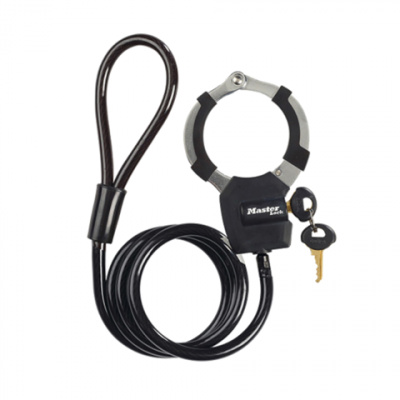
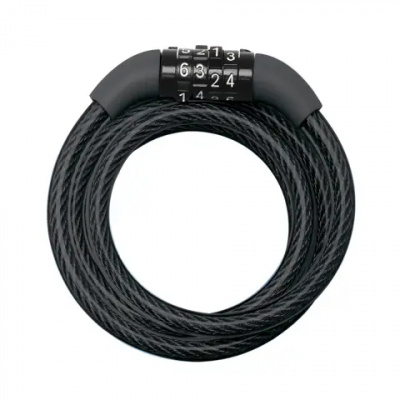
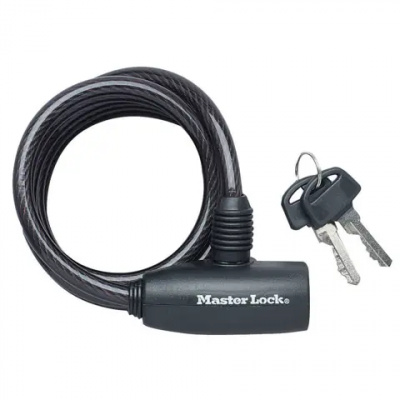
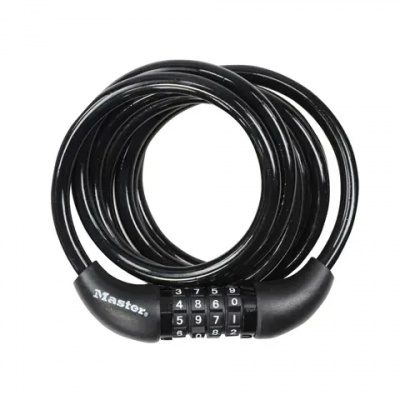
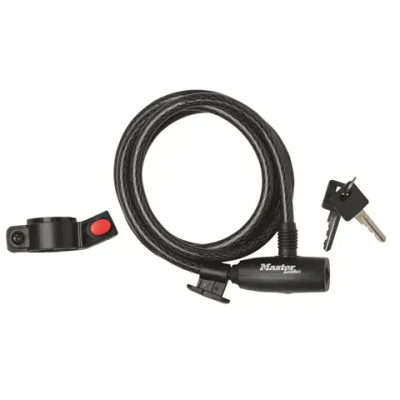
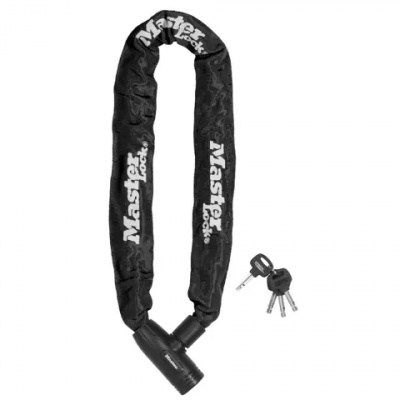
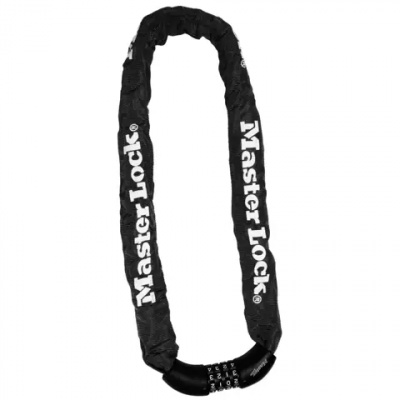
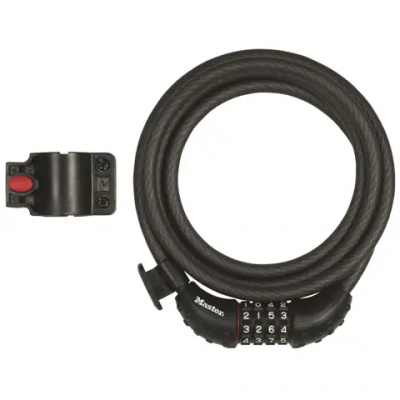
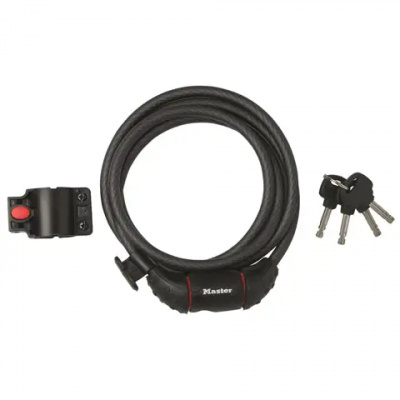
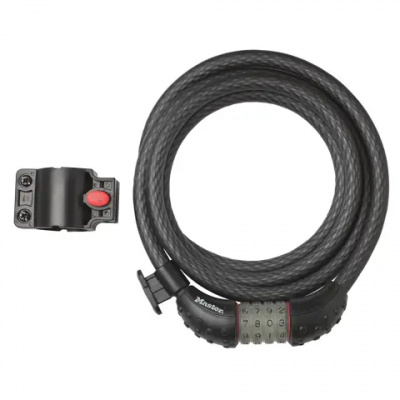
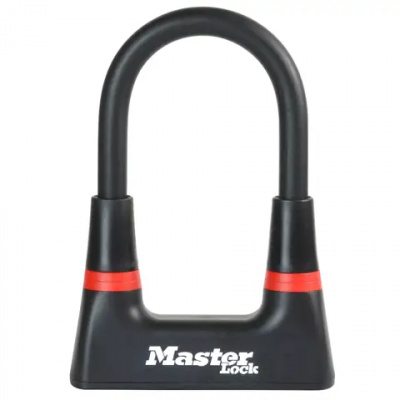
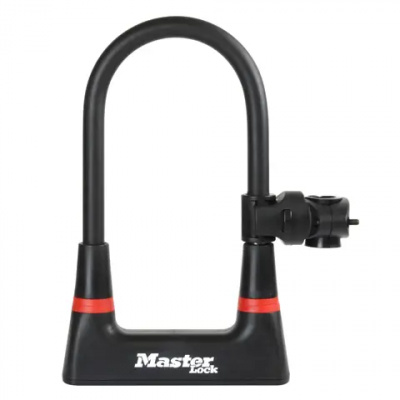
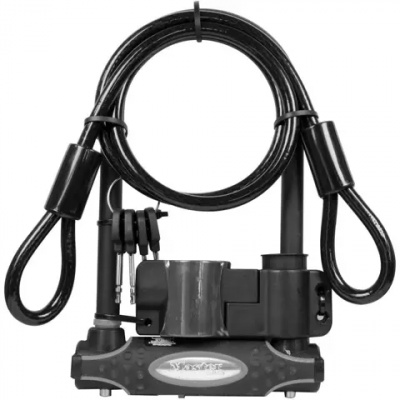
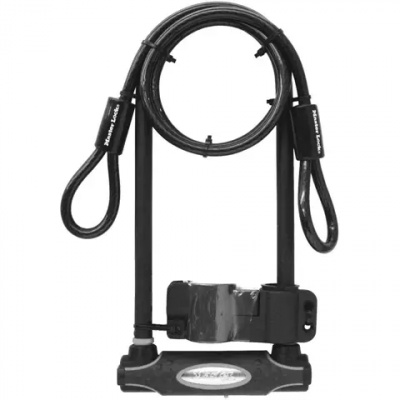
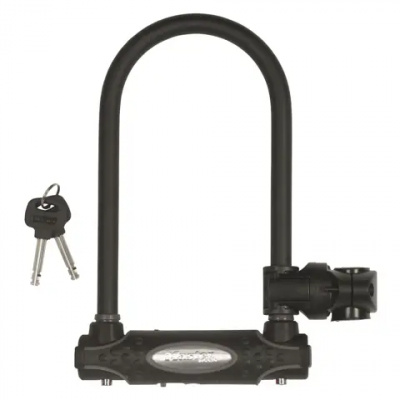
Masterlock bike locks cover a wide range of security needs, from a quick café-stop cable to a full-weight, insurance-grade D-lock for your commuter or e-bike. The range is broader than many riders expect. At the lighter end you've got combination cables that clip away neatly into a jersey pocket; step up and you'll find hardened steel D-locks and chains built to satisfy UK insurers. The standout design in the lineup is the Street Cuff - a cuff-style lock using laminated steel links engineered to remove the leverage points that bolt croppers rely on. That's a genuinely different approach to the problem, not just a heavier version of something you've seen before. Sold Secure ratings run through the heavier models, which matters if your insurer specifies a minimum standard (many do). Mounting brackets are included across most of the D-lock range, so frame fitting is straightforward for the majority of round-tube road and commuter bikes. If you're locking an e-bike with an oversized downtube, it's worth checking shackle clearance before you buy - more on that below. Compare the full UK price range on Masterlock security in the grid above, then read on to work out which lock type actually suits your riding.
Prices and availability can change quickly. Delivery charges are not always included in listed prices.
Final price, stock status and delivery terms are set by retailer. We may receive a commission on purchases made.
UK Lock Ratings and What They Mean for Your Insurance
The Sold Secure rating system is the benchmark UK insurers use, and it runs Bronze, Silver, Gold, and Diamond. Bronze covers lightweight deterrents - useful for low-risk spots, but most home and specialist cycle insurance policies require at least Silver, and many now ask for Gold if your bike is worth more than a few hundred pounds. Check your policy wording before you buy; it's a five-minute job that could save a rejected claim.
Several Masterlock D-locks and chains carry Sold Secure Gold certification, which puts them in the same bracket as the heavier options from Abus and Kryptonite. The Masterlock D-lock Sold Secure models at Gold level are the ones to focus on if your insurer specifies a rated lock. For lighter use - track pumps at trail centres, café stops where you're keeping an eye on the bike - a Silver-rated cable or chain is often a proportionate choice.
Frame mounting brackets on standard Masterlock D-locks fit most round tubes in the 22 - 35mm range, which covers the majority of road, hybrid, and hardtail frames. Aero frames with deep-section seat tubes can be trickier; the shackle clearance on a standard D-lock may be too tight to pass around the tube and a fixed object simultaneously. E-bike downtubes are another consideration - battery-integrated frames are often 60mm or wider, so measure your tube before assuming a D-lock will clear it. A chain lock or the Street Cuff design sidesteps this entirely, since neither relies on a fixed shackle span.
D-Locks, Chain Locks, and the Street Cuff - What's the Difference?
The classic D-lock (U-lock) format is still the most theft-resistant shape for the weight. A hardened steel shackle with a double deadbolt locking mechanism - where both ends of the shackle lock into the crossbar - makes prying dramatically harder than a single-bolt design. Masterlock's heavier D-locks use this dual locking lever system, and it's one of the features worth confirming on whichever model you're looking at. The trade-off is the fixed internal dimensions: you need to be able to pass the shackle around your frame, wheel, and a solid anchor point simultaneously, which takes a bit of planning at unfamiliar locations.
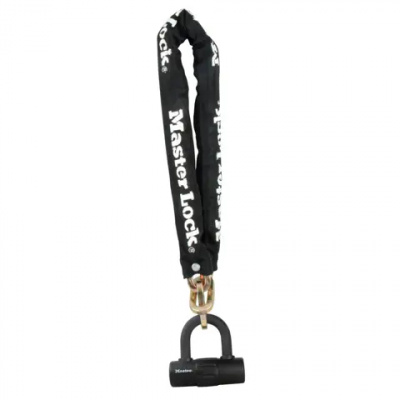
Chain locks give you more flexibility in how you route the lock, and they're better suited to awkward anchor points or locking two bikes together. The trade-off is weight - a security-equivalent chain will be noticeably heavier than a D-lock, and carrying it in a bag rather than a frame mount changes how it feels on longer rides.
The Street Cuff is the most distinctive design in the Masterlock range. It uses hardened laminated steel links rather than a single shackle or chain, and the link construction is specifically designed to eliminate the flat surfaces and pivot points that give bolt croppers mechanical advantage. It's a compact format, closer to a D-lock in size but with the flexibility advantage of a short chain. Worth considering if you want something that packs smaller than a chain but covers anchor points a standard D-lock shackle won't reach. The disc key cylinder used across the higher-security models adds anti-pick and anti-drill resistance at the lock mechanism itself - useful, since the cylinder is often the secondary attack point once a thief rules out cutting the shackle.
If you're after something from a different angle, Hiplok and Squire offer comparable security formats worth comparing. For cable locks and lighter supplementary security, Oxford is a solid point of comparison too.
Looking for replacement mounting brackets or keys? Head over to our dedicated Masterlock Spare Parts page to keep your current lock in action.
Keeping the Mechanism Working Through a UK Winter
British winters are hard on lock cylinders. Road grit and rain rinse factory lubrication out of the keyway after a few months of daily use, and if you're commuting through salted roads between November and March, that process accelerates. The result is a disc cylinder that starts to feel stiff, then sticky, and eventually jams with the key half-turned - usually on a cold Tuesday morning when you're already running late.
The fix is straightforward but the product choice matters. Use a dry PTFE or silicone-based lock lubricant, applied directly into the keyway every three to four months. Give it a moment to penetrate, then work the key in and out a few times to distribute it. The vinyl coating on the shackle and body protects the steel, but the cylinder itself is open to the elements every time you insert the key.
Avoid standard WD-40. It displaces moisture initially, but it's a solvent-based product that strips out what lubrication remains, and as it dries it leaves a residue that binds with grit to form a grinding paste inside the mechanism. A dedicated dry lock lubricant - graphite powder or PTFE spray - is a different product category entirely and is what the cylinder actually needs. This applies equally to an insurance approved Gold-rated D-lock on a commuter and a lighter combo lock on a weekend bike; the cylinder maintenance is the same regardless of security grade.
If a cylinder has already seized, a few drops of penetrating lock lubricant (not WD-40) left overnight will often free it. If the shackle body itself is corroding at the entry points, that's usually a sign that the vinyl coating has been breached - worth inspecting annually, particularly on locks stored outdoors.
Masterlock Locks FAQs
Are Masterlock bike locks Sold Secure rated?
Several Masterlock D-locks and chains carry Sold Secure Silver or Gold ratings. Always check the specific model's rating on the packaging - your UK cycle insurance policy will likely specify a minimum standard, and Gold is increasingly required for higher-value bikes. Don't assume; verify before you buy.
How do I stop my Masterlock cylinder from seizing in winter?
UK rain and road salt strip factory lubrication from the keyway fairly quickly. Every three to four months, flush the cylinder with a dry PTFE or silicone-based lock lubricant and work the key in and out to distribute it. Avoid standard WD-40 - it attracts grit and ultimately makes the problem worse.
Can I get replacement keys or brackets for my Masterlock?
Yes. Replacement mounting brackets and keys are available for most current Masterlock models. Visit our <a href="https://bikesy.co.uk/b/masterlock/spare+parts/">Masterlock Spare Parts</a> page to find compatible items and keep your existing lock running rather than replacing the whole thing.