
Industry9 Gravel Wheels
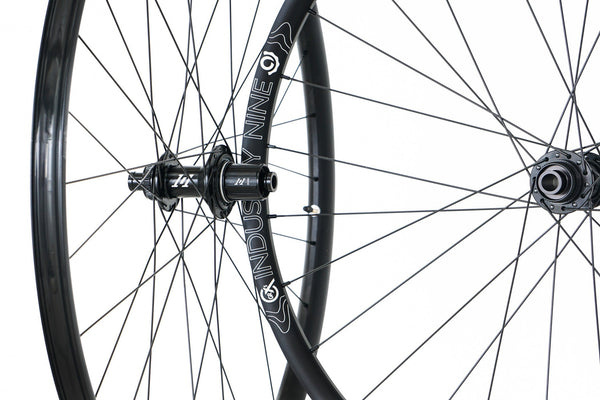
Industry Nine gravel wheels have built a serious reputation on the back of one thing: engagement speed that makes other hubs feel like they're thinking about it. Handbuilt in Asheville, North Carolina, these wheels are precision-machined from the hub outward, and the difference is immediately obvious the moment you drop a steep, loose climb and need power right now. No dead spot. No slop. Just drive.
The range splits into two clear camps. The premium UL250 series pairs lightweight carbon or alloy rims with the Hydra Drive hub - 690 points of engagement and a 0.52° pick-up angle that's about as close to mechanical telepathy as a freehub gets. Step down to the 1/1 GRCX series and you're still getting a genuinely capable wheel with a dual-phased 6-pawl system and 90 points of engagement - meaningful performance at a more accessible price point.
Both lines are tubeless ready, available in 700c and 650b, and built to survive the kind of bridleway grot that writes off lesser hubs by November. If you're weighing up whether I9 is the right move for your gravel bike, read on - we've broken down the specs, the differences, and exactly what you need to check before you buy.
Prices and availability can change quickly. Delivery charges are not always included in listed prices.
Final price, stock status and delivery terms are set by retailer. We may receive a commission on purchases made.
What Fits and What Doesn't: Axle Standards, Rotor Mounts, and Rim Widths
Getting compatibility right before you click buy saves a painful return trip to the post office. Industry Nine gravel wheels use standard 12x100mm front and 12x142mm rear thru-axle spacing, which covers the vast majority of modern disc gravel bikes without issue. Rotor fitment is worth checking: most I9 gravel wheels use Centerlock mounts, so if your frame and fork run 6-bolt rotors you'll need a Centerlock-to-6-bolt adapter - a cheap fix, but one to factor in.
On rim width, I9 gravel hoops typically run 24mm internal or wider. That's intentional. A wider internal bed opens your tyre carcass properly, giving a more rounded profile that corners predictably and runs lower pressures without the risk of burping. Practically speaking, it means these rims pair best with tyres in the 38c - 50c range - ideal for most UK gravel use, from hardpack forest roads to the muddier bridleways you'd find cutting across the South Downs or into the Kielder Forest.
For drivetrain-specific fitment - whether you're running XDR, HG, or MicroSpline - freehub body compatibility is a separate conversation. Check our Industry Nine hubs page for the full range of freehub bodies and spare drivetrain interfaces. And if you're setting these up tubeless for the first time, our tubeless valves listings cover everything you'll need for a clean, reliable setup.
Hydra vs 1/1: What You Actually Get for the Price Difference
This is the question most people ask when they first look at Industry Nine's gravel range, and the honest answer is: both are good, but they're good in different ways.
The 1/1 Drive system uses a dual-phased 6-pawl arrangement delivering 90 points of engagement - that's a 4° pick-up angle. For context, a lot of well-regarded hubs from brands like Mavic or DT Swiss sit in a similar or slower engagement range at this price bracket. The 1/1 GRCX wheels use traditional J-bend steel spokes laced to a quality alloy rim. They're solid, serviceable, and genuinely capable on technical gravel - you won't feel short-changed on a lumpy Peak District loop.
Step up to the Hydra Drive and the numbers shift dramatically. 690 points of engagement gives you a 0.52° pick-up angle - the kind of near-instant drive that matters most when you're grinding up a wet, rooty Welsh lane and can't afford a half-pedal stroke of nothing before the power bites. The Hydra hubs also use direct-thread aluminium spokes on the premium system wheels, which eliminates traditional nipples entirely. That's a stiffer, more consistent build that holds tension better over time and resists the spoke wind-up that can plague cheaper wheels on rough surfaces.
The UL250 builds also open up lighter rim options - including carbon - which shifts the overall weight meaningfully for riders who care about that number. If you're comparing against something like ENVE gravel wheels at the top end, I9's Hydra builds are competitive on engagement and build quality, with the added advantage of a more straightforward service story. The straight-pull spokes on select builds add further lateral stiffness - handy when you're loading up a bikepacking rig or sprinting out of a dip.
Worth being straight about the trade-off: the Hydra hub's complexity means it requires a little more attention to keep running perfectly - more on that below. If you want fit-and-forget simplicity, the 1/1 GRCX is genuinely the easier long-term relationship.
Keeping I9 Wheels Running Through a British Winter
UK riding conditions are a particular kind of test for any hub. Winter grit turns puddles into grinding paste, boggy bridleways push water into every seal, and a hub that can't keep its internals protected will start feeling notchy by February. Industry Nine address this with cartridge bearing designs and well-sealed hub shells on both the Hydra and 1/1 lines - better than many rivals at resisting the fine abrasive that works its way into cheaper unsealed systems.
One genuinely practical detail: the endcaps on I9 hubs are tool-free to remove. Pull them off after a grimy ride, rinse the drive ring area, and you've done the most important part of keeping the freehub healthy without needing a specialist workshop. It takes two minutes. Do it after rides in proper filth and you'll extend the service intervals considerably.
The Hydra's 690-point system is more involved to service than the 1/1's simpler pawl arrangement when you do eventually need to go inside - that's a real consideration if you'd rather handle maintenance yourself in the garage rather than send the wheels away. Hope gravel wheels offer a similar philosophy of UK-serviceable simplicity if that's a priority for you.
For bearing replacements, hub servicing tools, and any standalone hub upgrades, our Industry Nine tools page covers the specific drivers and cassette tools you'll need. If you're also looking at building a gravel and trail setup around the same hub platform, the Industry Nine MTB wheels range uses the same Hydra and 1/1 hub architecture, so your maintenance knowledge carries straight across.
Industry9 Gravel Wheels FAQs
Are Industry Nine wheels worth the money?
For most riders who push their gravel bikes hard, yes. The engagement speed is genuinely noticeable on technical climbs, and the build quality means a well-maintained set can outlast several frames. Factor in the serviceable hub design and you're looking at a long-term investment rather than a consumable - which changes the maths considerably.
What is the difference between Industry Nine Hydra and 1/1?
The Hydra hub runs 690 points of engagement at 0.52° - near-instant pick-up - using direct-thread aluminium spokes on premium builds. The 1/1 uses a 6-pawl system with 90 points of engagement (4°) and traditional J-bend steel spokes. Both are durable and serviceable; the Hydra is faster and lighter, the 1/1 is simpler to maintain and easier on the wallet.
Can I use Industry Nine gravel wheels on a road bike?
Yes, as long as your road bike runs disc brakes and has enough frame clearance for a wider internal rim profile - typically 24mm or more. They work well on all-road and endurance builds, offering better tyre support and the option to run lower pressures for comfort on longer days.