
Giant Time Trial & Triathlon Bikes
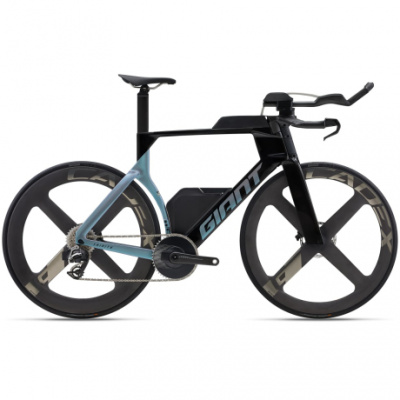
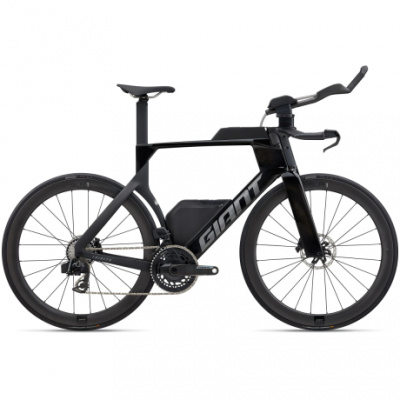
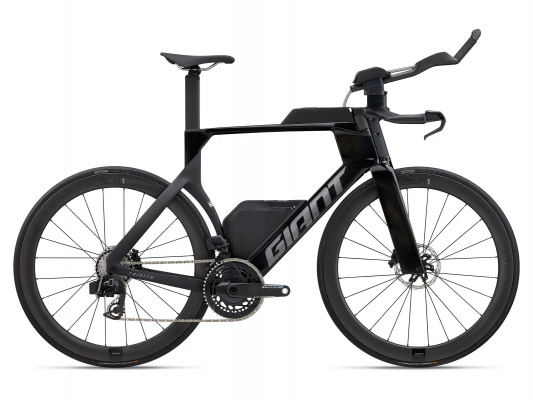
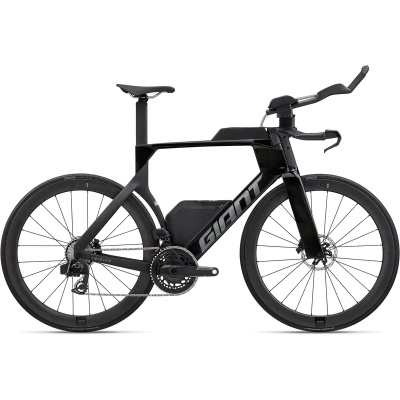
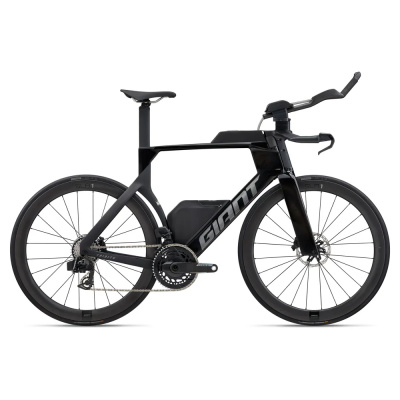
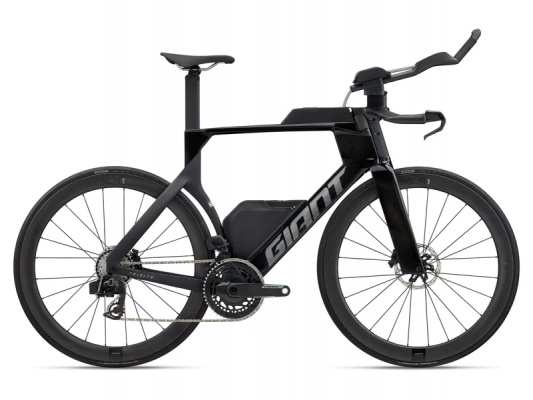
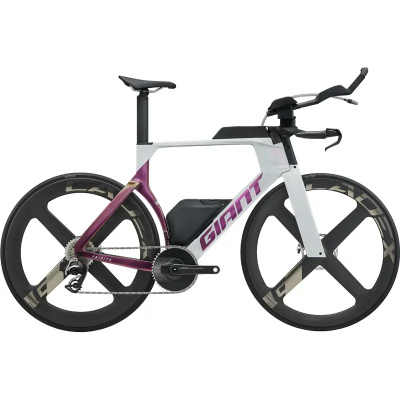
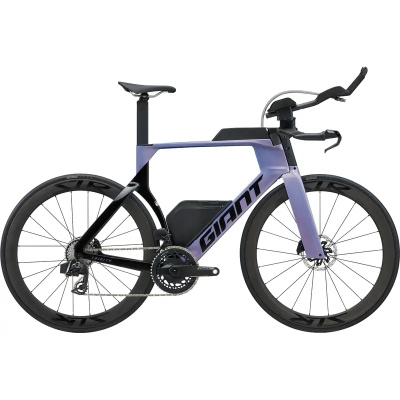
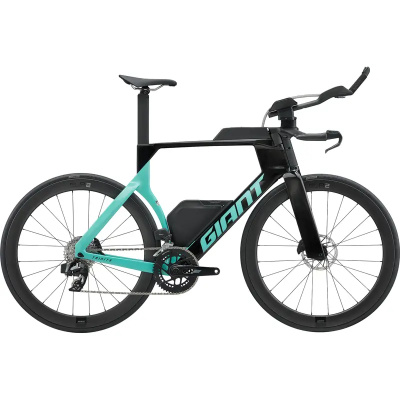
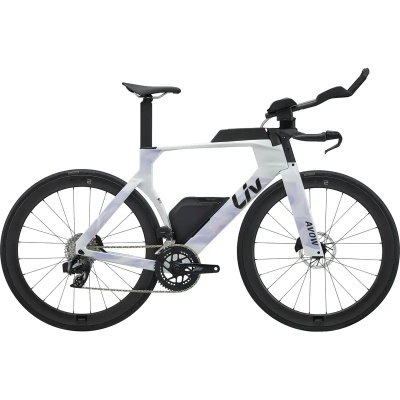
Giant time trial and triathlon bikes are built around one clear objective: getting you from start line to finish line faster than anything else on the road. The Trinity platform has been a fixture at world-class TT and triathlon events for years, and for good reason. Giant's AeroSystem Shaping Technology applies CFD modelling and wind-tunnel data to every tube profile, so the frame is doing real aerodynamic work rather than just looking the part.
There are two distinct directions in the range. If you're chasing CTT rankings on exposed A-road courses, the TT-spec models deliver a UCI-legal setup with a stripped-back cockpit and compliant geometry. If your season revolves around 70.3 or full Ironman distances, the Tri models add the AeroVault System - integrated hydration and nutrition storage that actually reduces drag compared to bolted-on bottles and bento boxes.
Either way, you're getting Advanced-grade composite carbon construction and a bike that's been developed alongside WorldTour riders. Compared to boutique aero brands like Cervélo, Giant tends to offer that same wind-tunnel pedigree at a more accessible price point across the range. Worth knowing before you start comparing specs.
Prices and availability can change quickly. Delivery charges are not always included in listed prices.
Final price, stock status and delivery terms are set by retailer. We may receive a commission on purchases made.
Decoding the Giant TT and Triathlon Lineup
The Trinity family splits into two clear camps, and picking the wrong one for your discipline costs you more than seconds. The TT-spec models are stripped right back - UCI-legal forks, a compliant base bar and aero extensions setup, no integrated storage. These are built for the clock, for CTT events, district championships, and anyone whose racing life is governed by UCI regulations. Nothing dangling off the front, nothing to distract from the numbers.
The Tri models take a different approach. The AeroVault System is baked into the frame design from the outset, so integrated hydration and nutrition storage sit within the bike's aero envelope rather than outside it. For Ironman and 70.3 racing, that matters enormously - you're on the bike for hours, and fuelling on the move without torching your aerodynamics is a genuine performance advantage.
Then there's the Advanced versus Advanced Pro question. Both use Giant's Advanced-grade composite carbon, but the Pro steps up with a higher-specification carbon fork, a fully integrated aero cockpit, and - on the Tri variant - the AeroVault system included. The standard Advanced model runs a slightly simpler front end, which is honestly easier to work with if you're setting your own position at home rather than in a fit studio. If you're new to TT geometry or still dialling in your fit, that adjustability is worth more than it might first appear. Trek's Speed Concept takes a similar modular approach at the top end, but Giant's range breadth across price points is hard to argue with.
The Giant Tech Philosophy: AeroSystem Shaping and AeroVault
AeroSystem Shaping Technology is the foundation everything else builds on. Giant developed the tube profiles using a combination of computational fluid dynamics and physical wind-tunnel testing - not one or the other. The result is a frame where every cross-section, every junction between tubes, has been optimised to manage airflow rather than simply looking aero. Flat-backed seat tubes, truncated aerofoil down tubes, carefully shaped fork legs: each detail is a deliberate response to data rather than a design trend.
What's less obvious - and genuinely clever - is how the AeroVault System works on the Tri models. Most riders assume that adding hydration to a TT bike hurts aerodynamics. When it's bolted on as an afterthought, it does. But because Giant designed the AeroVault into the frame's overall aero envelope from day one, the integrated system actually produces less drag than an equivalent bare frame with a conventional bottle cage and bento box added. The hydration sits within the bike's shadow. That's a meaningful difference on a four or five-hour Ironman bike leg.
The Advanced-grade composite layup uses a custom resin system and carbon fibre schedule developed in-house, balancing stiffness at the bottom bracket and head tube - where watt transfer and steering precision matter most - with enough compliance in the right places to keep you functional deep into a long-distance race. It's not just about peak stiffness numbers. For upgrades that complement this kind of platform, check our dedicated Giant power meters page and our Giant saddles page - both are worth visiting before you finalise your build.
Living with a Giant Trinity on UK Roads
British TT courses don't always play nicely with aero bikes. Exposed dual carriageways and open A-road courses can throw crosswinds at you from angles that make deep-section wheels feel like sails. The Trinity's tube shapes are designed with yaw stability in mind - the AeroSystem profiles manage crosswind loading better than older, more conventional aero frames - but it's still worth being honest about deep-section wheel choice on particularly gusty courses. Many experienced UK TT riders run a shallower front wheel on exposed days and save the deep dish for sheltered circuits. The bike doesn't fight you in a gust, but it won't make the decision for you either.
Wet riding is just part of the deal in the UK, and integrated brake systems need a bit more attention than traditional exposed calipers. Whether you're running rim or disc, the internal cable routing on the Trinity means you should flush and inspect cables more regularly than you might on a conventional road bike - particularly if you're training through winter. It's not a dealbreaker, just a maintenance rhythm to build in. Same goes for disc rotor clearance after any wheel removal; integrated frames are precise, so take your time re-seating wheels correctly.
Tyre clearance is genuinely relevant on British chip-seal. Most Trinity models will accommodate a 28c tyre, and running tubeless at slightly lower pressure is a sensible move for rougher surfaces - you pick up compliance without the aero penalty of a wider tyre ballooning at speed. For puncture-resistant options that won't compromise your aero setup, our Giant road tyres page is a good place to start. Brands like Scott take a similar approach to tyre clearance on their Plasma platform, but Giant's fitment options tend to be well-documented and straightforward to navigate.
Giant Time Trial & Triathlon Bikes FAQs
Is the Giant Trinity UCI legal?
The Trinity Advanced Pro TT model is fully UCI compliant and designed specifically for time trial racing under CTT and UCI rules. The Tri-specific models with the AeroVault hydration and storage system attached don't meet UCI regulations - that kit is built for triathlon, where those rules don't apply.
What is the difference between Giant Trinity Advanced and Pro?
The Advanced Pro uses a higher-specification carbon fork, a fully integrated aero cockpit, and - on Tri variants - the AeroVault system as standard. The standard Advanced model has a simpler front end that's easier to adjust yourself, which makes it a more practical starting point if you're still refining your TT position.
Can you use a Giant Trinity for Ironman?
Yes, and the Trinity Advanced Pro Tri is specifically built for it. The AeroVault system handles integrated hydration and nutrition storage within the bike's aero profile, so you can fuel through a long race without bolting on bottles that compromise your drag. It's a practical, well-thought-out solution for 70.3 and full Ironman distances.