
Fizik Aero TT Helmets
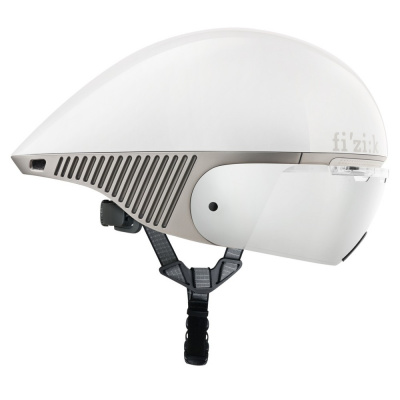
When the clock is running, aerodynamic drag is the one opponent you can actually plan for - and Fizik Aero TT Helmets exist precisely to help you beat it. Engineered for time trialists, triathletes, and track racers, these helmets combine wind tunnel tested teardrop profiles with seamless magnetic visors to smooth airflow from crown to shoulders, translating directly into measurable watt savings on race day. The drag-reducing tail design isn't just visual - it's functional geometry that rewards riders who can hold a committed TT position.
Fizik has always sweated the ergonomic details, and these helmets carry that logic through to the fit: a secure, pressure-free retention system that lets you stay low and locked in without shifting or fidgeting. That matters whether you're targeting a club 10-mile on a blustery dual carriageway or grinding through the bike leg of a full Ironman. The internal EPS foam delivers the impact protection you need without the bulk that costs you speed. Anti-fog visor coatings handle the damp, overcast starts that characterise so many UK early-morning races. Free speed isn't always cheap - but a quality aero helmet is about as close as it gets.
Prices and availability can change quickly. Delivery charges are not always included in listed prices.
Final price, stock status and delivery terms are set by retailer. We may receive a commission on purchases made.
Aerodynamic Tech and How It Handles UK Conditions
The foundation of every Fizik aero TT helmet is a wind tunnel tested teardrop profile - that elongated, stub-tail shape isn't aesthetic indulgence, it's drag reduction made physical. Air attaches cleanly to the shell, travels the length of the tail, and separates cleanly at the rear rather than tumbling into turbulence behind your head. The result is a measurably lower drag coefficient compared to a standard vented road lid, and those watt savings compound over 25 or 40 kilometres.
The magnetic optical visors deserve particular attention. Rather than fiddly press-studs or clip mechanisms that can fail mid-race or with cold fingers on a 6am start line in October, the magnetic integration clicks the visor into place positively and releases cleanly. The anti-fog coating is properly relevant to UK riding - humid summer mornings on exposed courses mean visors mist up fast, and a fogged visor at 45kph is a real safety problem, not just an inconvenience. Fizik's coating keeps the optical path clear through sustained high-intensity efforts.
Internal ventilation channels are routed to move air across the scalp without punching holes in the aerodynamic footprint. It's a careful compromise: enough airflow to prevent overheating during a flat-out 10-mile effort in August, but channelled so tightly that the external shell profile stays clean. On crosswind-exposed UK courses - the kind of open dual carriageway stretches common in eastern England and the Fens - the helmet's stability under lateral gusts matters as much as straight-line drag numbers. A well-fitted Fizik TT helmet sits low and close, reducing the lever arm that crosswinds exploit. If you're comparing options, Kask aero TT helmets and Giro aero TT helmets take different approaches to the same crosswind challenge - worth a look if you race regularly on exposed courses.
Getting the Fit Right for Your Aero Position
A TT helmet is unlike any other lid in one critical respect: it only works aerodynamically when it's fitted to your actual race position. Put the helmet on standing upright and it might look fine - drop into your tuck on the tribars and the tail either sits flush against your back, or it points skyward like an airbrake. If it's the latter, you're losing all the drag benefit the teardrop profile was designed to deliver. Get your fit assessment done in your riding position, not standing in front of a mirror.
Fizik's retention systems are designed for a snug, even wrap around the skull without pressure hotspots - important when you're in a fixed, aggressive position for 20 minutes or more and can't reach up to adjust anything. Sizing runs consistently, but head shapes vary, so check the circumference guidance carefully. The helmet should feel planted, with no rocking fore-and-aft when you shake your head. Any movement becomes amplified at speed and disrupts the clean airflow the teardrop profile depends on.
It's worth being clear about what this category covers and what it doesn't. These helmets are purpose-built for discipline-specific, solo efforts - TT, triathlon bike leg, track pursuit. If you're looking for a vented, mass-start race helmet for crits or road races with a bunch, the broader Fizik Helmets range covers that ground. A Fizik aero TT helmet in a road race peloton is overkill on the aero side and a compromise on ventilation and peripheral vision - use the right tool. MET aero TT helmets are another option worth comparing if you want to see how the fit philosophy differs across the category.
Building a Complete Aero Setup and Keeping the Kit Clean
The helmet is the most visible part of your aero package, but the watt savings stack when you address the whole system. Pairing a Fizik TT helmet with Fizik overshoes closes off the aero gap around your feet and ankles - an area that generates surprising drag at race speeds - while Fizik road shoes keep the power transfer stiff and the profile low. It's not about brand loyalty; it's that these components are designed with compatible aerodynamic logic, and the transitions between them are smoother as a result.
Care matters more than most riders acknowledge. The magnetic visor is the component most likely to suffer from careless cleaning - anti-fog coatings are delicate, and a dry cloth or abrasive cleaner will scratch them into opacity within a season. Use a soft microfibre cloth dampened with clean water, let it drip-dry, and store the visor in its protective sleeve when not in use. After a humid British summer TT - the kind where you finish soaked in sweat before you've even started - remove the internal EPS foam pads and wash them by hand in mild soapy water. Let them air dry fully before reinserting. Bacteria builds fast in warm, damp foam, and the smell becomes difficult to shift if you let it establish. It takes five minutes and extends the pad life significantly.
The EPS foam shell itself shouldn't be submerged or left in direct sun for extended periods - UV degrades the foam over time, quietly reducing its impact absorption without any visible sign. Store the helmet in its bag, out of direct sunlight, and inspect the EPS annually for any compression or cracking. A TT helmet that's taken a knock - even a light one on a hard surface - should be replaced. EPS compresses on first impact and doesn't recover.
Fizik Aero TT Helmets FAQs
How much time does an aero TT helmet save?
A quality aero TT helmet is one of the most efficient speed upgrades available. Wind tunnel data consistently points to savings of 30 to 60 seconds over a 40km time trial compared to a standard vented road helmet. The catch: those numbers assume you can hold a strict, static aero tuck throughout. If your position moves around, the saving shrinks.
Can you use a TT helmet for road racing?
Technically possible in some events, but not a good idea in practice. TT helmets compromise ventilation, add weight relative to aero road lids, and narrow your peripheral vision - all of which matter in a bunch. For mass-start racing, a dedicated aero road helmet does a better job on every count. Save the TT lid for solo efforts.
How should an aero helmet fit for time trials?
Snug, with no pressure points, and critically - the tail must sit flush against your back when you're in your actual race tuck. If the tail angles upward in your riding position, it creates drag rather than reducing it. Always check the fit while holding your TT position, not standing upright. That's the only assessment that counts.