
Ere Research Gravel Wheels
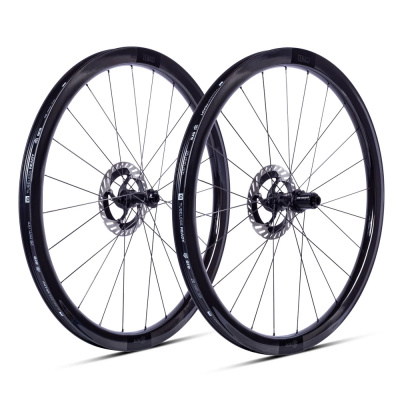
Ere Research gravel wheels - particularly the Tenaci line - are built around a clear idea: that a wheelset should handle chalk slurry on the South Downs on Saturday and feel equally at home on a fast gravel road on Sunday. Wide internal rim profiles (typically 24mm to 28mm) give modern, high-volume tyres the support they need to run lower pressures without squirm, which translates directly into grip and comfort on rough ground. That's not a small thing when a bridleway turns to flint halfway through your ride.
The range splits into two distinct directions. Go carbon and you get the Tenaci's specific layup tuned for vertical compliance alongside lateral stiffness - the kind of combination that keeps your watts going forward rather than disappearing into flex. Go alloy and you get a wheel that'll absorb rock strikes without drama and take a knock without requiring an immediate wheel-build intervention. Both options are built around Ere Research's proprietary Iona hubs, which use precision-machined alloy shells and sealed cartridge bearings designed to keep turning cleanly through the kind of grit and mud that UK winters reliably serve up. If you're upgrading from stock wheels or stepping up from an older rim-brake setup, these are a serious option worth comparing.
Prices and availability can change quickly. Delivery charges are not always included in listed prices.
Final price, stock status and delivery terms are set by retailer. We may receive a commission on purchases made.
Fitting These Wheels to Your Gravel Bike
Getting the compatibility right before you buy is the bit that catches people out. Ere Research gravel wheels run standard 12mm thru-axle spacing - 12x100mm up front and 12x142mm at the rear - which covers the vast majority of modern gravel frames. Rotor attachment uses the Centerlock disc standard, so if your rotors are six-bolt, you'll need a lockring adapter (widely available, not expensive, but worth factoring in before the wheels arrive).
Freehub bodies are where it gets more interesting. The Iona hubs accept interchangeable freehub bodies for Shimano HG, SRAM XDR, and Campagnolo N3W drivetrains, so switching between group sets down the line doesn't mean replacing the whole wheel. That flexibility is genuinely useful if you're running a mixed or upgraded drivetrain. Just make sure you specify the correct freehub body at the point of purchase - swapping later is straightforward but adds a step.
On internal rim width: the 24mm-plus figures here are designed to work with gravel tyres from around 38c up to 50c. Wider tyres sit more naturally on wider rims, holding their shape better under load and allowing you to drop pressure without the tyre rolling off-centre. Check your frame clearance before you go to the top of that range, particularly on older geometry bikes where the stays can be tight.
Tenaci Carbon vs Alloy: What You Actually Gain
The Tenaci Carbon models use a carbon fibre layup engineered specifically for gravel riding - not repurposed road rim moulds with a different label. The layup is tuned to deliver vertical compliance (the rim absorbs some of the chatter from rough gravel rather than transmitting all of it straight to your hands) while keeping the lateral stiffness you need when sprinting or pushing hard through a bend. Rotational weight drops noticeably compared to alloy, which you feel most on repeated short climbs - the kind of lumpy, punchy riding you get on bridleways through the Peak District or Exmoor. Rim depth on the carbon options also offers a modest aerodynamic advantage on faster, more open gravel routes.
The Tenaci Alloy wheels tell a different story. They're heavier, yes, but they handle impact in a way that carbon simply doesn't - a sharp rock strike that might crack a carbon rim will more likely just dent alloy, and a dent is often rideable. For winter bikepacking, loaded touring, or any riding where the ground is properly hostile, that resilience is worth more than saved grams. They're also the more cost-effective entry point if you want Ere Research's Iona hub quality without committing to the full carbon price. Compared to alternatives like Hope gravel wheels or Fulcrum gravel wheels at similar price points, the Tenaci Alloy holds its own on hub quality and build consistency.
The carbon option suits riders who race gravel events, do fast sportive-style rides, or want the best performance-per-gram ratio their budget allows. The alloy suits riders who prioritise longevity, ride in genuinely rough conditions year-round, or want a reliable second wheelset. Neither choice is wrong - it depends entirely on how and where you ride.
Keeping Ere Research Wheels Running Through a UK Winter
UK gravel riding is hard on bearings. Bridleways in November are a mixture of abrasive grit, clay, and standing water, and that combination gets into hubs faster than most riders expect. The Iona hubs use high-grade sealed cartridge bearings with precision-machined alloy shells, and the sealing quality is genuinely good - but sealed doesn't mean maintenance-free. A sensible interval is to check bearing play every three to four months of regular riding, and pull the freehub for a clean and regrease once a season if you're riding through winter consistently. If you're doing chalky rides on routes like the South Downs Way, the fine slurry that chalk paths produce is particularly abrasive, so lean towards the shorter end of that interval.
Spoke tension is the other thing to stay on top of. The torque-optimised straight-pull spoke lacing pattern used on these wheels is stiffer and less prone to spoke wind-up during tightening than J-bend lacing, but spokes do bed in and loosen slightly after the first handful of harder rides. Run your finger around the spoke bed after a rough descent and ping each spoke - they should all sound roughly the same pitch. Any noticeably looser spokes want attention before the next ride. Catching it early keeps the wheel true and avoids a progressive problem. DT Swiss gravel wheels use a similar straight-pull approach, so if you've maintained those before, the process here is familiar.
On the tubeless side: these wheels are tubeless ready out of the box, which means rim tape and valves are already sorted. Sealant is not included, and you'll want to top it up every two to three months - more frequently in cold weather, when sealant dries out faster. Running around 60 - 80ml per tyre is a reasonable starting point for most gravel setups. A puncture from a flint that sealant can't seal is still rare but possible; carrying a plug kit and a spare tube is the sensible belt-and-braces approach on longer rides away from help.
If your riding leans more towards tarmac sportives or road riding, it's worth looking at Ere Research road wheels instead - the geometry and rim profiles are optimised for narrower tyres and higher pressures. For dedicated gravel use, though, the Tenaci line is the right tool. You might also want to complete your setup with a reliable gravel-specific tyre once you've confirmed your rim width and clearance.
Ere Research Gravel Wheels FAQs
Are Ere Research Tenaci wheels tubeless ready?
Yes, all Ere Research Tenaci gravel wheels come tubeless ready as standard. Rim tape and tubeless valves are pre-installed, so setup is straightforward - you just need to add your chosen sealant and seat the tyre. No aftermarket tape or valve hunting required.
What is the maximum tyre width for Ere Research gravel wheels?
Internal rim widths across the Tenaci range typically run from 24mm to 28mm, which comfortably supports gravel tyres from 38c up to 50c. Before fitting wider rubber, check your frame and fork clearance - some older gravel bikes get tight above 45c, particularly at the chainstays.
Which freehub bodies are available for Ere Research Iona hubs?
The Iona hubs are compatible with Shimano HG, SRAM XDR, and Campagnolo N3W freehub bodies, and the bodies are interchangeable. Specify the correct standard when ordering to match your current drivetrain - getting this wrong at checkout is the most common fitment issue, so double-check before you confirm.